
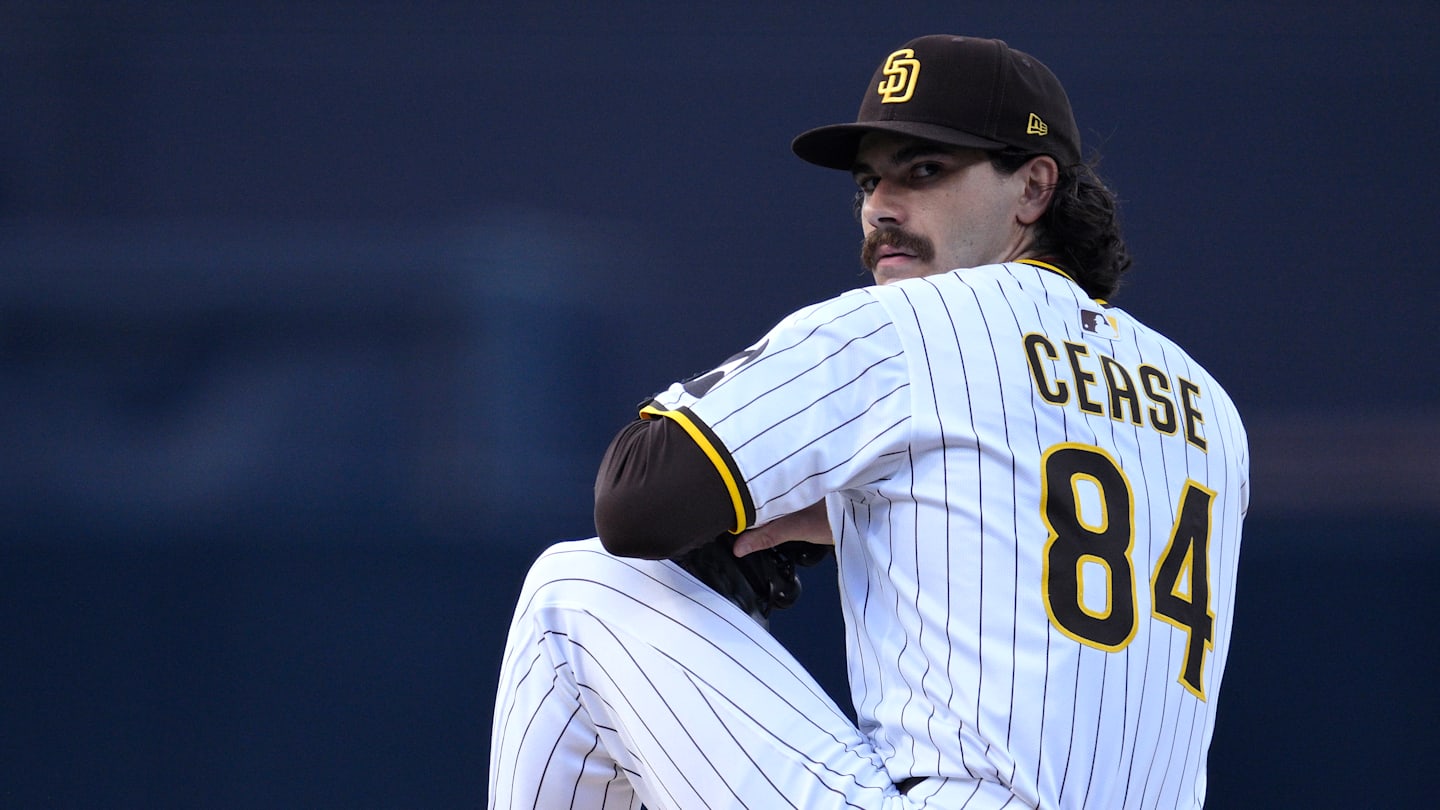
When news broke of Dylan Cease signing with the Toronto Blue Jays, there was a good amount of shock: seven years and $210 million far outpaced what most anticipated the workhorse right-hander to land in free agency.
It was especially relevant to the Chicago Cubs, a team in desperate need of a top-of-the-rotation arm. If Cease pulled in $210 million, what would that mean for Tatsuya Imai’s market? Framber Valdez? It seemed to have the potential of re-setting the starting pitching market this winter – and not in a way Jed Hoyer would find enjoyable.
But, now, we have the deferral details – and they paint things in a very different light.
Dylan Cease’s actual contract details fall perfectly within projections
With deferrals factored in, the deal comes in much closer to start-of-offseason projections: seven years and $182 million. That’s good news for the Cubs in the sense that maybe the entire market isn’t gonna get stupid pricey – but bad news in the sense that, again, deferrals are part of the equation – and this team has adamantly refused to defer money.
The deferrals are expected to reduce the present value AAV of the deal to around 26 million per year, per source.
Still the largest pitching contract in #BlueJays history https://t.co/u8mw0s2QoQ
— Mitch Bannon (@MitchBannon) November 27, 2025
I talked about that sticking point in the immediate aftermath of the deal and it remains just as true now as it was a few days ago. And the point I made then remains relevant, as well: it feels far likelier that the Cubs get their big arm via trade as opposed to through free agency. The largest free agent deal Chicago has ever given to a pitcher came more than a decade ago in Jon Lester (six years, $155 million) – and they’ve never come close to touching that mark again since.
Cease felt like a perfect fit (right-handed, power pitcher with swing-and-miss stuff) and given where his contract netted out now that we know deferral details, there’s going to be a contingent of Cubs fans frustrated about missing out. But it’s still early in the winter – and as long as Hoyer gets his big-name starter this offseason, whether via trade or free agency – the rotation will be in good shape.