
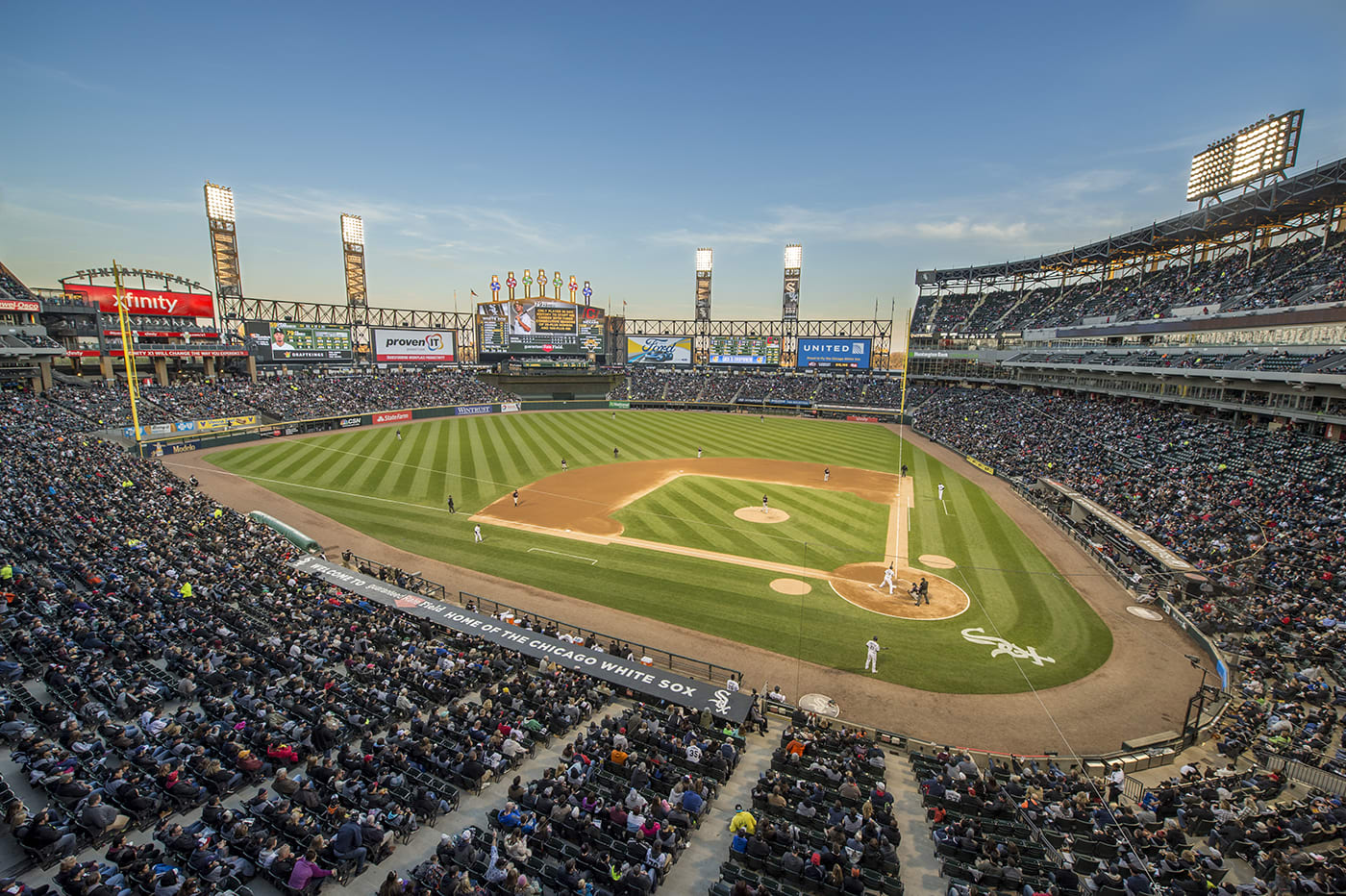
Chicago is a metropolis that breathes sports the way other cities breathe exhaust or ocean air. Walk through any neighborhood and you can feel the gravitational pull of its franchises. The Cubs are a national pastime unto themselves. The Bears carry a mythology older than most stadiums. The Bulls are still immortalized in murals and bar chatter, even decades after Jordan’s last dance. The Blackhawks have a history that traces back to the Original Six, cemented in grit, tradition, and a fan culture all their own.
And then there are the White Sox — a team that should stand shoulder-to-shoulder with these giants, yet somehow lingers in the back room of its own sports city, like a franchise trapped behind a one-way mirror.
This isn’t a story about hatred or mockery. It’s a story about wasted potential, structural stagnation, and a franchise that has spent more than a century in a state of knowing exactly what it could be… and almost never getting there.
If there’s any team in baseball that fits the definition of a sleeping giant, it’s the Chicago White Sox. But the distance between a giant that’s sleeping and a giant that’s hibernating indefinitely is wider than anyone in the organization seems willing to admit.
A Century of Coming Up Short
To understand the current frustration, you need to start with the foundational truth of the White Sox timeline: this franchise simply hasn’t won — not consistently, not recently, and certainly not historically.
Since 1918, the White Sox have made the postseason eight times.
Eight.
In more than 100 years.
For comparison:
The Dodgers made the playoffs 11 times between 2013 and 2023 alone.The Yankees have had a winning season every year since 1993.The Astros, a team once mocked as a basement dweller, have reached the ALCS seven years in a row.
Meanwhile, the White Sox — in one of the richest, largest, most sports-obsessed cities in North America — have floated in and out of relevance like a buoy on a choppy lake.
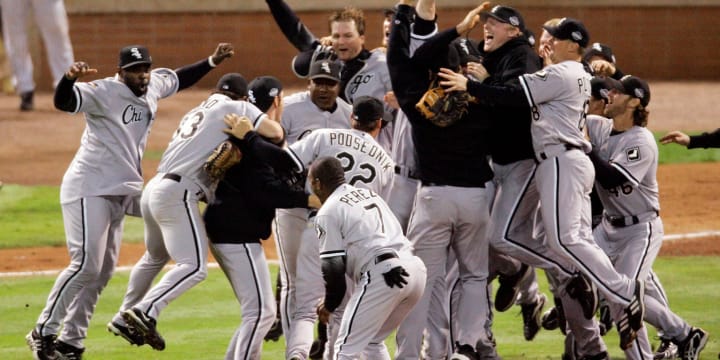
Even their lone shining moment, the 2005 World Series run, is isolated in a way that almost makes it feel accidental. They won three postseason rounds… but all in the same year. Every other playoff appearance ends quickly, quietly, and typically without an imprint.
This isn’t just statistical underperformance.
It’s institutional inertia — the kind that becomes generational if nobody interrupts the cycle.
Chicago fans didn’t deserve this. And the market certainly didn’t demand it. So how did a franchise blessed with so many advantages end up being a century-long exercise in “almost”?
Let’s dive deeper into how the White Sox got here — and why the path forward is both tantalizing and heartbreakingly complicated.
The 100-Loss Era: A New Low in a City That Expects More
Recent history hasn’t provided any comfort. In fact, the last decade has been one of the most brutal stretches in franchise history.
The White Sox have lost 100+ games in four of the last seven full seasons — including three straight at the time of this writing. That level of collapse isn’t simply a rebuild gone sideways. It’s organizational failure on a scale that’s rare in modern baseball.
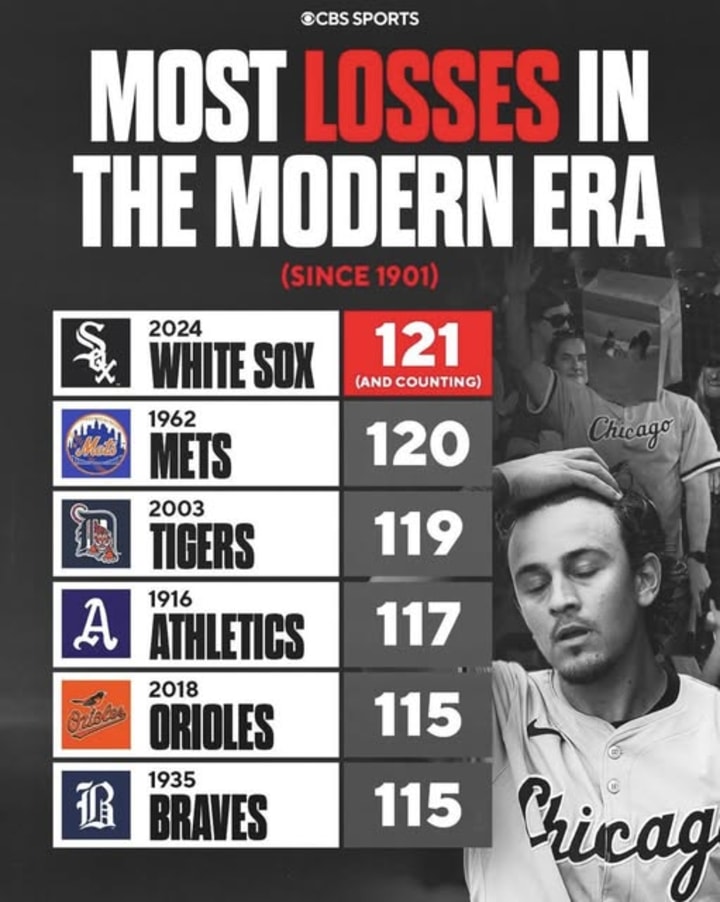
The last time teams regularly lost 100 games was during eras with different rules, different finances, and different competitive expectations. Today, with expanded playoffs, salary flexibility, analytics, and widespread player development systems, it’s hard to lose that much by accident.
To lose 120 games, as the White Sox did recently, you almost have to fight gravity itself.
The most frustrating part isn’t the losing — it’s that the losing seems cyclical, predictable, even structural. This is a team that keeps resetting without ever actually resetting. A franchise that rebuilds with no foundation. A club that declares a new direction before ever acknowledging why the last direction failed.
And in a city that prides itself on swagger, toughness, and high expectations, that kind of drift feels like betrayal.
A Market Built for Greatness… That Somehow Never Arrives
The most baffling part of the White Sox story is the mismatch between where they play and how they operate.
Chicago is the third-largest MLB market — a place overflowing with:
Millions of potential fansDeep-pocketed corporate sponsorsExpansive regional TV coverageBroad suburban sprawlA culture that treats sports as mandatory civic participation
Even sharing the city with the Cubs doesn’t diminish the opportunity. There’s more than enough room for two powerhouse franchises, especially given Chicago’s population density and suburban reach.
Yet the White Sox consistently sit near the bottom of MLB in payroll, recently clocking in at 28th out of 30 teams. When teams like Kansas City, Cleveland, and Minnesota — all in the same division — run higher or more consistent payrolls, the imbalance becomes hard to ignore.
And this isn’t a division stacked with financial juggernauts.
The AL Central is historically one of the least competitive divisions in baseball.
The Guardians won the division with 88 wins.
Most years, anything above 90 wins puts you in cruise control.
A Chicago team — with Chicago money — should own this division outright. Instead, the White Sox drift through it like a visiting team.
It’s not that Chicago lacks fans.
It’s that the team has never built a product worth rallying behind for more than a fleeting moment. And sports cities, even loyal ones, don’t reward inconsistency forever.
The Ballpark That Missed the Revolution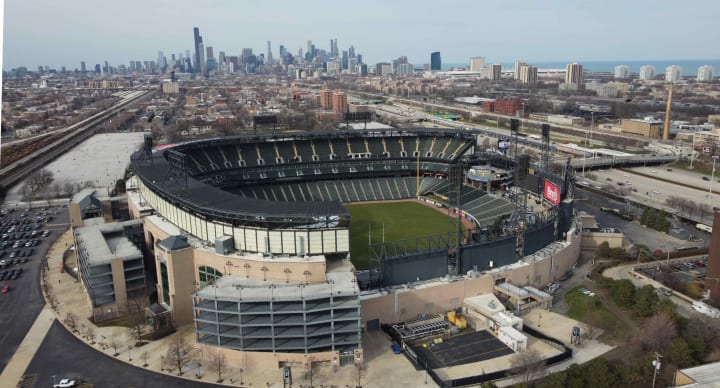 Guaranteed Rate Field is more symbolic than most people realize.
When it opened in 1991, it arrived one year too early to catch the wave of the retro-ballpark renaissance. Camden Yards debuted in 1992 and immediately reset the league’s entire aesthetic — brick façades, warehouse backdrops, intimate sightlines, green seats, and a feeling of timeless charm.
Chicago missed that cultural shift by inches.
The White Sox could have had an instant-classic stadium that echoed the city’s architectural grandeur. Instead, they got a structure that aged rapidly and never quite felt like a cathedral of baseball. Renovations have helped, but they can only mask so much.
Then there’s The 78 — that glittering, river-adjacent, perfectly located plot in the South Loop that checks every box for a modern ballpark:
Waterfront accessIconic skyline viewsWalkabilityTransit access
A chance to become a landmark
But the deal can’t solidify.
Public money is scarce.
Political will is fractured.
And the team itself hasn’t demonstrated the organizational competence to push the project across the finish line.
The result is classic White Sox:
A golden opportunity suspended in limbo, just out of reach.
Ownership Limbo: When Leadership Slows the Rebuild
Jerry Reinsdorf’s tenure has been long, complicated, and—for many fans—far too cautious. He has already designated Justin Ishbia as his successor, but the arrangement is conditional, slow-moving, and oddly non-committal for a franchise in dire need of direction.
Ownership transitions in sports matter more than most people realize. They determine:
Payroll strategyCultural philosophyTalent developmentLong-term investmentFan engagementBrandingStadium negotiationsAnd ultimately… winning
Yet the White Sox are stuck in a purgatory where the old owner hasn’t fully stepped aside and the new owner hasn’t fully stepped in.
This is the worst-case scenario for a franchise in need of transformation.
If there were ever a team that needed a clean break from its past, it’s the White Sox. Instead, they’re drifting through an era where neither ownership group is fully empowered to make sweeping changes.
The result?
Five more years of waiting.
Waiting for money.
Waiting for vision.
Waiting for leadership.
And waiting — more than anything — is what sunk this organization in the first place.
The Sleeping Giant Is Real — But Untapped
Despite everything, the White Sox remain one of the most fascinating “what if?” stories in modern sports.
This team truly could be a powerhouse:
A contender every year
A free-agent destination
A brand with national reach
A team that dominates the AL Central
A club that finally taps into Chicago’s full potential
There’s a version of the future where the White Sox become a model franchise — sleek, modern, competitive, and consistent.
And yet… it all feels theoretical.
Because potential is not performance.
Possibility is not execution.
And a sleeping giant is still just asleep.
The White Sox have the market.
They have the fanbase.
They have the geography.
They have the opportunity.
What they’ve never had is the sustained commitment needed to turn a century-long underachiever into the contender the city deserves.
The pieces are there.
The question — the only question — is whether anyone in power will ever pick them up.
Until that happens, the White Sox will remain exactly what they’ve always been:
A franchise on the edge of greatness… that never quite steps through the doorway.