
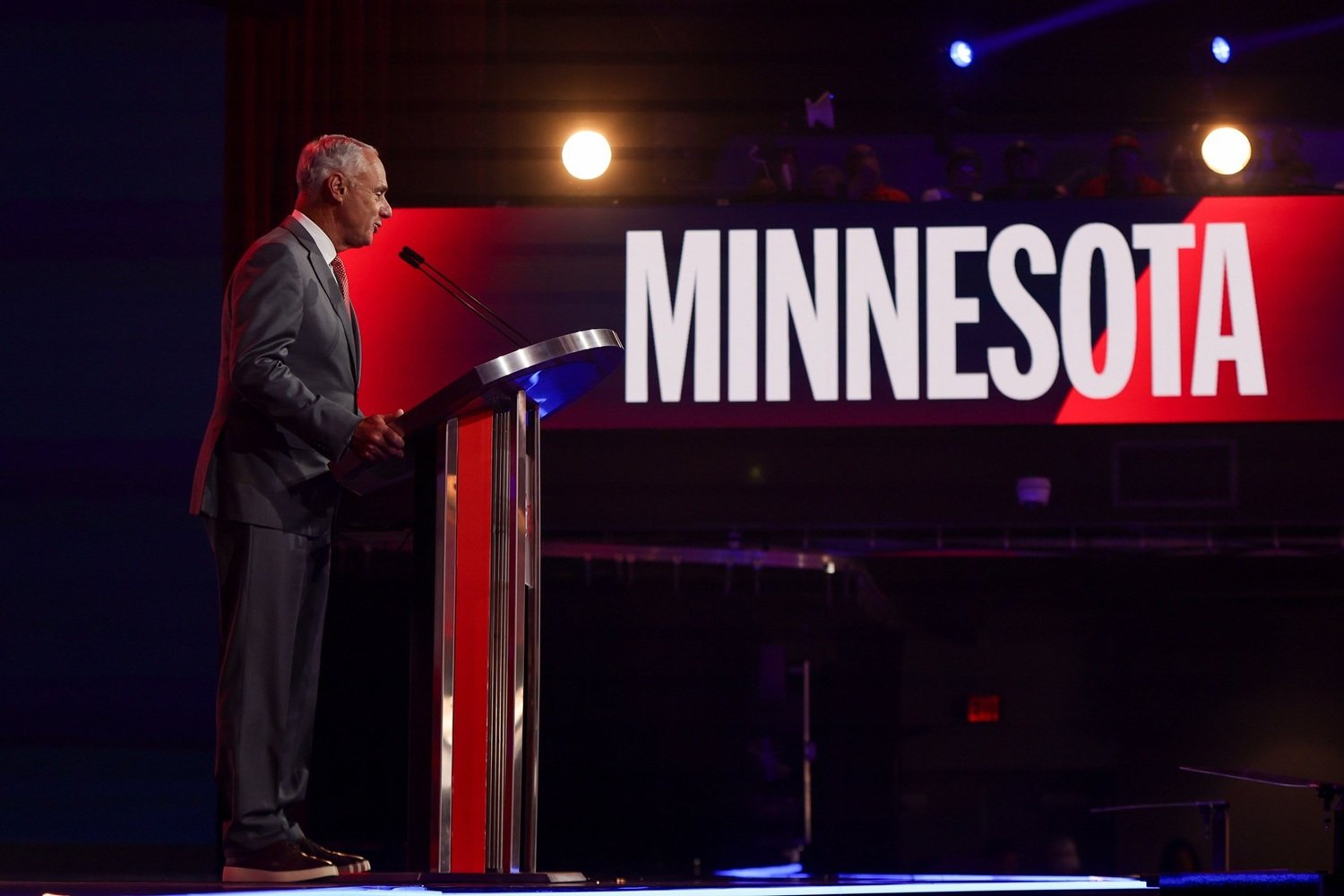
Major League Baseball is inching toward a critical crossroads. The current Collective Bargaining Agreement (CBA) expires at the end of the 2026 season, and both the league and the MLB Players Association are preparing for a heated negotiation cycle that could spill into the 2027 campaign. That uncertainty has many players, owners, and fans bracing for the possibility of another lockout. Long-standing debates over a potential salary cap, competitive balance, and revenue distribution sit at the core of the tension.
Twins fans are watching closely because the next CBA could bring changes that reshape the franchise’s future. While a lockout would be painful in the moment, the resulting agreement might benefit mid-market clubs like Minnesota in surprising ways.
Salary Cap and Salary Floor Possibilities
For decades, the Twins have lived in a league that rewards massive spending. The Dodgers, Yankees, and Phillies regularly show what happens when a team pours resources into the roster. Their path to October often looks much smoother than the one available to teams operating on tighter budgets. Outliers break through from time to time, but the numbers are clear. World Series contenders tend to come from the top of the payroll rankings.
Owners are again pushing for a salary cap, an idea players continue to reject. But if the topic gains traction, it could come with a salary floor. That part of the conversation matters deeply for Minnesota. A salary floor would force the Twins to invest a certain amount in payroll each season. Fans frustrated by dips in spending would welcome the mandate because it would align payroll with competitive goals rather than fluctuate with market conditions or ownership preferences.
A cap system would introduce new rules and restrictions, but for a franchise that rarely pushes past the middle of the spending pack, the ceiling matters far less than the floor. A consistent spending baseline could help the Twins maintain depth and avoid seasons where their roster relies too heavily on luck.
Television Revenue and the Shift from Regional Networks
The collapse of regional sports networks has hit several clubs hard, and the Twins are among the most affected. The move to Twins.TV last season brought greater accessibility for fans but created financial uncertainty. Under the old RSN model, teams received guaranteed broadcast revenue. Under the new setup, Minnesota likely saw a significant drop in media income.
This is why league-wide media restructuring could be a massive win for the Twins. MLB is pushing toward a more unified national broadcast approach, and major platforms like ESPN and Netflix have shown interest. If the league can bundle local rights into a national package and distribute revenue more evenly, mid-market teams would benefit immediately.
For the Twins, that could mean restoring lost revenue and creating long-term financial stability. In a sport where media money drives payroll decisions, a stronger national model would give Minnesota far more flexibility.
Competitive Balance and a Changing League Structure
Competitive balance is the heartbeat of CBA negotiations. Every issue, from revenue sharing to expansion, connects back to leveling the field between massive and mid-sized markets. MLB could pursue several structural changes, including a salary floor, a stricter cap system, realignment, or expansion.
As previously mentioned, a salary floor would help the Twins by requiring low-spending clubs to increase investment. A tougher cap-and-tax system could prevent large market teams from hoarding talent. These changes would give Minnesota a more realistic chance to compete consistently with baseball’s financial heavyweights.
Realignment is more complicated. The Twins currently benefit from the softest division in the sport. Realignment could tighten competition and make postseason paths more challenging. Expansion adds more teams to the mix and could redistribute talent and revenue in unpredictable ways.
Even with these risks, most competitive balance changes tend to benefit clubs in markets like Minnesota. Anything that narrows the economic gap between teams increases the Twins’ chances of building sustainable success.
A More Stable Economic Landscape and the Future of Twins Ownership
There is another angle that Twins fans should not overlook. A stronger and more stable economic environment for baseball could influence the ownership landscape. The Pohlad family has already explored selling minority stakes in the team. If MLB’s next CBA creates firmer financial footing with stabilized media revenue, more explicit payroll rules, and healthier league-wide structures, the incentive to sell could grow.
Prospective buyers want predictability. They want guaranteed revenue streams, consistent league policies, and less volatility in the economic model. A post-CBA environment that offers exactly that may open the door for a more serious ownership shift. While the Pohlads have been steady owners for decades, many fans believe a fresh ownership group could bring greater ambition and investment.
If the next CBA pushes baseball toward long-term stability, it could create the conditions needed for the Pohlads to finally move forward with a sale. That possibility alone gives Twins fans another reason to watch these negotiations closely.
The next CBA carries enormous implications for the Minnesota Twins. A salary floor could guarantee more consistent spending. A revamped national media model could replace lost revenue and stabilize payroll capacity. Competitive balance reforms could limit the overwhelming advantages enjoyed by the sport’s richest teams. Realignment presents risks, but the overall picture still tilts in Minnesota’s favor. Add in the potential for a more stable economic environment to spark real ownership change, and the Twins could emerge from the next CBA in a significantly stronger position.
The road to 2027 may be bumpy, but the destination could offer real hope for the franchise’s future.
Will the next CBA help mid-market teams like the Twins? Leave a comment and start the discussion.