
In case you somehow missed it, MLB is officially instituting the long-awaited Automated Ball Strike System, or ABS, in 2026. Fans have had the chance to see the technology at work for years in the minor leagues, but they’ve only seen it sparingly in big league games. It was used in select spring training games and the All-Star game, but there wasn’t enough data to really think about how it’d affect the catcher role.
Because of the limited information, the consensus seems to be that the new system will disproportionately hurt catchers like Patrick Bailey, who have gotten a lot of value out of pitch framing, while allowing worse framers to make up for their mistakes with challenges. However, the truth is likely more complex.
Davy Andrews, a FanGraphs writer and former Brewer Fanatic contributor, recently wrote a piece reflecting on the upcoming system, and a key takeaway was that people tend to forget that pitch framing is just as much about stealing strikes as it is about keeping strikes. He noted that the best pitch framers in the league earn strikes on ~90% of shadow zone pitches in the zone, while getting called strikes on just ~20% of pitches outside the zone. The challenge system should allow a catcher with a perfect eye to get 100% of fairly earned called strikes, which could be more valuable than the few stolen strikes taken away from batter challenges. This is especially apparent when noting that catchers tend to have much higher overturn rates than batters so far.
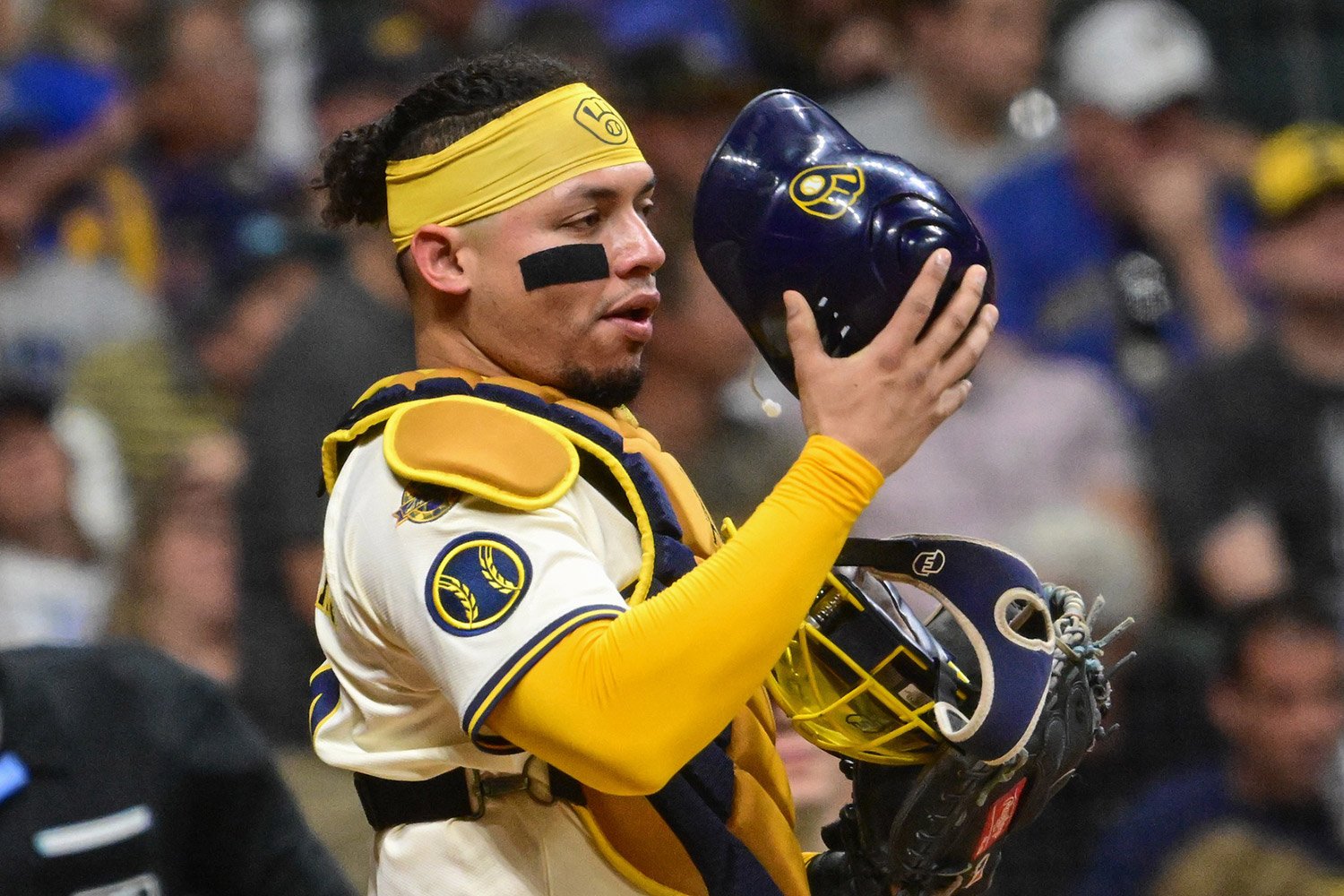
So how does William Contreras fit into all of this? Well, he was one of the best at framing pitches in 2023, accumulating +9 Catcher Framing Runs (5th in MLB). Since then, he has gradually declined in his productivity, posting +3 framing runs in 2024 and just +1 this past year. He’s still a much better defender than he was with the Braves, but could this new system be what he needs to turn things around behind the dish?
A peek at his Savant page shows that his weakest framing zone was towards the left-handed batter’s box. In this shadow zone, his strike percentage of 57.9% was considerably lower than the MLB average of 64.3% and he accumulated -3 framing runs in this zone. It’s difficult to say exactly why he struggled so much with pitches on his right-handed side, but reviewing a few clips of missed calls shows something is happening. Even when setting up his glove in the right location, he tends to instinctively pull his hand down and to his left before catching the pitch, framing it in the opposite direction and losing out on strikes.
While not quite as egregious, he faces a similar issue when catching pitches on the upper rail.
In each of these examples, Contreras’s reaction makes it seem like he’s still expecting a late strike call because of how confident he is that the pitch landed in the zone. Now, the strike zone on television can admittedly be misleading, but there is enough evidence to suggest that Contreras often has a hard time keeping his pitcher’s strikes in the zone where they belong.
A lot of this regression is due to the noise in his setup before the pitch. If we go back and look at the pitches he received in the same zones in 2023, the overall motion is far smoother, which lends itself to stealing and confirming more strikes.
However, while that is undoubtedly something for Contreras to work on in the offseason, he still clearly has a good understanding of the zone. With the robo-zone, he can compensate for framing mistakes by correcting history with a timely challenge or two without sacrificing much framing upside.
To get a more definitive answer on whether this will help or hurt his defensive efforts, we’ll have to wait until MLB rolls out its challenge probability and value numbers. Even without exact facts and figures, the new ABS system still seems to give William Contreras all the tools he needs to pump up his defensive value in 2026.