
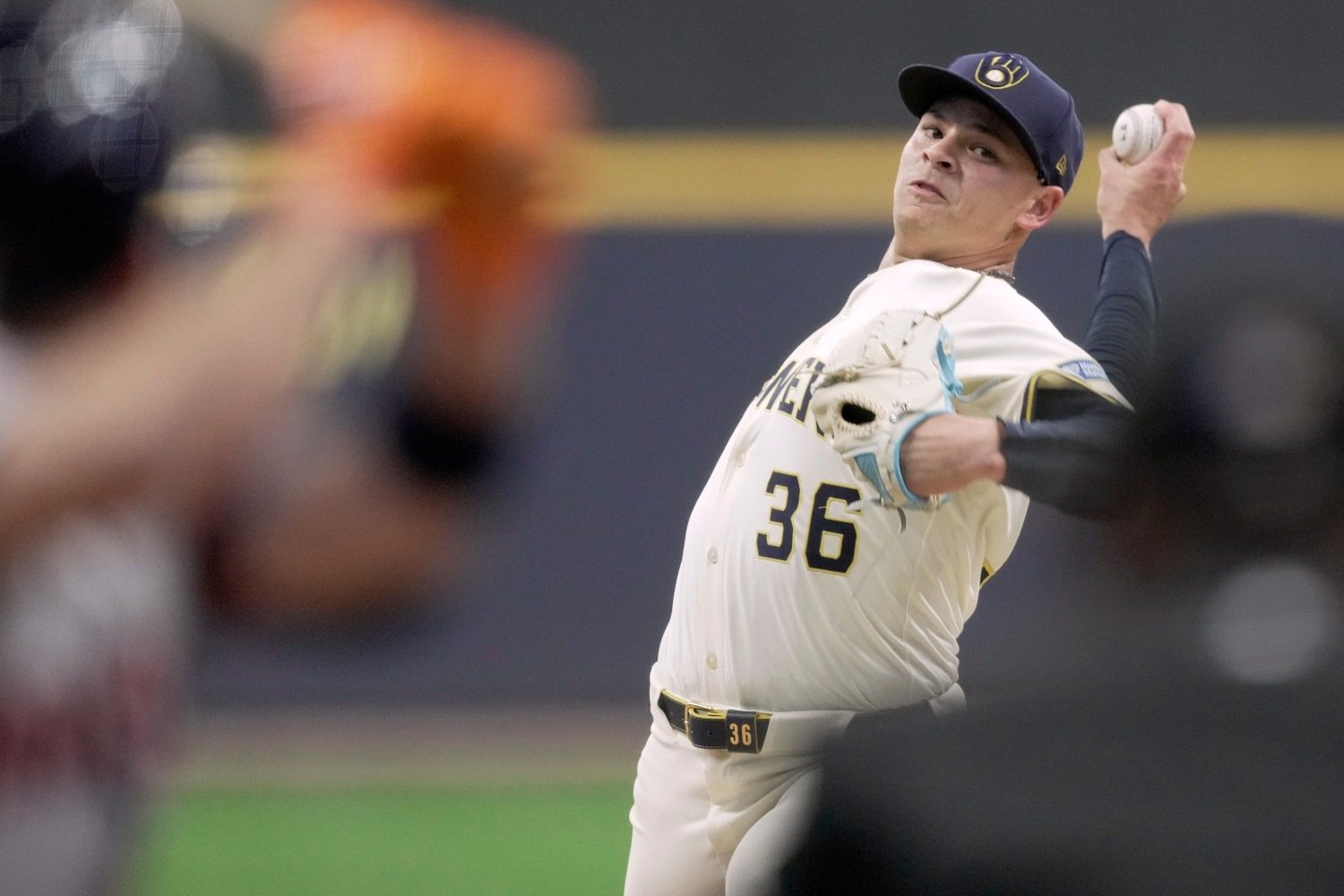
A spring training oblique strain and a handful of underwhelming starts limited Tobias Myers‘s opportunities in the Brewers’ starting rotation in 2025. In those starts, Myers wasn’t mixing speeds much, eschewing what had been an effective changeup the year before. Rediscovering a proper offspeed offering became one of his focuses with Triple-A Nashville, and he ultimately landed on a split-change.
It was a small tweak, but its impact could ripple into next season. The splitter significantly altered Myers’s identity as a pitcher, and it could be his ticket to more innings in 2026.
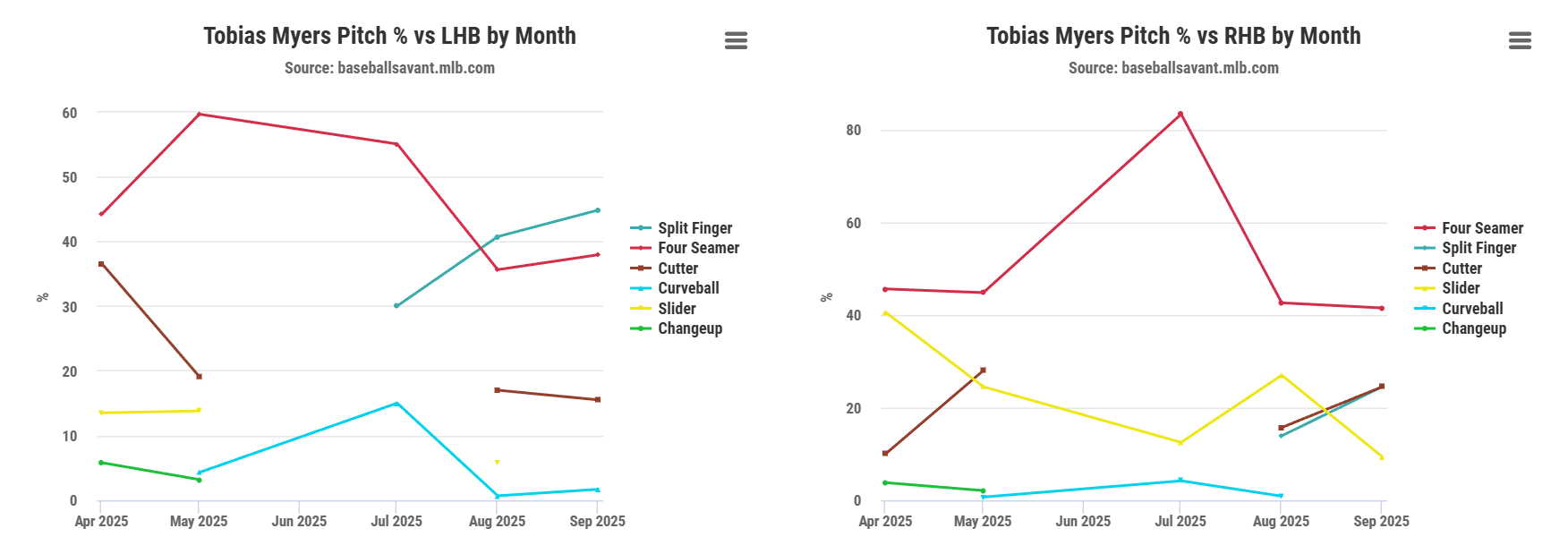
After settling on that new pitch, Myers said he expected to throw it plenty. It immediately became a weapon against hitters from either side of the plate, holding opponents to a .131 wOBA while inducing whiffs on 39.2% of swings. Myers not only made it his preferred weapon against left-handed hitters, but even used it at roughly the same rate as his cutter and slider against righties.
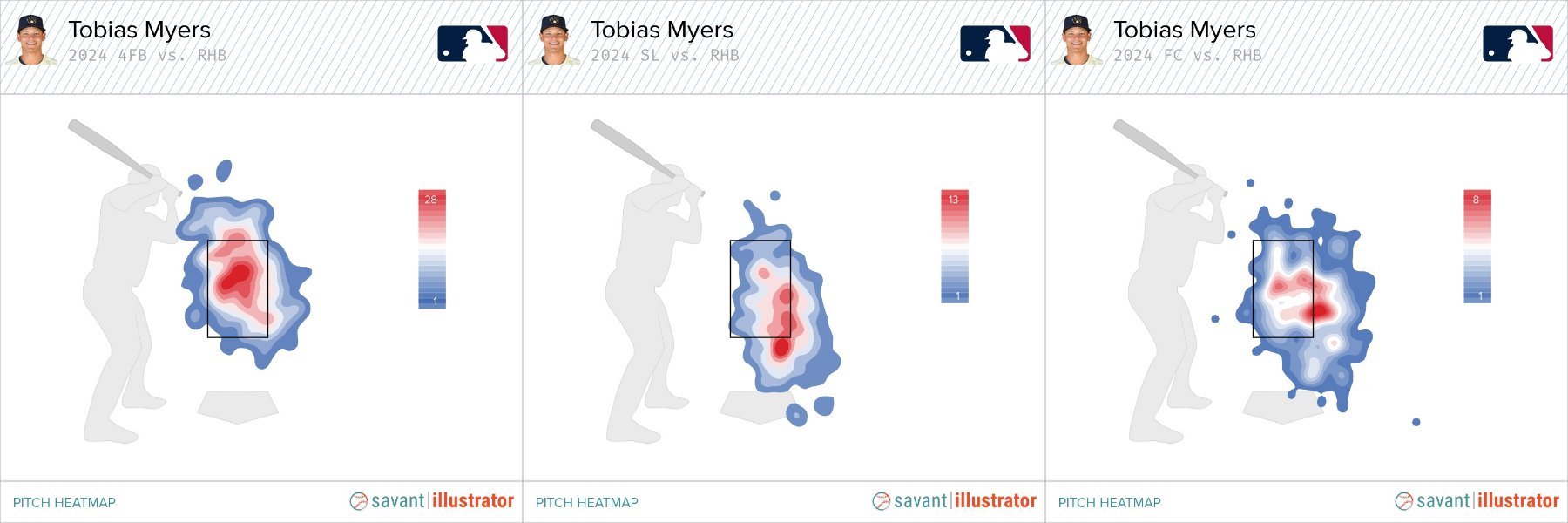
Those shifts in usage prompted different sequencing. Myers hit his stride as a rookie once he and the Brewers established his fastball-cutter-slider triad, particularly against right-handed batters. That meant tunneling pitches to start right down the middle, with the heater staying true over the plate and the secondaries breaking low and to the glove side.
Myers needed more tricks in his bag against lefties, including more elevated fastballs and cutters, but the back-foot slider was still a significant part of his approach down the stretch.
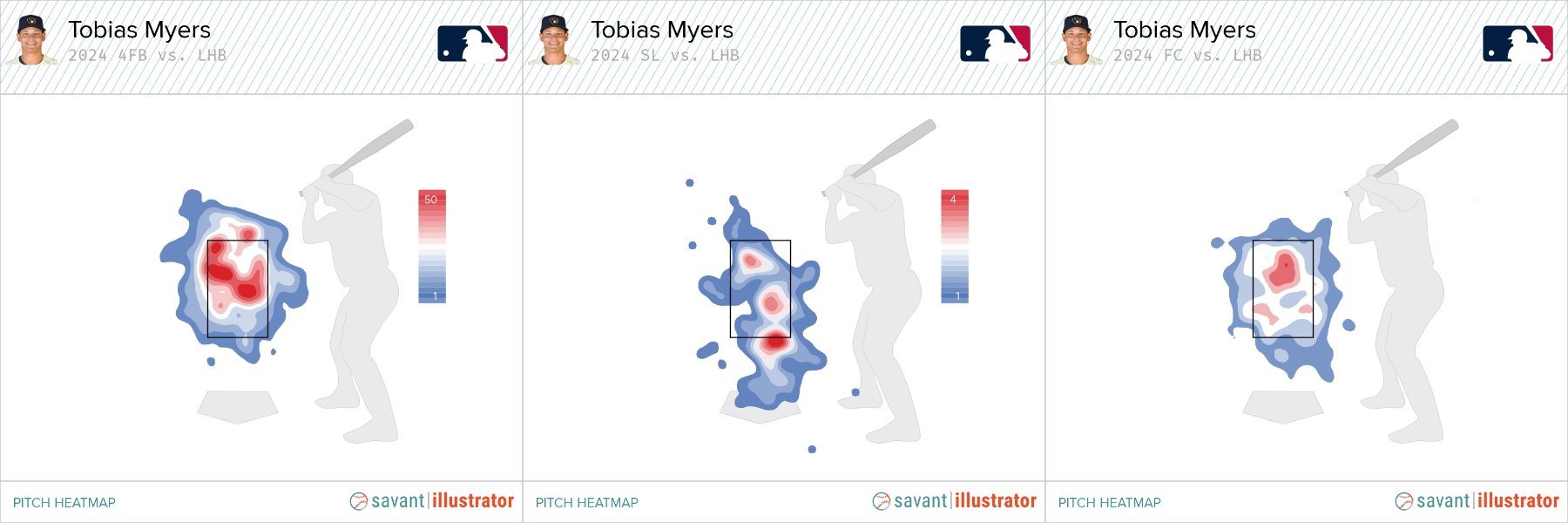
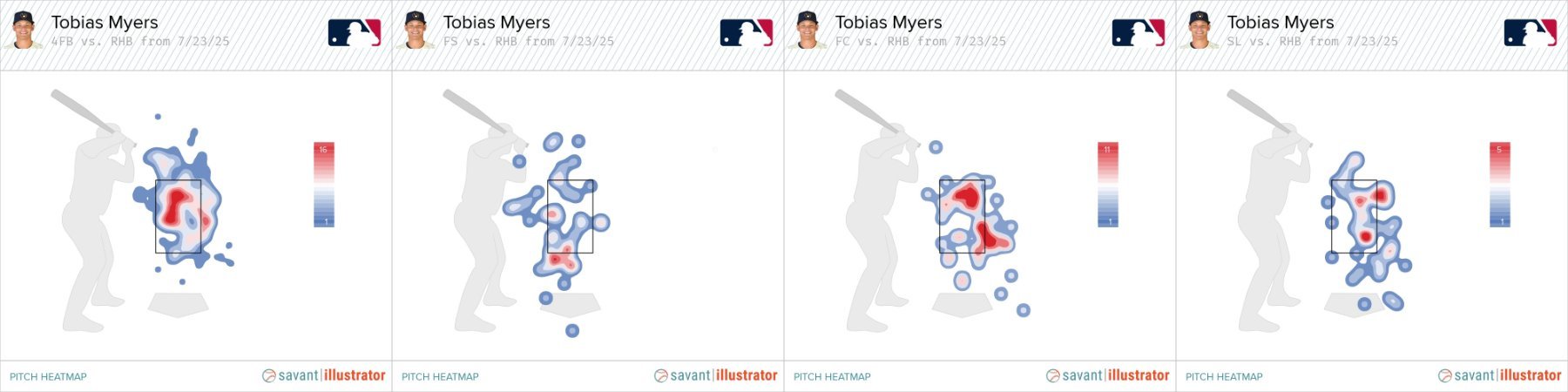
By August, Myers’s focus shifted to setting up a splitter that emphasized depth, tailing in the opposite direction of his slider and cutter. That meant working more on the north-south game, shifting his fastball usage further up and in to righties.
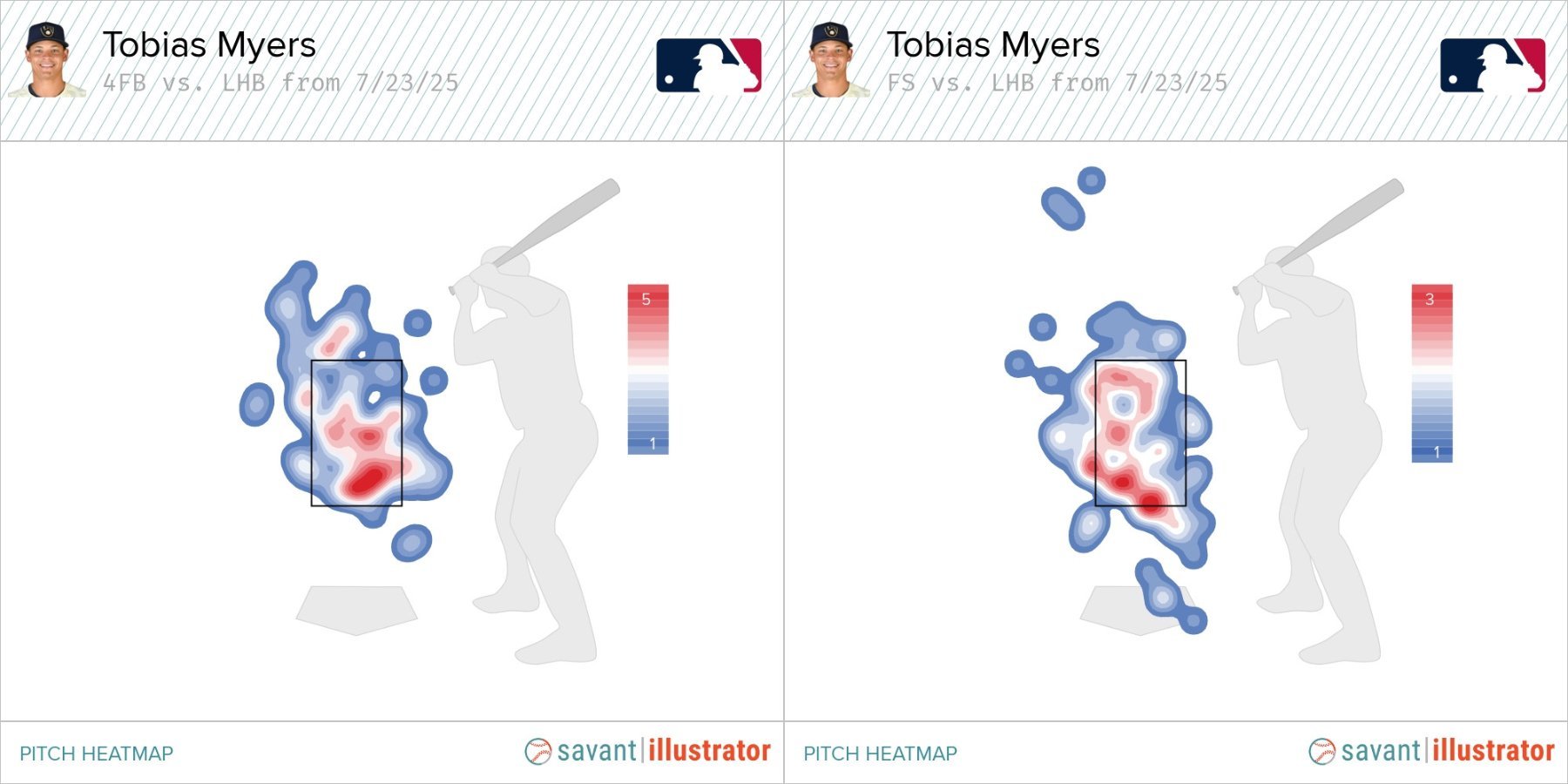
Going to a mostly fastball-splitter pairing against lefties (nearly 80% of his pitches in such matchups after he debuted the latter on July 23) led Myers to zero in on the bottom of the zone with both offerings.
Those new plans of attack made him a more well-rounded pitcher. In 2024, righties managed just a .275 wOBA against Myers, but lefties posted a more capable .320 mark. After he debuted the splitter in the big leagues on Jul. 23, 2025, lefties floundered to a .229 wOBA, compared to .278 for righties. His strikeout rate remained below-average at 18.5%, but he generated whiffs on 25.4% of swings, a higher rate than in his successful rookie campaign.
It wasn’t all sunshine and roses, as righties did more damage against Myers’s fastball in that time, particularly in the inner third of the zone. That may necessitate returning to his former sequences in some of those matchups, even if it means limiting his usage of a highly successful splitter.

Even if his 2025 season did not transpire as he may have preferred, Myers took advantage of the opportunity it afforded him to mature as a pitcher. He arguably profiles better as a starter now than he did a year ago, though it may be tough for him to crack a deep Milwaukee rotation—particularly if the club retains Freddy Peralta. In any case, Myers’s contributions next season might be closer to his rookie year than his sophomore campaign. The split-change is a difference-maker for the late-blooming righty.