
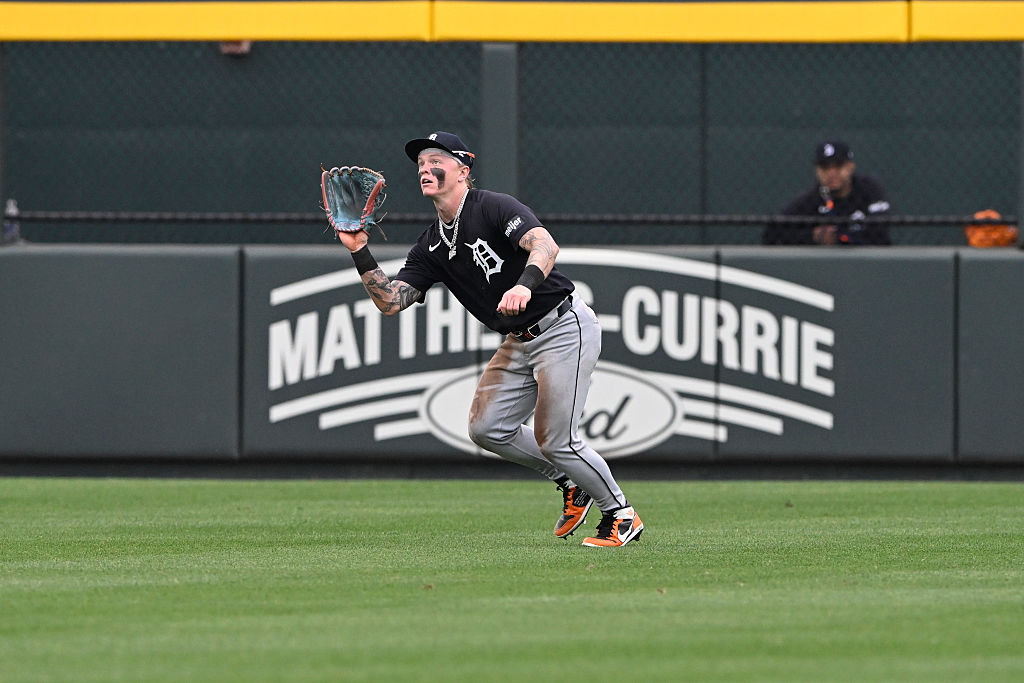
“People really underestimate the value of the first three steps,” Clark said. “They underestimate the value of either being down before contact, and then you have to restart your movement or being too late because you would much rather be a hair late than early.
“It’s kind of like stealing bases, especially with the momentum steal,” Clark said. “Like if you’re down early, then you’re stopped, you’re stagnant, and you have to restart. But if you’re down just a hair late, then it’s still okay. Trying to find that middle ground of being in the air when the ball is passing through the contact lane and then being able to land and change position quickly comes from billions and billions of reps and batting practice.”
Reading your Opposition
As the season progresses, on-field batting practice winds down, and players’ legs start to feel heavy, Clark will confine himself to a five-foot circle, shifting his primary focus to physical reads from the hitter and cultivating a better understanding of how the body interacts.
“I’ll just try and get reads before they make contact,” Clark said. “Reading hips, reading hands. It’s kind of the same thing with our position cards. A lot of guys play for the miss, meaning, if a guy strokes the ball in the gap, he earned that one, but more often than not, they’re going to clip it, roll it over, or they’re going to flare it.
“We’re playing basically in a way that would negate their miss, and you’re already working toward that area,” Clark said. “Then you just have that five-foot circle to work with where we’ve got to get out, and we’ve got to go get it out of the circle as fast as we can.”
With the Tigers’ focus on equating pre-pitch work to a tennis player’s positioning to take a serve, Clark’s family connection to tennis has made the equation come together smoothly.