
As the Chicago Cubs firmly enter offseason mode, they’ll explore all avenues in an attempt to make the team better for 2026. One of those avenues is via trade, which can sometimes involve pieces at the minor-league level, and can sometimes involve players at the big-league level, like the recent Marcus Semien for Brandon Nimmo trade. In this article, we’ll take a look at the Cubs’ 10 most important players at the big league level, and consider their overall likelihood of being traded this winter.
You can find part one of this series, where we looked at the back half of the Cubs’ top 10 players, here. Today, we’ll take a peek at the top five.
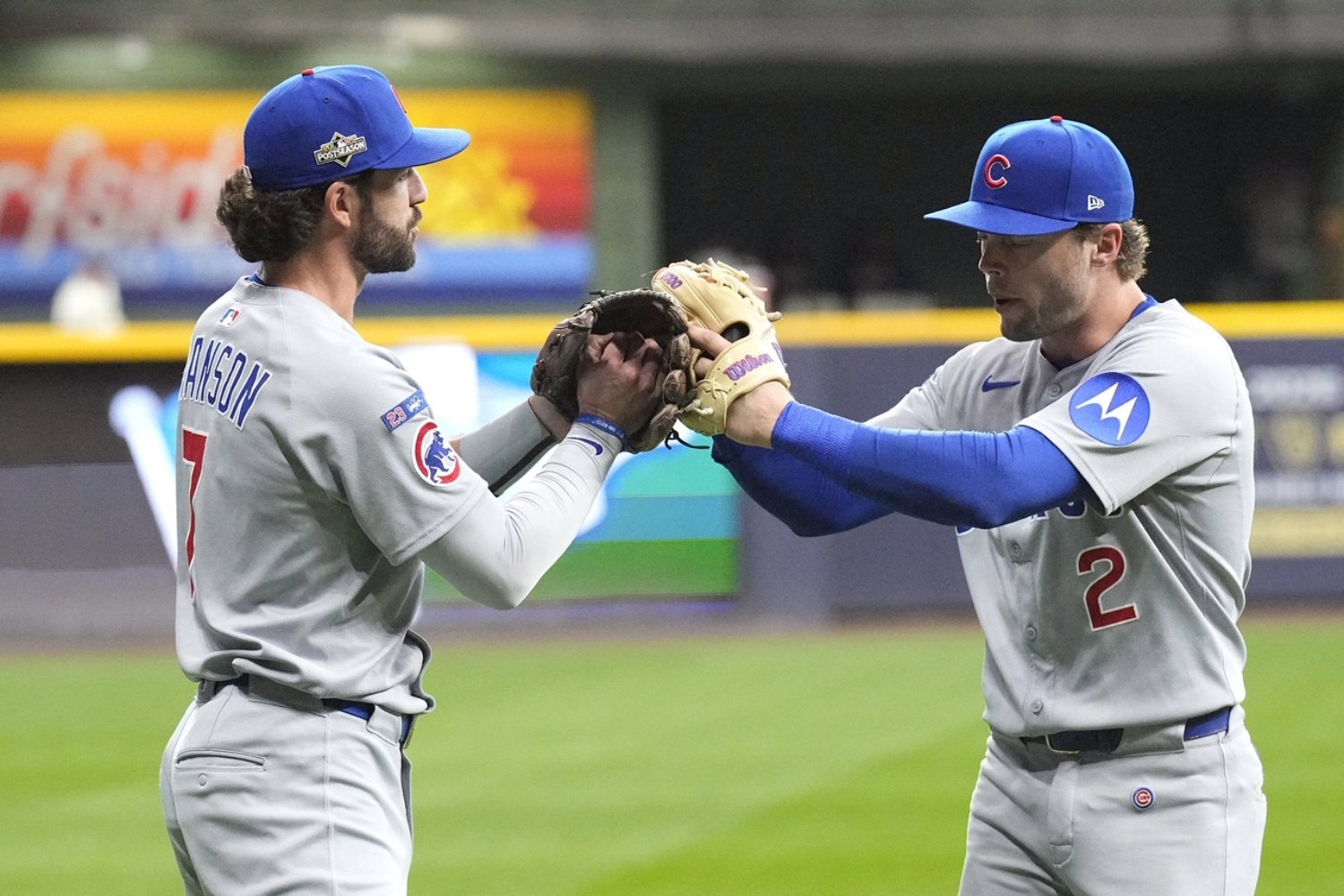
5 – Dansby Swanson
Pros: Dansby Swanson is an incredibly productive player. Since signing with the Cubs before the 2023 season, his 12.4 FanGraphs WAR is 25th-best in baseball, ahead of names like Alex Bregman, Bryce Harper, Rafael Devers, Manny Machado, and Vladimir Guerrero Jr. Since 2020, the shortstop is 13th in fWAR.
Cons: So much of Swanson’s value is in his defense, and he just had his worst defensive season since 2021. According to Baseball Savant, he was worth just three runs above average in the field in 2025. That is still a good number, though it is a concerning drop from being worth 12 runs above average in 2024. The bat has never been anything other than average to slightly above average. Defense, and the ability to defend at a premium position like shortstop, is his carrying tool. He’ll be 32 on Opening Day of next season, so it is fair to wonder how much longer he’ll be an above-average shortstop. Not to mention, he still has another four years and $109m left on his contract.
Trade Likelihood: Low
The contact is just too much for a player that has most likely hit his decline phase. If the Cubs do look to explore a deal here, it’ll most likely be to get off of the money, rather than to make the team better. Dansby Swanson, while an imperfect player, is still a good one, and he can still help them win in 2026.
4 – Nico Hoerner
Pros: I could wax poetic about Nico Hoerner for more than just the one paragraph that I have here. He is 18th in baseball in fWAR since his first fully healthy season on the North Side in 2022. According to a recent article from Bruce Levine, Cubs officials view him as a leader. He moved from shortstop to second base with no complaints and has gone on to win two Gold Gloves at his new position.
Cons: The Gold Glover will turn 29 next season, and while that isn’t exactly old, it is fair to wonder how much of his profile will age particularly well. He is a speed and glove-first player whose offensive profile walks a razor-thin line. He offers very little slugging and relies on a lot of groundballs and line drives to find space for singles.
Trade Likelihood: Medium
I, personally, would be heartbroken if the Cubs traded Hoerner, but I am also willing to concede that it might make sense. He’ll be a free agent after the 2026 season, and if the Cubs won’t give him another contract, they could look to recoup some of his value by dealing him for pitching help.
3 – Cade Horton
Pros: The rookie was an absolute horse for the Cubs in the second half, pitching to a 1.03 ERA in 61 1/3 innings. His absence in the postseason was very much felt, and given that it was just his first year in the big leagues, the Cubs will have control of him for a while.
Cons: His absence in the postseason, for one. The 2025 campaign was the first season of his professional career where he eclipsed 100 innings pitched. Injuries seem to be a recurring theme for the former Oklahoma Sooner. His second-half production took a unique shape, as well. Nobody has the true talent of a 1.03 ERA pitcher; his 2.79 FIP suggested some room for regression, and his strikeout rate of 23.5 percent was simply good, not great.
Trade Likelihood: Low
Horton, for better or worse, is the Cubs’ guy. They took a slight risk by taking him in the first round of the 2022 MLB Draft, and in 2025, it looked like a great decision. So much of the Cubs’ success in 2026 will depend on the young right-hander. You can pencil him into the front half of the starting rotation for next season and beyond.
2 – Michael Busch
Pros: Busch took a huge step forward in the power department in 2025, going from 21 home runs in 2024 to 34 this past season. His strikeout rate went from one of the worst in the league to simply a little bit below average, and as a result of those two things, he went from a 118 wRC+ to a 140 wRC+.
Cons: Michael Busch plays first base, and simply put, he’ll have to consistently post seasons with a 140 wRC+ to truly be a very valuable player. By wRC+, he was the ninth-best hitter in baseball, however, by fWAR, he was just the 45th-most valuable. At 28, he’s also old for someone entering his third full season in the big leagues. He’s still a great player, but the reason to be skeptical with Busch is the same reason why teams have been hesitant to give a big contract to Pete Alonso.
Trade Likelihood: Low-to-Medium
While Busch had a really good profile at the plate in 2025, if the Cubs don’t believe he is truly a 140 wRC+ type of hitter, they could look to cash in on the young first baseman now. I’d still be shocked if it happened, but for someone so obsessed with value, I can see Jed Hoyer deciding to deal Busch at a time when his value will most likely never be higher.
Pros: Crow-Armstrong was in the MVP discussion after a sterling first half of the season that saw him put up a batting line of .265/.302/.544. Combine that with his defensive value and blazing speed on the basepaths, and he was one of the best players in baseball.
Cons: He was one of the worst offensive players in the second half of the season, with a batting line of .216/.262/.372. He still gives value because of the defense and speed, but this is a guy that just looked completely hopeless at the plate at times.
Trade Likelihood: Low
The error bars on Pete Crow-Armstrong’s career are very wide. Is he the guy who carried the Cubs in the first half? Or the one that contributed to so much of their struggles in the second half? Either way, he’ll always give value because of the defense. I imagine if the Cubs did look to deal him, though, they’d find all sorts of differing opinions on what his value really is. Combine that with the fact that he is a fan favorite, and I just can’t see a trade that sends him out of town happening. The potential is way too tantalizing.