
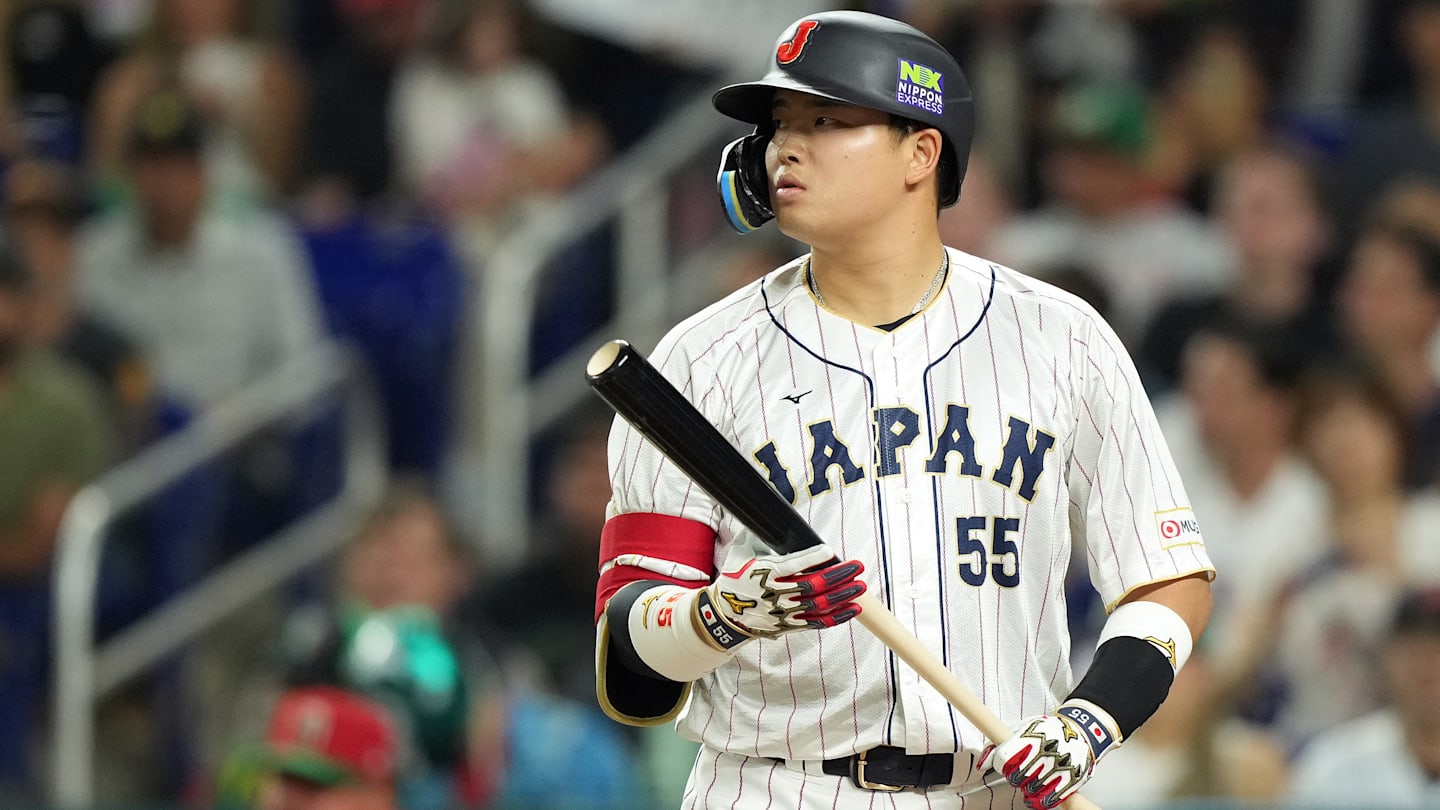
On the surface, it’s the kind of national headline Seattle Mariners fans have learned to expect every winter. An insider looks at the free agent board, scans the teams with obvious needs, remembers that Seattle has a long history with Japanese stars, and draws a straight line: Munetaka Murakami plus Mariners equals “perfect fit.”
That is the gist of Mark Feinsand’s recent piece on MLB.com, which matched every team with one free agent and landed Murakami in navy and teal. For a casual observer, it makes a ton of sense. Seattle needs more power. They have a vacancy at third base. They’ve had success with Japanese players for decades, from Ichiro Suzuki to Kazuhiro Sasaki to Hisashi Iwakuma. Murakami is the loudest power bat to come out of NPB since Hideki Matsui.
But once you look past the surface-level symmetry and factor in what the Mariners have already done with this roster, especially their five-year, $92.5 million commitment to Josh Naylor through 2030, the “perfect fit” label starts to feel more like wishcasting than reality.
Munetaka Murakami is the wrong kind of ‘scary’ bat for the Mariners now
Naylor is going to live at first base and DH. That’s his lane, and the Mariners clearly envision him as a middle-of-the-order anchor for the rest of the decade. When a team that usually operates in the cautious, value-hunting lane suddenly pushes that much guaranteed money across the table, it doesn’t leave a lot of room for another massive, overlapping gamble on a similar profile.
That’s where Murakami stops looking like a dream fit and starts looking like a luxury that doesn’t match how this front office has chosen to build. Plus, another problem is that there’s just as much “if” baked into his game as there is upside.
If you’re generous, you can picture a line where Murakami hits for big power, runs into enough walks to keep things afloat, and settles in as a 30-homer threat with some volatility. But there’s a very real scenario where the strikeouts pile up, the on-base percentage sticks in the low .300s, and the overall offensive value is a lot more streaky than star-level.
Now add in the defensive questions. There’s no guarantee Murakami sticks at third base. If he ends up grading out as a below-average defender there, you’re either shifting him across the diamond or nudging him toward DH. That might be fine for a team that hasn’t already pushed big chips in on a bat-first corner/DH type.
Seattle absolutely needs more offense. Their margin for error vanished too often when the bats went quiet, and nobody in that front office is blind to how badly they need another impact bat or two. But needing power and being the right team to take on this specific bet are two different things.
It’s hard to imagine this front office willingly stacking that kind of risk on top of the Naylor deal, especially when Murakami’s biggest question marks line up exactly where they’d hurt the most.
From afar, Murakami-to-Seattle is an easy story: a new Japanese star landing with the franchise that once turned Ichiro into an icon, filling a need at third base for a team starved for more thunder in the lineup. But when you layer in the reality of how the Mariners operate, it’s the kind of match that works on a national whiteboard, not necessarily inside T-Mobile Park’s front office.
Murakami might very well be the “scariest” free agent bat on the market this winter. For the Mariners, though, he’s scary for all the wrong reasons.