
It’s honestly refreshing that the release of the Orioles’ top 10 prospect list at Baseball America — writing it is a true highlight of my year — feels like an afterthought in an offseason where the team’s present and the high-stakes additions they hope to make are in focus.
Still, it’s a moment worth commemorating in terms of where the farm system is, and there’s still plenty of value to having homegrown players who can help in the second half of the decade and beyond.
The Orioles certainly do. The takeaways here are the same as they’ve been for a while. There are more pitchers and international signees (and some that fit in both categories), a signal that those two aspects of the organization are set to deliver reams of talent to the big leagues soon. There’s a lot more depth — and tradeable depth — than high-end talent, and that’s OK.
So in lieu of repeating myself, here are some salient points on each of the top 10 prospects that I learned from contacts inside and outside the Orioles organization.
Samuel Basallo’s catching is on the upswing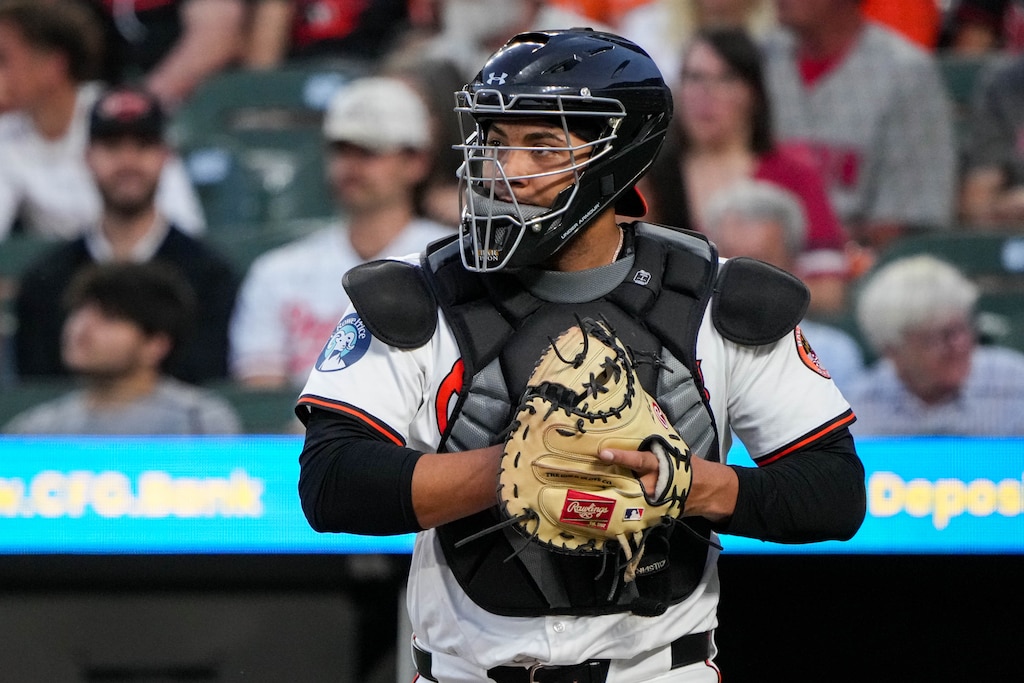
Orioles catcher Samuel Basallo takes his position behind the plate during the fourth inning of a game against the Boston Red Sox on Aug. 25. (Ulysses Muñoz/The Banner)
Basallo is a top prospect not only for the Orioles but in all of baseball because of his offensive potential, and that’s why the Orioles signed him to an eight-year contract extension. He’ll be worth a lot more over the course of that deal if he can catch consistently in the majors, and everyone I talked to felt like that was still a possibility. Everyone loves his big arm and thinks he’ll be able to control the running game, and many evaluators saw progress and recognized the work Basallo has put in to make catching a priority. He moves well for his size and is constantly working on his receiving. The other obvious areas of improvement — eliminating the lapses of focus and random misses behind the plate — are correctable. I was encouraged by what I heard.
Dylan Beavers’ scouting evaluations matched the statistical improvements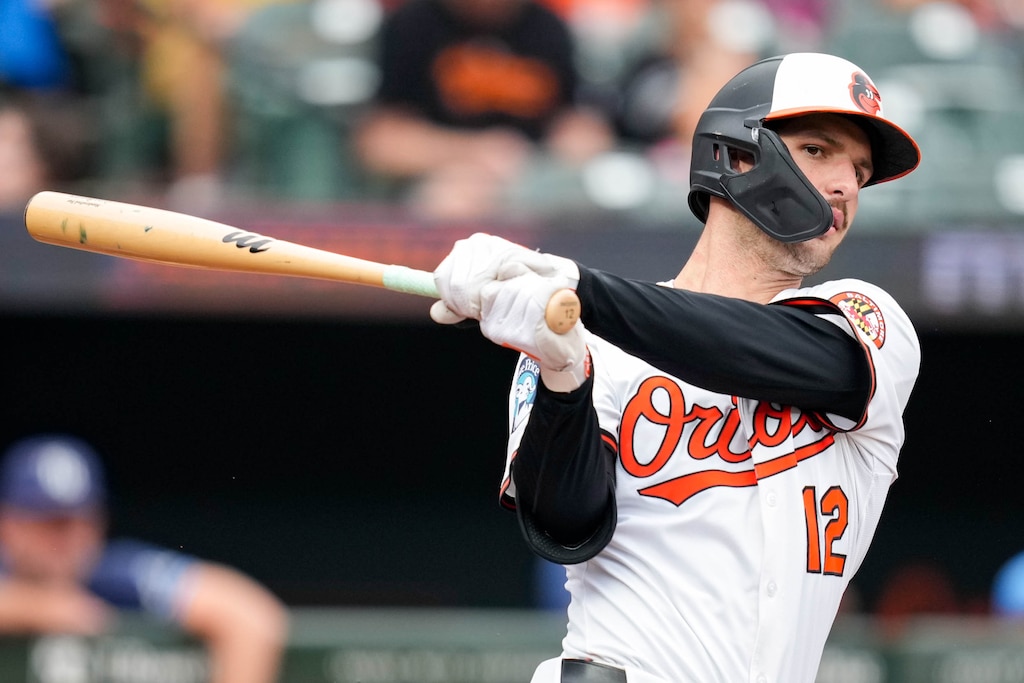
Orioles outfielder Dylan Beavers lines out in the second inning of a game against the Tampa Bay Rays on Sept. 25. (Ulysses Muñoz/The Banner)
Look at Beavers’ stats and performance, and it’s clear he was better this year than he’s ever been before. He had a .935 OPS and 18 home runs at Triple-A Norfolk and fared well after he earned his major league debut. That improvement was attributable to a timing adjustment he committed to, but I was heartened to see the scouting evaluation was that Beavers was a better player as well.
It wasn’t a consensus, but a majority thought he’d hit for enough power to be a useful corner outfielder. And considering Beavers’ long limbs and unorthodox swing, he’s always been a player scouts were tempered in their enthusiasm about, as it was hard to forecast what improvement looked like. Now that he’s shown them, it’s easier to believe in him.
Trey Gibson, arrow up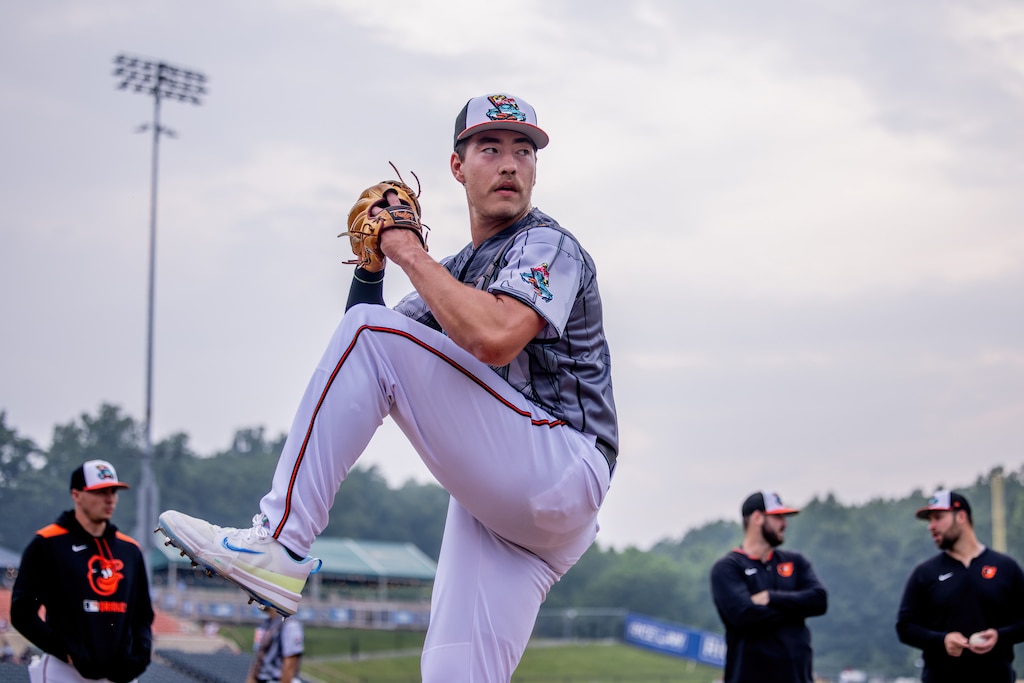
Trey Gibson had a 4.26 ERA across 26 starts at three different levels in 2025. (Joe Noyes/Chesapeake Baysox)
Orioles pitching prospects don’t get the benefit of the doubt from pro scouts, considering the team’s history, but Gibson was universally considered an arrow-up guy, and he impressed different evaluators in different ways. One said an Eastern League hitting coach relayed that Gibson was the best pitcher he saw all year. Many noticed how he mixed his pitches with confidence, missed bats consistently and commanded his pitches around the strike zone. And true to form for an Orioles pitching prospect, he’s adding pitches, with a cutter introduced in his last start of the season that should help round out his arsenal even further.
Nate George mostly matched the hype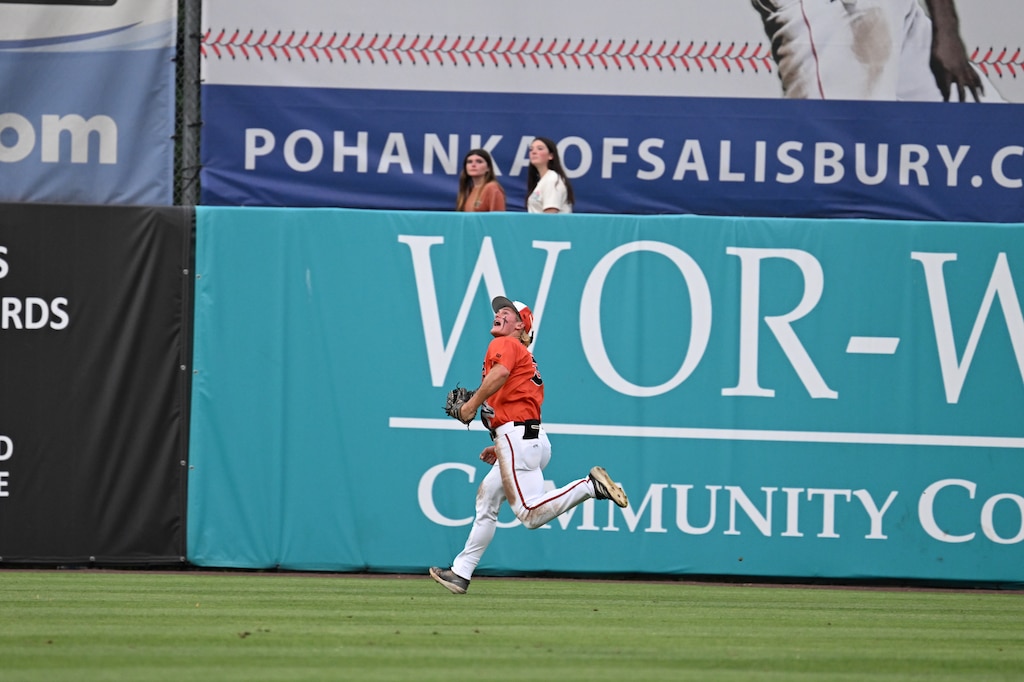
Orioles prospect Nate George tracks a fly ball in the outfield at Perdue Stadium in Salisbury, Maryland. (Courtesy of Joey Gardner Photography)
Any player is going to get high marks from evaluators for playing the game as hard as George does and being as athletic as he is. Many whom I spoke to, however, only saw him late in the season at High-A Aberdeen, where he struggled at first after lighting the FCL and Low-A Delmarva on fire. They had some questions about his swing and approach, but they all still thought he was good — and he ended up with a .773 OPS in 21 games in High-A, so it’s not as if he was bad. It’s just nice to have a marker for what improvement will look like in 2026.
Luis De León’s ground ball profile reminds many of Framber Valdez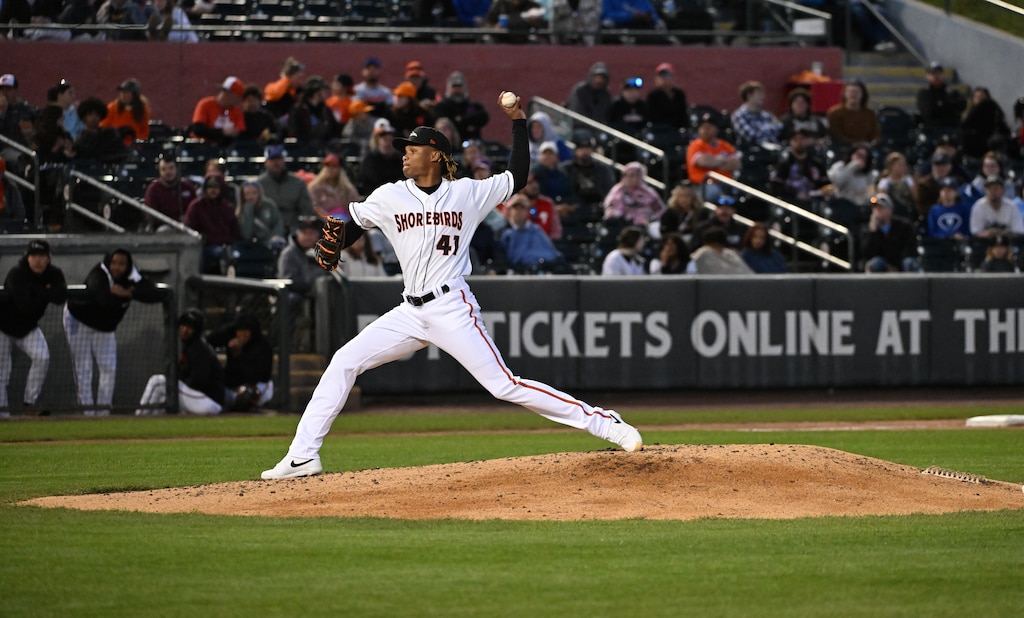
Luis De León pitches for the Delmarva Shorebirds. (Joey Gardner/Delmarva Shorebirds)
Valdez, the longtime Astros ace (and potential Orioles free agent addition), has a lifetime 61.8% ground ball rate that has driven a lot of his major league success. De León’s offerings have been pounded into the ground at a similarly high rate so far in the minors, and the hope as his command and execution continue to improve is that the ground ball profile is scalable. That sets a pretty high floor, and the fact that he also has a 16.1% swinging strike rate adds some fascinating upside.
Ike Irish is already one of those guys where you talk about his defense
Ike Irish scores a run for Auburn during an NCAA super regional baseball game against Coastal Carolina on June 6. (Stew Milne/AP)
The Orioles’ top pick in 2025 was widely regarded as a top college hitter in the draft, so it makes sense that he ended up selected by Baltimore. He’s going to get a chance to catch, with some first base and corner outfield mixed in — and there’s already chatter about whether him rotating as often as he will is going to allow him to get enough work behind the plate to have that be a potential major league position for him. The Orioles like to move guys around defensively, and they believe Irish can catch. How much he catches will probably depend on how right they are.
Esteban Mejia has a big arm
We’ve all seen the videos by now — he throws hard, and there’s potential for an impact arsenal. Pretty much everyone who has seen him has dreamed the biggest of dreams. He’s got the potential to be very, very good. I think this process just delivered a dose of reality about just how much has to happen for an 18-year-old throwing 100 mph over a 50-inning sample in the low minors to successfully develop into a big leaguer. It’s in there, it’s just a long way off.
Michael Forret is probably going to be the top pitcher this time next year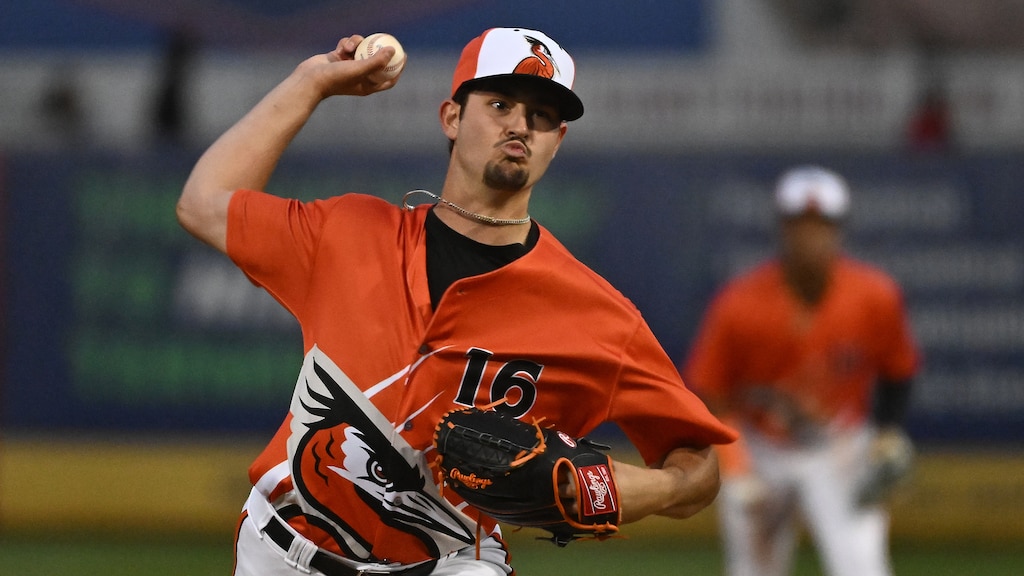
Michael Forret pitches for the Delmarva Shorebirds. (Joey Gardner/Delmarva Shorebirds)
Forret was pretty firmly in the same tier as Gibson and De León for everyone, but my own personal favorite of the group lagged behind the other two for many of the people I talked to. I just want to put my flag in the ground that if Forret pitches a full, healthy season, with his talent and control, he’s going to be among the top couple names on this list and firmly among the best pitching prospects in the minors.
Enrique Bradfield Jr. is unique, to say the least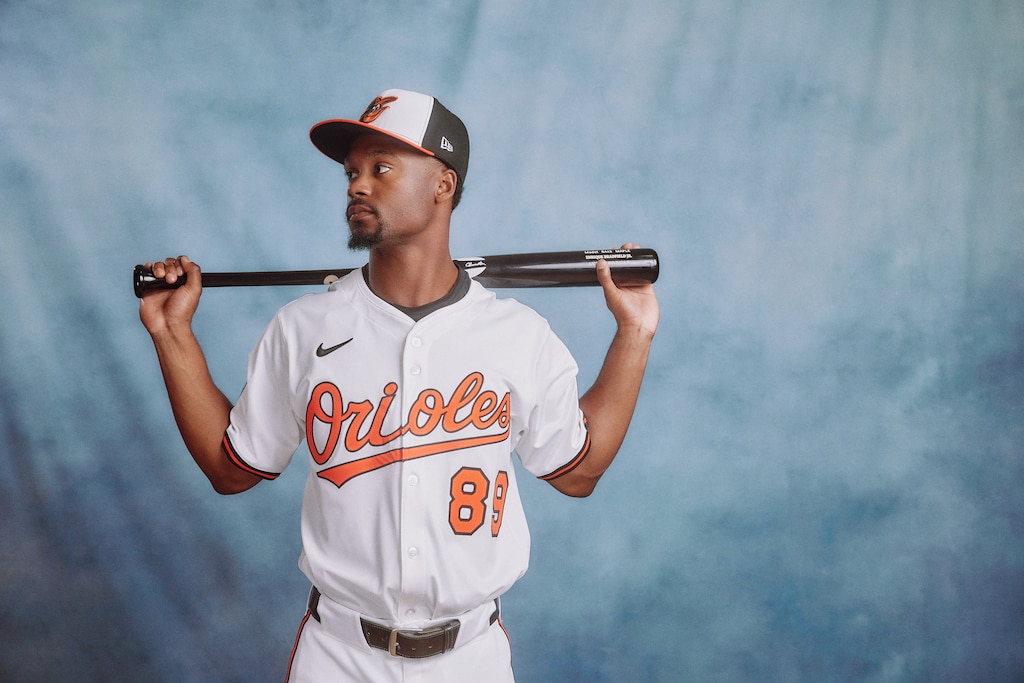
Outfielder Enrique Bradfield Jr. during the 2025 Baltimore Orioles Media Day at spring training. (Jared Soares for The Baltimore Banner)
Everyone understands that Bradfield’s value is going to come from his elite center field defense and base-stealing ability, and no one can really say what kind of offensive impact he’ll have in the majors. What’s clear is that he’s improved his quality of contact each of the last two years and is trending in the right direction. It’s also clear that even with minimal offensive impact, there’s a lot of major league value in Bradfield’s profile. It’s just not a neat translation to an exercise like ranking prospects.
Wehiwa Aloy might pop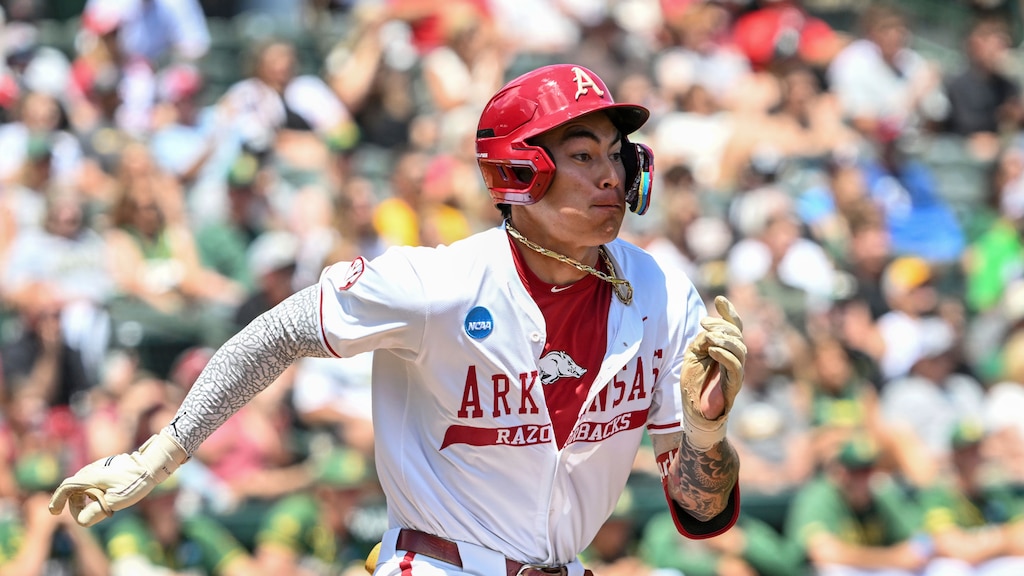
Wehiwa Aloy runs the bases for Arkansas during an NCAA regional baseball game against North Dakota State on May 30. (Michael Woods/AP)
In recent years, the Orioles have picked a handful of players who hit the ball incredibly hard in the air and also have some swing-and-miss to their game, only for the latter trait to hold them back. Aloy is the latest of this profile, and early returns are positive. He was the standout of last year’s draft group at Delmarva, and I think he’s going to benefit from the Orioles’ move from Aberdeen to Frederick for High-A. That league’s pitching is still going to challenge first-year players, but Frederick is a friendlier hitting environment and Aloy will be rewarded for his quality contact in a way no one was at Aberdeen. That’s going to make a difference.