
Brewer Fanatic recently examined Milwaukee’s positional depth at third base and shortstop. Readers can safely conclude that the current infield reserves are insufficient for a playoff-caliber roster in 2026. One more capable veteran could help prevent the offense from fading in October.
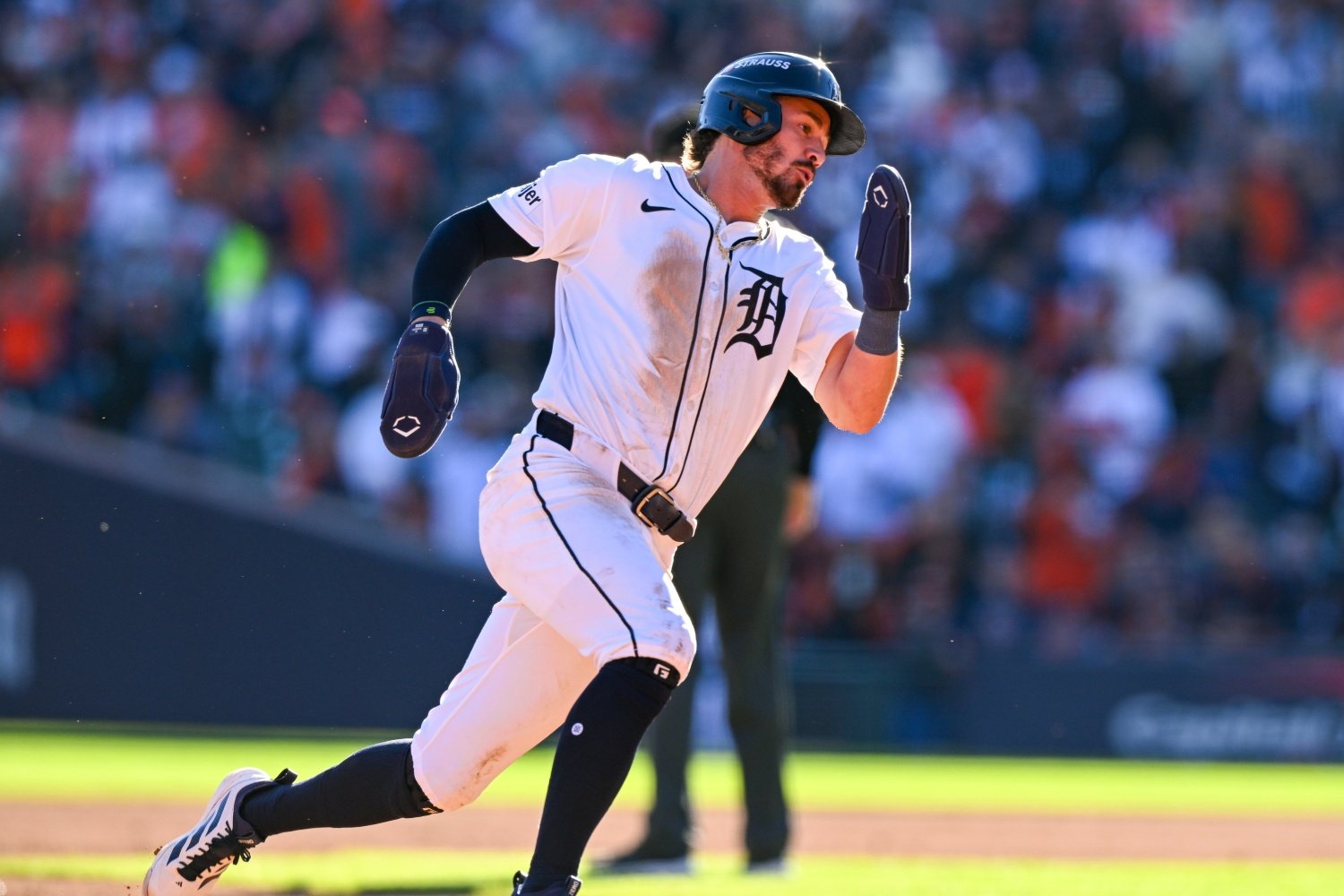
One strong candidate to be that veteran addition is Zach McKinstry, Detroit’s super utilityman. McKinstry’s career was unremarkable until last season. He had his best year ever in 2025, though, producing a .771 OPS while playing competent defense at every infield and corner outfield position. This performance earned him his first All-Star appearance and a Silver Slugger award.
Zach McKinstry, Performance Percentiles, 2023-25
Season
Batting Runs
Fielding Runs
Baserunning Runs
Bat Speed
Arm Strength
Sprint Speed
LA Sweet Spot %
2023
4
74
82
7
96
80
80
2024
20
70
92
7
58
79
87
2025
44
46
91
4
90
75
96
McKinstry runs the bases well, has excellent arm strength and frequently hits line drives and flyballs with launch angles that are favorable for hits and home runs. At the same time, he doesn’t hit the ball particularly hard in terms of exit velocity and bat speed. Furthermore, it is worth noting McKinstry’s extreme home/road splits in 2025. He had a .991 OPS at Comerica Park and .544 OPS everywhere else.
McKinstry, a left-handed batter, turns 31 years old in April. He has two years of team control and is projected to earn $3.5 million in arbitration this offseason. This could be a terrific fit for Milwaukee. Their top position-player prospects are unlikely to contribute in 2026, and McKinstry can provide needed depth through 2027.
Give Infielders a Break
Pat Murphy rarely rested his primary infielders in 2025. It was not until later in the year that Anthony Seigler would earn an occasional start in place of Caleb Durbin. The Brewers’ offense ran out of gas in the postseason. An extra day of rest for infielders a couple of times per month could help avert a late-season collapse or a postseason fade.
It was clear that Milwaukee did not believe it had a viable alternative to starting Joey Ortiz at shortstop in 2025. Players like Vinny Capra, Oliver Dunn, Owen Miller and Andruw Monasterio have not been legitimate threats to become everyday players anywhere on the infield. McKinstry is good enough to compete for at-bats with nearly anyone in the lineup.
Insurance Policy for Outfielders
The last thing Milwaukee needs is another left-handed-hitting outfielder. However, McKinstry has reverse splits: he’s hit better against left-handed pitching throughout his career, in limited appearances. He managed an .854 OPS against left-handed pitching (119 plate appearances) and a .746 OPS against right-handed pitching (392 PA) in 2025. Murphy doesn’t seem to mind keeping a few left-handed bats in the lineup, even against difficult left-handed pitching. McKinstry
Isaac Collins was terrific through August, but he fell out of favor after slumping to a .664 OPS in September and October. Collins also went hitless in nine postseason at-bats. It is unclear which version of Collins the Brewers can expect in 2026.
Garrett Mitchell should be healthy in time for spring training. If Mitchell becomes injured again, McKinstry would fill in nicely in left field with Jackson Chourio heading back to center field. Blake Perkins consistently provides Gold Glove-caliber defense and a .647 OPS, doing exactly that over the past two seasons. Brandon Lockridge figures to be a useful fifth outfielder, if that is more than faint praise. McKinstry doesn’t profile well in center field, but with Jackson Chourio and Sal Frelick each able to play there and Perkins as the defensive ace for the spot, he doesn’t need to. He can shield the team against another injury to Mitchell, and filter into the lineup against both lefties and righties to spell each of the regulars across the grass.
Christian Yelich played in only 19 games as a left fielder in 2025. At this point, it seems unlikely that Yelich will spend meaningful time in the outfield.
What Would it Take to Acquire McKinstry?
The underlying point of this article is that Milwaukee should consider trading from its pitching depth to provide affordable reinforcement for its position players. McKinstry could be an intriguing target. McKinstry doesn’t immediately strike one as being worth a high-leverage reliever in trade. If the Brewers could receive 500 plate appearances from a .750 OPS utility player who plays five positions, though, that might be more valuable than another 47 innings of relief from Trevor Megill.
Megill will play his age-32 season in 2026. Like McKinstry, he has two years of team control remaining. His performance could reasonably be expected to regress in 2026, and he dealt with arm trouble at the end of 2025. It is equally possible for McKinstry to revert back to a 1-WAR player. Even in his breakout campaign, he only had an 87 DRC+ (where 100 is average, and higher is better), according to Baseball Prospectus. His track record of success in the majors is short, and some of it might be illusory.
Even so, McKinstry has the potential to make the 2026 Brewers a more competitive team by being a credible short-term replacement for anyone on the field. He might cost them a strong prospect or an important relief arm, but he’s a tremendous baserunner; he might have power upside that has been hidden by the spacious Comerica Park; and the Brewers like patient hitters whom they can optimize with even better swing-decision training. The fit could be too good to pass up.