
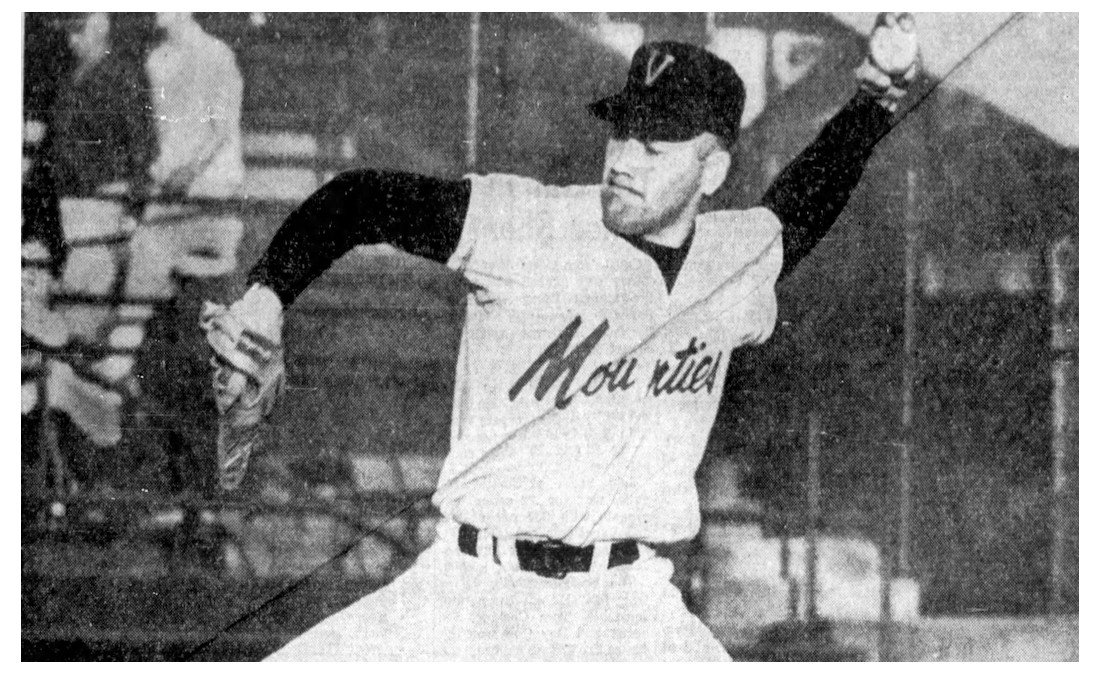
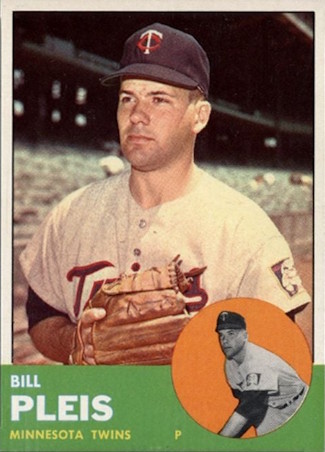
For six seasons, lefty Bill Pleis was a pretty reliable reliever for the Twins, contributing to the team’s 1965 world championship. Then, for nearly 40 years, he worked as a scout, doing his part to help bring future generations of ballplayers into pro baseball. Pleis died on October 17 at the age of 88. During his playing career, he pitched for the Minnesota Twins from 1961-66.
William Pleis III was born in St. Louis on August 5, 1937. When he was 15 years old and playing for the Glendale Bears in the Khoury League, he was part of a record-shattering game. Pleis and Bud Deprosky of Riverview Market combined for 60 strikeouts in a 14-inning game on August 24, 1952. Pleis fanned 35 batters in the game, which was called on account of darkness in a 0-0 tie. Though he surely threw more than 200 pitches in that game, Pleis continued to star in youth baseball and at Kirkwood High School. As early as 1955, scouts were beginning to take an interest in the teenage strikeout machine, including the local Kansas City Athletics. However, it was the Washington Senators who signed Pleis when he graduated in 1956. He spent a handful of games with the Louisville Colonels of the American Association, but the bulk of his summer was spent with the Orlando Sertomans of the Florida State League. The 18-year-old started 25 of his 26 games with Orlando and had an 11-12 record, with 193 innings pitched. He struck out 129 batters and walked 87.
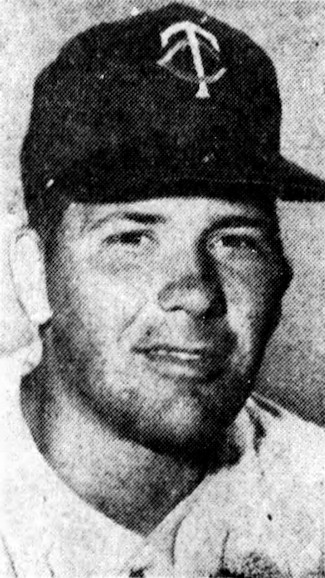 Source: The Times, September 1, 1964
As Pleis advanced through the minors, he was treated with all the care that minor-league managers tended to show young pitchers in the 1950s. That is to say, he was worked like a rented mule. Pleis’ manager with the 1957 Lafayette Oilers, Walt Dixon, frequently used him in both ends of a doubleheader. On June 11, he threw two 7-inning complete games against Baton Rouge by scores of 4-1 and 9-5. He finished 1957 with a 13-6 record for Lafayette and the Magic Valley Cowboys, logging a total of 187 innings. However, he only lasted 32 innings with the Allentown Red Sox in 1958 before retiring with a sore arm. After taking time off back in Missouri to recuperate, Pleis joined the Memphis Chicks of the Southern Association in 1959. He caught the eye of Memphis manager Luke Appling, who started him 24 times in 39 games. He went 8-8 with a 3.28 ERA, with 100 strikeouts.
During his sojourn through the minors, Pleis had been cut loose by the Senators and floated from team to team, including the Cubs and Red Sox organizations. That sore arm in 1958 probably contributed, and his size may have been a factor as well. At 5’10” and 170 pounds, he was considered too small to make the big leagues. A case of mistaken identity returned him to the Senators and their Sally League affiliate, the Charlotte Hornets, after a stint in the military in 1960. “Sherry Robertson [Washington farm director]. called me last June and asked if we could use another pitcher,” explained Charlotte general manager Joe Howser in 1961. “He said this fellow Pleis had been released by the Cubs, was a free agent and had approached one of our scouts about a job. The name rang a bell with me. I told Sherry, ‘Sure, I can use him.’ But when he got here, I was shocked that he was so small and so young. All the time I had been thinking about Jerry Pless, who once pitched for Jacksonville in the Sally League.” As it happened, Pleis turned into one of Charlotte’s best pitchers, working as a swingman. He won 10 games against just 4 losses and had a fine 2.73 ERA. Small or not, Pleis demonstrated that he could pitch. He made the move to the majors once the Washington Senators made the move to Minnesota to become the Twins.
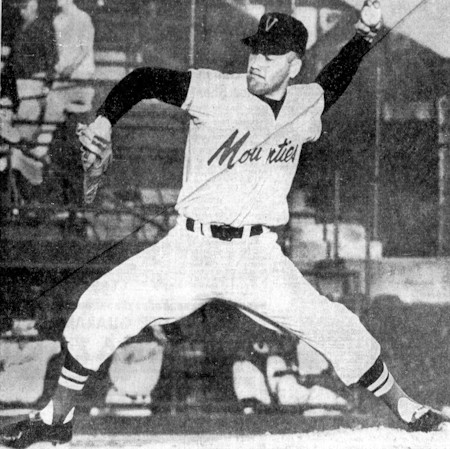 Source: The Vancouver Sun, June 8, 1962
Pleis was part of the very first Minnesota Twins Opening Day roster in 1961 and saw his first action in the second game of an April 16 doubleheader against Baltimore. The Orioles had tied the game at 4 in the bottom of the ninth and had the winning run at third base when Pleis was summoned from the bullpen to face Dave Philley. He retired Philley on a pop-up and then pitched a 1-2-3 tenth inning. Zoilo Versalles belted a 2-run homer in the top of the 11th to put Baltimore up 6-4, and Chuck Stobbs closed out the game to give Minnesota the doubleheader sweep. It also gave Pleis his first major-league win in his first game. He then recorded a save in his second game, throwing 1-2/3 scoreless innings against Boston to seal a 3-2 win. The Twins made their home debut on April 21 against the (new) Washington Senators and lost the first game of a doubleheader 5-3. In the next game, the two teams took a 4-4 tie into the ninth inning, and Pleis held Washington scoreless for 2 innings. Versalles ended the game with a walkoff sacrifice fly in the bottom of the tenth inning, and Pleis was the winning pitcher in the Twins’ first victory in front of a home crowd. The rookie held his own for a while but was returned to the minor leagues in the middle of May. The Twins brought Pleis back a month later, but he gave up 10 earned runs in 8-1/3 innings in June. He was knocked around quite a bit but settled down toward the end of the season and didn’t give up a run in his last 11 outings. In 37 games, Pleis had a 4-2 record with 2 saves and a 4.95 ERA. He walked 34 and struck out 32 in 56-1/3 innings. During the season, the Twins faced the Yankees often enough that Pleis got to pitch plenty against both Mickey Mantle and Roger Maris. The two sluggers only had one hit combined against the rookie pitcher during their quest to break Babe Ruth’s home run record — a Mantle single. Johnny Blanchard, though, took him deep twice. “He hit a curve in extra innings to beat me one day,” Pleis said after the season. “The next day he did it again. I finally learned my lesson.”
Pleis began 1963 with Triple-A Vancouver but was promoted to the majors in June. From there, he stuck with the Twins for the next three-and-a-half seasons as a steady left-handed bullpen arm. His first win of 1962 came when starter Joe Bonikowski was knocked out of the game in the second inning. Pleis took over and threw 7-1/3 innings, allowing 2 runs on 5 hits as Minnesota won 8-4. The strong outing led Twins manager Sam Mele to test Pleis as a starter. In his 4 starts, Pleis was 0-3 with a 6.75 ERA, but he was 2-2 with a 3.26 ERA as a reliever. His WHIP as a starter and reliever was 1.773 versus 1.121. Combined, Pleis had a 2-5 record and 4.40 ERA in 1962. He won a career-high 6 games in 1963, and 2 of those victories came as a starter. Pleis tossed an 8-hit complete game over Washington on June 28, striking out 6 on the way to an 11-4 win. But his best pitching still came from out of the bullpen, however. In the month of September 1963 alone, Pleis won 3 games in 8 relief appearances and lowered his ERA to 4.37 on the season. He threw a career-high 68 innings and walked 16 batters, or just over 2 per 9 innings, while fanning 37. Pleis recorded wins in his first two appearances of 1964 and added 3 saves and another win in the month of May. His control got the better of him at times during the year; his one loss of the season came on May 3 when he walked 4 Kansas City Athletics batters in the bottom of the ninth inning, leading to a 8-7 Twins loss. But he turned his season around by allowing 1 earned run over his final 15 appearances, totaling 15-2/3 innings. His fourth save of 1964, against Washington on August 31, came when Pleis relieved Mudcat Grant with a 2-1 lead in the eighth inning, with 2 Washington runners on base. He fanned pinch-hitter Fred Valentine to end the threat and pitched a scoreless ninth inning. “It was nice to figure in a tight game, and feel like you contributed something,” Pleis said after the game. “Honestly, I’d rather pitch in a tough game where every pitch means something.” The Associated Press coverage of the game put Pleis’ performance at the forefront, though the writer couldn’t resist taking a shot at the pitcher’s height by introducing him as “Stubby Bill Pleis.” The season-ending scoreless string left him with his first sub-4 ERA — 3.91, along with a career-high 42 strikeouts.
The Twins, to this point in their history, hadn’t done much to excite the fans in Minnesota. That all changed in 1965, when the team won 102 games and took the Los Angeles Dodgers to seven games before falling in the World Series. Pleis saw his greatest success as a pitcher, with a 4-4 record, 4 saves and 2.98 ERA in 41 games, including 2 starts. Though Pleis’ peripheral stats weren’t great (he struck out fewer people than in previous seasons and walked more), but he, Al Worthington and Johnny Klippstein were the only three Twins relievers with an ERA under 3. Pleis made one appearance against the Dodgers in the World Series. It came on Game Four, when the Dodgers won 7-2. He pitched the eighth inning and gave up a solo home run to Lou Johnson to wrap up the scoring.
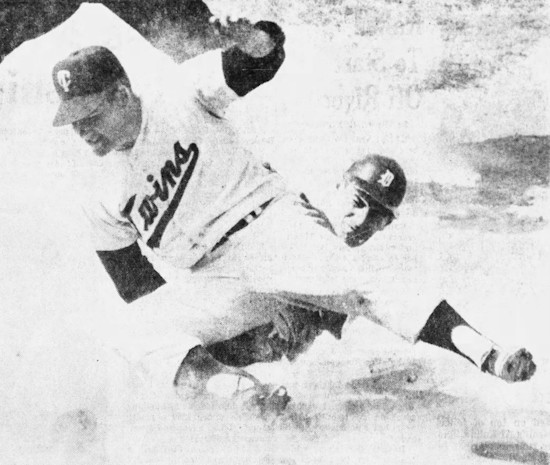 Pleis attempts to stop Detroit’s Dick McAuliffe from scoring after a wild pitch in a spring training game. Source: The Tampa Tribune, March 13, 1966.
Pleis understood his role as a middle reliever didn’t result in the most news coverage or the gaudiest statistics. But he hoped that his track record would give him a better salary when he prepared to negotiate with Twins owner Calvin Griffith ahead of the 1966 season. “Pitching this way, facing one or two batters, I don’t win a lot and I don’t lose a lot. And I don’t get many saves,” he said. “But there were 15 or 17 games last season in which I got the batter out when a base hit might have beat us. Only that doesn’t show in the statistics.” Pleis and the Twins came to terms, but after spring training, the team sent him to Triple-A Denver. It was Pleis’ first return in the minor leagues since 1962, and he didn’t fare well in the Mile High City. He made 18 appearances, including 5 starts, and had a 5.49 ERA. Pleis returned to Minnesota in the second half of the season and made a total of 8 appearances, with a 1-2 record and 1.93 ERA in 9-1/3 innings. His one win came against the White Sox on September 6; he threw 3 perfect innings with 3 strikeouts in a 12-inning, 4-3 victory. After the season, Pleis was released. He pitched for Hawaii in 1967 and Louisville in 1968, but shoulder injuries limited his effectiveness. He also spent time as a pitching coach for Buffalo in between his stints as a player. Those seasons were his final ones as an active player, but Pleis still spent some time on a major-league roster. He ended his time with the Twins a few days away from qualifying for the major league ballplayers’ pension plan. So as the 1967 season wore down, Griffith signed him to a major-league contract and let him sit on the bench long enough to qualify. Griffith has his faults, but he did that with other Twins veterans who were short of getting their pension, including Carroll Hardy, Julio Becquer and John Goryl.
Pleis played in 190 games over parts of 6 seasons with Minnesota, and he had a 21-16 record with 13 saves. His ERA was 4.07, and he struck out 184 and walked 126 in 280-2/3 innings. His career WHIP was 1.407, and his ERA+ was 94. Additionally, he had a 54-53 record across 10 minor-league seasons.
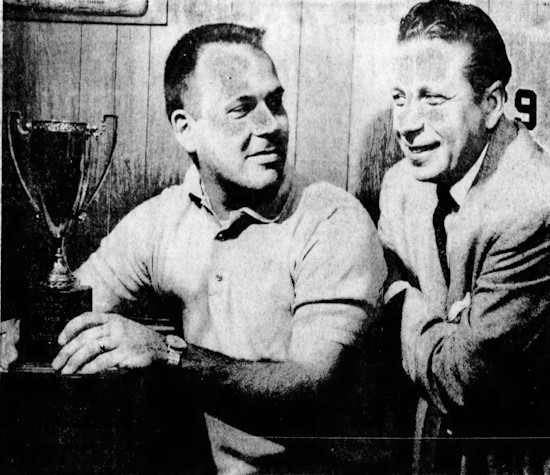 Pleis, left, shows scout Bill Messmann a trophy he won in a golf tournament. Messmann was the scout who signed Pleis to the Minnesota Twins and then helped the pitcher launch his own scouting career. Source: St. Louis Post-Dispatch, February 6, 1966.
Pleis spent a year away from baseball, and then the scout who signed him to the Twins, Bill Messmann, helped him enter the scouting profession in 1971. Pleis spent 5 years as a St. Louis-based area scout for the Houston Astros. One of his earliest signings was Paul Siebert, son of former All-Star and college baseball coach Dick Siebert. Paul had a 6-year pitching career with the Astros, Padres and Mets. In 1977, Pleis started a 30-year scouting career with the Los Angeles Dodgers. His territory initially included Iowa, Illinois, Arkansas and Missouri, and he drove about 35,000 miles a year, according to a 1985 interview with the St. Charles Post. “They think it’s easy; all you have to do is sit around and watch ball games,” he said about the perception of a scout’s job. “But it’s the toughest job in baseball.” Pleis later moved to Florida, and he scouted and signed two Dodgers first-round draft picks, Kiki Jones and Jamie McAndrew. He retired in 2006.
When Plies wasn’t scouting, he watched his son, Scott, have a rather interesting pro baseball career of his own. Scott played for 5 seasons in the Toronto and St. Louis organizations, and he pitched, caught, and played second base, third base and the outfield. Pleis and his late wife, Susan, had three children, and all of them had successful careers in athletics. Scott turned to scouting after his own playing career ended, and he once served as the director of amateur scouting with the Detroit Tigers. Steve took up golfing — another passion of Bill’s — and has played on several pro tours. Daughter Stacey has run a successful gymnastics business for more than 30 years. In addition to his three children, Pleis is survived by a large extended family of grandchildren, great-grandchildren, and nieces and nephews.
For more information: Pitman Funeral Home
Follow me on Instagram: @rip_mlb
Follow me on Facebook: ripbaseball
Follow me on Bluesky: @ripmlb
Follow me on Threads: @rip_mlb
Discover more from RIP Baseball
Subscribe to get the latest posts sent to your email.