
The Yankees invested a heavy amount of trade capital to build a super bullpen in 2025, dealing away a dozen players to bring in Devin Williams, Fernando Cruz, David Bednar, Camilo Doval, and Jake Bird between last winter and the trade deadline. Suffice to say their efforts did not pan out, the relief corps representing the team’s weakest unit during the regular season. Williams imploded in almost a fifth of his appearances, Cruz dealt with injury, Doval struggled to find the strike zone until the playoffs, and Bird was so bad he was optioned to Triple-A and left off the postseason roster entirely.
The bullpen will have a new look in 2026 with Williams leaving in free agency to join the Mets and Luke Weaver remaining unsigned. What’s more, the team non-tendered Mark Leiter Jr., Ian Hamilton, Jake Cousins, and Scott Effross already this winter, giving them precious few options currently on the roster. Bednar, Doval, and Cruz represent a decent trio to finish out games, but there is a clear need for multiple reinforcements. With the reliever market already beginning to move, will we see the Yankees’ first foray into free agency in the coming days, and could Pete Fairbanks be a name they target?
2025 Statistics: 61 games, 60.1 IP, 2.83 ERA (145 ERA+), 3.63 FIP, 3.76 xFIP, 24.2% K%, 7.4% BB%, 1.04 WHIP, 1.0 fWAR
2026 FanGraphs Depths Charts Projections: 60 games, 60 IP, 3.56 ERA, 3.60 FIP, 25.5% K%, 8.5% BB%, 1.23 WHIP, 0.7 fWAR
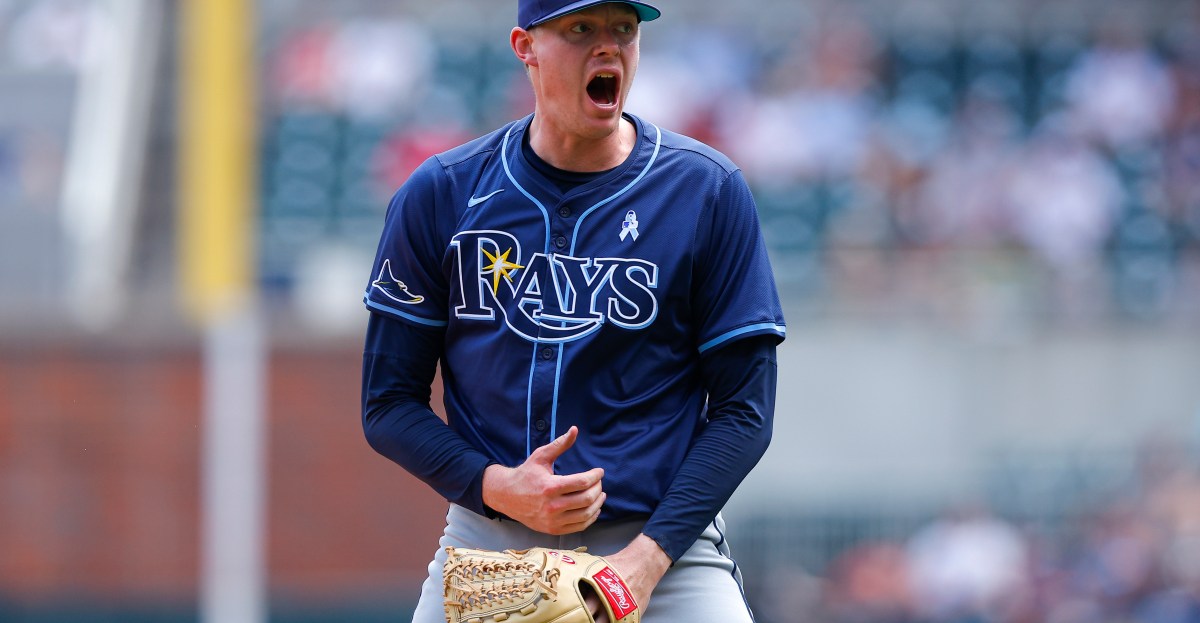
Over the last six seasons, Fairbanks has been one of the most consistent relievers in baseball. Among qualified relievers during that span, he ranks among the top-30 in fWAR (5.5), expected ERA (2.91), FIP (2.95), strikeout rate (30.1-percent), and average fastball velocity (97.9 mph). He set new career highs in appearances (61) innings (60.1) and saves (27) in 2025 and has recorded at least 23 saves in each of the last three campaigns. The Yankees are certainly familiar with the erstwhile Ray having faced him 28 times, with Fairbanks pitching to a 3.33 ERA with 27 strikeouts across 24.1 innings in those divisional tilts.
His calling card is his four-seam fastball, a high spin weapon that rides above the bat when thrown at the top of the zone. For most of his time in MLB, he was a two-pitch pitcher, backing up the elite heater with a nasty slider that racked up well in excess of a 30-percent whiff rate for his career. That began to change in 2025 with Fairbanks throwing a changeup and cutter each about five percent of the time to get hitters off his main offerings of fastball and slider.
Despite the still excellent results in 2025, there are signs that he is in the nascent stages of his decline. He has lost almost two mph and two-and-a-half inches of induced vertical break off the fastball since the peak of his powers. The result is a cratering of his strikeout ability over the last two seasons — after averaging a 34.8-percent strikeout rate between 2020 and 2023, he has posted a 24-percent strikeout rate across the last two campaigns. His average exit velocity has gone from about 87 mph to 89.5 mph and the proportion of batted balls that are pulled in the air has jumped from roughly 13-percent to 17-percent. The sum total of hitters pulling the ball in the air hard has seen his home run rate jump from 0.52 per nine to 0.94 per nine.
It’s fair to question the effect that injuries have had on this trend, the 31-year-old righty having undergone a pair of Tommy John surgeries and tearing his lat in 2022. Sixty-one appearances in 2025 appears to be the outlier rather than a new norm, Fairbanks typically making 45-50 appearances in seasons of full health. FanGraphs’ Depth Charts projection system disagrees, pegging him for another 60 appearances in 2026, albeit with an ERA almost a full run higher than last year.
Interest in Fairbanks is certainly starting to pick up, with the Tigers and Diamondbacks rumored as suitors in recent days. He became a free agent when the Rays declined the $11 million option they held for 2026 as part of the three-year, $12 million extension he signed after the 2022 season. Voices around the industry expect him to exceed that guarantee comfortably, forecasting a deal similar to the two-year, $28 million pact Ryan Helsley signed with the Orioles. If there is anything this early business in the reliever market has shown us, it’s that teams are still willing to pay top dollar for closers despite significant red flags as seen in the outlays for Williams and Helsley.
While the need in New York obviously exists, the team generally has not allocated significant payroll toward the bullpen after getting burned on the extravagant deals handed out to Aroldis Chapman, Zack Britton, and Adam Ottavino at the end of the last decade. $14 million per year for a reliever with significant arm history showing signs of decline on the wrong side of 30 may not be the most wise allocation of funds, especially given the Yankees’ situation. Owner Hal Steinbrenner has not committed to raising payroll above the $319 million figure he quoted for 2025 — in fact he openly stated that it would be “ideal” for the team to lower payroll in 2026 after years of repeating that he does not believe a payroll above $300 million is sustainable. That leaves limited funds to add another starting outfielder and reinforcements to a rotation that will be without Gerrit Cole, Carlos Rodón, and Clarke Schmidt at the start of the season. The Yankees need and will almost certainly add a reliever, but I’m not sure they will be swimming in the end of the pool where guys of Fairbanks’ ilk reside.