
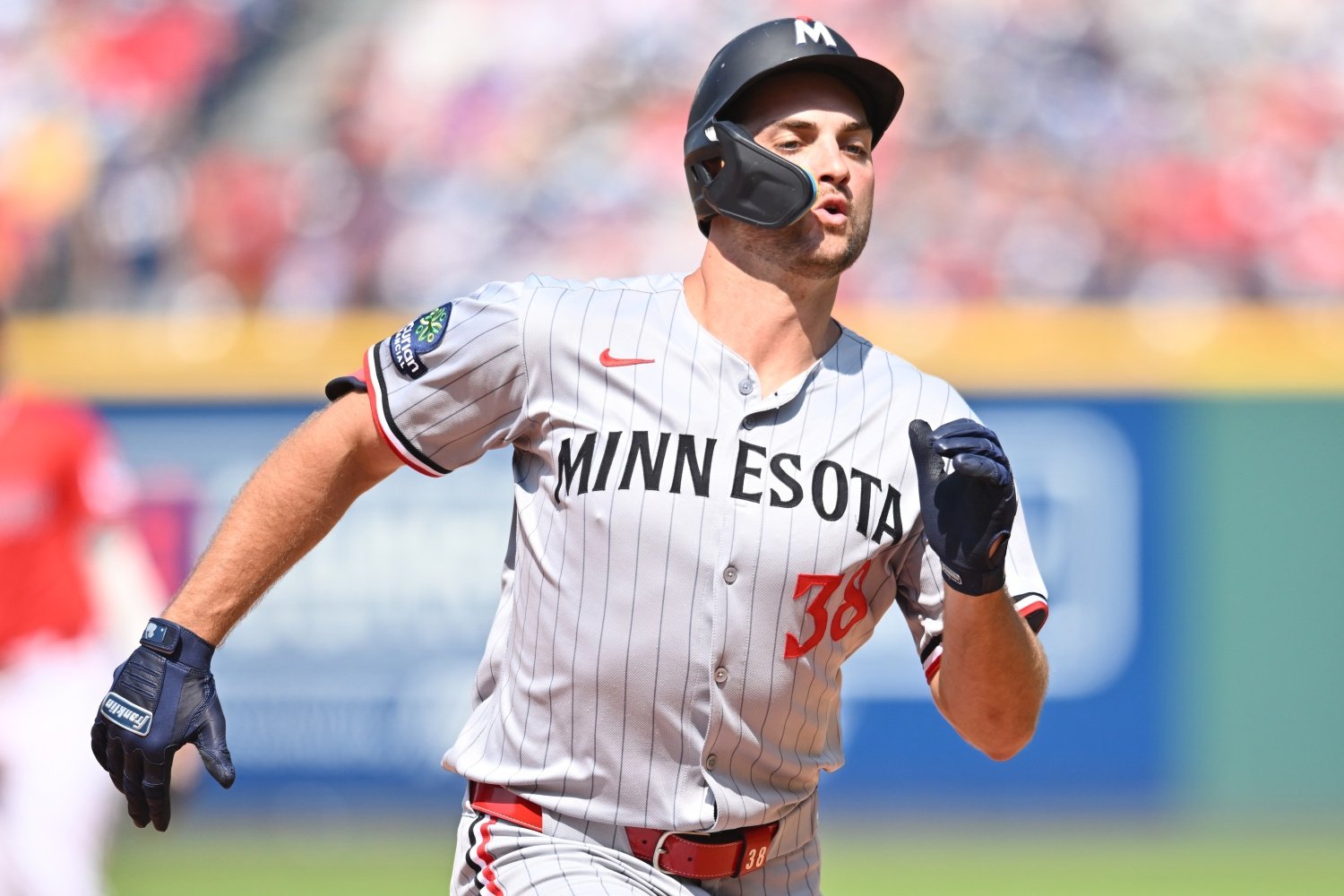
The Twins have had no shortage of left-handed hitting corner outfielders for years, but as they’ve continued to amass this style of player, their depth has turned into a logjam. With much of the roster in need of significant upgrades, it’s time to either look to deal from this depth chart or (at the very least) stop targeting left-handed corner outfielders with their limited resources.
The Twins did not fully prioritize prospects during their historic trade-deadline selloff in 2025. Instead, they chose to focus on players who were at or near MLB-ready status. They seemed especially keen on starting pitching and left-handed-hitting outfielders. In terms of pitchers, there’s no such thing as too much depth. On the position player side, however, it made less sense.
Despite having both current and future depth in the corner outfield, they acquired James Outman, Alan Roden, and Hendry Mendez, all left-handed-hitting outfielders who will likely spend most of their time in the corners. We will likely see all of them in 2026, as they filter into the majors and share playing time with fellow members of the brotherhood Matt Wallner, Trevor Larnach, Kody Clemens, Emmanuel Rodriguez, and Walker Jenkins.
Despite the playing time being difficult to project, the Twins tendered a contract to Trevor Larnach this winter, though whether he remains on the roster heading into 2026 remains to be seen. A strange detail that has surfaced is that the Twins’ hangup on trading Joe Ryan at the deadline to the Red Sox was reportedly Boston’s refusal to include an MLB-level outfielder in the deal. We can now assume this means either Jarren Duran or Wilyer Abreu—both of whom are left-handed-hitting corner outfielders whom Boston is currently open to dealing.
It seems as though the Twins cannot help themselves when it comes to this type of player. Despite significant questions across the roster, they appear hyper-focused on maintaining (and even adding to) the corner outfield endlessly.
Acquiring an established, borderline All-Star-level player would undoubtedly be an upgrade over the current group, but why spend limited resources on doing so? The current logjam includes plenty of players of all ages, with interesting skills that could translate into strong production. Wallner has shown everyday player upside in the past. They just targeted Roden, and clearly viewed him as a regular in left field. There will be no shortage of names who can at least rotate in and out, not to mention the top prospects set to debut at some point in 2026.
Walker Jenkins and Emmanuel Rodriguez are in Triple-A St. Paul, and despite injury concerns in their past, they’re likely a couple of good months away from kicking down the door to the majors. Though it’s always a risk to go into a season leaning on the production of players who have yet to debut, you still want the at-bats available to them when they’re ready. If Jenkins and Rodriguez are ready midseason, the Twins can likely find creative ways to get them in the lineup. Continuing to add MLB-level players to that depth chart would make things increasingly difficult.
When it comes down to it, it’s a question of asset management. Of course, it’s difficult to say we don’t want to see the Twins add a good player at any position. Still, if they’re going to spend the kind of capital it would take for such a deal, why do it at arguably the deepest position in the organization? They could go into the season with the current group of left-handed corner outfielders with reasonably high expectations, even if two or three get injured throughout the year. Is that really the part of a 92-loss roster the front office should be hell bent on upgrading?
Nor is this just about proactively adding to that group. Minnesota was (wrongly, it now seems) steadfast in their expectations when shopping Max Kepler in trades over the final few years of his tenure with the team. They surprised everyone by tendering a contract to Larnach. They believe this player type has a certain baseline value—a high offensive floor, especially because they take up the larger side of a theoretical platoon; middling but non-zero athleticism; and a chance to find power—that has led them to cleave too tightly to some of them in recent years.
Regardless of the Twins’ short and long-term plans, they should be content with their group of left-handed corner outfielders. They’ve drafted, signed, traded for, and developed a long list of names in this group. If they’re confident in their abilities, they should have more than enough options to cycle into this role for years to come. They have talent and upside across all ages, which is more than they can say for several other positions at the MLB level and in the organization as a whole. They should, indeed, be moving players like this out, rather than bringing any more in.
It’s time for the Twins to stop throwing their limited assets at left-handed corner outfielders and take a look at the rest of the roster. Do you agree?