

As the Phillies sought to expand their reach in Japan in 2022, the list of candidates to fulfill the club’s scouting vacancy ran about a dozen names long.
International scouting director Derrick Chung interviewed all of the prospective hires within a couple days of arriving in Tokyo that summer. But before spending the rest of his trip scouting professional players, he decided to watch an independent baseball tryout in the suburbs.
He didn’t find a player there. Instead, Chung found his scout.
Chung was surprised when Tora Otsuka ran up to him from the outfield and spoke in perfect English. Otsuka was just as surprised to see Chung because major-league scouts rarely attend independent league events.
Otsuka, son of former MLB reliever Akinori Otsuka, spent most of his childhood in California and played baseball for the University of San Diego. He still saw himself as a player. Chung saw Otsuka as a scout, setting him up for interviews before hiring him to scout Japan full-time for the Phillies a few months later.
“The biggest thing in scouting is an internal motor,” said Blake Crosby, the Phillies’ assistant international director of scouting. “And Tora’s motor is always running. He wants to be better every single day. He asks a lot of questions. He’s humble. He’s eager to learn and get better. … On top of that, his life experiences just make him a great fit for this role.”
A family legacy in MLB and NPB? Check. Fluent in Japanese? Check. Playing experience? Check.
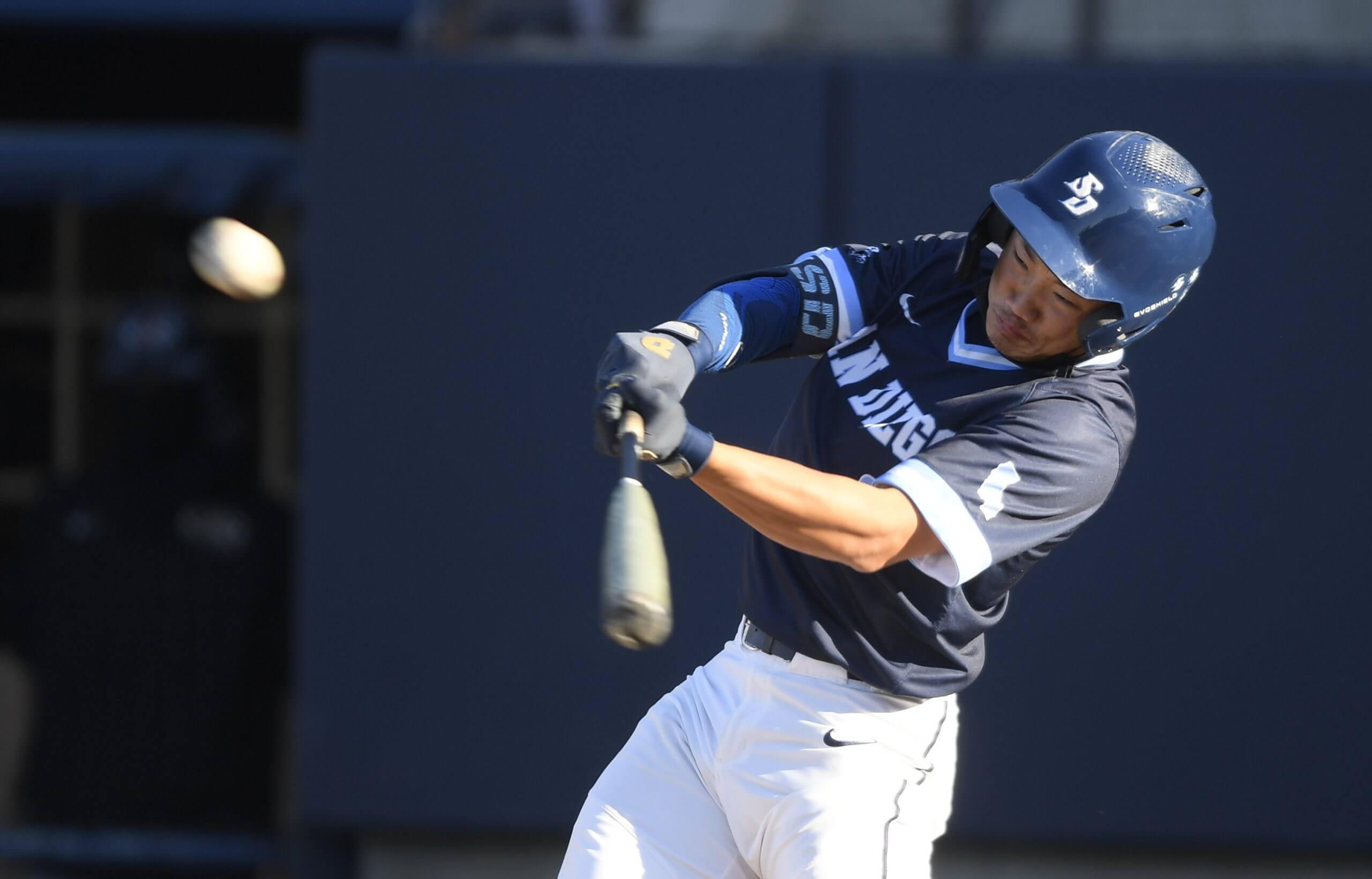
Tora Otsuka bats in 2021 for the University of San Diego. (Denis Poroy / Associated Press)
Hiring Otsuka in November 2022 was among several steps the Phillies took to revamp their scouting operation in Japan, but significant challenges remain as the club seeks to tap into the country’s talent-rich pipeline. Now, three years after Otsuka joined the organization, those involved in the Phillies’ international scouting operation feel they have the infrastructure necessary to compete for top players.
There is buy-in from managing partner John Middleton and president of baseball operations Dave Dombrowski. There are multiple scouts on the ground: Otsuka and part-time scout Koji Takahashi, with assistance from Taiwan-based cross-checker Youngster Wang. Top international scouting personnel, including Crosby, Chung and assistant general manager Jorge Velandia, travel to the country several times a year.
“I think we have a really good pulse,” Dombrowski said at last month’s GM meetings. “When I first joined the Phillies (in 2020), when we would have our meetings, I would say, ‘I don’t really have a very good pulse on that player. I’m really not sure.’ I don’t feel that way anymore. I think we have very thorough information.”
The groundwork is there, but that is only half the battle. A Japanese-born player has not competed for the Phillies since 2008, and just two — Tadahito Iguchi and So Taguchi — have played for the club. Neither came straight from Nippon Professional Baseball: Iguchi was acquired in a trade in 2007 and Taguchi signed with the Phillies that December after playing six seasons in St. Louis.
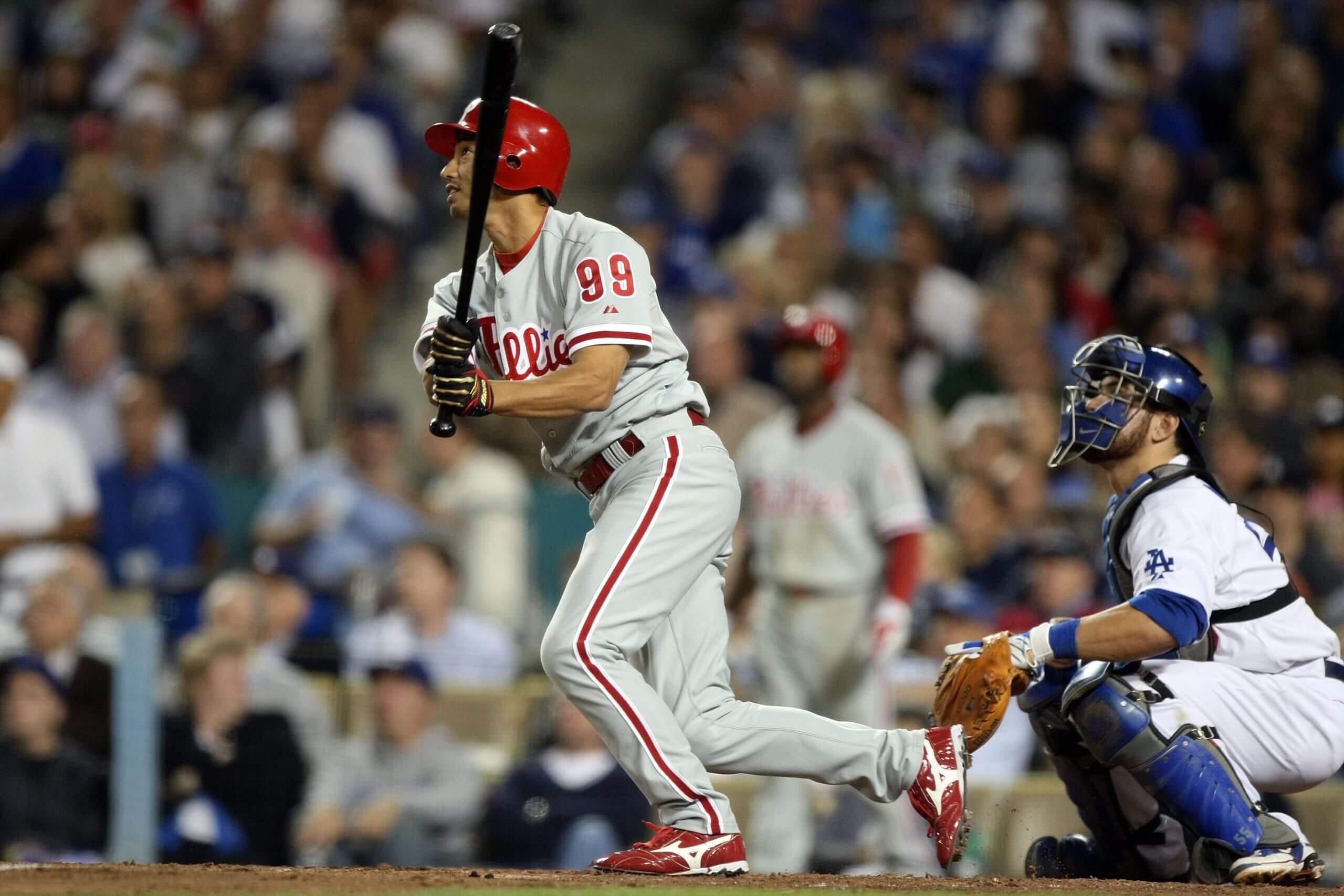
So Taguchi hits during Game 4 of the 2008 NLCS. He is the last Japanese native to play for the Phillies in the majors. (Jed Jacobsohn / Getty Images)
It has not been for a lack of trying. Shohei Ohtani said he was interested in taking a photo with the “Rocky” statue, but not playing in Philadelphia when he first came to MLB in 2018. World Series MVP Yoshinobu Yamamoto chose the Dodgers over the Phillies’ $300 million-plus offer when he was posted in 2023. The Phillies were interested in meeting with Roki Sasaki last offseason, but he declined.
The Phillies’ outreach to these players coincided with an expansion in the international scouting department, which Chung said began under senior advisor Sal Agostinelli and former assistant GM Bryan Minniti’s leadership in 2017. Velandia built on their work after the pandemic, when the club was without a scout in Japan for over a year as its on-the-ground scout chose not to return.
Still, there are several obstacles the Phillies face: a lack of legacy in Japan, no direct flight from Philadelphia to Tokyo, a smaller Japanese population in Philadelphia than other major U.S. cities, international communities knowing less about the city compared with Los Angeles or New York.
Much of it, Otsuka said, can be overcome if just one Japanese player signs with the Phillies and competes in the major leagues.
“When you’re a kid, you grow up watching a player and it makes you feel, ‘Oh, I want to play for the Phillies one day,’” Otsuka said. … Like the Dodgers — seeing Ohtani, Yamamoto, Sasaki on that team, and all these kids are watching them. I think that gives a lot of Japanese players or kids a dream to want to play for that certain team. But with the Phillies, there’s not really a track record of having big players. I know it’ll take some time.
When pitching Philadelphia to players, Otsuka, 27, tells them more about the city: its Japanese restaurants and communities, the passionate fan base, the Phillies’ success, the nearby golf courses.
It has not worked out on the major-league level. But the pitch resonated with Koyo Aoyagi, whom the Phillies signed to a minor-league contract in January with a non-roster invite to big-league camp. Aoyagi pitched in 19 games with Triple-A Lehigh Valley and four with Double-A Reading before his release on July 23, finishing with a 7.22 ERA across 33 2/3 innings (23 appearances, six starts). He averaged 10.16 walks per nine innings as opponents slashed .250/.444/.435 against him.
Much of Otsuka’s job after the signing had less to do with baseball. He interviewed and chose an interpreter for Aoyagi, traveled with him to spring training and shared dinners with him. Otsuka’s goal was to make Aoyagi feel comfortable in his transition to the organization.
“It’s very easy to put things on paper like, ‘Oh, this is where the restaurants are,’” Crosby said. “‘This is where the dog park is.’ For us to get a trial of what (players are) actually going to need was a good experience. It taught us there’s real adjustments that are going to happen with players that come over from Japan: some physically, some mentally. You just learn from every player.”
Two years before Aoyagi, there was Yamamoto. Otsuka was one year into the job when the Phillies pursued the three-time Pacific League MVP and offered him more than $300 million. The scout knew everything had to be on-point — the presentation, videos, the interview. But Yamamoto chose to join fellow Samurai Japan teammate Ohtani in Los Angeles, setting the stage for a Dodgers dynasty that took down the Phillies in the 2025 National League Division Series.
When the Dodgers play, much of Japan watches. The first two games of the 2025 World Series averaged 10.7 million Japanese viewers despite a 9 a.m. local start time.
So, could the Phillies playing the Dodgers in the NLDS lead to greater awareness of the club in Japan?
“It was a tough loss, but I think it was a very good series and the fact the entire country of Japan was closely watching this series — there’s no better advertisement than that,” Chung said.
If not via television, the Phillies are working to make their presence known in the Pacific Rim in other ways. The club spoke with NPB executives and the KBO commissioner in separate meetings at Citizens Bank Park last year, sharing information about how the Phillies operate from the baseball and business sides.
And being one of about half of the MLB organizations with a full-time scout on the ground in Japan is helpful. Otsuka, based in Tokyo, travels to watch NPB and amateur teams nearby, though he will sometimes visit Hiroshima and Sapporo. Takahashi mainly handles Osaka. The two also run pitching tryouts each year, which Chung said allows the organization to look for talent in an unconventional way.
The basics of scouting remain the same: finding data, watching lots of games, seeking information about makeup. Until NPB players are posted, MLB scouts cannot communicate with them. So, they find information in other ways: through watching games, of course, and talking with coaches, team employees and family members.
Crosby said the club operates with no assumptions about where a player might want to live or whether he wants to come overseas. Though uncommon, a few Japanese amateurs have elected to come to the U.S. to play rather than go into the NPB draft, so keeping an eye on high school talent in Asia has become even more important.
“If they tell us at the end of the day, ‘Yeah, I want to go to NPB’ or ‘I want to play in KBO,’ then we have to live with that decision,” Crosby said. “But we don’t want to assume that’s their decision because you never know the one or two kids that say, ‘You know what? I really don’t want to do that. I want to come first to Major League Baseball.’”
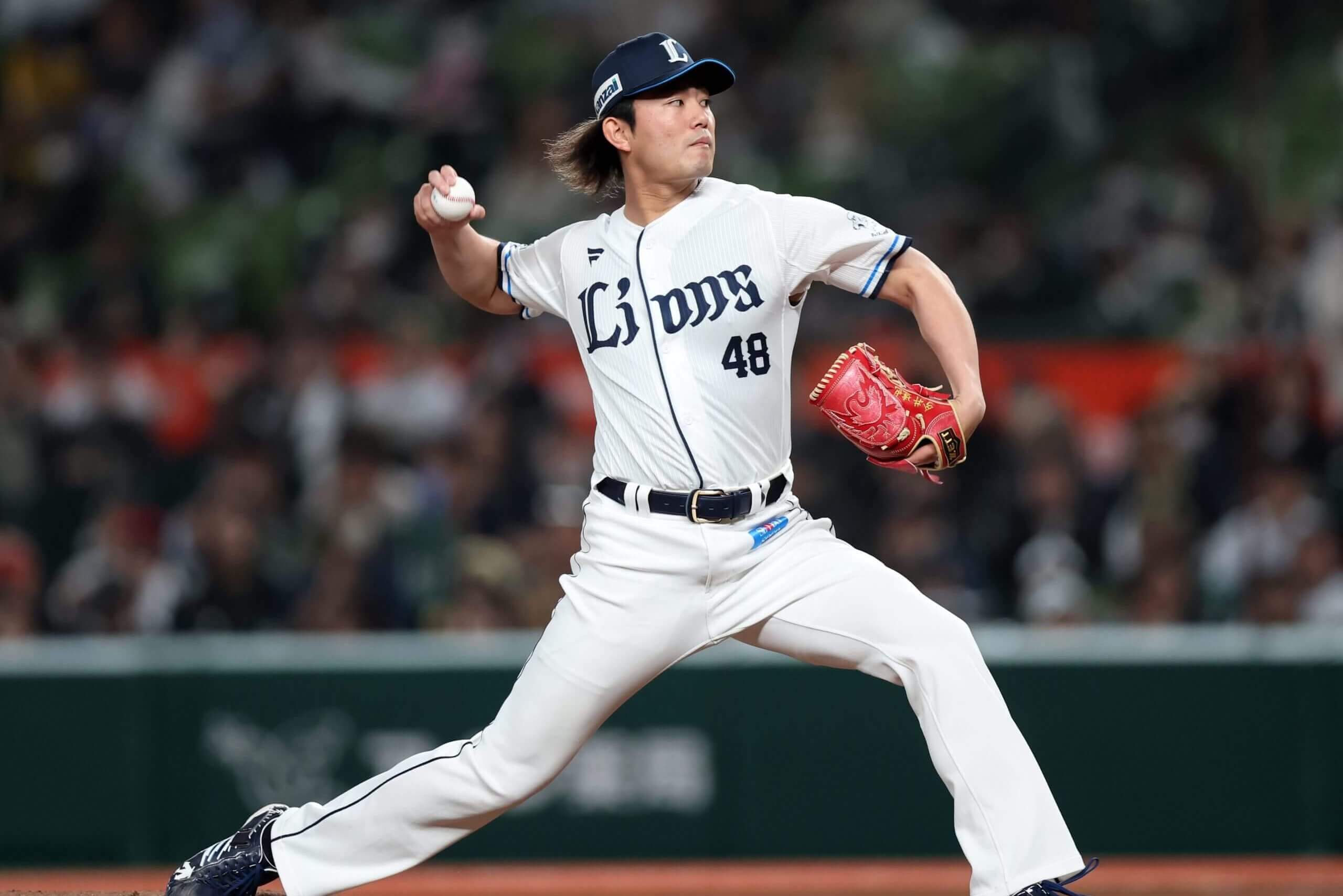
Tatsuya Imai, 27, is one of the top starting pitchers on the free-agent market. (Sports Nippon / Getty Images)
There’s a trio of strong players who have been posted this winter: infielders Munetaka Murakami and Kazuma Okamoto, and pitcher Tatsuya Imai. None of them is necessarily a clean fit for the Phillies. Murakami and Okamoto are corner infielders — positions the Phillies have covered – and the club already has a strong rotation. The Phillies plan to engage in the Japanese market this winter but might not be the highest bidders or find their interest to be mutual, according to major-league sources.
So, this might not be the offseason where the Phillies break through in Japan. And, even with a revamped scouting operation, a breakthrough could take time. Until then, the approach remains the same: scouting all over Japan, informing players about Philadelphia and hoping someone chooses to be the first.
“The mindset we have right now is, ‘Look, we know what we’re up against,’” Crosby said. “But it’s a no excuse mindset that Jorge and Derrick have instilled in us. It’s like, ‘Hey, we’re going to go after every player like we have the best shot to get them.’”
The Athletic’s Matt Gelb contributed to this report.