
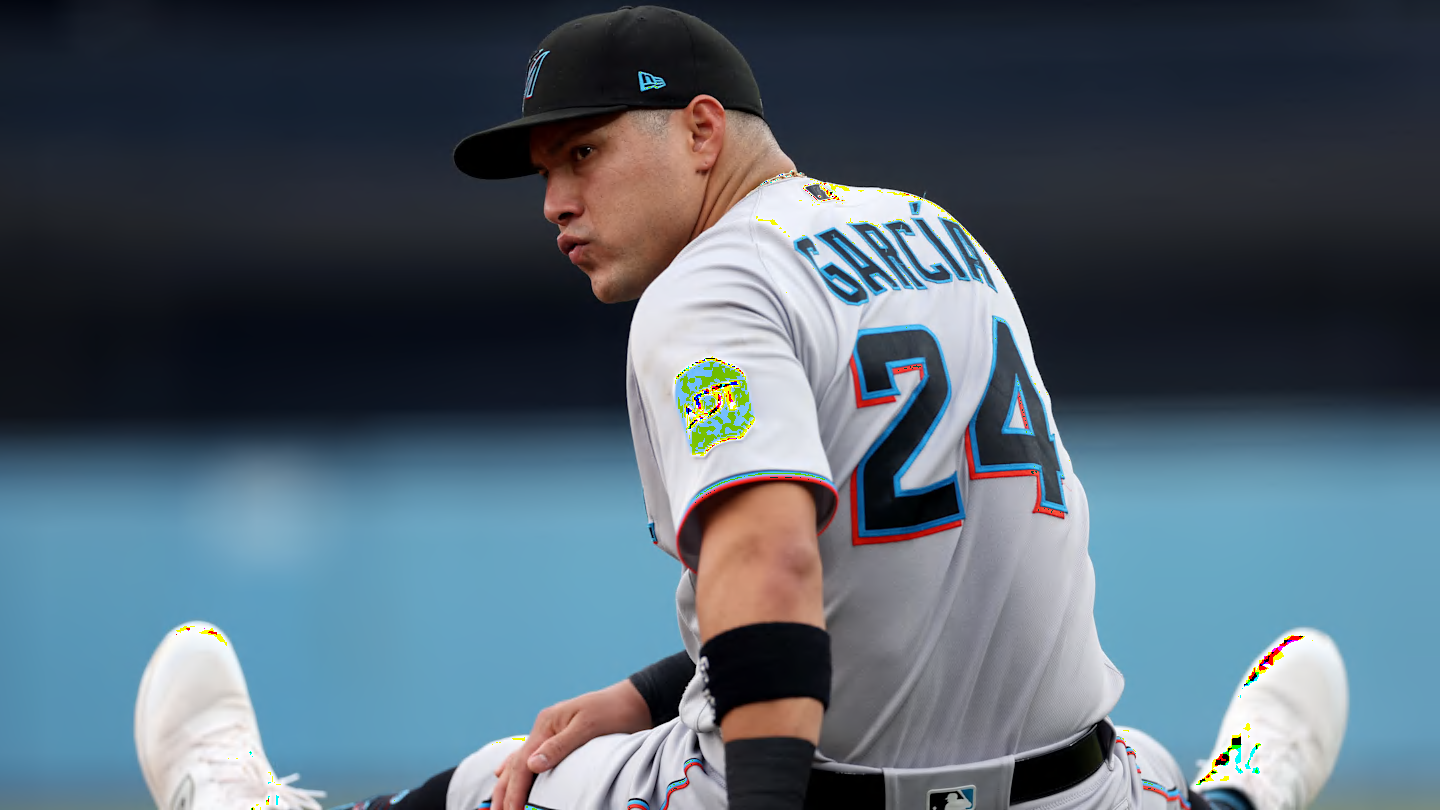
For years now, the narrative has been the same when it comes to the Miami Marlins and MLB free agents.
No, not the narrative where the Marlins can’t afford to pay for the biggest names on the market. What I’m talking about here is the more troubling narrative where Miami must overpay players- any players- to proverbially “bring their talents” to South Florida in the first place.
You could refer to it as “having to pull an Avisail Garcia”, but I’m really trying to work on putting that deal firmly in my rear view now that he’s almost entirely off the Marlins books. Better for my mental health, that way. So let’s call it something else:
Having to pay players the “Marlins Tax.”
Again, this is something Miami has had to do for years. Way overpay relative to what the rest of the league is offering, and generally having to settle for doing so for second or third tier talent at that. Pick a free agent the Marlins have signed during the Sherman era, and you’ll know this to be true. Garcia? Johnny Cueto? Tim Anderson? Heck, most of the Loria era can be painted with the same brush. It was all fun and games when Miami traded Carlos Delgado one year into his deal for the club’s second teardown, but do the same thing to Jose Reyes and Mark Buehrle and people are going to start to talk.
Some think it’s the ballpark. Some think it’s the small crowds. Plenty think it’s the lack of a will to win and the historically flighty nature of the organization. Whatever the dominant cause may be, and it’s probably an All of the Above deal, it certainly stands in stark contrast to the rest of South Florida’s sports teams. The Dolphins keep getting an A on those player report cards every year. The Miami Heat are a model organization. Same goes for the Florida Panthers. InterMiami has that Messi guy. Oftentimes though, much more is made of that lovely lack of state income tax. Or as much as it alienates fans when announcers say South Beach…the allure of South Beach. Those clubs always seem to tap into Florida’s extrinsic benefits much more effectively than the Marlins do.
Nevertheless, if the Marlins are ever going to have that consistent, sustained success they claim to be chasing, it is imperative that they stop having to pay that tax.
Now, it’s possible that by the time spring training rolls around, there will be some evidence that that is starting to change. Having to pay the Marlins Tax is not the same thing as not being viewed as a sure thing to make the postseason. Plenty of closers that you would think the Marlins would have been interested in have signed, and mostly for prices that you would hope the Marlins could have met. Yet they all signed with much better bets for making a deep playoff run this year. Recently, there have been reports of the Blue Jays and Tigers matching the Marlins interest in Pete Fairbanks. It’s hard to imagine a world in which Fairbanks, or any player, turns down a chance to join Toronto if the money is close to equal. Especially since most quality relief pitchers signing with teams like Miami do so with the knowledge they might be traded to a contender midseason anyway. Taking a Blue Jays or Tigers deal from the jump just saves the family a move.
Then again, Miami was also interested in Cedric Mullins, and he just took a deal with Tampa instead. Not encouraging considering the fact the Marlins were the better team last year, and the Rays haven’t done much to convince folks that will change dramatically in 2026. If it was just a matter of the Rays promising more playing time in the outfield, I guess that can be explained away as well. If not though, then it would appear Miami still has serious work to do on rehabbing their reputation.
Part of the problem with the Marlins Tax is that it puts the team in the continuous position of having to rely on trades to significantly bolster the roster. Free agency should never be the dominant avenue an organization takes to team building, but it is a key part. You want to hold on to as many affordable assets as possible. Understandably, Miami will always be behind the 8-ball financially, as their chief rivals have deeper pockets. Shedding the double disadvantage of their money not being equally as green though would be a real boon to the front office.
Especially on account of Marlins President of Baseball Operations Peter Bendix. For one thing, he’s too smart to be naturally inclined to overpay for a player anyway. For another, he was pretty much hired to avoid a repeat of the last time the team did so with…okay, THIS is the last invocation of Avisail Garcia. But that guy- Bruce Sherman probably hung a sign saying “No More Garcias” Ted Lasso style in Miami’s offices when Bendix was hired. Either way, that puts the Marlins in the position of being even less likely to land an exciting free agent than they have ever been before.
Which could explain why Miami hasn’t landed anyone yet, despite reports of the team being willing to spend more this offseason. They were willing, but only at market price, if not slightly under.
Of course, it’s also early. Those Winter Meetings haven’t even started! All could be well with Miami’s offseason plans.
But if the Marlins Tax is still in effect? Expect either another long, slow winter, or one with a couple painful deals.