
For this week’s MaiLLbag, I’ve picked five questions and enlisted Kate, John, and Eric for an assist. If you asked a question in the site comments or on BlueSky and haven’t seen it answered yet, don’t worry, I’ll get to it soon. If you have a question, feel free to leave it in the comments, send it to me on BlueSky, or email me at jake.mailhot[at]gmail.com.
“Which coach(es) does Dan Wilson listen to when making in-game decisions?”
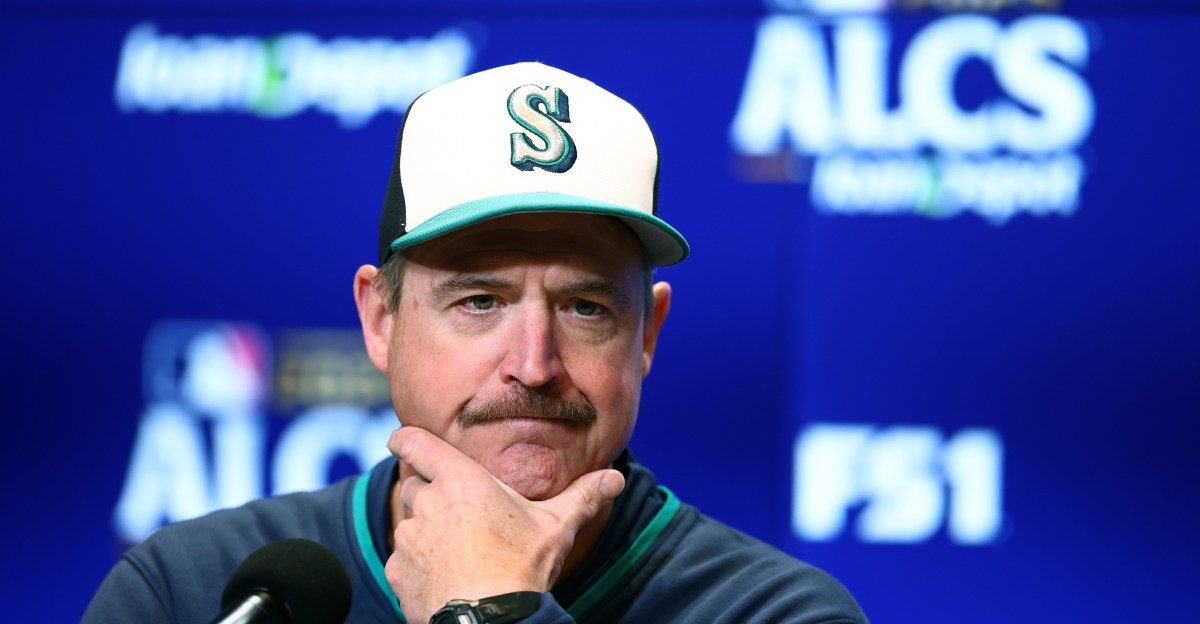
These questions are hard to answer because I’m not in Dan’s head, but I’ll give my best understanding. A lot of the decisions Wilson makes are anticipatory rather than reactionary – ie, if x happens, y will then happen. I think the average fan would be surprised at how far ahead Wilson and his staff think, both offensively and defensively. They have to think both at the macro (game and series level) and the micro level (by at-bat, by pitch sequence) simultaneously. It’s a collaborative effort between Wilson and each coach who is responsible for his area, be it pitching, hitting, base-running. And while there’s a lot they bring in from advance scouting as far as overarching plans, a lot of these decisions are also based on in-game trends, which can then sometimes come to a head, as we saw in Andy Bissell’s famous challenge in the KC game. So the answer is…all of them? —Kate
“How much pitching coach input does Dan Wilson need when he changes pitchers in a game?”
Again, it’s hard to answer this without literally standing next to him, but there’s a general pre-plan developed at an organizational level of how they want to pitch a game, and then adjustments get made to that plan based on how the game develops. In-game, that’s mostly a Dan and Pete Woodworth conversation – how deep a starter gets to go, who relieves him if they need one out vs. if they’re starting with a clean inning – but the other coaches have a voice, too. For example, the hitting coach might have insight on how the opposing hitters are trying to attack the Mariners pitching, and the bullpen coach might know if the pitcher they want to go to is having trouble getting warm or feeling under the weather. —Kate
“I’m curious how the team will manage bringing up their promising prospects now that our contention window is wide-open, particularly in the infield. Were Cole Young and Ben Williamson done a disservice by being brought up too early out of necessity? How do they fit (and how much of a chance do they get to show their fit) with Emerson and Arroyo on the way? How much longer is J.P. Our Shortstop?”
The easiest way to answer these questions is in reverse order of their asking. J.P. Crawford will be the Mariners shortstop through 2026 at least, so long as he remains healthy and producing at the level he has been the last few years. Yes, Colt Emerson might be a superior at this point, but I’m not sure it is an overwhelming certainty. If Emerson had the glove work of Rays prospect Carson Williams or Milwaukee Brewers phenom Jesus Made, we might see a more aggressive shift. But Emerson, much like Crawford himself at the time of his own call up, will likely play third base in deference to a respected and established starter, who is not over the hill by any means.
I think we are already seeing the implications for Arroyo as well, with Adam Jude recently writing that the team intends to transition him into outfield work with greater frequency. The compact Colombian is already splitting reps in Winter ball between second base and left field, which indicates to me the club rightly recognizes Williamson and Young as much more adept defenders on the dirt. A year of work at third will know more lock Emerson in there than it did Crawford a decade ago. For Arroyo to play consistently in Seattle in the future, positional flexibility is similarly vital, and his defensive limitations put him in the Nick Solak/Jeff McNeil zone of hoping he hits enough that you’re not worried about the glove.
Nothing I saw from Williamson nor Young last year gives me serious pause about their evaluations as players. Both have demonstrated solid ability to make contact with the baseball. Both demonstrated they can handle their respective defensive positions acceptably, with Williamson looking like an above average defender.
I spent some time recently reviewing the 1990s Atlanta Braves, following Jerry Dipoto making note of their knack for knowing when to call prospects up. What I found was that not only did Atlanta have over a decade, straight of calling up one or more players who would go on to be an All-Star, but many of those players did not actually excel in their first half or full season. However, for polished, contact heavy hitters like Williamson and Young, the opportunity to face the level of competition they will need to handle was a valuable one I believe. Neither excelled. But, neither ultimately was a total black hole. I am more bullish on Young to achieve a full-time role this year than Williamson, but I feel better, not worse that both players have already had a healthy taste of big league challenges when heading into 2026. —John
“Given where the Mariners are in the “we’re actually a world series candidate” window, how realistic is it that any of the top prospects on the cusp of breaking through make any sort of contributions next year? I’d love to see Colt, Kade, Harry, Cole, and Ben get time, but can the M’s afford that?”
This is sort of the paradox of the Mariners’ preferred roster construction strategy: if you’re committed to draft, develop, and trade to build a sustainable winner, at some point, you need to commit to the young prospects you’re counting on to replace the players you’ve developed and then traded (or let walk in free agency). It’s true that the Mariners are currently in a position on the win curve where it makes sense for them to overpay in free agency or in trades to bring in marginal improvements to their roster. That’s what World Series contenders do so that they have an overwhelming amount of talent to survive the attrition of a long regular season and deep postseason run. It’s why the Dodgers ultimately prevailed in the World Series this year despite a ton of injuries and some concerning signs of aging from their superstars.
The Mariners already “overpayed” to bring back Josh Naylor on the largest free agent contract given to a position player during Jerry Dipoto’s time at the helm. That move was born more out of necessity as the organization doesn’t have many internal options at first base. I do think we’re coming to a point where there will be some significant turnover in the infield and in the starting rotation in the near future. Probably not in 2026, but the team should start planning for J.P. Crawford’s departure in 2027 and the possibility of Logan Gilbert and Luis Castillo departing in 2028. That means giving players like Colt Emerson and Kade Anderson opportunities in the big leagues sooner rather than later so that they’re ready to take on full-time roles in the next few years. It’s a tricky balance to strike.
I think 2025 actually provides a pretty good blueprint for how this might look in practice over the next few years. The Mariners gave Ben Williamson and Cole Young opportunities to make an impact at third and second base during the first half of the season, but as soon as it was apparent they weren’t ready for a full-time role, the team quickly pivoted to a few key trade deadline acquisitions to bolster the roster for the stretch run. I think you could probably expect to see something similar with Williamson or Emerson at third base in 2026 and Anderson or Jurrangelo Cijntje in the rotation in 2027. —Jake
“Which historic rival from the 90s (Yankees, Indians, Orioles) should current Mariners fans have the most animus towards?”
What a question. Gut reaction is obviously the Yankees. They’ve always been hateable, since before the Mariners existed. And then in the 90’s when their 3rd? 4th? dynasty era was budding, the Mariners were there as the scrappy upstarts just trying to slug their way into the playoffs, which of course they did in 1995 and defeated the Yankees (no one ever talks about this series, weird!), but then you know who beat the Mariners and sent them home from their first postseason experience? F*cking Cleveland, that’s who. Cleveland is definitely the team from that era that I still have pretty irrational beef with simply because that was my first real baseball heartbreak. They ended a magical run by one of the most charming and captivating baseball teams of the modern era. Funnily enough, Cleveland was also famously scrappy and have continued to be so, as they play in a mid-sized market and are often overshadowed by their AL East rivals while consistently running the table in the shittiest division in baseball (the AL Central). So yeah, I still do not like that franchise. The Orioles, while they did break my heart in 1997 (and I was actually there when Mike Mussina outpitched Randy Johnson in game one of the ALDS), that Mariners team simply did not have the pitching to make a real run and as the saying goes, the first cut is the deepest. A second playoff booting 2 years later didn’t have the same sting. Also, it’s tough to hate another team that hasn’t won a championship since 1983 and has been subjected to decades of cheap ownership. So yeah, Cleveland sucks, the Yankees can always catch these hands, and the Orioles and their delightful hats/logo can just go about their business. —Eric
Do you have any questions about the Mariners you want answered? Or any questions about the wider baseball world? Ask away!
Leave a comment belowFind me on BlueSkySend me an email