
The Toronto Blue Jays enter baseball’s Winter Meetings with a bulk of their offseason work already complete, but there are still needs left to address.
With holes to fill in the bullpen and lineup, the Jays could complete their offseason in a variety of ways, from more historic spending to creative trades or simply plugging holes. Breaking those potential offseason paths into three tiers, here’s how the Jays could round out their roster ahead of Opening Day.
Where possible, estimated free-agent contracts come from The Athletic’s Tim Britton:
Filling in the gaps
Pitching was Toronto’s top need entering the offseason, and that’s already addressed with the signings of Dylan Cease (seven years, $210 million) and Cody Ponce (three years, $30 million). All indications are the Jays will continue adding, but they could conceivably address the final few holes without blockbuster trades or massive investments. If Toronto plans to run a similar payroll to the $280 million mark they ended 2025 at, here’s an example of how that offseason would look.
AcqusitionCost
SP Dylan Cease
Seven years, $210 million
SP Cody Ponce
Three years, $30 million
RP Pete Fairbanks
Two years, $20 million
2B Jeff McNeil
Trade José Berríos to the New York Mets
Signing Pete Fairbanks would raise the Jays’ payroll just above the third luxury tax threshold ($284 million). But with some deferrals on the reliever’s contract or a move to offload money, they could enter the season under that luxury tax mark. It’s a threshold the Jays have yet to surpass in franchise history.

Trading José Berríos for Jeff McNeil could be a cash-neutral move for 2025. (Ishika Samant / Getty Images)
The Jays have shown interest in Fairbanks and many back-end relievers of his caliber this offseason. With 75 saves over the last three years, he would enter the season as Toronto’s closer, or at least in competition for the role with Jeff Hoffman.
Trading José Berríos for the Mets’ Jeff McNeil would essentially be a cash-neutral move for 2026, with New York and Toronto exchanging areas of depth to fill holes. The Jays may need to add another piece to facilitate the trade, as Berríos’ contract runs through the 2028 season, a year longer than McNeil’s.
Trading Berríos at all could be difficult for the Jays, as he struggled down the stretch in 2025 and lost his rotation spot. The veteran starter also possesses a limited no-trade clause and is owed more than $65 million over the next three years. Building a package for McNeil makes sense for the Jays if they whiff on free-agent bats, and New York could use reliable pitching.
Though he’s hovered around league average at the plate the last three seasons, McNeil fits what the Jays require this winter. He isn’t Kyle Tucker or Bo Bichette, but the long-time infielder flourishes against right-handed pitching and could reasonably fit between Vladimir Guerrero Jr. and George Springer at the top of Toronto’s batting order against righties. He also brings the same high-contact, low-strikeout mold the Jays embraced in 2025.
This wouldn’t be the flashiest finish to Toronto’s winter, but the Jays would still enter 2025 as one of the American League’s top contenders.
One more big addition
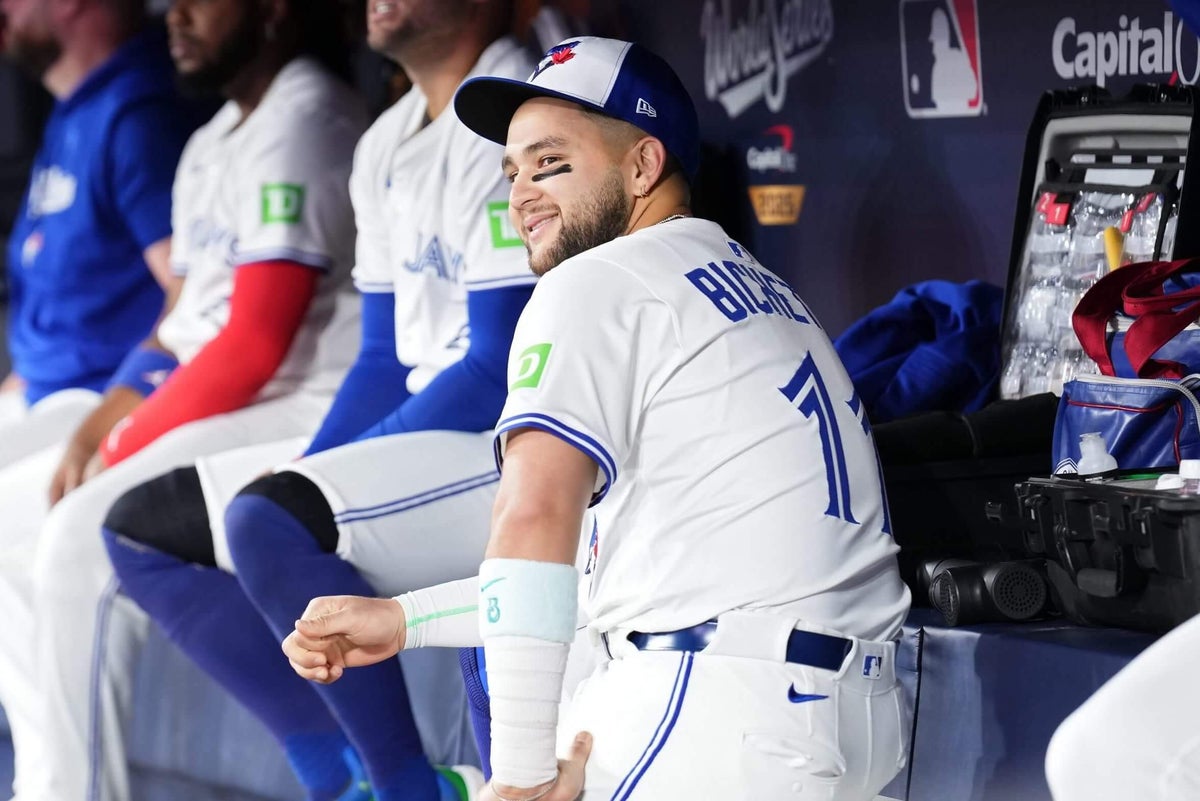
Bringing back Bichette is the cleanest way for the Blue Jays to polish off a busy offseason. He fits beside Andrés Giménez in the middle infield, either at shortstop or second base, and Bichette expressed interest in staying with the Jays before entering free agency. But the 27-year-old isn’t going to take some massive hometown discount.
With Bichette projected to receive an annual average value around $26.5 million, signing him would increase Toronto’s Opening Day payroll to just below the fourth competitive balance tax (CBT) threshold ($304 million) — a mark only the Dodgers and Mets surpassed last year. To stay under that final threshold and avoid significant penalties, the Jays would have to get creative in addressing other areas of need.
AcquisitionCost
SP Dylan Cease
Seven years, $210 million
SP Cody Ponce
Three years, $30 million
INF Bo Bichette
Eight years, $212 million
RP Tyler Kinley
One year, $3.5 million
UTIL Ezequiel Durán
Trade Yariel Rodriguez to the Texas Rangers
Tyler Kinley, though not one of free agency’s top closers, is the type of creative addition who would allow the Jays to fill out the roster without breaking the bank. After years of struggle in Colorado, he was traded to Atlanta at the 2025 deadline and flourished through the end of the season. He posted a 0.72 ERA in his final 25 innings, with the Braves upping Kinley’s usage on both his curveball and slider. They ended up as two of baseball’s best breaking balls last year. The 34-year-old wouldn’t enter 2026 as Toronto’s closer, supplanting Hoffman, but he has the upside to pitch late in games.
Bringing in another reliever like Kinley would allow the Jays to trade from an already busy bullpen, as well. The Rangers are a potential partner, with their four most-used 2025 relievers either free agents or currently projected to move to the rotation. Texas has multiple top infield prospects on the cusp of the majors, so a utility man like Ezequiel Durán could be expendable for bullpen help. Trading Yariel Rodríguez for Durán allows the Jays to add a needed bench infielder while clearing up money to fit under the final CBT threshold.
Unprecedented spending continues
The high-spending Mets entered 2025 Opening Day with a $338 million CBT payroll. Even after a profitable run to the World Series, it seems unfathomable that the Jays will reach that level of spending this year. But what if they did? A busy Blue Jays offseason could get even busier.
AcquisitionCost
SP Dylan Cease
Seven years, $210 million
SP Cody Ponce
Three years, $30 million
OF Kyle Tucker
12 years, $460 million
RP Robert Suarez
Three years, $54 million
P Carmen Mlodzinski
Trade Nathan Lukes to the Pittsburgh Pirates
Adding Tucker and closer Robert Suarez addresses the Jays’ final two needs with top-of-market All-Stars. They’d not only fill out Toronto’s roster but become significant figures on the Jays’ quest to get back to the World Series.
Suarez, though 35, leaned on his 99 mph fastballs to lead the National League in saves last year. He’d supplant Hoffman as Toronto’s closer, making the Jays’ bullpen playoff-ready on Opening Day.
Tucker, who visited Toronto’s development complex in Florida on Wednesday, has been worth at least 4.6 WAR the last five seasons, per Baseball Reference. He could be the elite left-handed bat the Jays would love to pair with Guerrero at the top of their batting order. Tucker’s addition would also allow the Jays to move an outfielder like Nathan Lukes, traded in this example offseason for further pitching depth.
But two more massive signings would also bring Toronto’s 2026 Opening Day CBT payroll to around $333 million, $54 million more than their end-of-season payroll last year. By running a payroll this high, the Jays would also end up paying around another $50 million in competitive balance tax.
Expecting an offseason of this magnitude would be unwise. But if Blue Jays ownership is willing to make a business exception to sign an elite free agent like Tucker during a clear competitive window, it’s not entirely impossible.