
With free agents beginning to sign and several deals landing in the AAV (average annual value) range, the White Sox should be exploring. This stretch of the offseason presents an important window for Chris Getz and the front office.
By this time next week, the Winter Meetings will be well underway, and the Sox should be positioned to make their first offensive additions after kicking off the offseason with the signing of Anthony Kay. Last year’s Meetings delivered one of the franchise’s biggest trades, when the White Sox sent Garrett Crochet to Boston in a four‑prospect deal built around Kyle Teel and Braden Montgomery. That move came on the final day of the event and reshaped the organization’s long‑term core.
We also saw activity start early on the market. A reported “top target”, Austin Slater, signed as early as November 18 last offseason. Given how the White Sox typically operate, and considering they have yet to make a significant move this winter, this is the point on the calendar where meaningful roster activity should begin to surface.
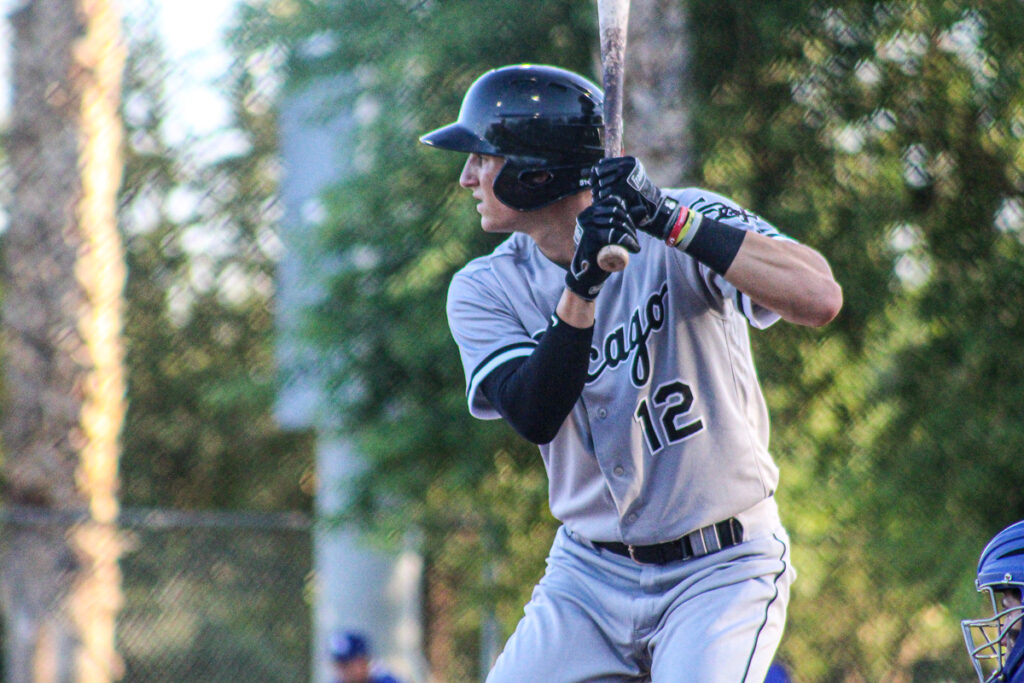
Power remains one of the clearest needs on this roster. The Sox finished 23rd in the majors with 165 home runs, a total that fell well below the league‑average range. For context, the Red Sox ranked 15th with 186 home runs. Chicago’s number would have been even lower without the mid‑season call-ups of Colson Montgomery and Kyle Teel. Montgomery hit 21 home runs in 71 games, and Teel added 8 homers. Lenyn Sosa led the team with 22.
 via: Sean Williams/FutureSox
Montgomery should project around 20-25 home runs with room to push toward 30 if he can build on last season and avoid a sophomore slump. Teel looks like a reasonable bet for double‑digit power. Even with those internal gains, the Sox still sit short of the homer total needed to reach league‑average power. Given the natural variance that comes with young hitters, adding a steady twenty‑home‑run bat would help stabilize the lineup and round out the production.
There is reason for optimism based on the second half. After the All‑Star break, the Sox ranked 8th in home runs (89), 10th in runs scored (315), 8th in RBIs (309), T‑12th in ISO (.165), 10th in average (.250), T‑11th in SLG (.415), 13th in wOBA (.317), and 14th in wRC+ (102). The foundation is improving, but the lineup still needs more reliable power to lift the overall floor.
To outline realistic ways to add that power, I focused on two primary roster holes: a corner infield bat and an outfielder. I gathered around ten names in each group, all of whom hit at least ten home runs last season. The tiers sort these players by the level of impact they can provide and also help frame what each type of addition may cost.
15-20+ HR tier: These are the ideal additions. They bring the most impact and help close the gap toward league‑average power. Players in this range may command more than the White Sox are willing to spend. Some may also prefer joining a contender, which could place them outside the comfort level of this front office.
15+ HR tier: This is the most realistic tier for Chicago. These players generally fall in the $5-$10 million AAV range and offer dependable pop without requiring a major financial commitment. This is the tier where the Sox can upgrade without stretching their budget.
10+ HR tier: These are lower‑cost options, often in the low‑million AAV range. They are value signings who add depth and enough power to lengthen the lineup.
I do not expect the White Sox to venture anywhere near Andrew Benintendi’s AAV on the open market. None of the players in this group are expected to reach $17 million per year. A contract in the $12-$15 million range over three or four years already feels wildly optimistic for this front office.
A more realistic expectation sits closer to the $5-$10 million per year range, which mirrors the structure of the Anthony Kay deal that signed for $5 million with added incentives and an option year that would double his salary. That type of contract strategy could help Chris Getz bring more meaningful talent to the South Side and set a fair target for AAV without creating false expectations for fans. Any move at the higher end of this range would show a real shift in approach and a clear effort to add a legitimate middle-order presence.
1B/DH Options for White Sox
15-20+ HRs
Ryan O’Hearn
O’Hearn profiles as one of the strongest fits in this tier. He hit 17 home runs with a 127 wRC+ in 2025. He also held a .281 average and played most of his time at first base, but saw some work in the corner outfield as well. He has a good enough bat to handle DH when he needs a day off his legs.
He held his own against both sides last season as he posted an .832 OPS against left-handed pitching. That balance gives him everyday value and keeps him in the lineup when a left-hander starts without the need for a platoon. His left-handed power fills a clear need, and his defensive value stands out with 6 OAA (outs above average) on Savant at first base and play that grades around average in the corner outfield. He brings a reliable bat and a well-rounded skill set that would help stabilize the lineup.
Last report from Vegas @mullyhaugh 9:25AM. Cubs looking at pitching and another OF. Sources confirm Wh Sox have had talks with numerous teams on Robert. Free agent interest in IB / DH /OF Ryan O’Hearn. Tune in @670TheScore
— Bruce Levine (@MLBBruceLevine) November 13, 2025
The 32-year-old may look for a contending team, and he could seek a larger contract than the White Sox are willing to offer this offseason. He likely sits in the 2-4 year range at 12-15 million dollars per year. The cost may be too ambitious for this front office, though it would show a meaningful effort to upgrade the offense.
O’Hearn fits several needs in one move, and he would bring steady home run production that this lineup is missing. There has been reported interest, and his past work with Ryan Fuller in Baltimore could keep Chicago in the mix, even if this type of signing sits on the optimistic end of what the Sox are expected to pursue this Winter.
Kazuma Okamoto
Okamoto is 29 and one of the most accomplished power bats available this winter. He hit .327 with a .416 OBP and a .598 SLG in 2025 while producing 15 home runs in only 69 NPB games due to an elbow issue. His broader track record shows a consistent impact with 277 home runs across eleven professional seasons. He has plus raw strength with a compact swing that lets him pull and lift quality pitching, and that approach translates well to MLB game power.
He played both corner infield spots in Japan and handled some work in the outfield. His best defensive fit is first base, and his numbers there are strong with a .996 fielding percentage over seven NPB seasons. He can also cover third base fairly well. He brings a right-handed power profile that holds up against good velocity and should remain productive as he moves into his thirties.
His strikeout rate dropped to 16% in 2024 and then to 11% in 2025. He also hit a home run against the United States in the 2023 WBC. Several MLB clubs scouted him heavily during the Japan-Korea exhibition series, including the White Sox, Yankees, Phillies, Padres, Angels, and Blue Jays. Contract projections sit near 15 million dollars per year on a 3-4 year deal that may land between the 40-60 million dollar range. Some evaluators think the contract could reach up 90 million dollar range.
Okamoto matches what Chicago needs if they want to add a middle-order bat with real impact. His steady production gives him a safer outlook than most international corner bats. He would fill a major hole in the Chicago lineup and provide the type of upgrade that can change the shape of an offense without a long-term commitment.
Marcell Ozuna
Ozuna enters free agency at 35 after a season that fell short of his previous two years of elite production. He played 145 games in 2025 and finished with a .232/.355/.400 line with 21 home runs, 68 RBIs, a 114 wRC+, and 1.2 WAR. The power drop was sharp after he hit 79 total home runs in 2023 and 2024, yet he still posted the highest walk rate of his career at 15.9 percent and finished in the 91st percentile in expected OBP.
He served almost exclusively as a designated hitter. There is risk with age, yet there is also short-term upside if he finds a middle ground between his 2025 output and the star-level production he showed in the two seasons before it.
Ozuna will likely aim to join a contending club after a disappointing season for both him and Atlanta. His market should be active, but the offers may not come from teams willing to make a long-term commitment. A contract in the 10-16 million dollar range on a 1-2 deal is realistic, and it mirrors what the White Sox once did with Edwin Encarnación in 2020 when Chicago signed him for 12 million. Chicago could explore a similar structure with incentives and an option year to help Ozuna reset his market for 2027.
He fits what the Sox need if they want a short-term designated hitter with real home run upside. He would bring stability to the middle of the order, and working with Ryan Fuller and Derek Shomon could help him reclaim more of the impact he showed earlier in his career. His age adds risk, yet his underlying skills and patience give him a path to rebound in a limited window.
15+ HRs
Josh Bell
Bell is one of the most realistic options in this tier and fits both the budget and timeline for a club like Chicago. He hit 22 home runs in 2025 with a .237/.325/.417 line and a 107 wRC+. He also posted a .358 xwOBA. His max exit velocity reached 114.1 mph, and his underlying traits pointed up as he improved his barrel rate, hard-hit rate, and zone swing decisions from the previous season.
Bell split his time between first base and DH and profiles best in a platoon role. He struggled against left-handed pitching with a .552 OPS, but he was sharper in the second half and should fit as part of a platoon with Lenyn Sosa or Miguel Vargas, depending on how the roster shakes out. He still offers left-handed power.
Bell is projected for a one-year contract in the 5-8 million dollar range, yet signing with a rebuilding club may push his ask closer to ten million. A structure with incentives tied to home run totals or an option year with a higher back-end salary could give him a path to reach that number. He signed for six million in 2025 and comes off a slightly stronger year, so it is reasonable to expect him to seek a raise.
His performance trends suggest he can still be a productive short-term addition for a club in rebuilding mode that needs left-handed power. He offers a realistic path for the Sox to add impact at a manageable cost.
Rhys Hoskins
Hoskins was a key free-agent addition for Milwaukee last winter and delivered steady production before a Grade 2 UCL sprain in his left thumb cost him two months. He hit .237/.332/.416 with 12 home runs, a 109 wRC+, and a .324 wOBA over 328 plate appearances. His contact quality remained strong with a 90.2 mph average exit velocity and a 46.4 percent hard-hit rate.
He played 82 games at first base and profiles as a bat-first option who can stay in the lineup regularly against right-handed pitching. He finished fifth on the Brewers in home runs despite the limited playing time, and his approach stayed intact with an 11.6 percent walk rate. Milwaukee declined his $18 million option after the injury and his reduced role once Andrew Vaughn took over first base, which now places him back into a market where teams view him as a short-term power upgrade.
Hoskins is likely looking for a one-year deal to rebuild value, and the price should sit in the same range as the other hitters in this tier, possibly somewhere around the 5-10 million dollar range, depending on incentives and playing time. He was a prized signing just a year ago and still carries the on-base skill and natural lift to project as a 15-plus homer bat if he stays healthy.
For the White Sox, Hoskins could provide another source of home run potential while the roster continues to develop. His profile aligns well with what Chicago has explored in past offseasons, and he represents one of the cleaner upside plays in this group.
Nathaniel Lowe
Lowe is a free agent after the Red Sox non-tendered him in November due to a projected arbitration salary near 13.5 million. He played 153 games in 2025 and finished with a .228/.307/.381 line with 18 home runs, 84 RBIs. His defensive metrics dipped with -5 OAA at first base, but his track record points to a better baseline than what he showed in Boston and Washington.
His underlying data offers a path back to form. Lowe improved his hard-hit rate and Whiff% from 2024 to 2025. His profile suggests he can steady his approach with more consistent swing decisions. He struggles against left-handed pitching, so he will likely need a platoon option. He owns a career OPS of .771 and posted a 123 wRC+ as recently as 2024 with Texas.
He is projected to sign a one-year contract in the 5-8 million-dollar range. At 30 years old, signing with a rebuilding club may push that number toward the higher end, yet his down season and non-tender status keep him in a price tier the Sox can manage. He earned 10.3 million in 2024 and signed for the minimum in 2025 after a DFA, so his camp may prioritize a steady role over a higher AAV.
Lowe’s history with Will Venable from their World Series run in Texas gives Chicago an entry point in talks. He fits as a rebound candidate who can stabilize first base while offering a left-handed profile with more ceiling than he showed in 2025. If he lands closer to his 2022-2024 production, he becomes one of the better value plays available in this tier.
Sung Mun Song
Song enters the posting system at 29 after two seasons that pushed him into the top tier of KBO hitters. He hit .340/.409/.518 with 19 home runs in 2024, then followed with a .315/.387/.530 line in 2025, including career bests of 26 homers, 90 RBIs, and 25 steals. Over nine seasons with Nexen and Kiwoom, he owns a .283/.347/.431 career line with 80 home runs, 454 RBIs, and improved swing decisions as he moved into his physical prime.
He is a left-handed bat with power to the pull side and a swing that lifts fastballs well when he gets to his spots. Evaluators praise his athleticism and a plus arm at third base, and he also has experience at second and first. That versatility is valued by big-league rosters, though his best defensive fit is likely the corner infield. He captained Korea at the 2024 Premier12 tournament and has been on MLB radars for the past two seasons.
Song’s breakout came after a delayed development path. He missed all of 2020 and part of 2021 due to mandatory military service, and he did not secure an everyday role until 2022. His production before 2024 was modest, which creates some natural risk when projecting his bat to MLB velocity. His swing can get “uphill”, and evaluators note he may be challenged by elevated pitches on the outer half.
He will be posted under the KBO’s 30-day negotiation window, and any signing club must also pay a release fee equal to 20 percent of the guaranteed contract (likely under the $25 million threshold). He’s projected to earn around $12.5M, potentially under $15M for a multi-year deal. His potential deal is compared to Hye-seong Kim’s (3+2 years, up to $22M), but at a lower cost. For the White Sox, Song checks several boxes and has a profile with enough upside to outperform his contract. Chicago has been connected to multiple international bats and has clear openings at either corner. Song would carry more variance than the established MLB bats on this list, yet he also brings a ceiling few bargain-tier players match. In a tier built around rebound candidates and short-term deals, Song represents a chance to add an ascending hitter with multi-year potential at a manageable cost.
10+ HRs
Rowdy Tellez
Tellez profiles as a low-cost left-handed power option in the flyer tier if the White Sox miss on higher-end bats. He hit .228/.276/.443 with 17 home runs in 2025 across 112 games, including 97 starts at first base. His .329 xwOBA was one of his strongest marks in recent seasons and came alongside notable gains in bat speed and lift.
He spent time with Seattle and Texas last year and was more productive with the Rangers, where he logged a 109 OPS+ and an 8 run value against fastballs. He also hit .259 after the All-Star break. Tellez is most likely a platoon, and took playing time away from Jake Burger down the stretch last year.
Tellez turned 30 in March and remains a limited defender with a -4 OAA mark at first base. A modest one-year deal in the 2-3 million dollar range is realistic and mirrors his recent contracts.He offers real pull-side power and enough short-term value to justify a spot in a platoon if the White Sox reach this tier of the market.
Wilmer Flores
Flores sits in the 10+ HR tier as a veteran fallback who offers stability more than ceiling. He played 125 games for San Francisco in 2025 and hit .241/.307/.379 with 16 home runs and 71 RBIs. His quality-of-contact metrics continued to drift downward, with modest exit velocity and limited impact in the field. Flores, now 34, profiles best at DH and saw the majority of his starts there last season.
Even so, his reputation carries weight. Flores has long been viewed as a reliable clubhouse presence and a steady at-bat in leverage. A glue veteran on young rosters, he’s respected across the league, and that leadership component would fill some of what the Sox lost when Mike Tauchman was non-tendered. Flores posted 16 home runs in a down offensive year, and his ability to square fastballs or work count leverage remains intact.
The profile now leans heavily toward part-time usage. However, a one-year deal at the lower end of this tier keeps him in Chicago’s conversation if preferred targets sign elsewhere. He would not headline the offseason or address the club’s power shortage on his own, yet you can see the angle if the front office wants a stabilizer who has produced in various roles for more than a decade.
Flores is not the priority, but he’s a defensible contingency if the Sox need a cost-controlled bat who can absorb DH/1B at-bats and help guide a young roster through a transition year.
Carlos Santana
Santana, though he’s nearing 40 and coming off a season that reflects the inevitable aging curve. He played 124 games in 2025 between Cleveland and Chicago, finishing with a .219/.308/.325 line, 11 home runs. His glove still graded out well for his age, posting 8 OAA and a +12 DRS (Defensive Runs Saved) at first base, making him one of the better defensive options in this tier.
His profile hasn’t changed much over the last decade. Even during his decline phases, Santana’s walk rate stays strong (11% in 2025), and his chase decisions remain above league average. His batted-ball authority has tapered off, and his expected metrics show the same: xwOBA (.287), xSLG (.334), and hard-hit rate (37.8%) all dipped year-over-year. But he still finds ways to extend plate appearances and bring veteran steadiness to the club, like Flores.
Santana’s value now comes as much from presence as production. He has played for nine franchises, won a Silver Slugger, claimed a Gold Glove in 2024, and has long been regarded as a model teammate. His stints in the AL Central and familiarity with several front offices make him a known quantity, and Chicago could appeal if he prefers a comfortable environment that offers playing time and a mentor role. He finished 2025 with the Cubs, and he will likely hold out for a major-league deal. Santana could return on a minor-league deal with a spring invite as the most realistic outcome if he keeps playing.
For the White Sox, Santana would not be a priority option but could be a stabilizer if higher-upside names sign elsewhere. His switch-hitting and defensive reliability fit the roster, and he remains the strongest glove in this entire tier. At this stage of his career, he’s more of a floor play than a ceiling swing, but his professionalism and history of delivering competitive at-bats give him a path to contribute in a limited role.
Outfield Options for White Sox
15-20+ HRs
Adolis García
García is coming off a down season by his standards, but the underlying traits that once made him one of baseball’s most dangerous power bats remain intact. He hit .227/.271/.394 with 19 home runs and 75 RBIs across 135 games for Texas in 2025. His production slipped for a second straight year, yet he still finished with an 89th-percentile average exit velocity and plus defensive marks in right field. His arm strength remains elite and gives him a clear path to everyday work in either corner.
Across 2023 and 2024, García combined for 40+ home runs, 150+ RBIs, and posted back-to-back seasons with impact-level power. Even with the decline, he averaged 22 home runs and 80 RBIs over the past two years. His bat speed took a notable dip in 2025, and he has been exposed by fastballs at the top of the zone, but a coaching staff confident in its swing and approach adjustments could view that as a correctable flaw. His chase rate remains high, so the bet is on loud contact returning rather than a reshaped plate approach.
The Rangers non-tendered García after his $10.5 million salary, making him a free agent heading into his age-33 season, with motivation to reset his value on a shorter contract. Expected deals fall in the 1-2 year range with an AAV between pushing 8 figures. His shared history with Will Venable during Texas’s World Series run gives Chicago an entry point in discussions, and his personality and competitiveness fit the type of veteran presence a young roster can benefit from.
For the White Sox, García offers a buy-low path to real power upside with a chance to flip him midseason if he rebounds. He could stabilize a corner outfield spot in 2026, form an eventual pairing with Braden Montgomery, which would give each corner fantastic arms. The risk lies in the bat not bouncing back, but among short-term power bets, few players in this tier can match his ceiling and fit.
Harrison Bader
Bader had one of the most complete seasons of his career in 2025. He hit .277/.347/.449 with 17 home runs, 54 RBIs, and a 122 wRC+ across 146 games in 2025. His move to Philadelphia at the deadline sparked an even stronger finish, where he produced well above league average and looked fully recovered from the injuries that slowed him earlier in his career.
Bader’s defensive value remains near the top of the position. He ranked among the league leaders in both Defensive Runs Saved (+13) and Outs Above Average (+6) while logging innings in all three outfield spots. Even at 32, there has been no meaningful erosion in the athletic traits that make him special, and his sprint speed remained elite. His offensive growth was the unexpected development. Bader set career bests in average, OBP, slugging, and wRC+ in 2025. He remained aggressive early in counts, but he punished mistakes and handled sinkers far better than in recent years.
Contract models project Bader in the 1-3 year range, anywhere between a $12-17 million AAV. Some projections have his AAV pushing into the mid-20 millions, which would effectively remove the White Sox from consideration. He is likely to prioritize competitive environments, and his price tag would make him the highest-paid player on Chicago’s roster.
The only realistic scenario where the White Sox enter this market is if Luis Robert Jr. is moved and the club reallocates salary to stabilize center field for 2026-27. Even then, Bader represents their absolute spending ceiling. He would provide leadership to a young group, but his age and contract expectations make him far more likely to land with a playoff-caliber team. If circumstances shift, Bader offers one of the safest defensive floors on the market and a bat trending in the right direction, but he profiles as an unlikely match unless the roster undergoes significant change.
15+ HRs
Austin Hays
Hays reached free agency after Cincinnati declined his $12 million mutual option for 2026, opting instead for a $1 million buyout. He signed a one-year, $5 million deal with the Reds last winter and delivered a steady rebound season when healthy, hitting .266/.315/.453 with 15 home runs, 64 RBIs, and a 105 wRC+ in 103 games. Several IL stints limited his availability, but when on the field, he provided the level of production expected from a solid corner-outfielder.
The underlying contact profile supports the bounce back. Hays posted a 10.4% barrel rate, and his xSLG and xwOBA both trended upward from 2024. His improvement came with added lift and more consistent impact against right-handed pitching, as 13 of his 15 homers came in same-side matchups. Historically, Hays has handled both sides evenly, so he offers more than a strict platoon fit.
Defensively, Hays would provide a clear arm-strength upgrade in left field. His 88th-percentile arm strength remains one of his standout tools. That matters for a White Sox club that struggled to generate average outfield defense. It also matters, given Andrew Benintendi’s ongoing availability questions.There is also organizational familiarity: Hays spent multiple seasons in Baltimore under current White Sox hitting director Ryan Fuller, including his 2023 All-Star campaign. That relationship could become a meaningful leverage point as Hays looks for another opportunity to re-establish himself.
He projects in the one-year, $6-8 million range, fitting comfortably into Chicago’s budget and timeline. For the Sox, Hays offers dependable corner-outfield competence, without blocking Braden Montgomery once he arrives. Among the mid-tier outfield options, Hays represents one of the clearer and more realistic fits on both performance and cost.
Mike Yastrzemski
Yastrzemski is one of the steadier corner-outfield profiles in this tier, reaching free agency after completing a one-year, $9.25 million deal that began in San Francisco before a midseason trade sent him to Kansas City. Between the two stops, he played 147 games and produced a .233/.333/.403 line with 17 home runs, a 106 wRC+, and 2.4 WAR. It’s the seventh straight season he has landed between roughly 2-3 WAR.
His time with the Royals showcased his best stretch of 2025. Over 50 games, Yastrzemski posted a .321 wOBA, a 106 wRC+. A 12.9% walk rate (90th percentile), strong zone control. He continues to excel against breaking and offspeed pitches, while the fastball remains the biggest area for offensive improvement, something the White Sox address in their 2nd half offensive transformation.
it’s not Khris Davis .247 but one free agent I am especially fascinated by is #31 Mike Yastrzemski, who has somehow posted 2.0-2.8 bWAR in all 7 of his MLB seasons (including, hilariously, in the shortened 2020 campaign) and was quietly awesome for KC post-trade https://t.co/Ae0qxuwD4z pic.twitter.com/SdlO0jPWlQ
— Céspedes Family BBQ (@CespedesBBQ) November 7, 2025
Defensively, Yastrzemski brings attributes the White Sox have lacked. His 97th-percentile arm value and above-average reads in the corner-outfield offer immediate stability, and he logged innings at all three outfield spots in 2025. Even with some decline in range metrics, the total package grades out as a defensive upgrade, particularly in the corners where Chicago needs competence.
Contract expectations place him in the one-year, $8-12 million range. For Chicago, the fit is straightforward: Yastrzemski is a left-handed bat with on-base skills with moderate power, and a veteran presence who doesn’t block Braden Montgomery, yet raises the lineup’s baseline. He’s the type of stabilizing corner-outfield addition the club can make without committing long-term dollars. Among realistic options in this price range, few provide the immediate utility that Yastrzemski offers.
Max Kepler
Kepler enters the market after a difficult first season in Philadelphia, where he hit .216/.300/.391 with 18 home runs, 58 RBIs, a 90 wRC+, and 0.6 WAR across 127 games. The Phillies signed him to a one-year, $10 million deal to stabilize a corner-outfield spot, but the fit never fully materialized.
Even with the down year, the quality of contact points to rebound potential. His average exit velocity (90.8 mph) and hard-hit rate (44.7%) remained strong, and he posted an 80th-percentile squared-up rate with an 11.6% barrel percentage, both meaningful indicators that the power foundation is still there. Kepler’s chase and whiff numbers ticked up, but his plate discipline held steady, reflected in a 10.1% walk rate and improved swing decisions in the second half.
Pair good contact skills and strong plate discipline with the ability to elevate the baseball, and you should get a productive big league hitter.
Kepler’s .329 xwOBA (62nd percentile) says that his .691 OPS in 2025 was pretty unlucky.
— Matthew Knauer (@matthewk36711) December 3, 2025
Defensively, Kepler continues to bring around average corner-outfield value. His arm strength and reads remained consistent with his career norms, and he logged over time across all three spots in 2025. For a White Sox club that ranked poorly in outfield defense last season, his floor alone would represent a notable upgrade.
Kepler profiles similarly to Austin Hays in contract range, likely a one-year deal in the $7 million window, but with slightly more power upside and slightly less defensive certainty. At age 32, he fits the mold of a veteran left-handed bat who could slide into the middle of the order. His max exit velocity dipped from a career-best 115.4 mph in 2024 to the 112 mph range in 2025. Given where the outfield market has already moved, Kepler could be one of the better rebound candidates available on a short-term deal. He represents a realistic middle-tier option. If the market cools into the spring, Kepler becomes even more attractive as a value, inexpensive signing.
10+ HRs
Michael Conforto
Conforto is coming off the most difficult season of his career, posting a .199/.305/.333 line with 12 home runs, an 83 wRC+, and -0.6 WAR over 138 games for the Dodgers. Los Angeles signed him to a one-year, $17 million deal with the expectation that he would lock down a corner-outfield role, but his performance never stabilized, and he ultimately fell off the postseason roster.
Even with the decline, certain traits remain appealing for a short-term flyer. Conforto still walked at an 11.5% clip and carried an 82nd-percentile chase rate, maintaining the plate discipline that once made him an above-average bat. His bat speed remained excellent, and his underlying EV metrics landed in the average range, but the quality of contact cratered, and both his xwOBA and xSLG slid sharply from 2024 levels. He also struggled against sinkers, and early-count aggression contributed to less efficient swing decisions, highlighted by a sizable jump in first-pitch swing rate.
Defensively, Conforto offered little support. He graded as one of the least effective left fielders in 2025, finishing at -8 OAA with diminished lateral range. His arm remains serviceable, but at age 33, he projects closer to a bat-first corner option or part-time DH.
The appeal is strictly in the buy-low profile. Conforto has a decade of big-league experience, carries a career 121 wRC+ against right-handed pitching, and only two seasons ago posted above-average expected metrics. He’s projected in the one-year, $3-5 million range and may need to secure a roster spot earlier in the offseason rather than risk being unsigned into February. Conforto would add left-handed power depth at a minimal cost, but he does not solve defensive issues and overlaps heavily with existing profiles like Andrew Benintendi. Among low-cost hitters with rebound paths, Conforto is one of the more recognizable names, but also one of the riskiest bets.
JJ Bleday
JJ Bleday hits free agency at 28 after being non-tendered by Oakland, ending a three-year run in which he flashed power but never fully cemented himself as an everyday option. He finished 2025 with a .212/.294/.404 slash line, 14 home runs, a 90 wRC+, and -0.1 WAR over 98 games.
The advanced numbers highlight why he became available. Bleday’s xBA (.198) and xwOBA (.277) were the lowest of his career, and his contact quality took a notable step back. He struggled badly against changeups, posting a -9 run value against the pitch. But even with the inconsistency, there were pockets of growth: his hard-hit rate and in-zone swing rate all climbed from 2024.
JJ Bleday has been DFA’d by the A’s. After a ‘24 where he tallied 20 HR, .761 OPS, the 28 y/o really struggled in ‘25. Good chase & BB%, poor defense and K%. A curious case.
— Sam Fosberg (@discussbaseball) November 19, 2025
Defensively, Bleday logged 55 games in center field but projects more cleanly in a corner, where his arm strength (81st-percentile) plays better. His range metrics remain below average, yet he offers enough versatility to move around the outfield if needed.
For a club like the White Sox searching for upside plays in this tier, Bleday is one of the younger options available with a former first-round pedigree and real left-handed power. But as a low-cost flyer, he fits the mold of a player whose trajectory could shift quickly with the right adjustments. Bleday is expected to sign for minimal guarantees, likely a split contract or a modest one-year MLB deal. Chicago has a chance to bet on talent while offering a real developmental test for a front office eager to produce a turnaround story. Among upside swings in this price range, he’s one of the more intriguing, albeit volatile, options.
Post Navigation