
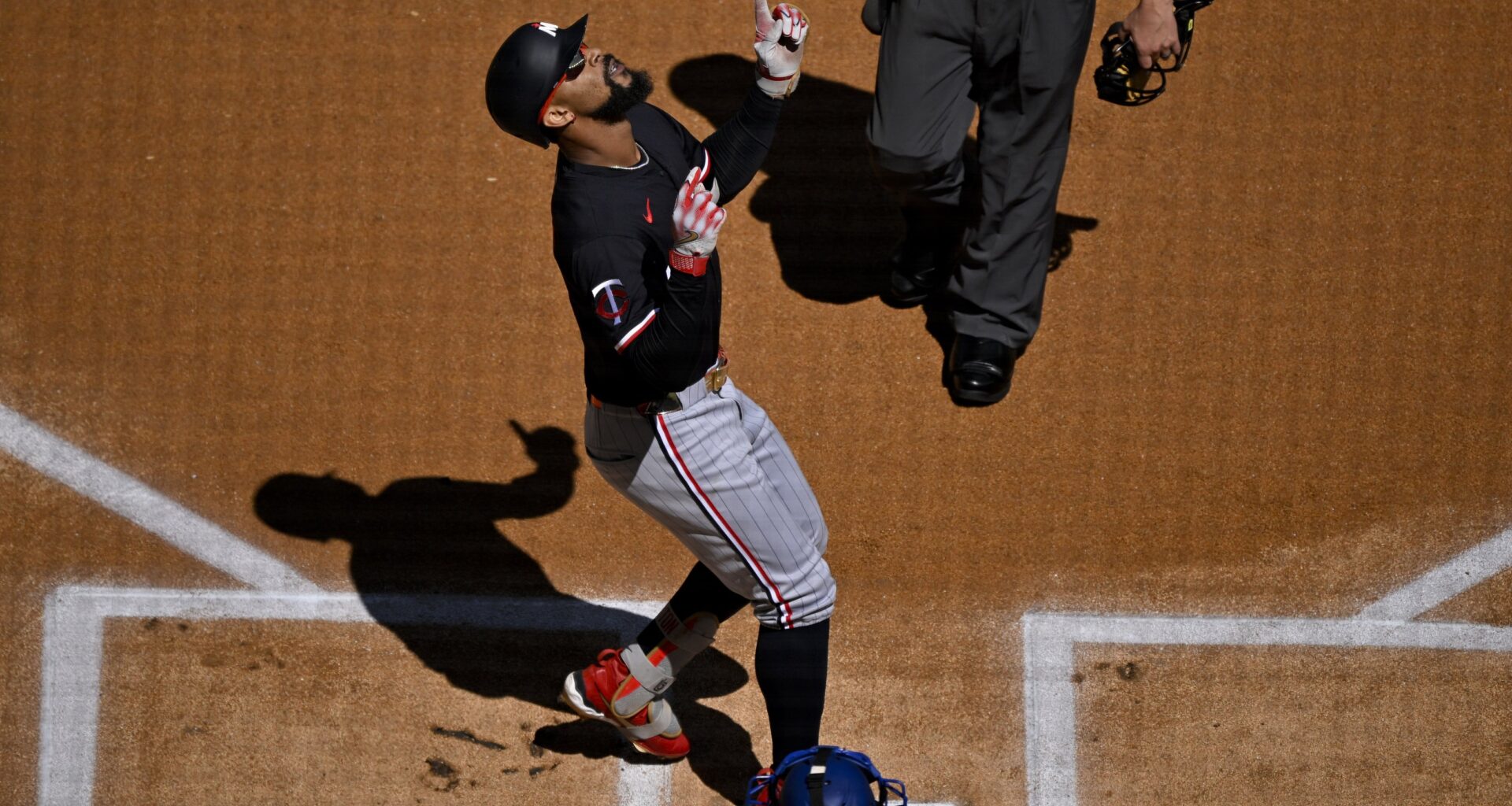
The Minnesota Twins’ front office walked into the winter meetings and did something fans probably needed to hear: they said they are not interested in trading Byron Buxton, Joe Ryan or Pablo López this offseason. Given the smoke surrounding all three in recent weeks, that was no small statement.
And honestly, that is exactly how it should be. These are the types of players competitive teams collect, not unload. You build a core around them. You do not move them unless you are ready to admit that the window is closed and the locks have rusted shut.
But even with that reassurance, fans are not imagining the tension. The Twins looked very much like a franchise walking the line between competing and retrenching. Last year’s deadline, which involved shedding bullpen arms and clearing money, suggested a team bracing for a softer landing in 2026 rather than gearing up to sprint.
That is why, despite the front office’s public stance, it is still plausible to wonder whether the door is completely shut on moving Buxton, Ryan or López. Mid-market teams often operate with different guardrails. They do not have the luxury of outspending mistakes or replacing injuries with premium depth. When payroll projections dip, like this season where the Twins are expected to land well below last year’s post-purge figure of around 130 million dollars and possibly under 100 million dollars, the temptation to convert expensive, high-value players into multiple lower-cost future contributors becomes very real. It is not desirable from the fan perspective. It is not energizing. But it is a reality that front offices in this economic tier confront regularly.
Teams in this bracket build and rebuild in rolling cycles. They hold their stars until they cannot justify the next contract or until the payroll crunch tightens. They trade premium players not because they want to but because the structure demands it. That is the context sitting quietly underneath the front office’s reassurance.
First: Buxton.
He is coming off the healthiest season we have seen in years. He energized the lineup, stabilized center field, showed MVP-caliber flashes and brought the type of charisma and presence that cannot be taught. However, he also carries the lingering reputation of injuries, being on the wrong side of age-30, and the uncertainty surrounding a potential 2027 work stoppage. If a missed season or partial season affects the remaining years of his team-friendly contract, the calculus shifts. For a mid-market team, this winter might have been the moment to capitalize on maximum value if they wanted to.
Second: Ryan and López.
Top-of-the-rotation arms don’t just walk around unattended. If you’re rebuilding, these are your most valuable trade chips. But if you’re trying to compete—even on a budget—they’re the exact pieces you refuse to entertain offers on. The Twins planting a flag here suggests they view 2025 not as a step-back year but as a bridge year they intend to bolster internally rather than detonate.
Third: they understand the fan base.
I mean, it’s hard to believe that this is the case given all the posturing and tone deaf reactions in the recent past. This is not a market that wants to hear about another cycle of waiting for a window to open. Fans want a push toward contention, not a slow retreat in the name of long-term flexibility. The front office knows that trading franchise-level players immediately after trimming payroll would create significant backlash. With attendance dipping into the lowest numbers they’ve seen since the Metrodome years, the front office and potential new partners have to understand they need some kind of revenue stream and unloading star talent would result in Target Field becoming the place where moss collects on empty seats.
So their stance matters.
Their core stays intact. Their best players remain.
However, the underlying economics do not go away. The Pohlad family could choose to spend well beyond mid-market ranges, but they have opted instead to operate within them. If the Twins were to reverse course and entertain offers for Buxton, López or Ryan, the payroll projection would collapse quickly. What currently looks like a moderate dip from 130 million dollars could fall below 100 million dollars. That outcome would invite questions about whether the competitive timeline was being pushed further into the future.
For now, the message is clear.
The Twins are saying they are not rebuilding. It is the correct public stance. The next step is proving that keeping this group together leads to something greater than a reassuring sound bite.