
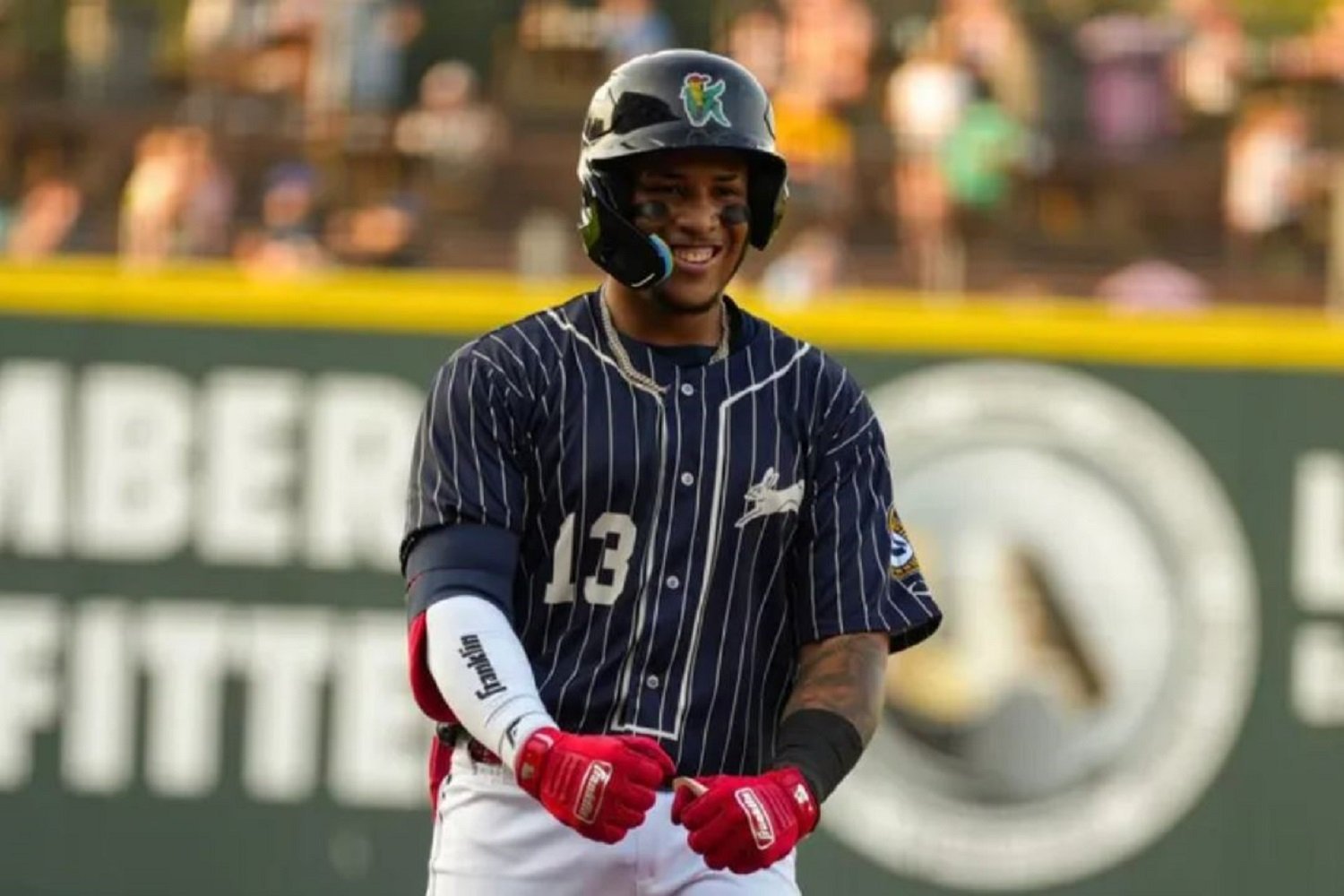
Image courtesy of David Malamut, Cedar Rapids Kernels (Photo of Eduardo Tait)
The Twins’ farm system has undergone significant restructuring in recent years, but the organization remains committed to developing waves of talent to complement the big-league roster. Some years produce star-level prospects while others deliver depth, but Minnesota has consistently found value across the age spectrum. Identifying a top prospect in every age group offers a unique view of how well the system is layered. It also highlights how the Twins continue to invest in both high-end draft picks and international signings, which gives the farm system balance and long-term upside.
From teenagers just getting their first taste of professional baseball to pitchers and position players closing in on Target Field, every tier of the system features someone capable of making an impact. This age-based snapshot shows the range of tools, projections, and developmental paths that make the Twins one of the more intriguing organizations to track as their next wave forms.
Age 17: INF Haritzon Castillo
Castillo is one of the freshest names in the system, but he already carries the look of a fast riser. Signed out of the Dominican Republic, he has impressed evaluators with a fluid swing that produces consistent line drive contact. In 39 games last season, he hit .283/.395/.428 (.823) with 13 extra-base hits and a 117 wRC+. He moves easily in the infield with enough athleticism to project to multiple spots. While he is still years away, his baseball instincts have already put him ahead of most players his age.
Other Candidates: INF Santiago Leon, RHP Santiago Castellanos
Age 18: SS Quentin Young
Minnesota took Young with their second-round pick last July, and he has quickly become one of the most exciting young shortstops in the organization. His combination of smooth defensive actions and emerging offensive impact gives him a strong foundation to build on. He went 2-for-17 in his pro debut, but it was a small sample size. The Twins love his ability to control the strike zone, and the added strength has started to translate into more loud contact. His ceiling is still forming, but the ingredients are all there for a significant leap.
Other Candidates: OF Jhomnardo Reyes
Age 19: C Eduardo Tait
Tait was the top prospect acquired in the Jhoan Duran trade. He is coming off a breakout season in which he showed advanced feel for hitting and surprising pop for his age. In 112 games, he hit .253/.311/.427 (.738) with a 103 wRC+, while being four years younger than the average age of the competition at High-A. His receiving continues to improve, and the Twins believe he can develop into a strong defensive catcher as he matures. The bat is already ahead of schedule, and his balanced approach should allow him to move quickly. Minnesota has needed catching depth, and Tait has positioned himself as a key part of that future.
Other Candidates: LHP Dasan Hill, RHP Matt Barr
Age 20: OF Walker Jenkins
Jenkins remains the centerpiece of the entire system. His five-tool profile and polished plate approach make him one of the top prospects in baseball. Last season, he finished the year at Triple-A and still combined for a 135 wRC+. Even as one of the younger players at his level, he has shown the ability to make adjustments quickly and consistently drive the ball with authority. His overall game continues to trend upward, and he has arguably the highest ceiling of any player to come through the Twins system since Byron Buxton.
Other Candidates: RHP Charlee Soto, IF and OF Brandon Winokur
Age 21: SS Marek Houston
Houston has become one of the more intriguing infielders in the organization thanks to his smooth defensive ability and growing offensive confidence. The Twins took him with the 16th overall pick in last June’s draft and pushed him to High-A in his pro debut while slashing .270/.330/.350 (.680). His range and arm strength allow him to stay at shortstop long term, and the Twins think there is more power to come as his body matures. With a strong work ethic and improved plate discipline, he could take a significant step forward next season.
Other Candidates: OF Gabriel Gonzalez, RHP Riley Quick
Age 22: SS Kaelen Culpepper
Culpepper was the Twins Minor League Player of the Year after he flashed across multiple levels this year with a dynamic skill set. In 113 games, he hit .289/.375/.469 (.844) with a 138 wRC+. He is a reliable defender at shortstop, after questions about his ability to stick at the position during the draft process. His offensive approach continues to tighten with more consistent at-bats. His ability to impact the game in multiple ways keeps him firmly in the conversation as one of the system’s most dependable upper-level infielders.
Other Candidates: OF Emmanuel Rodriguez, C Khadim Diaw
Age 23: LHP Kendry Rojas
Minnesota spoke highly of Rojas when they acquired him as part of the Louis Varland trade. He has emerged as the top left-handed arm in his age group thanks to a sinker and one of the better sliders in the system. In 69 innings, he posted a 4.70 ERA with a 28.8 K% and a 10.3 BB% while being over five years younger than the average age of the competition at Triple-A. If his slider continues to develop, he could project as a playoff-caliber starter with room to grow. The Twins value his competitiveness and steady progress.
Other Candidates: RHP Marco Raya, IF Billy Amick
Age 24: LHP Connor Prielipp
Prielipp is finally starting to resemble the dominant pitcher he was before Tommy John surgery. His slider remains a true out pitch, and the Twins have been encouraged by his increased velocity and improved command. In 2025, he posted a 4.03 ERA with a 27.0 K% and an 8.5 BB%. If he can maintain health, Minnesota believes he could push for major league innings sooner rather than later. Derek Falvey mentioned him as a potential option for Minnesota’s revamped bullpen, and he has the upside to be a dominant late-inning lefty.
Other Candidates: RHP Andrew Morris, RHP Mick Abel
This age-based breakdown shows how deliberately the Twins have built their farm system. Each tier offers something different, and together they create a foundation that can support both short-term needs and long-term aspirations. Players like Jenkins and Culpepper are nearing the doorstep, while younger talents such as Castillo and Young provide hope for the next wave. It is a reminder that, even as the major league roster shifts, reliable talent is developing just beneath the surface.
Do you agree with the rankings? Should any of the other candidates be the top choice? Leave a comment and start the discussion.