
 *This is a Prediction*
The New York Mets enter the upcoming offseason with one clear objective: find a dependable, top-tier starting pitcher who can anchor a rotation that has been inconsistent, injury-ridden, and lacking a true veteran tone-setter.
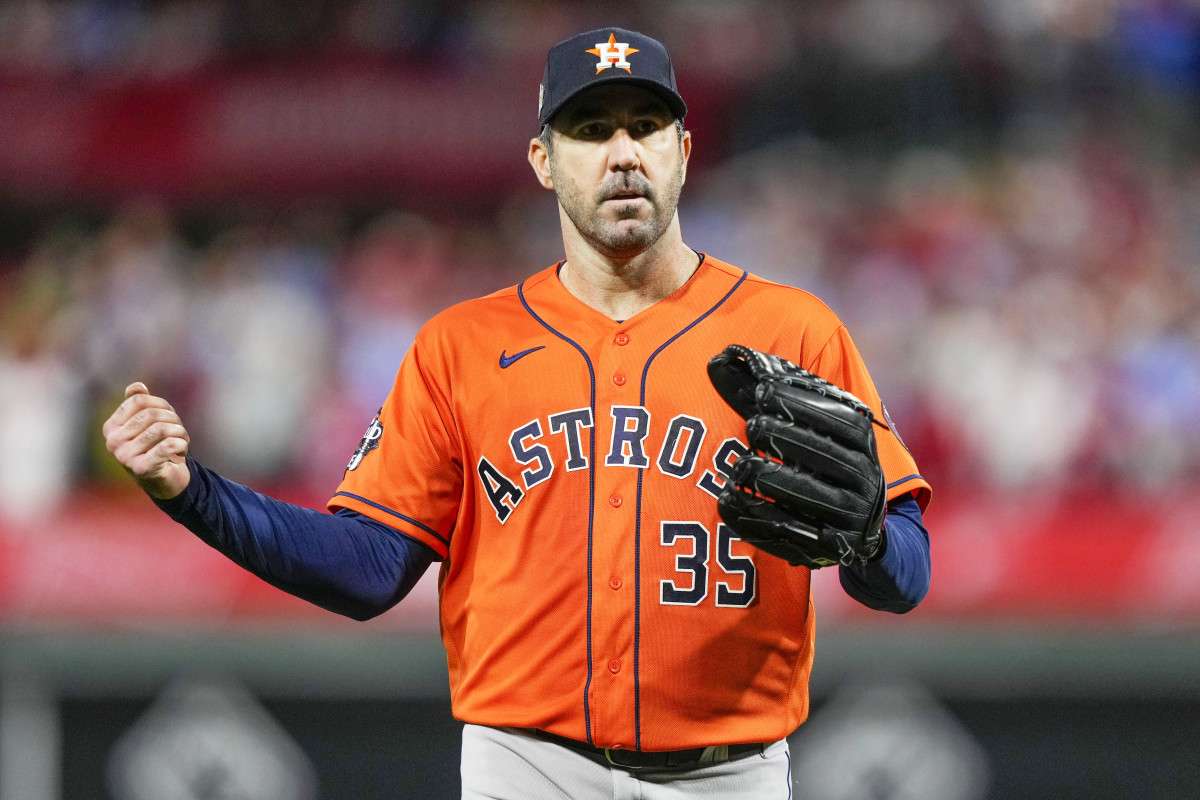
While several arms will be available, none fit the Mets’ immediate needs better than Justin Verlander. Even at this stage of his career, Verlander remains the type of stabilizing force that transforms a pitching staff the moment he signs.
More MLB Content From TWSN:
New York Mets Sign Kyle Schwarber
San Diego Padres Trade Fernando Tatis Jr to the New York Yankees
Tarik Skubal Will Be Traded to the Houston Astros
The Mets need the ace, a true No. 1, and there are several possible avenues to pursue, both via trade and free agency. Tarik Skubal is an intriguing option, though executives around the league strongly doubt that Mets president of baseball operations David Stearns would surrender the massive prospect haul required to land him for 2026 and then commit roughly $400 million when Skubal hits free agency next fall.
They could explore a deal for Joe Ryan, but multiple executives say the Twins have shown no indication they’re willing to move him. Another path is targeting Framber Valdez, arguably the top starting pitcher set to hit the market.
Whoever they land, the mission is clear: the Mets desperately need a frontline ace, and that could be Verlander.
The Mets don’t necessarily need a long-term solution—they need reliability, experience, and someone who can give them quality innings right away. Verlander checks every box.
His 2025 season proved he still has elite competitiveness left in the tank. Across the year, he posted a 3.88 ERA with 142 strikeouts, 44 walks, and a 1.20 WHIP over 157⅔ innings, demonstrating both durability and above-average production for a veteran entering his 40s. For a Mets team that saw its rotation constantly reshuffled due to injuries, underperformance, and lack of depth, those numbers are not just appealing—they’re essential.
What Verlander brings goes beyond the stat line. He offers championship pedigree, postseason fearlessness, and a meticulous approach to preparation that sets a standard for an entire clubhouse.
The Mets have several young pitchers developing within the organization, but without a veteran who knows how to navigate a full season, setbacks are inevitable. Verlander serves as both mentor and insurance policy. Pitchers tend to elevate their game when surrounded by greatness, and Verlander’s work ethic alone would be a massive asset.
Financially, Verlander also makes sense. At this stage, he won’t command a long-term mega-deal. Instead, he fits the mold of a short-term, high-AAV signing that does not handcuff the Mets’ future payroll flexibility.
Unlike pursuing a massive trade for an ace—such as Tarik Skubal or Joe Ryan, which would gut the farm system—Verlander costs only money. No prospects, no draft picks, no long-term commitment. For a franchise that has repeatedly vowed to maintain a strong pipeline while still competing immediately, this is the perfect blueprint.
Furthermore, bringing Verlander back sends a message. It tells the fanbase and the clubhouse that the Mets want to win now, not later. Verlander brings credibility, leadership, and stability—three things the Mets desperately lacked throughout 2025.
If New York wants instant improvement without sacrificing its future, signing Justin Verlander is the exact move that bridges that gap.