
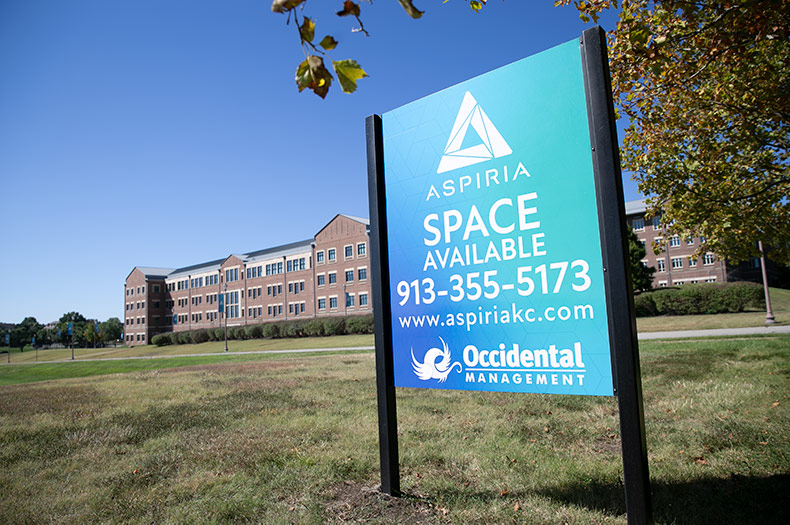
The prospect of the Royals’ new stadium landing so close to their neighborhood in Overland Park has residents like Sarah Gulledge worried about the impact on their lives and community.
Gulledge, the president of the Hawthorne Valley Homeowners’ Association southeast of 119th and Nall, was originally attracted to the area right on the border of Overland Park and Leawood because of the suburban bliss it offered, the good schools nearby and its proximity to where her husband grew up.
She thinks a baseball stadium — like the one the Royals are pondering building at the 200-acre Aspiria campus nearby — “would ruin the neighborhood feel of the area.”
Gulledge and her neighbors have several concerns, but chief among them are the increased traffic on gamedays, a loss of peace in their neighborhood and the noise that will come with a stadium.
“I just don’t understand the impetus to plop a professional baseball stadium right in the middle of a suburban neighborhood where most of the people there don’t want it,” she said. “I don’t understand it.
Mark Kelly, president of the Hawthorne Place HOA, further south near 123rd and Nall, has lived in his neighborhood for more than 25 years. He said he doesn’t know of anyone in his neighborhood who is for a stadium so close to their homes. He worries it would “overwhelm that community.”
“I think that Overland Park would be making a big mistake to approve this project,” he said. “I’m afraid [a stadium would be] just a little bit too much.”
It’s with all that in mind that several Hawthorne neighborhoods and their HOAs have started to band together to vocally oppose the stadium.
“All of the things that go with it just don’t sound appealing to anyone who lives there,” Gulledge said. “We have a nice, quiet, safe neighborhood, and I think that this would completely change it.”
How did we get here?
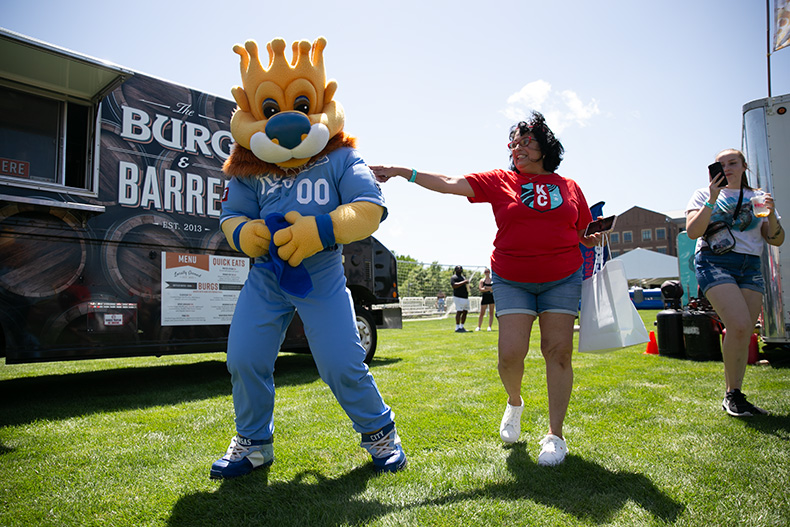 Royals mascot Sluggerrr made an appearance at a World Cup pep rally at Aspiria in Overland Park earlier this year. Photo credit Leah Wankum.
In the last year or so, the Aspiria site has been identified as one of at least three possible locations for the team’s future ballpark as it plans to vacate Kauffman Stadium when its lease runs out in early 2031.
In a recent survey sent to fans, the Royals asked about a future landing spot for a stadium, and listed Overland Park along with downtown Kansas City, Missouri, and North Kansas City.
In the spring, an affiliate of the Royals acquired the mortgage on the wider Aspiria campus, seeming to confirm what until that point had largely been speculation about the team’s consideration of the site. Occidental Management, a Wichita-based developer, still maintains ownership of Aspiria.
That has raised questions about the future of the Aspiria campus and its numerous existing corporate tenants, including T-Mobile, Black & Veatch, Fiserv, and other large regional employers.
Representatives from Occidental declined to comment on the potential of a Royals stadium on the property. However, Occidental president Chad Stafford, said in an email that they’ve “continued to see very strong leasing activity at Aspiria,” including a recent lease deal with Topeka-based financial services firm Security Benefit Corp.
Looking back on Aspiria:
The site at 119th and Nall was Once the world headquarters of the Sprint Corporation. the telecommunications Giant at one point had wanted to house some 15,000 employees at its Overland Park campus, but that vision never fully panned out.
Still, Sprint did build out several office buildings, multistory parking garages and site amenities, like walking trails and an amphitheater, to serve its employees.
In 2019, Sprint sold the office park and undeveloped land to Occidental and began leasing its occupied space back. The following year, when Sprint and T-Mobile merged, t-Mobile took over the lease, and to this day, the company continues to operate some corporate offices on the western portion of the campus. Other tenants have also joined T-Mobile, including HNTB and Hill’s Pet Nutrition.
Eventually, Occidental requested Aspiria be rezoned to a mixed-use district zoning designation.
Though not easily served by public transit, there are hundreds of parking spots at Aspiria today, many of which are in structured parking garages, a carryover from the Sprint days, that are still used daily by workers of T-Mobile and other corporate tenants.
“We want to grow with this project, not be pushed aside by it.”
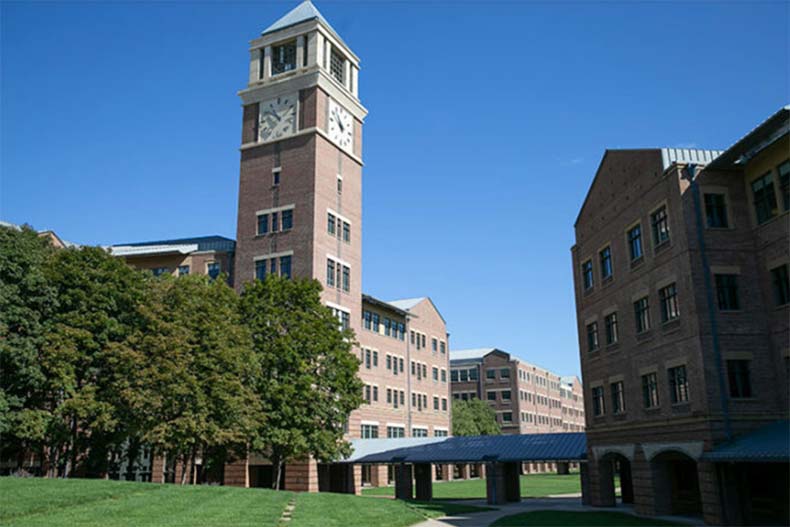 Parts of the former Spring world headquarters campus now dubbed Aspiria serve as corporate offices for T-Mobile and other companies. File photo.
The Hawthorne neighbors aren’t the only ones who have expressed trepidation about the prospect of a Royals stadium and how it might fit in with their community.
Susan Hatten, who owns Lalli’s Boutique at Park Place in Leawood just across Nall from Aspiria, said she’s “excited about the possibilities” a new stadium could bring, but at the same time, she has concerns about how it could impact her business.
“A modern ballpark could bring energy, visitors and real economic opportunity to this area— and I support that vision,” she said. “But supporting the stadium doesn’t mean staying quiet about what local businesses need. We want to grow with this project, not be pushed aside by it.”
She also urged the Royals’ ownership team to “include the people already here” in their planning.
“That means clear communication about construction, solutions for access and parking, protections against displacement, and real opportunities for small businesses to benefit from the increased traffic,” Hatten said. “I’m all for the stadium. I’m all for progress. But it only works if the existing businesses in the neighborhood are part of the plan. A project this big should lift everyone — not replace us.”
The issue emerged in the recent mayoral election. Incumbent Mayor Curt Skoog has voiced at least qualified support for the team moving to Overland Park, saying he wants to make sure the Royals remain in the Kansas City metro.
Skoog’s challenger, former Overland Park city councilmember Faris Farassati, forcefully opposed any plans for the team to move to Overland Park,
After Skoog won on Nov. 4 by roughly 40 percentage points, Farassati has still kept hammering the issue. He started a Facebook group called “No Stadium in OP.” He’s also organized what he’s billing as a community forum on the Royals possibly moving to Overland Park on Monday night.
“Join grassroots groups to discuss concerns and explore ways to move forward in opposition,” a flyer for the forum reads.
Petitions on either side of the issue also recently popped up online within days of each other, both on Change.org.
A petition against a stadium, started by Kelly, the Hawthorne Place HOA president, has more than 1,200 signatures as of Monday. A petition that encourages support for a stadium in Overland Park has garnered 55 signatures.
A spokesperson from the Jewish Community Center — which directly neighbors Aspiria — declined the Post’s request for comment about the impact of a potential Royals stadium in Overland Park.
What would the process look like if the Royals come to Overland Park?
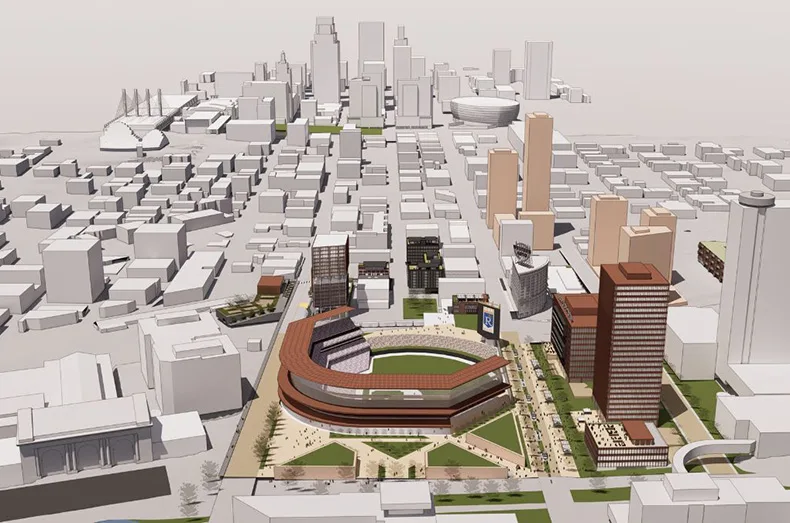 One proposal for a new Royals stadium in Kansas City, Missouri, was at what’s currently Washington Square Park, across Main Street from Union Station. Image rendering courtesy BNIM.
The exact approval process would depend on what kind of application the Royals submitted for a future stadium.
The Aspiria campus is already zoned for mixed-use development, which, according to the city’s municipal code, allows for arenas and “[s]ports or recreational facilities of all types.”
So, it would be unlikely that a stadium would require a rezoning application.
On the other hand, it would likely need a revised preliminary development plan approval from the Overland Park Planning Commission and the Overland Park City Council.
Additionally, a stadium plan would almost certainly trigger a public hearing before the planning commission since the new plan would be substantially different from Occidental’s previously approved plans for Aspiria.
In a written statement to the Post last week, Skoog nodded to the role the city would likely play in ultimately approving a new stadium, if the team selects Aspiria:
“A major league baseball stadium in Overland Park is an exciting possibility. We must approach any project with the same standard we apply to everything we do at the City: It has to be good for Overland Park,” Skoog said. “We know residents, business owners, and other stakeholders have many questions. Our City has a thorough development review process that includes community engagement. Should the Royals make Overland Park their future home, we will work with the team and the community to share information and answer those questions openly.”
Overland Park does require all mixed-use developments to provide a Project Design Manual, which would include “illustrative plans” as well as detailed guidance for phasing, street layouts, stormwater management, architectural standards and landscaping.
Eventually, a proposed stadium, like any other project, would also need a final development plan approval, but that might potentially only need to be okayed by the planning commission, unless the city council opted to hear the application. At that juncture, a lot more project details would have to be worked out.
Additionally, since the relative intensity of the use of a baseball stadium — that is, its scale, height and density — would be higher than the developments previously envisioned for the Aspiria campus, the city is likely to require updated traffic plans, as well as further infrastructure upgrades to accommodate it.
Last month, a revised site application for Aspiria was withdrawn, dealing specifically with transportation improvements on Nall Avenue tied to the active mixed-use development plans for Aspiria.
But other developments on portions of the site have continued apace.
Just last month, the planning commission approved final development plans for two new restaurants, Capital Grille and Yard House, near 115th Street and Nall.
Andretti Indoor Karting & Games also recently celebrated the opening of its new location at Aspiria, and the city signed off in early 2025 on more retail development nearby.
Special STAR incentives might not require local approval
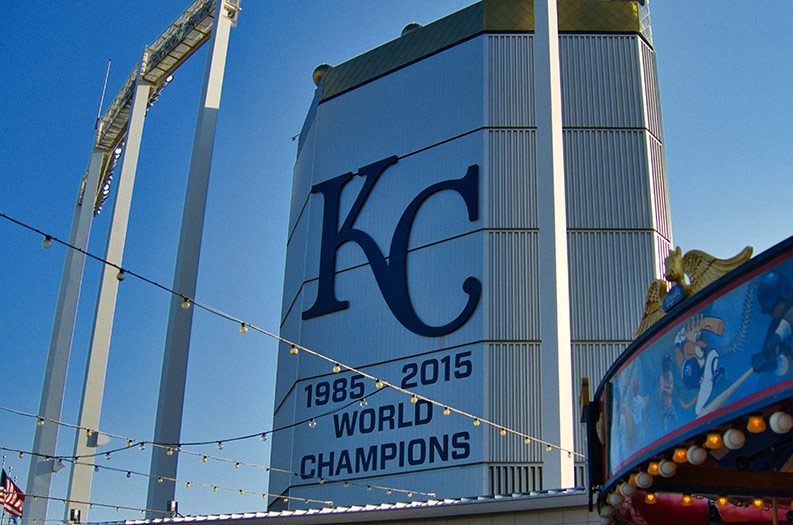 Kauffman Stadium at the Truman Sports Complex in Kansas City, Missouri. Photo credit Shutterstock.
On the public financing incentives side of things, Overland Park wouldn’t necessarily have a say in the decision to make state-backed STAR bonds available to the Royals.
Those are Sales Tax and Revenue bonds, a type of incentive available in Kansas that is designed to support development that will spur entertainment and tourism destinations, according to the Kansas Department of Commerce.
Under that framework, debt accrued from bonds issued along with interest are meant to be repaid over time with sales taxes raised from within the project’s established boundaries.
However, the Kansas Legislature crafted a law last year that would allow STAR bonds to cover up to 70% of the cost of constructing a new professional sports stadium for the Royals and/or the Chiefs. (STAR bond financing is usually capped at 50% of a project’s costs.)
The law, enacted during a special session, originally had a deadline of this past summer, but that was pushed back to summer 2026 after the earlier deadline ran out.
That special dispensation also eliminated the requirement to get the approval of the local jurisdiction, instead deferring that authority to the Secretary of Commerce, who is currently Lt. Gov. David Toland.
If a city doesn’t agree to the formation of a special stadium STAR bond district, local sales taxes would not be used to finance the project unless otherwise authorized by that local government within 60 days of approval.
Though there’s still technically six months left on the clock under the extended deadline on the special STAR bond law for stadiums, the Legislative Coordinating Council — made up of leaders from both parties in both the Kansas House and Senate — has given the Kansas Department of Commerce and the team until Dec. 31 to present a deal for consideration.
Neighbors still urge state, city officials to listen to them
Gulledge, from the Hawthorne Valley HOA, doesn’t want to see the neighbors’ voices lost in all of this.
“[State and local leaders] would need to think very carefully about listening to the residents that live there, their constituents, rather than thinking about the money they could make off of it,” she said.
Likewise, Kelly, from the Hawthorne Place neighborhood, urged officials “to please think twice” when it comes time to making decisions tied to a potential Royals stadium in Overland Park.
“I know that they see it as a feather in their cap to capture a major league sports team. I don’t think in the long run that this is going to prove beneficial to our area,” he said.
Gulledge and other neighbors worry that residents are getting forgotten in the conversations so far.
“It’s very important to take into account what we, the people who live right there, would prefer, because it’s going to affect our quality of life every day, and I think that that should be important to them,” Gulledge said.
Lucie Krisman contributed reporting to this story.
Looking back: Royals surveying fans about 3 possible future stadium sites, including Overland Park