
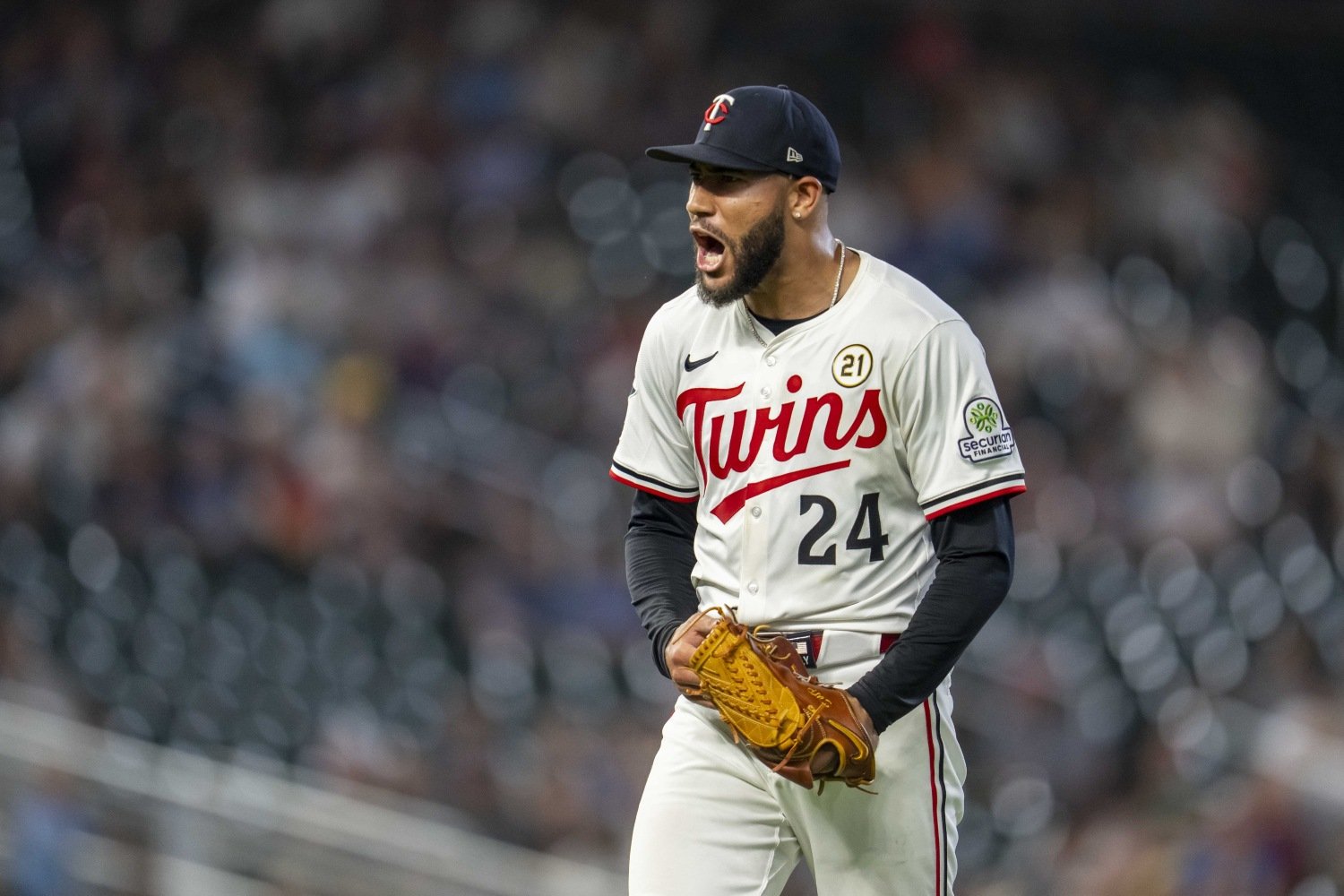
For the past few years, the Twins have focused on accumulating starting pitching depth. The earliest form of this pattern probably dates back to 2021, when they had a full rotation of Kenta Maeda, José Berríos, Michael Pineda, JA Happ, and newly-extended Randy Dobnak, but still elected to sign journeyman Matt Shoemaker to a deal that bumped Dobnak to a long-relief, swingman role to begin the season. Lewis Thorpe and Devin Smeltzer, two lefty swingmen who had parts of two years of MLB experience, were also in the system as high-minors depth.
If you were watching the Twins at all at that time, you know how it ended. But the intention seemed clear: the club did not want to be caught without enough rotation depth, and Shoemaker was another buffer against that eventuality.
The following season, the club opened the year with six starting pitchers on the Opening Day roster: Sonny Gray, Joe Ryan, Chris Paddack, Dylan Bundy, Chris Archer, and Bailey Ober. Smeltzer, Josh Winder, and Cole Sands were also in the system, though Winder and Sands were not really seen as MLB-ready starters, and neither had debuted.
In 2023, the team made the controversial decision to start Ober at Triple-A St. Paul, deferring to Gray, Ryan, Maeda, Tyler Mahle, and newcomer Pablo López to form the rotation. Exemplifying the value of starting pitcher depth, Ober was promoted in April to take Mahle’s place. Behind him on the depth chart, though, was Louis Varland, who had five promising big-league starts the year prior and was seen as one of the more exciting pitching prospects in the system.
That campaign served as the sign that the Twins were truly all-in on this strategy. They had six pitchers who looked like quality big-league starters, one more prospect seen as ready, and they even had Paddack as a potential late-season wild card if his recovery from Tommy John surgery was successful. Even so, they had to rely on a short run of starts from 35-year-old Dallas Keuchel.
They attempted to do the same in 2024, though the cupboard was a bit more bare. López, Ryan, Ober, and Paddack returned to the rotation, and Anthony DeSclafani was slated to round out a rotation filled with established starters. Varland assumed the 2023 Ober role, as a starter with major-league experience sent down to keep warm in St. Paul until the need arose—and boy did it arise quickly, as the injured DeSclafani never pitched for the Twins, and Varland made the Opening Day rotation.
Behind Varland was Simeon Woods Richardson, who had two appearances across two years, but he had impressed in spring training, and he looked ready to get some run. He got that chance after Varland struggled enough to be demoted in April. Behind Woods Richardson was David Festa, who had no big-league experience, but he did look likely to be ready at some point in 2024. Sure enough, he was called up in June.
Finally, this season, the Twins took a similar tack, beginning the season with López, Ryan, Ober, Paddack, and Woods Richardson in the rotation, leaving Festa and Zebby Matthews—two top prospects with their debuts out of the way—waiting in the wings.
In each of the past three seasons, the Twins have started the season with at least two young pitchers with MLB experience at Triple A: Ober and Varland in 2023; Varland and Woods Richardson in 2024; and Festa and Matthews in 2025.
Did you need this history lesson? Maybe. It’s relevant to the 2026 rotation picture.
Assuming no trades—which may be a big assumption, depending on your view on the status of López and Ryan, even after Ken Rosenthal’s recent report—the Twins will have eight different rotation options with experience in the bigs. López, Ryan, Ober, Woods Richardson, Festa, Matthews, Taj Bradley, and Mick Abel each started at least eight games at the highest level last season.
López, Ryan, and Ober seem like locks to be in the rotation (if they’re still in the organization), and Woods Richardson is out of options, seemingly locking him into the big-league roster in some role. That leaves Festa, Matthews, Bradley, and Abel in some limbo; each has at least one minor-league option year remaining.
Will the Twins once again start the season with at least two pieces of depth at Triple A? It seems likely, given previous years. Perhaps Bradley will get the nod for the fifth rotation spot, leaving Matthews and Festa (both of whom have 25 games of big-league experience) as the first and second lines of defense against injury and ineffectiveness. This would push Abel, the secondary piece of the Jhoan Durán trade, to the third reserve spot.
That spot has generally received about five starts per season over the past five years of Twins baseball. That’s probably fewer than anyone who has any level of belief in Abel as a starter would want him to get in his age-24 season. The eighth spot has been set aside for players like Thorpe or Sands in many seasons, not a recently graduated fringe top-100 prospect.
So what do the Twins do? Do one of those eight get moved to the bullpen? Woods Richardson doesn’t profile as a bullpen candidate, and it might be hard to justify moving Bradley—acquired in a one-for-one swap for Griffin Jax—to the bullpen after three seasons in MLB rotations.
Matthews and Festa are both names that could be considered bullpen fodder, as each has shown bright flashes but struggled—which is also an argument for Bradley, I suppose. And Abel probably has the brightest flashing “RELIEVER RISK” light of them all. But will the Twins make such a decision?
Further complicating things are Connor Prielipp and Kendry Rojas, two Triple-A pitchers added to the 40-man roster last month to protect them from the Rule 5 Draft. Both seem poised to debut in the next season or two, and have upsides as high as any of the other fringe arms listed. This crowding may further push the Twins to make reliever decisions—or perhaps even trade decisions—on the 10 internal names who are on the radar at this point.
How would you handle this, though? As the offseason goes on, there will be a ton of discussion as to what the team should do with all these golldang pitchers. There’s one more lesson they should have gleaned from the last few years: Letting a logjam slowly unclog itself through accident and injury risks stunting the development of some of the arms making up that jam. Proactivity matters.