
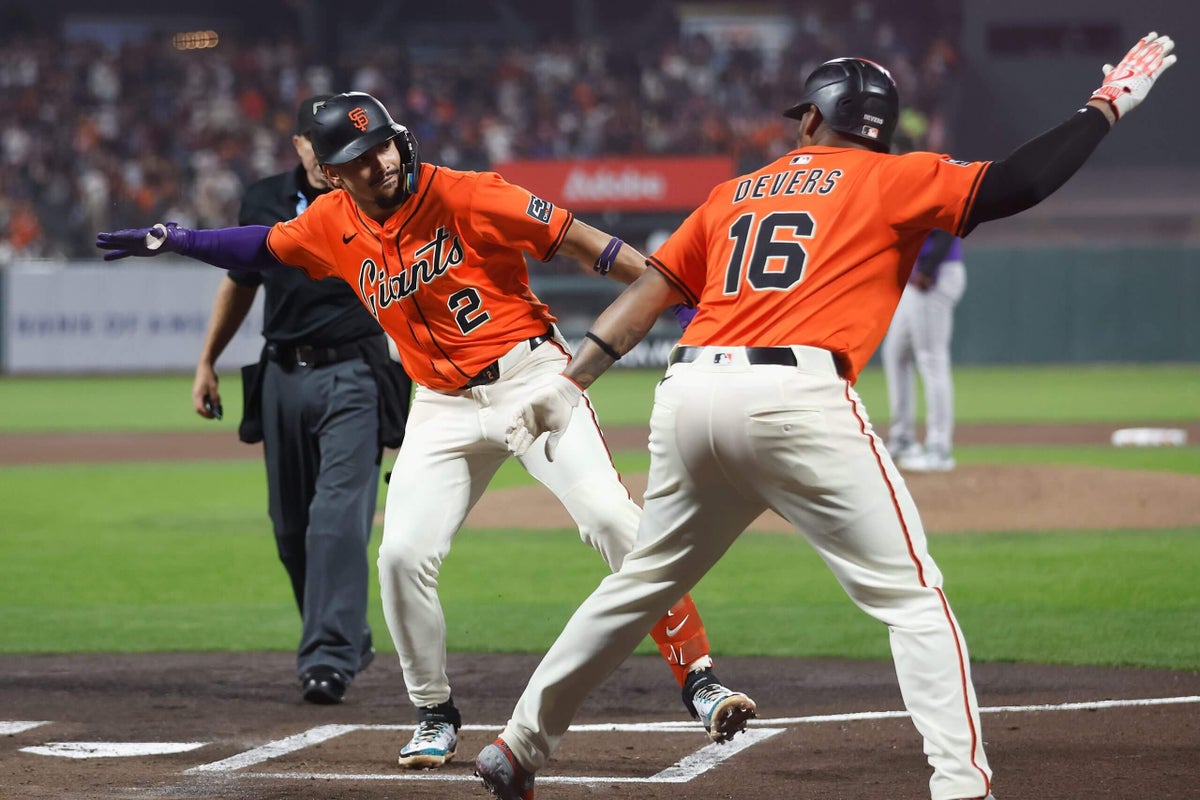
In about 18 months, there won’t be baseball games to write about. I was already running out of ideas in 2020 when the 60-game season started, and I used all of my best ideas in the beginning. Maybe they’ll let me publish restaurant reviews. You get words, I get a tax write off, everyone wins.
Major League Baseball’s collective bargaining agreement is expiring after the 2026 season, and the owners want a salary cap. They might not dig in, considering all of the uncertainty with media rights and regional sports networks around the league, but it’s hard not to be a pessimist. Fans are ticked at the Dodgers in a way that they weren’t in 2022, and the owners can use that. They can feed on it, like the villain cackling over a dark orb in an ‘80s cartoon.
That means we should savor baseball games in 2026 like the last quarter of water in a canteen, and Giants fans should hope for the best durned baseball team possible. And for the eternal optimists out there, there’s hope. When the lineup worked last season, it really worked. With an upgrade or two, it’s good enough to be a postseason lineup, and not just in the “happy to be here” sense. A full season of Rafael Devers and a more comfortable Willy Adames is just the start.
And then after that, there might not be a year of baseball.
When the sport returns after a potential lockout, the lineup might not be as fun.
To help with a look into the future, we’ll get some assistance from Baseball America, which includes a fun, forward-looking exercise as a part of their annual Prospect Handbook, where they project what rosters for each team will look like after three seasons. It’s less about predicting the future and more about where that organization stands. The exercise asks two questions: Does the team have a long-term solution at the position in the big leagues already? And, if not, who would be the internal option based on what we know right now?
Here’s an example from the 2007 Prospect Handbook, when they were trying to project the Giants’ 2010 roster:
Catcher — Eliézer Alfonzo
First baseman — Travis Ishikawa
Second base — Kevin Frandsen
Shortstop — Emmanuel Burriss
Third base — Angel Villalona
Left field — Eddy Martinez-Esteve
Center field — Fred Lewis
Right field — Nate Schierholtz
No. 1 starter — Matt Cain
No. 2 starter — Tim Lincecum
No. 3 starter — Jonathan Sánchez
No. 4 starter — Matt Morris
Closer — Brian Wilson
Buster Posey was still in college, a long way from leading the Giants on and off the field. Baseball America didn’t know the Giants would draft Madison Bumgarner a couple of months later, or that he would arrive in the majors before he turned 21. Brandon Belt and Pablo Sandoval were already in the system, but neither was on the Giants’ top-30 prospect list yet. And there definitely wasn’t anyone who was expecting the Giants to come away from those Winter Meetings with a brand new ace (Barry Zito).
You can see the bones of the championship team in place with that exercise, but you can also see all the work the Giants still had to do. They were going to have to build a lineup, and they were either going to have to pay for it, trade for it, or develop it. They developed it, for the most part, and many t-shirts were sold.
Here’s the 2026 version of the exercise, which projects the 2029 roster (2029 ages in brackets):
Catcher — Patrick Bailey (28)
First baseman — Bryce Eldridge (24)
Second base — Willy Adames (33)
Shortstop — Josuar De Jesus Gonzalez (21)
Third base — Matt Chapman (36)
Left field — Drew Gilbert (28)
Center field — Jung Hoo Lee (30)
Right field — Heliot Ramos (30)
DH — Rafael Devers (32)
No. 1 starter — Logan Webb (33)
No. 2 starter — Landen Roupp (30)
No. 3 starter — Jacob Bresnahan (24)
No. 4 starter — Keyner Martinez (24)
No. 5 starter — Carson Whisenhunt (28)
Closer — Randy Rodríguez (29)
The lineup looks remarkably similar to the one that finished out the 2025 season, with the addition of a hotshot prospect arriving to move Adames to second. All of these guys will be around for the next few seasons, if the Giants still want them.
The rotation is something you describe at a campfire with a flashlight under your chin. As of now, it’s an organization short on present-day pitching, and it looks like they might be short on it in the future, too.
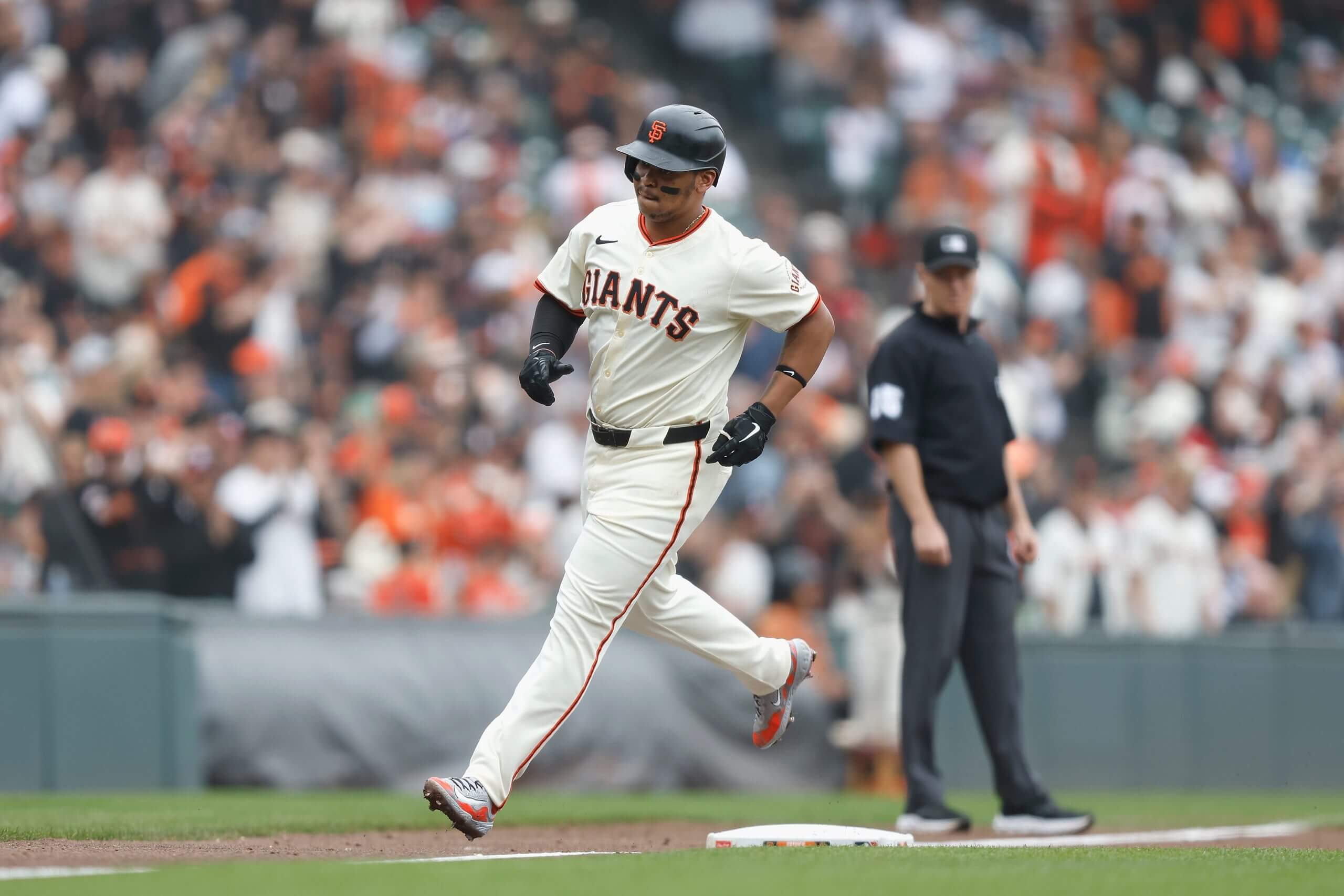
The Giants need to take advantage of Rafael Devers’ prime years. (Lachlan Cunningham / Getty Images)
The most important scrap of information in this exercise for our purposes, though, is the number next to the players. There will be players in their mid-30s. There will be players who have youth on their side right now who won’t have it then. There will be injuries and birthdays, and they’ll have a cumulative effect. Up and down the lineup, if you’re asking yourself if these players are better in 2029 than right now, the answer is likely “no” for everyone except the players who are currently prospects.
This is a bit of a bait-and-switch, considering that Baseball America looks at three seasons in the future, and my concern is with how a lineup might return after playing one season and missing another. I’m shorting these guys a year. Maybe they’re fun in 2028, too.
Still, the larger point stands, which is that the current lineup is a lineup that should be treated with urgency. They’re good now. Right now. Like few lineups in recent Giants history. You can quibble with the right choice of adjective, but it’s hard to imagine anyone thinking it’s not a good enough lineup to contend with some roster upgrades.
There have to be upgrades, though. If it’s not coming in free agency, and there have been mixed signals on that front, it’ll have to come in a trade. And while there’s been all sorts of speculation that the Giants might trade Bryce Eldridge, I’m with Andrew Baggarly in that article. I don’t think Posey’s talking up his best prospect because he’s playing seven-dimensional backgammon, here. I think he’s talking him up because he’s a heckuva prospect.
On Monday, a writer asked Posey about the lineup and if the team leader had thought of how Devers and Eldridge could coexist in the same long-term plans. After a bit of a pause, Posey dryly said, “Yeah. One of them could play first base, and one of them could DH.” The timing was everything, and it was played for a bit of a laugh, but behind the joke was an obvious truth: Yes, they’ve thought about keeping Devers and Eldridge on the same team. There’s a chance it would suit their needs very, very well. There’s a chance that might happen as soon as next season.
Even if the Giants don’t trade Eldridge, they can still make substantial upgrades, which brings us back to the original point. Now. This is a lineup that might do some really fun things now. And if there’s not going to be baseball next year — or if there’s an annoyingly truncated, lockout-shortened season, even — they’re running out of seasons where they can confidently predict this lineup to be this well stocked with veterans. Now.
If the Giants won’t spend, that would disappoint, and fans would have a right to complain. But the front office should still act like the organizational hair is on fire, so to speak, and attack the present like there isn’t a tomorrow. Because there might not be. This might be this mostly veteran group’s best chance to play some really fun, meaningful baseball. They should get some pitching to celebrate. How the front office does that is their own business. No, it’s literally their business right now. You can look over their shoulders while they work, but be quiet (and maybe eat some Altoids.)