
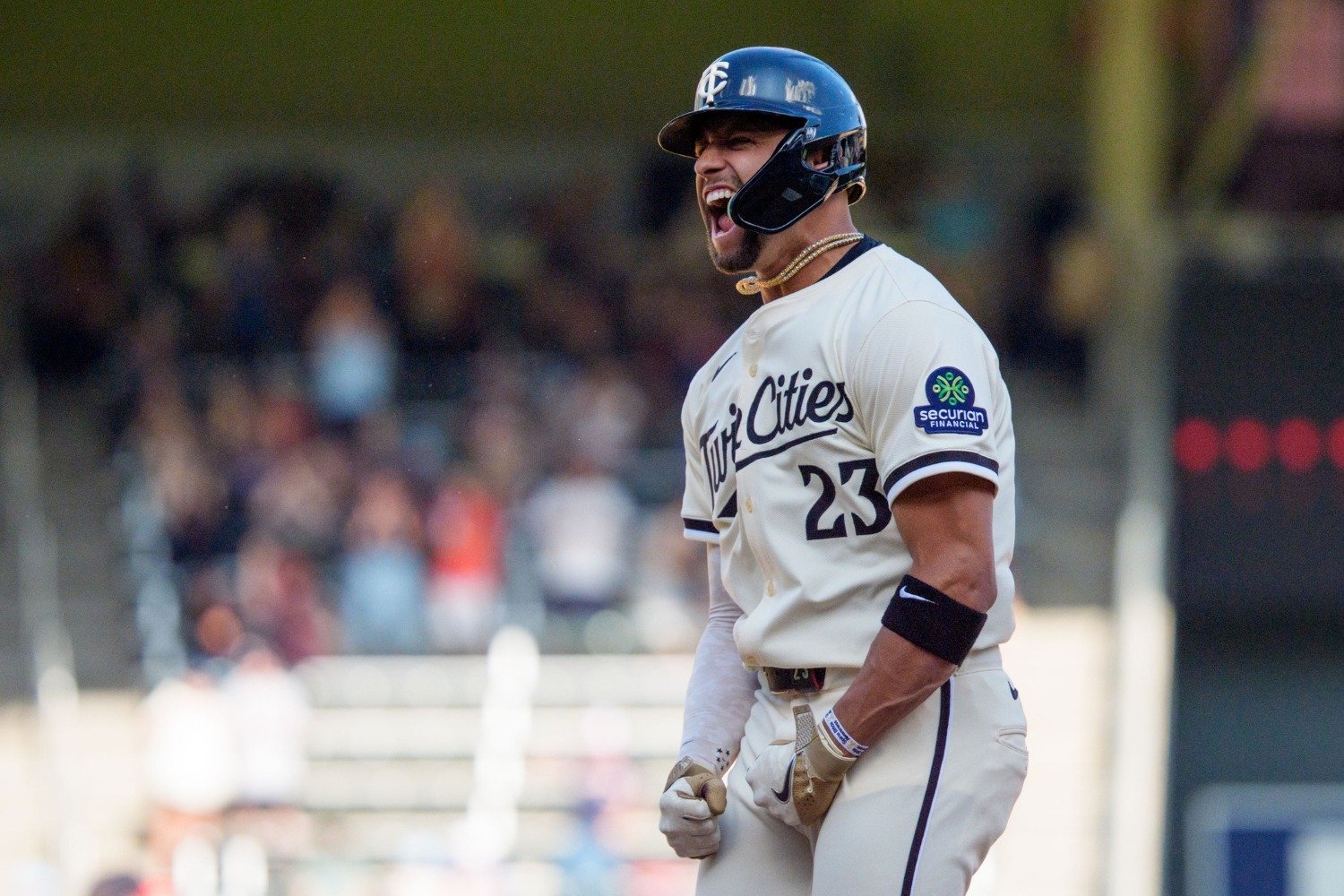
The Minnesota Twins enter Tuesday’s MLB Draft Lottery with the second-best odds at securing the No. 1 overall pick, and they are guaranteed to select in the top 10 for the 2026 MLB Draft.
It’s a rare opportunity for a club that has spent most of the past decade trying to compete while still building internally. Any time a front office gets access to elite amateur talent, the stakes rise. Minnesota’s recent history with premium picks shows promise in some places, frustration in others, and plenty of room for debate, as the club prepares for what could be a franchise-shaping selection.
Here’s a look back at Minnesota’s recent track record with top-10 picks and how those players have developed in the team’s farm system.
2023 MLB Draft: OF Walker Jenkins (5th Overall Pick)
Minnesota used the fifth overall pick in the 2023 MLB Draft on outfielder Jenkins, and his rapid rise through the system has earned him national attention. In many other draft classes, he likely would have been the first overall pick. Few prospects reach Triple A as 20-year-olds, and players who do often develop into above-average big-league regulars.
Jenkins has shown advanced bat speed and a mature approach, but he is still an unfinished product. Last season, he posted a 135 wRC+ in 84 games. There are no guarantees in prospect development, though, and the Twins will need patience as he adjusts to the highest levels of the minors. His trajectory is encouraging, but stardom is not yet assured.
2022 MLB Draft: SS Brooks Lee (8th Overall Pick)
One year before Jenkins, the Twins grabbed college shortstop Lee with the eighth overall pick. His plus hit tool turned him into one of the fastest-moving prospects in baseball, and helped him reach the major leagues ahead of schedule. Minnesota pushed him to Triple-A St. Paul in his first full professional season, and he made his MLB debut in 2024.
That intriguingly natural feel for hitting has yet to translate to production in his early MLB returns. Over the last two seasons, Lee has posted a 75 OPS+ in 189 games. He’s slated to open next season as Minnesota’s starting shortstop, and that comes with pressure on both sides of the ball. The organization still believes his approach and swing will win out in the long run, but it is fair to say he has been more frustrating than fulfilling so far. His upcoming season may be one of the most critical individual storylines on the roster.
2017 MLB Draft: SS Royce Lewis (1st Overall)
Lewis was Derek Falvey’s first premium draft choice as chief of Twins baseball operations, when they selected him first overall in 2017. The Twins took Lewis over a group that included Hunter Greene, Brendan McKay, and MacKenzie Gore, ultimately signing him to an underslot deal to distribute additional money to the rest of the class.
For stretches, that decision looked brilliant. Lewis has flashed superstar ability, launching big home runs and showcasing a dynamic skill set that few players can match. The trouble, of course, is that injuries and inconsistent playing time have made it difficult for the Twins to view him as their long-term anchor. Last season, he played in a career-high 106 games but posted an 83 OPS+. Lewis remains a fascinating talent whose next chapter could swing the team’s overall trajectory.
Looking Back at the Previous Regime’s Track Record
Before the current front office took over, Minnesota went through a stretch of four straight top-10 picks under Terry Ryan. The results were uninspiring, except for one undeniable success story.
Tyler Jay, Nick Gordon, and Kohl Stewart were all selected in the top six picks, but none developed into cornerstone players. Gordon provided some big-league value, but not enough to justify his draft spot. Stewart never found traction. Jay moved to the bullpen and battled injuries.
Byron Buxton, selected second overall in 2012, became the exception. When healthy, he has played at an MVP level and turned into a franchise icon. Without Buxton’s success, that run of picks would be remembered far more harshly.
The MLB Draft remains one of the most unpredictable talent pipelines in sports. Variability in development, wide gaps in competition levels, and the number of professional levels a player must climb after being drafted before getting to the majors all contribute to uncertainty.
Still, teams must hit on top-10 picks if they want sustained success—especially teams like Minnesota, who operate with a below-average payroll. Minnesota’s recent record shows both optimism and caution as it prepares for a potentially pivotal selection in 2026. With the lottery approaching and talent evaluations underway, the Twins know this opportunity does not come around often. The true test will be turning a premium pick into a premium player.
What stands out about Minnesota’s recent top-10 picks? Leave a comment and start the discussion.