
As he focuses on shoring up a pitching staff in need of significant reinforcement, Cubs president of baseball operations Jed Hoyer also knows that he has work to do on the positional side. With Kyle Tucker unlikely to re-sign with Chicago, there’s a hole in the heart of the batting order that helped the team win 92 games in 2025. Hoyer must find a way to enter 2026 with confidence in the production he’ll get from the middle of Craig Counsell‘s lineup, but he has some competing imperatives to consider, too.
Firstly, of course, the Cubs have pressing needs on the pitching side, too. They need at least two more above-average, reliable pitchers, be they starters or relievers. That will take up a major chunk of the spending capacity Hoyer has for this winter—although there’s a lot of money available to him, after the team had a remarkably lucrative year. Whether he ultimately plunges financial resources into those additions or finds a way to swing a key trade, Hoyer will use some of his hot stove fuel bolstering the staff, leaving him with constraints when it comes to the offense.
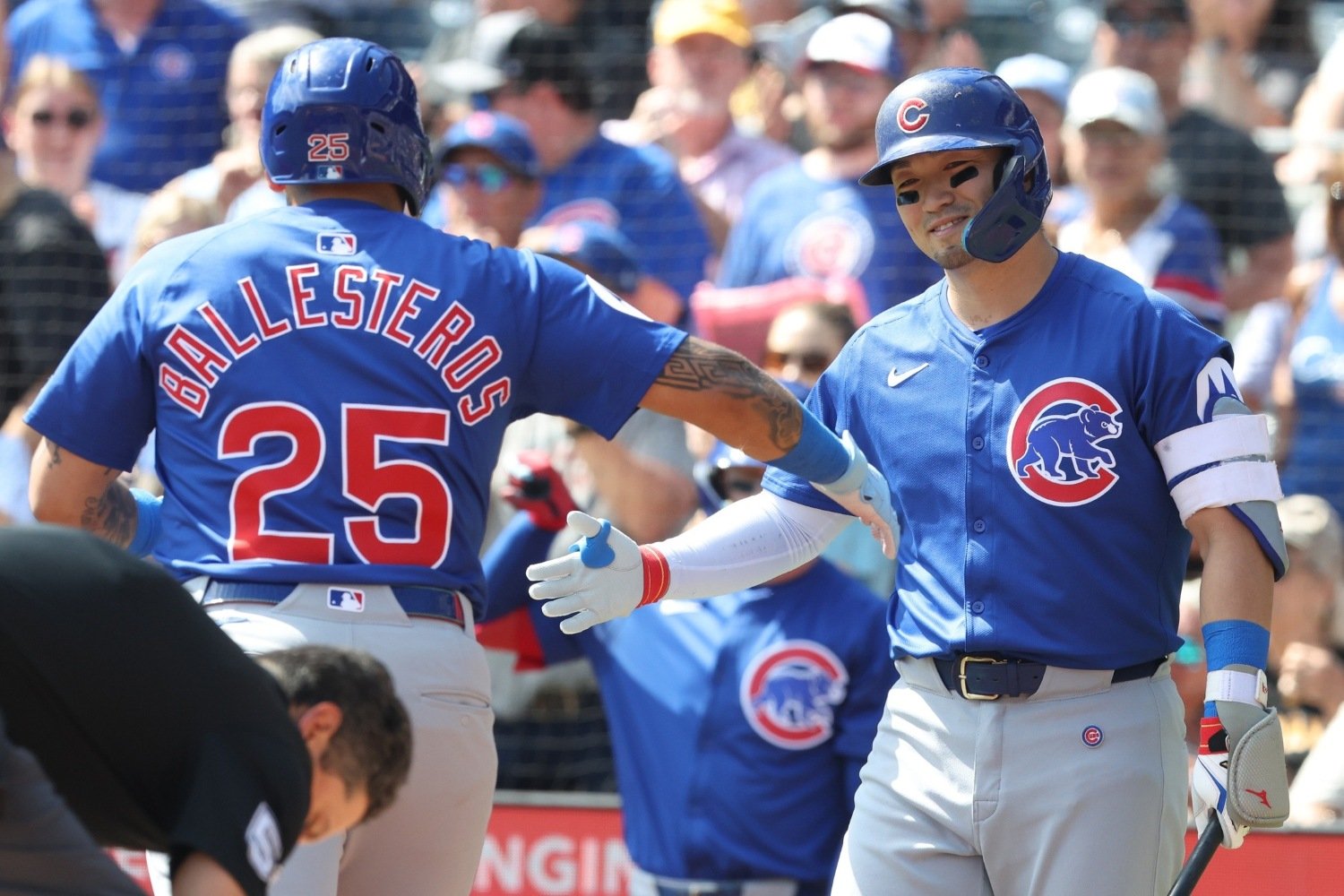
Secondly, he must figure out how to leave space for whichever of the team’s top prospects remain with the Cubs come Opening Day. Another year in Triple A would be a waste of time and talent for Moisés Ballesteros and Owen Caissie, and although Kevin Alcántara has one more option year (thanks to time missed because of injuries), he, too, needs the challenge of some big-league work. The Cubs need to finish 2026 having a much clearer idea of the future roles for each of those three players. There are many ways to achieve that—making Caissie and Ballesteros pieces of a three-player platoon across two roles, along with Seiya Suzuki; letting Alcántara sponge up at-bats as a platoon partner for Pete Crow-Armstrong and a backup to Ian Happ; and/or trying out Ballesteros or Caissie at first base, to spell Michael Busch—but none of them are perfect or obvious solutions.
Speaking of Suzuki and Happ, Hoyer also has a major background problem to navigate. Both of those sluggers will hit free agency after 2026. So will second baseman Nico Hoerner. It seems unlikely that the team will extend more than one of those three, so they’ll need to replace two key hitters for 2027—in an offseason bereft of big-name bats, and under the haze of confusion caused by a likely winter lockout. That doubles the importance of making sure Caissie, Ballesteros and Alcántara are known quantities; one of the set is likely to be asked to take over an everyday place in the heart of the order by 2027. If it can be two, that would be perfect, but the team can’t project that without seeing what they can do over larger samples next year.
That need to play the kids stands in some tension with an equally powerful mandate, though. The 2026 Cubs need to win. They need to build upon what they did in 2025 and compete for another NL Wild Card berth. Playing Caissie, Ballesteros or Alcántara every day (or even letting them share a job, but using up two or three roster spots at a time all year) would be a big risk, for a team with high expectations. Average offensive output wouldn’t be enough, either. The team needs a batter who’s worth something like 20 runs above average, and it’s hard to trust that any or all of those three can be that guy.
It’s a dilemma for Hoyer, which means that there’s no perfect solution. In all likelihood, the team will end up charting some middle course. It’s unlikely that they’ll sign Alex Bregman or Eugenio Suárez, but either is certainly possible. Those guys would displace Matt Shaw, at least part of the time, but they’d be with the club for multiple seasons, so they would cushion the eventual losses of Suzuki and/or Happ—or, perhaps, even Hoerner, with Shaw moving to second base in 2027. They’re a better fit for players with youth and upside, like Munetaka Murakami and CJ Abrams, but those guys’ price tags are very uncertain and much will hinge on whether they can be had at palatable costs.
Remaining competitive on a consistent basis over several years is difficult. The Cubs, a large-market team in a sport where large markets have tended to dominate, haven’t met that standard over a full decade since before World War II. To change that, they have to get the balance just right this winter. Hoyer will have to find a way to infuse new talent into his lineup, without creating a morass for Counsell when filling out the lineup card or thwarting the development of key long-term pieces.