
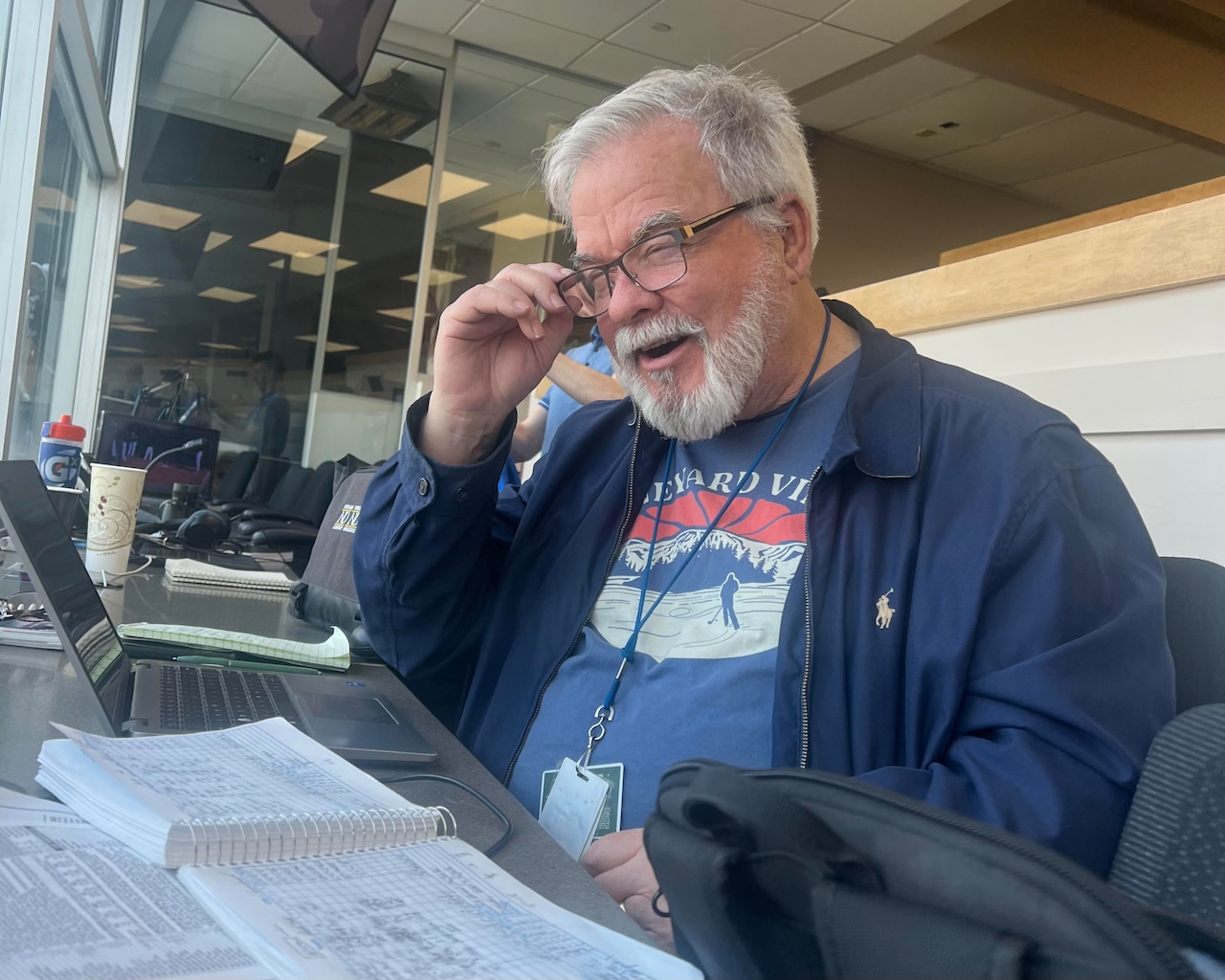
CLEVELAND, Ohio — Paul Hoynes has spent more than 40 years covering baseball in Cleveland, building a reputation for consistency, fairness, and old-school reporting. But when the moment came to learn he’d earned the highest honor in baseball writing, the veteran reporter was anything but composed.
“I was shaking so much I couldn’t even call home. I had to text Jackie to have her call me because I couldn’t make the phone work,” Hoynes revealed on the latest Cleveland Baseball Talk Podcast, describing the moment he learned he had won the newly renamed Platinum Pen Award, formerly known as the J.G. Taylor Spink Award.
The Baseball Writers’ Association of America announced Hoynes as the award’s latest recipient Tuesday, making him just the fourth Cleveland writer to receive the honor. It places him alongside Gordon Cobbledick, Hal Lebovitz, and Sheldon Ocker in the writers’ wing at the National Baseball Hall of Fame in Cooperstown.
For Hoynes, who began covering the Indians (now Guardians) in 1983, the recognition came as a complete shock despite being a finalist last year.
“I was stunned,” Hoynes said after learning he had won. “When Jack O’Connell, the secretary of the BBWAA, came and told me, I thought he was telling me, ‘Hey, nice try, kid. Better luck next year.’ But he told me I was in, that I’d made it.”
The award announcement hit him on multiple levels — professional validation, personal achievement, and a milestone that resonated deeply with his family, who have supported his career through decades of road trips, late nights, and breaking news.
“She was ecstatic,” Hoynes said of his wife Jackie’s reaction. “Our whole family was going crazy… the boys, our grandkids, my daughters in law, all my sisters and brother, you know, just really excited about this. It means a lot to me and I think it means a lot more to Jackie and our family.”
The moment when the award was officially announced to his peers at the BBWAA meeting produced what Hoynes described as one of the most profound emotional experiences of his career.
“I felt like I was floating,” he said. “Got a standing ovation, big pop from the crowd, you know, all the writers, all my peers that were in there. I was floating.”
The significance of the award isn’t lost on Hoynes, who joins a select group of writers recognized by the Hall of Fame. Despite the competition against esteemed colleagues Tom Verducci and the late Scott Miller, it was Hoynes who emerged with the honor in his second appearance on the ballot.
Even so, after learning of the award Hoynes wasn’t celebrating. He wasn’t calling friends or planning his Hall of Fame speech. He was doing exactly what he’s done for more than 40 years: writing baseball stories.
“This guy just got the most amazing news of his life and he’s still pounding out a notebook at 11 o’clock at night. What’s going on here? To me, that says so much about you and the way that you’ve approached this job for so long,” marveled Joe Noga, his colleague at Cleveland.com. “You are the textbook for what a beat writer is and should be.”
It’s a testament to the blue-collar work ethic that has defined Hoynes’ career covering Cleveland baseball.
“I can’t do anything else,” Hoynes said.
This singular focus on the job has made Hoynes a fixture in Cleveland press boxes since 1983, from the nearly empty Municipal Stadium days through the team’s renaissance in the 1990s and into its current competitive era.
Behind his longevity lies a professional philosophy built on fairness and accountability — principles that have earned him respect from players, managers and front office personnel alike.
“If you criticize somebody, you show up the next day. Give that guy a chance to air his grievance,” Hoynes explained on the podcast. “And you know, the one time I didn’t, I ended up in the lake.”
That reference to his famous Lake Erie plunge in 2016 — the result of a prediction gone wrong — exemplifies the accountability he demands from himself as well. It’s all part of a professional approach that has stood the test of time through baseball’s many changes.
Throughout his career, Hoynes has built relationships with countless figures in Cleveland baseball history, from Doc Edwards and Mike Hargrove to Charlie Manuel and the current front office regime.
“Charlie Manuel taught me a lot about the game,” Hoynes recalled. “The front office guys have always treated me well. John Hart, Danny O’Dowd, Mark Shapiro, Chris Antonetti, Mike Chernoff… I think they respect that sometimes you have to criticize them. But I try to be as fair as I can.”
This balance of critical reporting and professional respect hasn’t gone unnoticed. In a media landscape that increasingly rewards hot takes and manufactured controversy, Hoynes has succeeded by doing the opposite — showing up every day, treating people fairly, and focusing on the work.
When Hoynes began covering Cleveland baseball in 1983, the team played in cavernous Municipal Stadium, where, as Noga put it, sometimes “the Seagulls outnumbered the fans.” Four decades later, Hoynes has chronicled a franchise transformation few could have imagined.
“They make the trade with San Diego, they start that renaissance maybe five years before they move to the new ballpark, and you were in on the ground floor of all that,” Noga said.
What makes Hoynes’ Hall of Fame recognition particularly fitting is how thoroughly his career has been intertwined with one franchise’s history. Unlike many national writers who receive similar honors, Hoynes has been the consistent voice of Cleveland baseball through its darkest days and brightest moments.
“In those early years and from ’83 through early ’90s, you would think after all those years you could win by accident,” Hoynes recalled of the franchise’s struggling years. “But you don’t win by accident in baseball. You have to have a plan.”
Hoynes had a front-row seat as that plan unfolded: the franchise-altering trade with San Diego that brought Sandy Alomar Jr. and Carlos Baerga to Cleveland, the development of homegrown stars like Manny Ramirez and Jim Thome, the opening of what’s now Progressive Field, and the free agent acquisitions that pushed the team over the top.
“They got Sandy Alomar and Carlos Baerga, then they got Kenny Loft and Manny and Thome came up through the. Albert Bell came up through the system,” Hoynes reflected. “Then they opened a new ballpark. They brought in Dennis Martinez and Jack Morris and Orel Hershiser and Tony Pena. It was like a snowball rolling down a hill and it was hard to stop.”
The result was a team that transformed not just Cleveland baseball, but the city’s entire relationship with the sport.
Hoynes’ career has spanned emotional extremes that few baseball writers experience with a single franchise. As Noga noted: “You were there to write about all those moments from, from the tragedy of, of Steve Olin and Tim Crews in 1993 that could have derailed everything that they were building… then to go to Game 7 of the World Series in 1997. Game 7 in 2016. So many highs, so many lows with this team.”
Through it all, Hoynes has maintained the perspective and professionalism that ultimately earned him baseball’s highest writing honor. When the franchise has needed tough coverage, he provided it. When moments called for celebration, he has captured them. The constant is his presence in the press box, documenting a franchise’s evolution. His career stands as a remarkable chronicle of how one baseball franchise reinvented itself.
In July, Hoynes will deliver a speech at Cooperstown and later will ride at the front of a parade with Hall of Fame players behind him. It’s an honor that still hasn’t fully registered.
“I’m still kind of in a state of shock right now,” Hoynes admitted.
As Hoynes prepares for an unforgettable summer, the BBWAA’s recognition validates what colleagues and readers have known for decades: there’s no substitute for showing up, doing the work, and treating people with respect. For aspiring sportswriters, there’s no better textbook than Paul Hoynes’ career.
Podcast transcript
Joe Noga: Welcome back to the Cleveland Baseball Talk Podcast. I’m Joe Noga, joined by Paul Hoynes in Orlando. Hoynsey. This morning, the Baseball Raiders association of America announced the renaming of the Career Excellence award, formerly the J.G. taylor Spink Award. It was renamed a few years back and they permanently chose a new name for the award. It’s going to be the Platinum Pen Award. And the first recipient of the platinum PEN award, Mr. Paul Hoynes. More than 40 years on the beat for the Guardians and the Indians. Hoinsey, how much of a shock was it that, that you could. For you to win this award, Joe?
Paul Hoynes: Yeah, you know, I, I found out ahead of time, you know, on Monday night, but I was still stunned. I was, I’m shocked. I just, I was so, I was, I thought, you know, I thought I. So when Jack o’, Connell, the secretary of the bbwa, came and told me, I thought he was telling me, hey, nice try, kid. Better luck next year. But he told me I was in there, that I’d made it. And Joe, I couldn’t even, I was shaking so much I couldn’t even call home. I had to text Jackie to have her call me because I couldn’t make the phone work.
Joe Noga: Was, was that, that was obviously the first call was, was to Jackie. What was her.
Paul Hoynes: Yeah, yeah. Oh, she was, she was, she was ecstatic. She, she’s more nervous than I was. I mean, I mean, our whole family was going crazy. And you are fired up. Our grandkids, our, my daughters in law, all my sisters and brother, you know, just really excited about this. It’s, you know, it means a lot to me and it means, I think it means even a lot more to Jackie and our family.
Joe Noga: Well, that’s what I was going to say. I mean, Jackie’s been married to you for 50 years. She’s been through just as much as you have, sort of on this journey, you know. You know, that’s, that’s got to feel really good for you to, to be able to have her there, you know, in Cooperstown when you go there.
Paul Hoynes: Yeah. You know, Mark Tompkin, the new BVWA president, said, how long have you guys been married? And I said, 51 years. And he goes, well, she should be getting this award, not you.
Joe Noga: That’s great. What was the moment like after they made the announcement there at the meeting this morning and you were able to stand up and give a few words about it?
Paul Hoynes: It was really, really emotional. I felt like, I felt like, I was like, you know, like floating. And you Know, got a standing old big pop from the crowd, you know, all the writers, all my peers that were in there, you know, it just, I just, you know, it was, I was floating. Just, you know, I felt like. I don’t know, I don’t know. What, what did Rocky Balboa say? This is the best day in the history of my life.
Paul Hoynes: That’s it. And I kind of felt like that it was, you know, and it just, it was, it was a great feeling. And you know, the, all the BBWA members that, you know, I just thanked everybod and you know, the ballot, Joe was really a tough one. You know, Scott Miller was on there and Tom Verducci, you know, it was a three man ballot, you know, and Scott Miller was a good friend of mine. I saw him in San, in, in, in San Diego when the Guardians opened the season last season and you know, he was ill then, but he was, you know, enthusiastic. He looked, he looked, you know, he was hanging in there and. But then, you know, Bob Nightingale from the BBWA told me yesterday that he had talked to Scott just before, you know, he passed and he said, you know, this was during the summer and he said if he had a vote, he’d vote for me. So that’s the kind of guy, that’s the kind of guy he is, you know, Andrew Duchy, you know, I mean, this guy’s a great, you know, writer for Sports Illustrated. He does, you know, I mean, he does, he so has so many skills. You know, he does broadcast, he does play by play. You know, when he breaks down a player on MLB Network, you know, you learn something. You know, I was just, you know, I was just really honored to, to come out, to win, to win it, you know, because that’s not an easy deal.
Joe Noga: Yeah, and last year you were so close. Nine votes away from winning the award that deservingly went to Tom Boswell. He, I was there when he received the award. His speech was, was pretty outstanding. Hoynsy. It sounded like a college professor wrote that speech. So that’s what you’re up against in July. Just so you, you have some sort of idea. But you know, just having been that close the year before, did. Was there a moment that you thought, well, maybe it’s just not in the cards for me.
Paul Hoynes: I thought that. I’ve been thinking that way the whole, the whole, the whole, you know, even the week before it came down or ever since, you know, you, you get back on the ballot, I was thinking, you know, this isn’t going to work. When I saw the ballot. I said, you’re not, you’re, you know, this is going to be a tough one. And I just, you know, I don’t know, it’s just, it was just like, I, I really, I, I, I was convinced myself yesterday that I wasn’t going to get in. You know, I just thought, no, it’s, you know, it’s, it’s, it’s not in the cards. But, you know, when, when Jack O. Connell came over and told me, I was sitting there writing, you know, writing last night, and he said, you’re our guy. And I thought he was coming over to say, better luck next time, you know, and pat me on his shoulder.
Joe Noga: And that’s the thing. You’re sitting there last night, you were working until, you know, 11 o’ clock last night, still writing notebooks and stories about the Guardians. And I’m just thinking, this guy just got the most amazing news of his life and he’s still pounding out a notebook at 11 o’ clock at night. What’s going on here? It just, to me, that says so much about you and the way that you’ve approached this job for so long. You are the textbook for what a beat writer is and should be. And your devotion to the beat, your sort of stewardship of the beat, has been an example for me and so many of the guys and gals who have come through the press box at Progressive Field and Old Municipal Stadium. I’m just watching Twitter and I’m watching all the social media responses coming in. You’re going to have a lot of replies to write. You know, we’re in the next 24 to 48 hours. I got a text message from Hammy Tom Hamilton, just saying how, how thrilled he was for you and, and for all of us, because you getting through the door there, it feels like all of us getting through the door, too.
Paul Hoynes: That’s a nice thing for you to say, Joe. I mean, you know, like, you wrote a beautiful story on, on the award this morning. You know, think of all the people that have written about baseball in Cleveland, you know, since the Guardians Indians started in 1901. There’s only, what, handful in the hall of Fame? I mean, and there probably should be more. You know, hopefully Jimmy Ingram gets a shot, you know, someday down the road, and you too, and Zach Meisel. We got a lot of great writers in Cleveland. And so, you know, but, you know, I just, you know, Joe, I can’t do anything else. That’s, that’s my problem. There’s, there’s, I can’t do that. There’s nothing else I can do. I can’t make a living. It and anything else we, we’ve known.
Joe Noga: For a long time Hoins you that you’re institutionalized, that this is there. There’s no separating the two. And some of the stories and some of the, the lore, we’ll, we’ll get to that in a minute here. But you mentioned the, the writers who were it won the award before. Gordon Kobaldick, Hal Leibowitz and Sheldon Oker are the three from Cleveland who now. Who you now join. Obviously you and Sheldon had a relationship, a great relationship for so long and so long on the beat. The three of you, along with Jimmy Ingram, just that would. That was reporting on the guardians for 30 years.
Paul Hoynes: Yeah, we were together and we’re still talking, Joe. So we didn’t kill each other. You know, we were, we were competitors, but we’re still friends. And, you know, it was just. Joe, we had so much fun when we were together on that beat. It was like all, like, when I think back of those days, all I can remember is like, laughing, you know, joking around and, and having fun. It was, it was, you know, it wasn’t a grind, you know, and some, you know, some beat guys, you know, in comp, you know, they’re very, they’re competitive to almost a fault, and it makes the job so much harder to me. So, you know, you can still get the story first and you. But you can still be friends. And, you know, I think that’s really.
Paul Hoynes: Help. Help me stay on the beat as long as I have.
Joe Noga: Yeah, I don’t think anybody walks into that press box, you know, any new person who comes in and joins the beat and thinks, oh, well, this Hoynesy guy, he’s. He’s going to be hard to be around, hard to work with or, you know, step. You’ve been so welcoming to everybody and, and I think that that’s another reason why a wide range of reporters and voters and guys who you’ve encountered in other press boxes, you know, we’re so eager to vote for you both times that you were on this ballot. I think that they, they showed that, you know, they, they, they really want to, you know, recognize that and it’s a great thing. You know, you’ve, you mentioned, you know, for so long you guys were on that beat, you and Shelley and Jimmy. It coincided with, you know, one of the great stretches of baseball in Cleveland. I think that might have, might have helped you maybe in a lot of ways.
Paul Hoynes: Yeah, no doubt about it. That was, you know, the renaissance of Cleveland baseball in the. What starting probably in 94 and all through what, 2000, 2002, that great run. And they’re still going really, you know, still, you know, that the franchises franchise is still winning the 90. Those night teams in the 90s, they made an indelible mark on Cleveland and Cleveland’s, you know, Cleveland psyche, I mean, you, you can’t, you can’t think of the Cleveland Indians without thinking of those teams. And that’s why they keep bringing all those guys back.
Joe Noga: You know, you go, you go even further back. I mean, you started in 83 on the beat, but you go, you know, some, some lean years where the Seagulls outnumbered the fans at old Municipal Stadium. And you go all the way back there and then you come up through the late 80s, they make the trade with San Diego, they start that renaissance maybe five years before they move to the new ballpark. And you were in on the ground floor of all that. To have seen this franchise sort of turn itself around and build the way that it has into a consistent winner the way that it has, and being a kid from Cleveland yourself, that has to be very rewarding.
Paul Hoynes: Yeah, it’s been fun to watch. And Joe, in those early years and from 83 through 19 to early 90s, you know, you know, you would think, you know, after all those years you could, you’d win by accident. But you don’t win by accident in baseball. You have to have a plan. You have to have the right people running it. You have to have an owner that, that is supportive but stays out of the way. And you have to have players. And eventually that’s what the Guardians slash Indians did. You know, like you were saying, they got Sandy Alomar and Carlos Byerga, then they got Kenny Loft and Manny and Tomy came up through the. Albert Bell came up through the system. Then they, you know, they opened a new ballpark. They brought in Dennis Martinez and Jack Morris and Oral Hershiser and Tony Pena. And it all kept, you know, it just kept rolling. It was like a snowball rolling down a hill and it was hard to stop.
Joe Noga: Yeah. By the time they were ready to go, all they needed was. Was the. To light the fuse. And, and you were there to write about all those moments from, from the tragedy of, of Steve Olin and Tim Cruise in 1993 that could have derailed everything that they were building. And you know, then, then to, to go to game seven of the World Series in 1997. Game seven of the World Series. In 19 or in, in 2016, you know, so many highs, so many lows with this team. How do you stay even keel? How do you stay the professional that you were and still, you know, be able to criticize the team when they make mistakes or criticize players when they’re not performing the right way? Obviously, these are things that have been instilled in you over, over decades in this job.
Paul Hoynes: Yeah, Joe, you know, when, when I first started out, I, you know, I, I’m surprised somebody didn’t, one of those players didn’t grab me by the neck and just, you know, one of them did. But I’ve, over the years, I’ve learned, you know, I kind of, I’ve tempered myself and learned, you know, the game is hard game to play. The guys that play it, you know, are pretty, are talented and they deserve, you know, your respect, your, your, you know, your, you know, you’ve got to respect their skill level and, you know, if they, if they play bad, you know, you’re right about it. And, but I don’t think you, you kind of, you know, you don’t go, you know, deep fry them, you know, you just, you know, and, and you’ve got to show up the next day. You know, if you, if you criticize somebody, you show up the next day. Give, give that guy a chance to air his grievance. And you know, the one time I didn’t, I ended up in the lake. So.
Joe Noga: 2016, I, I remember that, that was a strange time. Seeing you in a wetsuit, jumping into Lake Erie, that was, you know, pretty outstanding. But it’s not like there, there have been so many other things you’ve done as well. You covered the Olympics. You were at Michael Jordan’s retirement press conference. Yeah. I mean, these are, there are so many. It is, it is a vivid tapestry that you have painted in this career so far of places you’ve been and, and we haven’t even gotten into the silly stuff. We haven’t even gotten into, you know, wearing two belts to the ballpark because you were in a hurry or, you know, forgetting your car keys. And, you know, God bless Jackie for, for everything that she’s had to put up with. But I, I think my, my favorite story was at least the one that involves me. You know, I’m, I’m in bed. You’re in, you’re in Arizona going for the start of spring training. And I get a text message on my phone. I roll over and I look at my phone and, and it’s you texting, thinking that you were texting Jackie and you were texting me on accident, asking to send a picture of your driver’s license because you had forgotten your driver’s license and you couldn’t rent a car and you needed her to send a picture of your birth certificate or something. And then I come to find out that it’s not the first time that you had forgotten your birth. Your driver’s license and your license had expired and they wouldn’t rent you a car at spring training. So all of these things make you just sort of a larger than life, you know, presence and character and one that absolutely everybody in that press box respects, I think, because they, they read what you write. And that’s another thing. It’s not just the, the smiling and the laughing and the, you know, being so affable when it comes down to it, you know, where, where did all that talent to be able to compose a game story under pressure the way that you do? I still marvel at it.
Paul Hoynes: I don’t know, Joe. When you’ve done it, I think, you know, I, I don’t know. You know, I just, you know, I, I think it’s almost like automatic now. You know, you, you know, you, you’ve, you’ve done it so often that, that, that, you know, you still, I still like to have fun with the story. I still like to have fun with the game. I don’t like, you know, if, I mean, there are times when you got to write it straight, when you’re on deadline, when you’re on or in a hurry. But, you know, I like to find. Trying to work hard to find a different angle on a game. And, you know, sometimes it works, sometimes it doesn’t. But there’s 162 of them, so you’re always going to get a lot of.
Joe Noga: Chances as far as, you know, just being inextricably linked with one franchise. Some guys who win this award, they, they’re national columnists or they’re, they’re writers who jump around. I mean, you’ve been associated with this team for so long. Anybody with the team that, that really stands out as somebody who’s, who’s helped you or, or made things easier for you in your career.
Paul Hoynes: Man, I think, you know, there’s, you know, Doc Edwards was, I really loved him when he, he managed here. Mike Hargrove, you know, I, you know, Charlie Manuel. Charlie Manuel taught me a lot about the game. I love, you know, the, the front office guys have always treated me well. John Hard, Danny o’, Dowd, Mark Shapiro, Chris Antonetti, Mike Chernoff, you know, I have pretty good relate. I have good relationships with them. I mean, you know, I think, you know, I, you know, you, I think they respect, you know, that sometimes you have to criticize them. But, you know, I try to be as, as fair as I can, but yeah, I mean, all those guys have helped me and I, you know, Johnny Goral helped me too. The, the third base coach, you know, he, he, I’d ask him a question, he goes, you know the answer to that. What? Yeah.
Joe Noga: Yes.
Paul Hoynes: He would give me a hard time. You know, why was the third baseman pulled over the, you know, off the line or something like that? He goes, you’ve been covering baseball for six, you know, 40 years. You know the answer. So it’s, it’s, it’s been fun. It’s always fun.
Joe Noga: It’s always interesting too, as far as, you know, this season. What kinds of things are you anticipating now? I mean, this is, you’re like a, a guy who’s, you’ve got July is there, the end of July, the enshriment weekend. I went through and I, I watched Tom Hamilton win the, basically the broadcaster’s version of this award, the Frick Award, last year. And you know, everything that he went through on entire weekend, you know, he got to ride in a parade point. You get to ride in a parade and you get to ride at the head of a parade with 47 hall of Famers behind you. That’s going to be the coolest thing to see, I think, ever. And, and it lets off on the steps of the hall of Fame and you go in and they’ve got all the, all the food and drinks. You can handle it. It’s going to be the coolest. I’m just setting you up here. It’s going to be a heck of a weekend. But just your anticipation of what this is going to be like and how nervous you are, you know, I don’t.
Paul Hoynes: Know if I can be much more nervous than I am right now, but yeah, I’m, I’m looking forward to it. I’m, you know, I’m still kind of in a state of shock right now. I, you know, I’ve talked to, you know, a couple guys, Jason Stark and, and, and Nightingale, and they told me, you know, that they’d given, they said if you need any advice, talk to them. You know, Craig Mulder, our buddy from the hall of Fame, has called me and said, you know, I think they’ll be willing to help, you know, and if I have any questions so, yeah, I mean, but, you know, I, I really don’t know what to expect. I was there, Joe, with, in 2007, I believe, when I was PWA president and, you know, Cal Ripken. And Cal Ripken and Tony Gwynn got in the hall of Fame and it was a little different setup then.
Joe Noga: That’s a pretty good stage. You and Tony Gwynn and, and, and, and Cal Ripken.
Paul Hoynes: Wow. Yeah. So, but I think they do it different now that I think they put the writers and the broadcasters in separately and the players the next day. So I, I, I’m kind of just feeling my way, you know, I remember being in the parade, though. Jackie and me were in a parade and we got off and nobody knew who we were. And Jackie said, we’re like the hairdressers at the Academy Awards as we went up to, you know, into the hall of Fame.
Joe Noga: I mean, appropriate.
Paul Hoynes: Yeah, I guess.
Joe Noga: But now you’re going to be sitting center stage. You’re going to be one of the, the honorees. I can’t wait to be there and to witness it. Hoinsey, this is less of a podcast and more of a, you know, sort of just a recognition or, you know, whatever. But I wanted to make sure that we, we got your thoughts out here. Just in the moment. There’s going to be much more to come. There’s going to be many more reflections. The, the well wishes have been pouring in on social media via text, and we’re going to try and compile some of those and, and just share their thoughts about what a great honor this is for you. You know, last year, this past season, Mary Kay Cabot, our friend and colleague from the, the Brownsbeat on cleveland.com wins their equivalent of this award and gets honored by the hall of Fame. This year, you get the award. I can’t be more blessed to be surrounded by colleagues who are of such high caliber as you and Mary Kay and everybody. So I think this is, this is fantastic. Really looking forward to the rest of this year.
Paul Hoynes: That’s so nice you say, Joe. I really appreciate it. You know, Mary Kay was very deserving of the award. And, you know, I’m, I’m still kind of dealing with this thing right now, so I got to come to grips with it. But I’m, I’m a happy guy. I gotta tell you, my family’s happy. You know, they, they’re probably more excited than I am. So it’s, it’s a cool thing. And hopefully I just, I, I’m, I’m really excited.
Joe Noga: All right, Hoynse, we’ll catch up with you. Hopefully. We got have some Guardians news from the Winter meetings there at some point later on this week. Nothing so far today, but when it breaks, we’ll. We’ll get a good handle on it and we’ll talk to you again tomorrow.
Paul Hoynes: Good deal.