
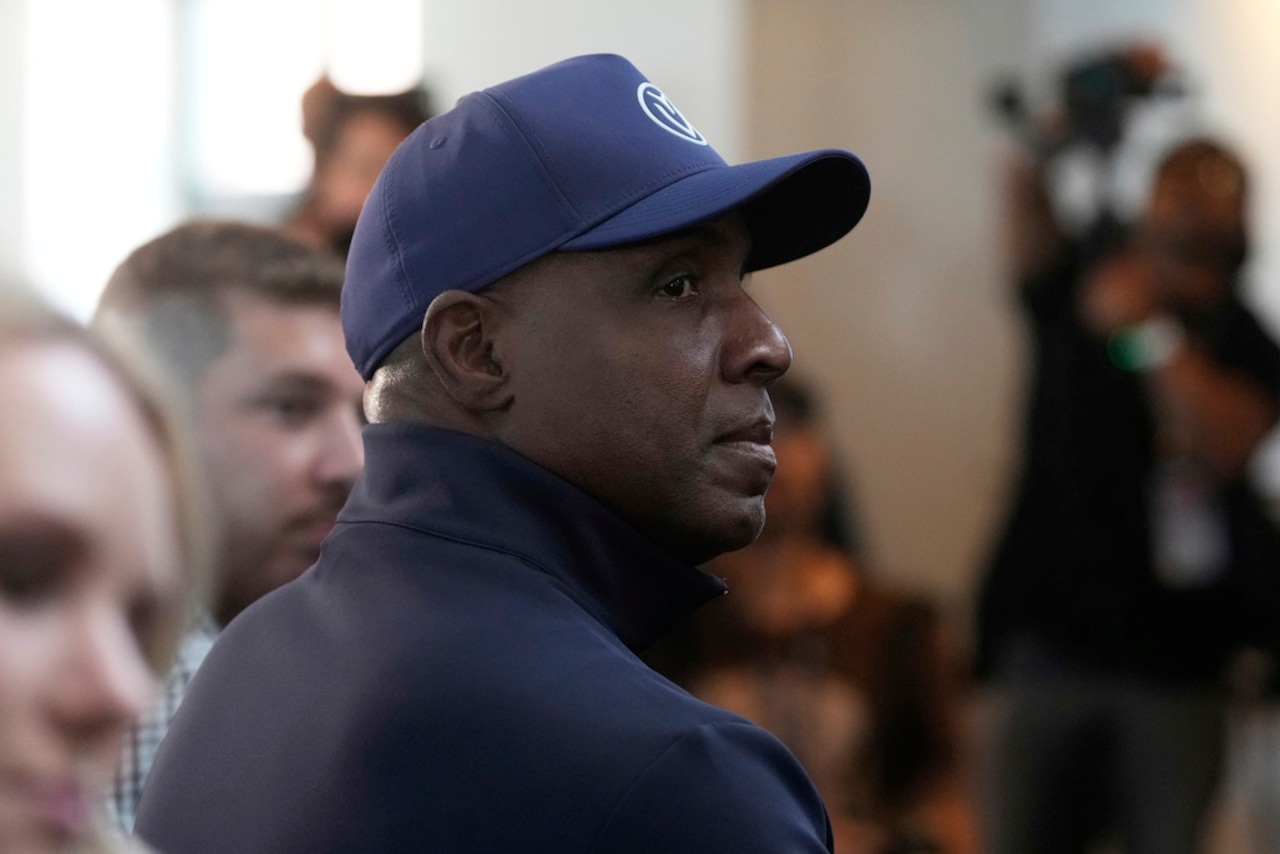
CLEVELAND, Ohio — Baseball’s greatest statistical achievers could soon be permanently locked out of Cooperstown, thanks to a little-known rule that could slam the door shut on Barry Bonds, Roger Clemens, and Gary Sheffield by 2031.
In a stunning revelation discussed on the Cleveland Baseball Talk Podcast, cleveland.com reporters Joe Noga and Paul Hoynes detailed how a new Hall of Fame rule creates a potential doomsday scenario for some of baseball’s most accomplished yet controversial figures.
“These are players who played during that era and fell off the, the BBWAA writers ballot. This was their first bite at the apple on the eras committee,” Noga explained. “They won’t be eligible to appear on the Contemporary Era Committee ballot again until 2031. But because none of those three players received at least five votes, if they don’t receive five votes again, that’s it for them. They won’t have any chance to get into the hall of Fame.”
This revelation represents a dramatic shift in how the Hall of Fame handles controversial candidates, essentially creating an expiration date on their eligibility. For context, players like Bonds and Clemens previously would have had multiple chances through various veterans committees after falling off the writers’ ballot.
“That’s a new rule by the Hall of Fame that they put in for this round of voting on the era committees,” Hoynes noted with apparent astonishment. “You’re talking about Barry Bonds, the all time home run leader, Roger Clemens, a seven time Cy Young winner, and Gary Sheffield’s got over 500 home runs. And these guys in the next, what six years might be totally ineligible to get into the Hall of Fame. And it’s a remarkable, remarkable turn of events.
The implications are enormous for baseball history. Bonds finished his career with 762 home runs, more than any player in MLB. Clemens won an unprecedented seven Cy Young Awards and struck out 4,672 batters. Gary Sheffield slugged 509 home runs across a 22-year career. Yet all three might be permanently excluded from baseball’s most hallowed institution.
The Contemporary Era Committee, which just elected Jeff Kent to the Hall of Fame, includes Hall of Fame players, executives, and media members. This year’s Hall of Famers included Fergie Jenkins, Jim Kaat, Juan Marichal, Tony Perez, Ozzie Smith, Alan Trammell, and Robin Yount – a group Noga characterized as “some pretty old-school guys.”
Bonds, Clemens, and Sheffield each received fewer than the minimum five votes required to remain eligible under the new rule. This apparent unified rejection suggests a continued hardline stance against players associated with performance-enhancing drugs.
Hoynes reflected on the emotional aspect of potentially losing these towering figures from Cooperstown forever: “You think about the game and, and those guys not being in the Hall of Fame and it makes you sad. But they’re still going to be part of baseball. You can’t talk about baseball without talking about Pete Rose, right. And Joe Jackson and all those guys.”
This rule change represents perhaps the strongest institutional position yet against the steroid era, creating a mechanism to permanently resolve the sport’s most contentious Hall of Fame debates. For supporters of these players, the clock is now ticking toward 2031, when baseball’s most prolific statistical achievers could be permanently relegated to the same historical limbo currently occupied by Pete Rose and Shoeless Joe Jackson.
Podcast transcript
Joe Noga: Back to the Cleveland Baseball Talk podcast. I’m Joe Noga, joined by Paul Hoynes from the Baseball Winner meetings in Orlando, Florida where a Giants slugger has been elected to the hall of Fame, but not that one. Jeff Kent, the all time leader in home runs as a second baseman gaining election to the hall of Fame via the Contemporary Era Committee on Sunday night. Kent spent part of the 1996 season in Cleveland before being traded that off season to San Francisco where he went on to have pretty much the most success in his career. Hoynsey, what do you remember about covering Jeff Kent in Cleveland and do you think the committee got it right?
Paul Hoynes: Kind of a surprise selection, Joe. I mean I, I, when Kent was on the BBWA ballot, I voted for him, but he never got more than 46% of the vote over his 10 year stay on the ballot. And, but you know, his first time on the ERA committee on the ERA ballot he gets voted in and he was, I am surprised. I, you know, I, I think, you know, I think a lot of the voters are kind of, you know, are stuck in the same kind of quagmire that the BBWA voters were, you know, considering the guys that had the taint of steroids over them and you know, opposed to other players. Kent seemed to be the choice. He was named on 12 of the 16, I think over, over, yeah, 14 of the 16 ballots. You needed, you know, 12 votes to get in. And he was, you know, saw him on the zoom call, very emotional. But what I remember about him in Cleveland is he didn’t play a whole lot. Joe. Jose Viz Vizcaino was, was playing second base more than, more than Kent and I think he only played a like 40 games for Cleveland. He played in the postseason that year, but it didn’t seem like he impressed the Indians coaching staff that much. But they did in the off season trade them to, to the Giants for Matt Williams who helped them get to the World Series in 1997.
Joe Noga: Yeah, Kent’s, you know, his resume, 17 seasons played with the Blue Jays, Mets, Indians, Giants, Astros and Dodgers. Five time All Star. 337 home runs, the most among any second baseman.351 as a second baseman and, and really, you know, those numbers and, and his rate stats really bear out. You know, his, his hitting in the clutch with runners in scoring position, his OPS with runners in scoring position. This was a guy who was a true slugger at second base when, you know, really second in a time when second basemen were, were light hitting infielders. Yeah.
Paul Hoynes: And he came over here and when he got to Cleveland, they had traded, they traded Carlos by Erga and Alvaro Espinosa to the Mets for, for Kent. And when he came over, I, I just remember him always saying that American League pitchers were chickens. They wouldn’t throw him fastballs. They kept throwing them breaking balls so he couldn’t get his swing off. I guess when he went, and when he went to the National League, I guess he saw a lot more fastballs.
Joe Noga: Find it curious. Kent famously had a frosty relationship with the media and that probably played into him spending 10 years on the ballot and never getting more than 50% of the vote. But a guy like Albert Bell, who was one of the premier sluggers of his era, he was on the ERA committee the last time this was around and you know, didn’t really get a sniff of any sort of consideration there after being a finalist. I just wonder why Jeff Kent, you know, who had a frosty relationship with the, the writers, gets in the first try and you know that he’s on the air committee and Albert Bell, you know, still sitting and waiting.
Paul Hoynes: An interesting question. I think, you know, Bell, he’s kind of threatened the media. Kent just, just didn’t like reporters. Some reporters. I think there was a difference in the relationship there between the media. But Albert certainly had a seven or eight year period there where it’s hard to ignore the numbers he put up and maybe he’s still paying for that reputation.
Joe Noga: That’s, that, that’s what you always hear is, you know, the, the stats and the numbers, they’re, they’re overwhelming. You know, with Kent it was the same way and now he’s sitting there, you know, going to be in Cooperstown and Albert Bell is still waiting for that call. So, you know, I find that interesting. Kent not the only player on that ballot. Obviously the, the big sort of news of the steroid era players, Barry Bonds, one of Kent’s former teammates, Roger Clemens, Gary Sheffield. These are players who played during that ERA and fell off the, the BBW AAA writers ballot. This is their first chance to sort of their first bite at the apple on the ERAS Committee, they won’t be eligible to appear on the ERAS Committee ballot again until 2031. But because none of those three players received at least five votes, if they don’t receive five votes again, if they make it on the ballot in 2031, that’s it for them. They don’ have any chance to get back into the hall of Fame.
Paul Hoynes: Really. An interesting rule. That’s a new rule by the hall of Fame that they put in for this, for this round of voting on the ERA committees, it really, I mean, Joe, this is, you’re talking about Bonds, the all time home run leader, Clemens seven times Cy Young winner, Sheffield’s got over 500 home runs. And these guys in the next, what six years might be totally ineligible to get into the hall of Fame. And it’s remarkable, remarkable turn of events, I mean to, for guys that were so talented but you know, have that taint of the steroid era and that they push things too far and it, it is, you know, you know, you think about the game and, and those guys not being in the hall of Fame and you know, it, it makes you sad and, but you know, potentially not being in the hall of Fame, it makes you sad. But you know, you can’t, you know, they’re still going to be part of baseball. You can’t talk about baseball without talking about Pete Rose, right. And Joe Jackson and all those guys. So, you know, they’re going to be part of that if they don’t get elected. But still, you know, that’s what the hall of Fame is a hard place to get into, Joe. That’s all you can say.
Joe Noga: Yeah, the voters, the hall of Famers who voted on the committee, Fergie Jenkins, Jim Cott, Juan Marichal, Tony Perez, Ozzie Smith, Alan Trammell and Robin Yount, those are some, some pretty old school guys. And I can see, I just don’t see Robin Yount voting for a steroid era player. And that’s sort of what bared out. There were other, there were executives on the committee and there were three reporters, slash historians, including Jason Stark, who’s a BBWA Lifetime Achievement award left Career Excellence award winner. Really, these are people who, you would think that there’s a bit of neutrality on that side and that more votes would come from maybe the executives or the reporters, but apparently those guys didn’t get on. I want to talk about Don Mattingly and Dale Murphy and for, for a little bit, Carlos Delgado, Delgado guy, he got nine votes and this is a guy who potentially at some point could be back around and, and, and you know, have a chance to make it.
Paul Hoynes: Yeah, just really a big time slugger for Toronto and the Mets. Played for several teams, you know, came close to hitting five home run, 500 home runs. He won the Roberto Clemente Award and he gets nine votes, 56.3% of the vote. He misses, misses by three votes to go into the hall of Fame. But really kind of an underrated Ball player, underrated power hitter for sure.
Joe Noga: And Manning Lee, who finally made it to the World Series this year on the bench with Toronto. This is a guy who’s an MVP. If you think about baseball in the 80s in, in New York it was Donnie Baseball. You know, really this is kind of puzzling as to why he’s, he’s not getting, you know, stronger consideration.
Paul Hoynes: Yeah, sentimental favorite for sure. You know, had the great start to his career, pure hitter. Then he ran into back problems at the end of his career and that kind of, you know, really kind of sapped his power. And I think that’s what, you know, that’s what has hurt his hall of Fame chances. He was on, on the BBWA ballot, you know, for old, I think he may have been on for 15 years back then and he has, you know, he still, you know, hasn’t, hasn’t quite gotten enough votes. So hopefully one day he gets in. But it’s a tough nut to crack here, Joe. I mean Dale Murphy, a two time MVP gets six votes. He doesn’t get in either.
Joe Noga: Yeah, I think it might just be a matter of time though. I think Dale Murphy might get sort of a groundswell of support in a few years. We might see him back on the ballot next year or the next time this, this ERA committee comes around in three years. All right, let’s talk a little bit about the Guardians and their approach to the winter meetings. Really the, the overarching theme to this winter meetings for the Guardians is whether they’re going to focus on trying to bring in a bat or some offense or will they fortify and bolster their pitching their deep in their bullpen this upcoming season? Do they, they try to improve the offense or do they stick with young guys like Brian Rocchio and try to develop Kyle Manzardo and bring along Travis Bazana at some point. Is this an offense that was historically bad this past season but still won a division title? Can they, can they repeat that Hoinse in your mind if they don’t add to the lineup?
Paul Hoynes: I think they have to add Joe. I’ve said that all along. You know, I think they, they are kind of weighing this right now, but it seems like they are leaning toward, you know, sticking with their prospects. The players they’ve signed and developed, drafted, signed and developed, you know, hoping that this young, core, young group of, of offensive players can take a step forward this year. They don’t want to bring in middle of the road free agents to block their path. We’ve seen that in the Past with Josh Bell and Mike Zannino, that didn’t fare so well. But Joe, when you look at this position, by position, the stats where they ranked in the American League last season, Ethan Homer’s 28th in runs, 29th in batting average and OPS. I mean, they have got to do something, you know, with young players, Joe, just as well as I do. Okay, some of them, you know, maybe one or two take a step forward, but as many as take a step forward, there’s going to be some that regress or some that stay the same. It’s a tough way to, you know, to have success in the big leagues. And to think you’re going to repeat what you did last season, which was a historic season, historic comeback, I think that’s fool’s gold. You need, need a professional hitter in this lineup, and if it, if it takes you making a deal and having to trade some prospects, so be it. But if you want to contend this year, I think you really have to do that.
Joe Noga: Yeah, I think the, the point you made there is really good. If you’re relying on the young guys in your lineup, the ones that you’re waiting to see come, you might get one, maybe two of those guys, maybe Brian Rocchio, maybe Kyle Manzardo develops that consistency and, and hits throughout the end of the season instead of falling off in September. But you’re not going to get three or four of those guys doing it all at once. That, the. To expect that is kind of crazy. It just doesn’t work that way. Maybe one, maybe two guys have the light bulb go off. But to, to think that all of them are going to click all at once is, like you said, kind of crazy. They’re going to lean heavy on the pitching then, if that’s the case in the month of September, the Guardians just didn’t give up any runs. To expect that to be the formula that wins again is also kind of crazy. You’re not going to have that. You’re not going to go a month and just not give up runs as a starting staff, which it seemed like Gavin Williams, Tanner Bybee and Joey Cantillo and those guys all did. Who are the pitchers that you’re kind of expecting to see step up from the bottom of that rotation?
Paul Hoynes: Yeah, Joe, I mean, what, what the Guardians are hoping for is that the, the, the young players they have, the young position players they have, can show the same progress that their young starting rotation did this past season. Guys that you just named Bobby and Williams, Logan Allen, Cantillo and Messick and all those guys, you know, and you know, they obviously they had some help. Saccony came over from Arizona, Luis Ortiz from Pittsburgh before he was suspended. So those guys help, but they’re, they’re looking for the same kind of results from the offense. And you know, I think that’s a big ask right now. And you know, so, you know, I just, you know, I just, you know, I, you know, just from talking to different people, I think they’ve, you know, they may bring in like a second tier home, you know, hitter or a utility guy that can swing the bat, but it doesn’t sound like they’re going to, you know, bring in the kind of hitter that could start every day in right field for him.
Joe Noga: Is there a veteran out there like in the mold of a Jason Giambi who doesn’t have to be a guy who necessarily plays every day, but then, you know, still has an influence or an impact on the clubhouse and gets them playing in the right direction and it sort of mentors the young players that way.
Paul Hoynes: Yeah, I’m sure that I don’t have a name right now, but I’m sure there is, I’m sure there is a guy like that. Do they, do they go out and do it? You know, do they add a guy like that? I, you know, I think we’re going to have to just wait and see because when you look at last winter, they were really busy with, you know, the trades for Saccony. The trades, you know, Jimenez and, and got Luis Ortiz. Then they signed A. Bieber as a free agent. Then, you know, they get two, the relievers, Ortiz, I mean, Seawall and Judas. So, you know, they made a lot of moves. I don’t know if they’re going to be that busy this year, but, or this winter. But I think it would behoove them to really take a look at this offense.
Joe Noga: Yeah, it’s anywhere you can, can sort of make a, a subtle move or a upgrade maybe to the bench or something like that. Could be big for this team. Another name out there obviously mentioned in all of the winter meetings previews as, as one of the top trade candidates or possibilities, Stephen Kwan. Obviously, a lot of fans in Cleveland don’t want to see Stephen Kwan on the trading block, but this is a front office that has, has shown that it will listen at this time of the year about a guy that’s in Quan’s sort of situation. What’s the latest from Chris Antonetti about Stephen Kwan?
Paul Hoynes: I think, you know, Antonetti is still, you know, what he told Us at the end, at the trade deadline in.
Paul Hoynes: I mean, he goes. There’s a lot of interest in Steven Kwon from other teams and we’re just as interested in Kwon keeping Quan. So I think right now, if you had to say today being what, Monday in December, if Quan would be the starting left fielder on opening day come March 26, I think you’d have to say yes. But I don’t know if you’d say the same thing tomorrow.
Joe Noga: Yeah, that’s. It could change in, in 24 hours, you know, and hearing that from, from Chris Antonetti, you know, as of right now, I guess it is. So that’s, that’s a good sort of way to go there. All right. What else is going on in the, you know, in the hotel there with the writers and everybody sort of swirling around. I know a familiar face is going to be kicking things off with the managers interviews this afternoon.
Paul Hoynes: Yeah, Craig Alberna’s the new manager of the Baltimore Orioles, is, is in the first slot, Joe. I mean the leadoff spot at 2:00pm for the annual, you know, managers interviews. He’s going to, I guess, you know, get. The Baltimore media will get another crack at him. But we do not know if Stephen Vogt will be in the peanut gallery heckling him.
Joe Noga: Yeah, it’s maybe not necessarily a heckle, maybe just there for support. Obviously the two have a very close relationship. I can’t imagine, uh, the last time Albert has would have hit leadoff. I mean that’s, that would be a question to ask him for sure. But certainly a guy who’s going to make it entertaining. If you can sort of translate that heavy east coast accent from Craig Alburnez. Kyle Schwarber. What’s the latest on Kyle Schwarber? Sort of the tip of the spear in terms of your free agents and the big name free agents. Once we see a guy like that come off the board, we should probably see a lot of movement.
Paul Hoynes: Yeah. The Pirates have reportedly offered Schwaber a four year deal worth 100 million. The Reds are very much interested in him. As you know, we’ve talked about before. I think the market is going to be huge for Schwaber. Left handed, power hitter, hit over 50 home runs last season for the Phillies. You know, he, you know, the world is his oyster right now.
Joe Noga: Will he get that fifth year, do you think, at age 32, do you think he can, you know, talk his way into getting that fifth year out of a team?
Paul Hoynes: I think if Cincinnati or Pittsburgh are serious about getting them, that’s the way.
Joe Noga: To get them as far as another big name out there, you know, Brian Cashman coming out and saying he’s serious about resigning Cody Bellinger. Is. Is that the big move for the Yankees this offseason?
Paul Hoynes: Yeah, I would think so, Joe. I mean, Bellinger can do so much, you know, very versatile player, center fielder, first baseman. He. He did a lot of stuff for, for the Yankees. You know, he had a great year offensively, kind of built for that ballpark. Yeah, I would think, you know, that would be a really, you know, that’s probably the main target for the Yankees. But they’re also interested in Kyle Tucker, too, right?
Joe Noga: If the, if the Yankees can’t land Bellinger, do you think they pivot quickly to Kyle Tucker, or is that a guy who’s going to, you know, command as much, if not more than. Than Bellinger?
Paul Hoynes: Yeah, I think they would try. You know, they definitely would. Would make the run at that Tucker. You know, Toronto’s also interested in him. You know, Toronto spent a lot of money already this winter, so, you know, the bidding is going to be high for, for him. But, you know, I think the Yankees, you know, will definitely, especially if they don’t get Bellinger, would go hard after Tucker.
Joe Noga: Yeah, it seems like the, the Blue Jays are, are spending it a lot really, to, to sort of fortify their rotation and maybe add to their lineup as well. All right, hoes, that’s going to wrap up today’s edition of the Cleveland Baseball Talk podcast. We will check back in with you, hopefully with some. Some big news tomorrow morning here on the podcast, and we’ll talk to you then.
Paul Hoynes: Good deal.