
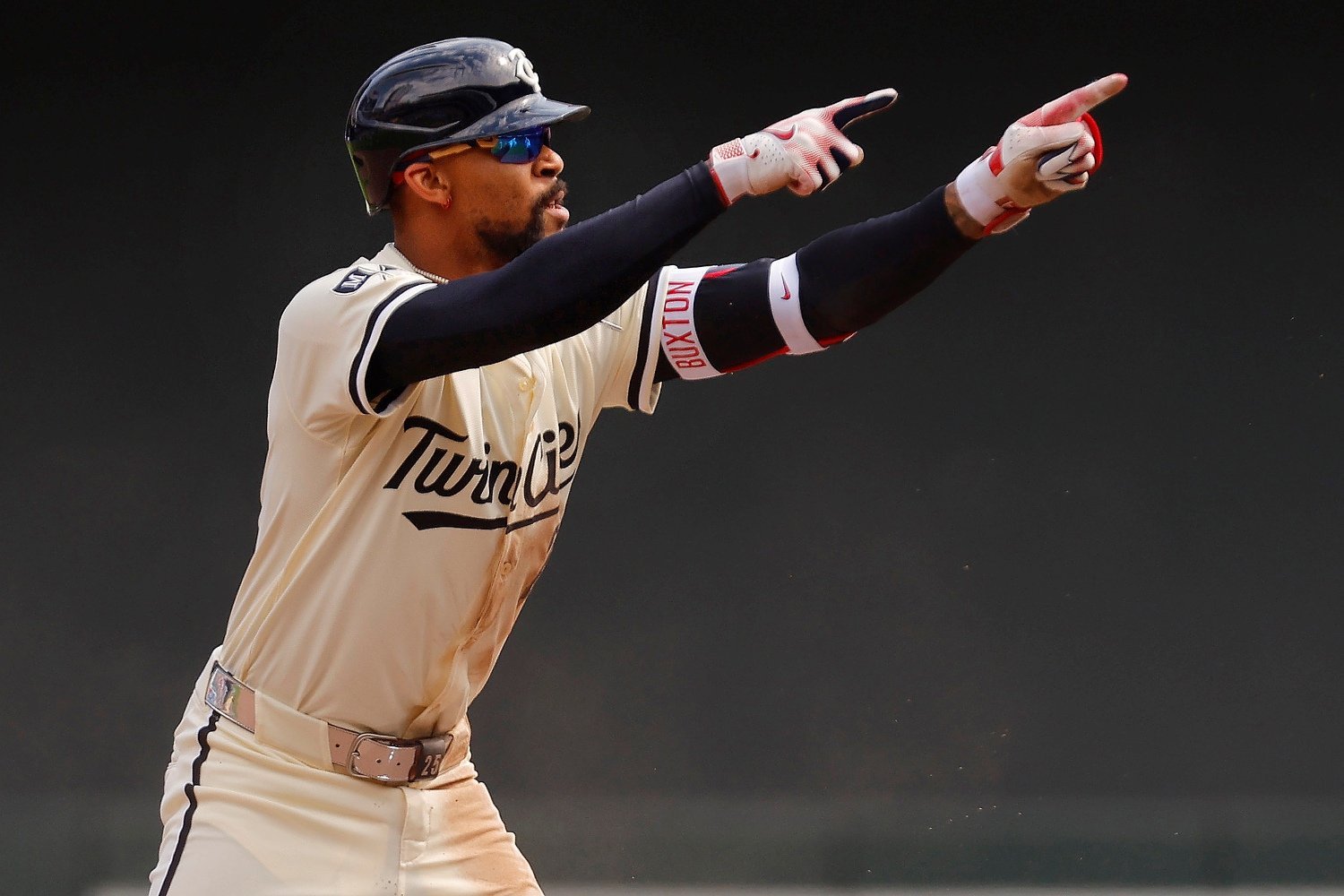
Byron Buxton has never been shy about his feelings toward Minnesota. Across multiple interviews last season, he made it clear that he wants to remain a Twin for life. His connection to the organization, the fan base, and the community is something he has spoken about with pride and sincerity. Under normal circumstances, that would make the idea of trading him seem almost unthinkable.
This offseason has created a different kind of challenge. Reports have surfaced suggesting that Buxton may be open to waiving his no-trade clause if the Twins continue to move veteran players such as Pablo Lopez, Joe Ryan, or Ryan Jeffers. That possibility introduces a significant layer of complication. Even if the Twins found a strong market for Buxton, no deal could happen without his approval. Any conversation about trading him must account for whether he views the franchise as moving toward contention or slipping away from it.
At the same time, the broader league context has changed in a way no one predicted. According to MLB.com, right-handed hitting outfielders have become the hardest type of player to find this winter. That reality could elevate Buxton’s value to its highest point in years.
Look across free agency, and the scarcity becomes obvious. Rob Refsnyder, Miguel Andujar, and Harrison Bader headline the group. Each offers something useful. Refsnyder and Andujar can handle left-handed pitching. Bader’s defense remains elite (as Twins fans saw last season). But none of them are stars, and none profile as everyday impact players for contending teams. They are better suited for supporting roles.
Beyond them is a class of respected veterans who have passed their prime. Andrew McCutchen, Tommy Pham, Starling Marte, and Chris Taylor have accomplished plenty in their careers, but they no longer have the upside or durability teams are seeking for a full season. They can help someone win, but they are not centerpieces.
Scarcity has already pushed teams to surprising decisions. MLB.com highlighted the deal in which Baltimore traded four years of control over 24-year-old starter Grayson Rodriguez to the Angels for just one year of 31-year-old outfielder Taylor Ward. It shocked the industry, but it also revealed how aggressively clubs may act to secure a reliable right-handed outfield bat.
If that is the current price, Buxton becomes one of the most intriguing trade pieces (semi-)available. Even with the injuries, his ceiling remains extraordinary. When he is right, he alters games with power, speed, and strong defense. Last season was the most complete campaign of Buxton’s career, as he set career highs in home runs (35), RBIs (83), runs (97), walks (41), plate appearances (542), and at-bats (488) while topping 120 games played for the second time in 11 seasons. He posted a .264/.327/.551 line with a 136 OPS+ on his way to winning his first Silver Slugger.
No free-agent right-handed outfielder offers anything close to that combination. In a market starving for this player type, someone may be willing to take a big swing. Buxton has three years remaining on his deal at only $15 million per season, a very team-friendly contract for whatever team he suits up for in 2026.
For the Twins, the decision is delicate. Buxton’s desire to stay carries real weight, but so does the possibility that the roster could continue to change around him. If the team moves more veterans, he might view a fresh start as a better path. If they hold firm, he may want to remain the face of the franchise. Minnesota will need to balance his preferences, his health, the market forces working in their favor, and the long-term shape of the roster.
Trading a player like Buxton requires conviction and timing. This winter presents a rare confluence of events. Right-handed-hitting outfielders are scarce; Buxton’s value may be peaking; and the Twins are navigating a crossroads. Whether they act on that opportunity or choose continuity will define much of their offseason, and possibly much more of their future.
Should Buxton be the first veteran traded by the Twins this winter? Can they take advantage of the right-handed-hitting outfielder shortage? Leave a comment and start the discussion.