
The rational Mets fan, if any still remain, will point to the calendar and say, “It’s Dec. 10, still fairly early in the offseason. Plenty of players are still available. Trust the process, David Stearns will put together a competitive team.”
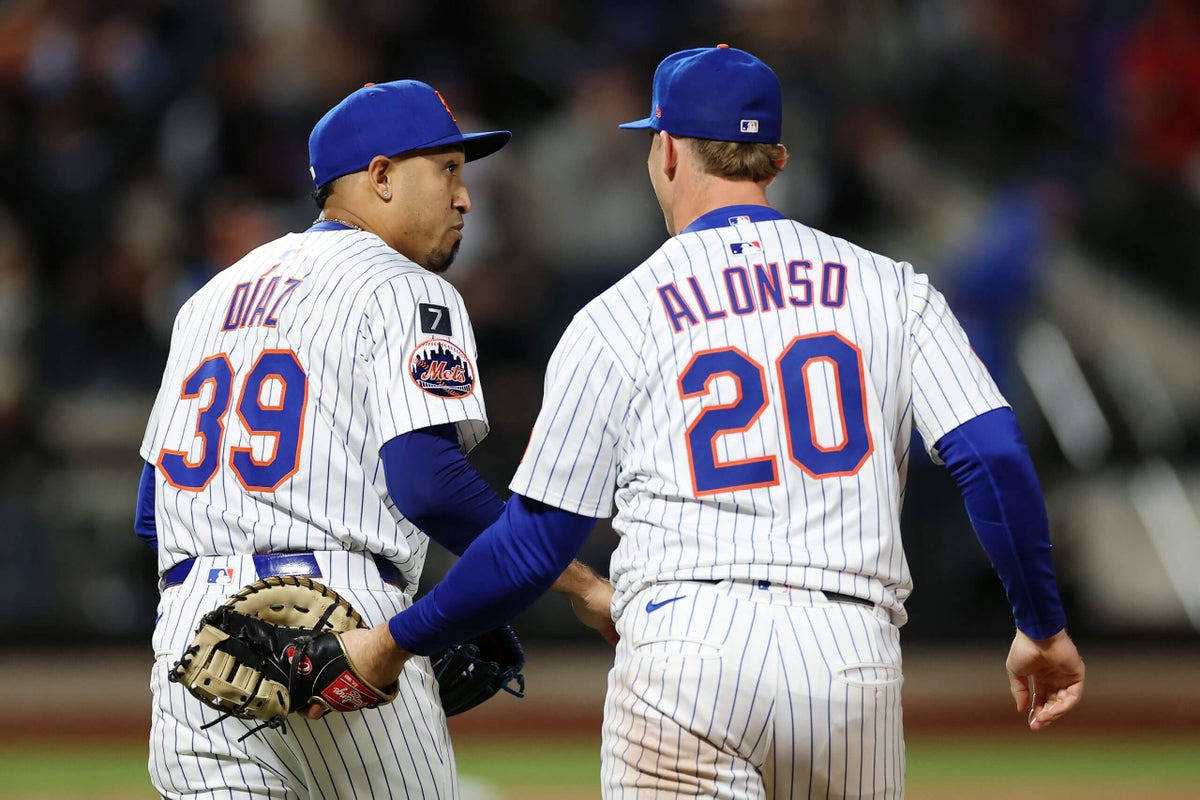
The irrational Mets fan, the long-suffering type who suffered through the years of the Wilpon ownership, now must wonder if Fred and Jeff are practicing voodoo on Stearns and owner Steve Cohen. Losing franchise stalwarts Edwin Díaz and Pete Alonso on back-to-back days is something one might have expected from the Wilpons, only with some ridiculous positive spin on how the team will be better for it.
To this point, Stearns and Cohen are not saying much of anything. That’s to be expected as they start to clean up the mess they’ve created, the baseball equivalent of a flooded kitchen floor. But they had better provide some answers quickly, and with actions, not words. Mop up the kitchen, turn on the Hot Stove and start cooking.
The Mets, who made no secret of wanting to become the East Coast version of the Los Angeles Dodgers, are nothing of the sort. Change was necessary after the club started last season 45-24, the best record in baseball on June 13, then failed to qualify for a 12-team playoff field. But this kind of change? It’s incredibly jarring, particularly with the way the Mets are going about it, operating with a confidence that borders on arrogance, even indifference.
Remember when Cohen took over as owner in late 2020 and said he would be “slightly disappointed” if the Mets failed to win a World Series in three to five years? The Mets are preparing for their sixth season under Cohen, their third under Stearns. And the excitement the two helped create by building a team that reached the National League Championship Series two years ago is fading into exasperation.
Stearns seemed only lukewarm on Alonso last offseason, when the Mets allowed the first baseman to twist on the market until mid-February before signing him to a $54 million deal with an opt-out. And he all but signaled Alonso’s departure at his end-of-season news conference, talking at length about the Mets’ need for better run prevention when defense is not Alonso’s strength.
Well, good luck finding a better right-handed hitter to go behind the left-handed Juan Soto. Throughout the industry, quality right-handed bats are in short supply. And both of the top remaining free agents, Kyle Tucker and Cody Bellinger, hit left-handed.
The Orioles rightly valued Alonso’s bat more than his defense, viewing him as a game changer for their lineup. And Alonso, who turned 31 on Sunday, is getting the last laugh on his former team. Combine his free-agent deals the past two offseasons, and he wound up with six years, $185 million — or $33 million more than Freddie Freeman got from the Dodgers in a heavily deferred six-year deal in March 2022. Alonso’s deal with the Orioles contains no deferrals.
Again, it’s too early to pass judgment on the Mets. But Stearns has yet to address the team’s biggest vulnerability, its starting rotation. He needs to find a replacement for left fielder Brandon Nimmo, the first of the popular and accomplished players he let go, in a trade with Texas for Marcus Semien, a 35-year-old second baseman in offensive decline. And now Stearns has lost one of the best closers in the game and the leading home-run hitter in franchise history, two players who proved they could handle the New York pressure cooker, as did Nimmo.
Stearns’ reluctance to go long-term on a free-agent starting pitcher is understandable. And, given the varying questions surrounding the top remaining starters, Framber Valdez, Ranger Súarez and Tatsuya Imai, probably correct. But what then is Stearns’ answer, particularly when he is likely to trade Kodai Senga and considering parting with David Peterson as well?
Acquiring any top starter available in trade — Tarik Skubal, Freddy Peralta, MacKenzie Gore, etc. — would require the Mets to part with one of the young homegrown pitchers who showed such promise last season. Skubal and Peralta, both potential free agents, are not particularly likely to move. Gore, who would come with an extra year of control, is coming off a poor second half.
For their bullpen, the Mets signed Devin Williams to a three-year contract at a present-day value of approximately $15 million a season, a deal that would have looked much better if they had retained Díaz. Williams’ talent is undeniable, but he had his struggles last season with the New York Yankees. And now, with Díaz out of the equation, he will be without the ideal safety net.
Robert Suarez is the most prominent remaining free-agent reliever, the kind who perhaps could help provide the same kind of one-two back-end punch the Mets would have had with Williams and Díaz. Pete Fairbanks, Luke Weaver and Tyler Rogers also remain on the open market. But if the Mets are going to continue their newfound fervor for financial discipline, they might again get outbid.
Then there is the outfield, where the Mets have not one but two starting positions open. As The Athletic’s Brendan Kuty noted, signing Bellinger away from the Yankees would be one way for the Mets to change the narrative. Signing Tucker would be another. The Mets have given no indication they’re pursuing them, or that they are willing to spend at that level.
The leading trade candidates include St. Louis’ Brendan Donovan, Cleveland’s Steven Kwan and Boston’s Jarren Duran and Wilyer Abreu. But again, the Mets not will be operating in a vacuum while competing for those players. Other teams want them, too — if they’re even traded.
Stearns is a cool customer. He will not be fazed by the challenge ahead. But the blowback he is facing is many multiple times more intense than when he was with the Milwaukee Brewers and traded Josh Hader in the middle of a pennant race. And surely he knew it was coming, after growing up in New York rooting for the Mets.
The rational Mets fan knows it’s Dec. 10. The irrational Mets fan doesn’t want to hear it.