
The Los Angeles Dodgers have spent the early winter reshaping the edges of a roster already good enough to win back-to-back World Series titles. After signing Edwin Díaz to a record-setting three-year, $69 million contract—the highest annual salary ever for a reliever—the club suddenly finds itself with a pitching staff that looks overwhelming on paper.
With Roki Sasaki transitioning back to a starting role next season and Emmet Sheehan emerging as a cost-controlled contributor, the Dodgers now boast a six-deep rotation featuring Yoshinobu Yamamoto, Shohei Ohtani, Blake Snell, Sasaki, Sheehan, and Tyler Glasnow.
And with that depth comes the natural next step: trade conversations.
Glasnow’s Name Surfaces at the Winter Meetings
 Kiyoshi Mio-Imagn Images
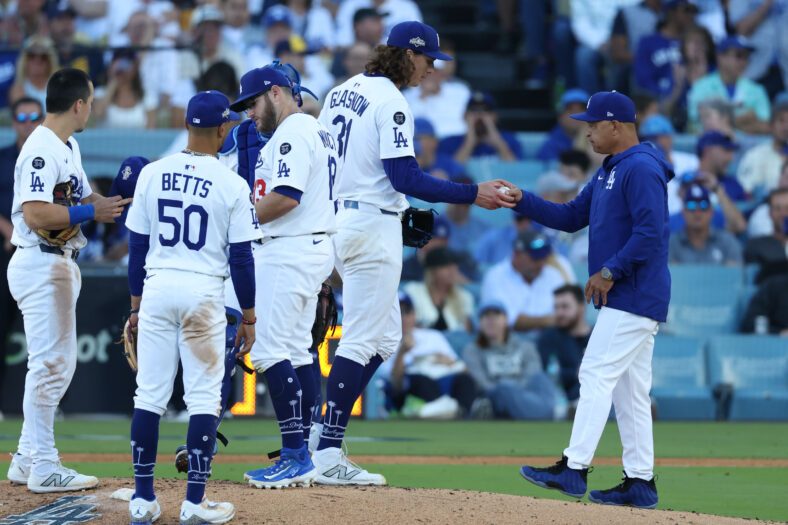
According to ESPN’s Alden Gonzalez, the Dodgers “would not be opposed” to moving Tyler Glasnow after his name surfaced in discussions during the Winter Meetings.
Yahoo Sports echoed the report, quoting Gonzalez: “The Dodgers ‘would not be opposed’ to moving pitcher Tyler Glasnow after his name was brought up in conversations this week at the winter meetings.”
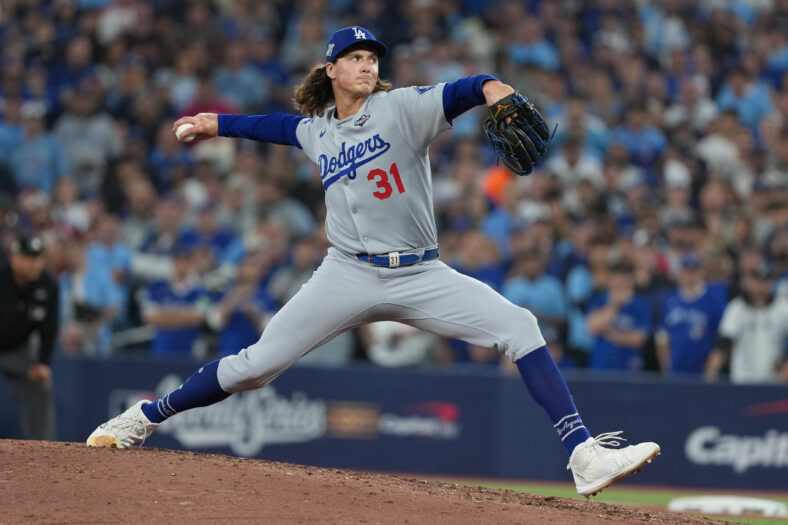
It’s not hard to understand why teams are calling. When healthy, Glasnow remains electric—106 strikeouts and just 56 hits allowed in 90.1 innings last season, along with a 1.69 ERA across six postseason appearances. But his workload limitations continue to shape his value; he has topped 100 innings only three times in ten MLB seasons.
With two years and $65 million guaranteed remaining on his deal—and a $30 million club option for 2028—any acquiring team would face both upside and uncertainty.
Support Local and Independent Sports Writing – Subscribe To the LAFB Network Today!
Age, Injuries, and the Economics of Depth
 Nick Turchiaro-Imagn Images
Glasnow is now 32, and his long injury history makes him the most logical candidate to move if Los Angeles wants to balance payroll or replenish other areas. Despite generating over $1 billion in annual revenue, the Dodgers remain deliberate about spending for spending’s sake. Their roster has few holes, and moving Glasnow could allow them to redirect resources to the outfield or bench depth without compromising rotation strength.
He remains dominant in flashes, but his 2.47 strikeout-to-walk ratio in 2025 was his lowest since 2017, and his career-high in innings (134) came two seasons ago.
Trading him might require Los Angeles to absorb some salary, but the front office is operating from a clear position of leverage.
Vote For Your Favorite Dodgers Duo: Ohtani – Yamamoto, Betts – Freeman, Hernandez – Hernandez
Leadership Voices Downplay—but Don’t Close—the Door
President of baseball operations Andrew Friedman, GM Brandon Gomes, and manager Dave Roberts have remained in close contact since the Meetings wrapped. While none have embraced the idea of dealing Glasnow, none have dismissed it, either.
Gomes reaffirmed the club’s stance on another frequently speculated name—Teoscar Hernández—saying a trade “doesn’t feel likely”, adding: “That’s not something we anticipate at all.”
Still, Hernández’s name surfacing underscores that the Dodgers are evaluating every corner of the roster.
Subscribe to LAFB Network’s YouTube Channel
Kansas City Enters the Chat: Outfield Dominoes Could Influence Pitching Moves
 John E. Sokolowski-Imagn Images
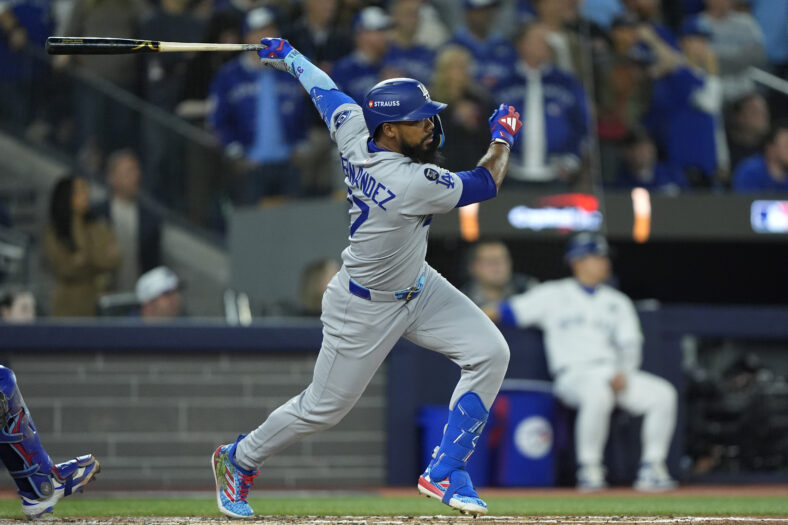
The Athletic’s Katie Woo and Fabian Ardaya reported this week that the Kansas City Royals have interest in trading for Teoscar Hernández, writing:
“The Kansas City Royals have coveted an offense-first outfielder, and have interest in Hernández, a league source said.”
If the Dodgers were to move Hernández—who has two years and over $46 million remaining on his deal—it would create a second outfield vacancy. That domino effect could increase pressure to flip pitching depth, including Glasnow, for an outfielder capable of playing every day.
Los Angeles has already explored the market for versatile St. Louis Cardinals utilityman Brendan Donovan, who has experience in both infield and outfield spots and remains an active trade target.
Why Glasnow Might Be the Odd Man Out
With Yamamoto, Ohtani, and Snell locked in as untouchable rotation anchors, and Sasaki and Sheehan offering youth and upside, Glasnow becomes the most movable experienced starter. His contract, age, and injury profile make him a logical piece for a blockbuster-type deal—especially if the Dodgers want to address multiple needs in one move.
And yet, because the Dodgers have the luxury of choice, they lose nothing by waiting. If they keep him, they’ll carry six legitimate starters into a season where a three-peat is the only acceptable goal. If they trade him, they could fill a specific need while controlling the risk of another injury-shortened year.
Operating From a Position of Power
Los Angeles doesn’t need to trade Tyler Glasnow. But they also don’t need to keep him. That balance of flexibility gives the front office maximum leverage, whether they choose to hold six starting pitchers or move one to complete their final roster puzzle.
In a winter where the Dodgers already fortified their bullpen and continue to explore upgrades elsewhere, Glasnow’s future remains one of the sport’s most intriguing unresolved questions. And as has become the norm under Friedman, every option remains on the table—especially when the goal is historic: becoming MLB’s first three-peat champion since the dynasty-era Yankees of 1998–2000.