
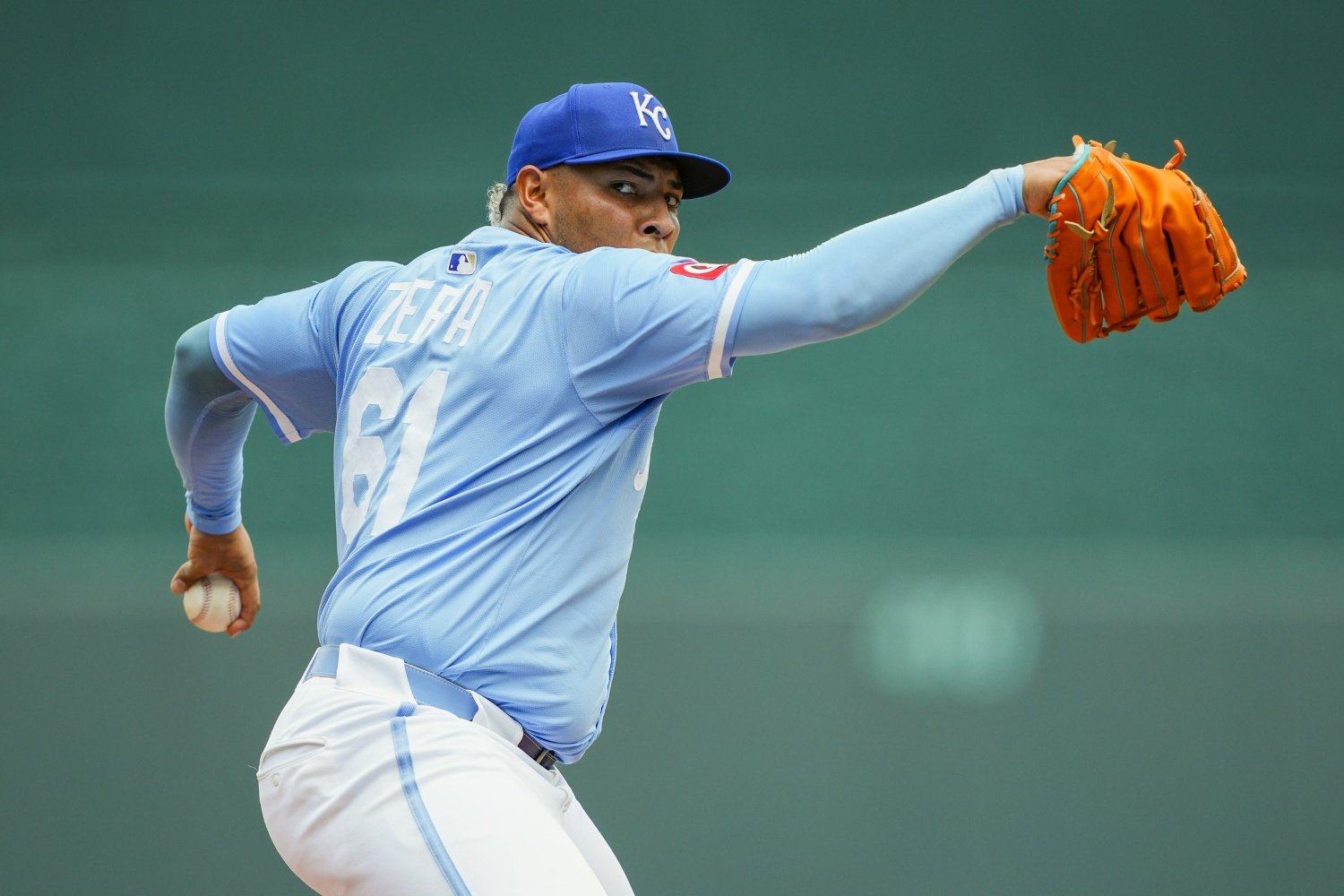
Every team must look ahead at all times to remain competitive. Not getting stuck in the past—or, in certain situations, the present—is especially crucial for the Brewers, who aim to compete every year in baseball’s smallest market. Shipping Isaac Collins and Nick Mears to Kansas City for left-handed reliever Ángel Zerpa was their latest forward-thinking move. It was also a reminder that the front office, like most these days, looks well beyond surface-level results when projecting a player’s future performance.
The Brewers gave away more 2025 value in the trade than they brought in. Collins and Mears combined for 2.6 rWAR this season, with the former finishing fourth in National League Rookie of the Year voting. Zerpa, meanwhile, contributed just 0.3 rWAR and a 4.18 ERA (99 ERA+) out of the Royals’ bullpen.
Despite their recent success, both Collins and Mears had unclear outlooks in Milwaukee. Collins overperformed his expected results based on his quality of contact, and his defense fell off badly in the second half. Mears lost a tick of velocity, leaving him without a fastball that could miss barrels and tanking his strikeout rate. The Brewers, undoubtedly aware of those trends, moved them into lesser roles down the stretch. Collins received just 10 postseason plate appearances, and Mears was omitted from their NLCS roster.
Both players might still be viable big-leaguers next year. Even if his hitting regresses, Collins’s plate discipline should still get him on base often, and Mears’s slider is still lethal against right-handed batters. While other players passed the pair on Milwaukee’s depth chart, their respective strengths fit nicely on a Kansas City roster with low-floor outfielders and shaky relievers.
Zerpa, meanwhile, is trending more clearly in a positive direction. Whereas Collins’s and Mears’s peripherals suggested their performance was actually slightly below average at the plate and on the mound, Zerpa’s well-above-average 3.38 SIERA and 3.36 DRA (74 DRA-) were career bests. His 117 Stuff+ tied him with new teammate Abner Uribe for 16th among qualified relievers, pointing to his greater potential to be a significant piece moving forward than the players the Brewers gave up.
The best pitch in Zerpa’s arsenal is a 96.4-mph sinker. It sinks more than expected from his arm angle, which helped him post an elite 62.3% groundball rate in 2025. Switching his focus to that sinker (at the expense of a four-seamer that also had heavier action than a hitter would anticipate out of the hand, but with a deleterious effect instead of a beneficial one) has been a major change for Zerpa. Here are the inches by which his average movement has varied from the estimated “dead zone” for each flavor of heater for each of the last three years, according to Pitch Leaderboard.
Pitch
Four-Seamer
Sinker
Season
Horiz. DZ Delta
Vert. DZ Delta
Horiz. DZ Delta
Vert. DZ Delta
2023
0.6
-1.5
0.7
-0.3
2024
-0.3
-2.3
1.5
-1.2
2025
0.2
-2.3
1.8
-1.7
The Brewers like sinkers (especially deceptive ones), so their vision for Zerpa likely centers around keeping things simple and letting that power sinker do most of the work. From there, they should branch out by tweaking the rest of his arsenal to complement his best pitch better.
Zerpa will always be a ground-ball pitcher first, but he has good enough stuff to run an above-average strikeout rate. Some pitch models like his slider even more than his sinker. His flat four-seamer can coax swings underneath it at the top of the zone, when set up properly. A sparingly-used changeup has shown flashes of being a decent fourth pitch. Yet, Zerpa’s whiff rate has consistently been among the lowest in baseball since his debut.
Those whiffs have not shown up because Zerpa lacks deception. That’s where the Brewers come in, as perhaps the best organization to help him. Their pitching coaches preach the value of masking pitches as effectively as possible out of the hand. It’s why they emphasize throwing multiple fastball variations, and it’s why they often prefer short, tight sliders that hold the same plane as a heater over bigger curveballs.
Zerpa’s slider will be a great place for them to start. It evolved into more of a slurve this year, after some mechanical tweaks impacted how he spun the ball.
.png.83cdc5927b8d798442360e68d40c6272.png)
Zerpa threw that more vertical breaking ball more frequently toward the back foot of right-handed hitters, where it induced more rollovers. Their groundball rate against the pitch jumped from 40.1% in 2024 to 62.5% in 2025.
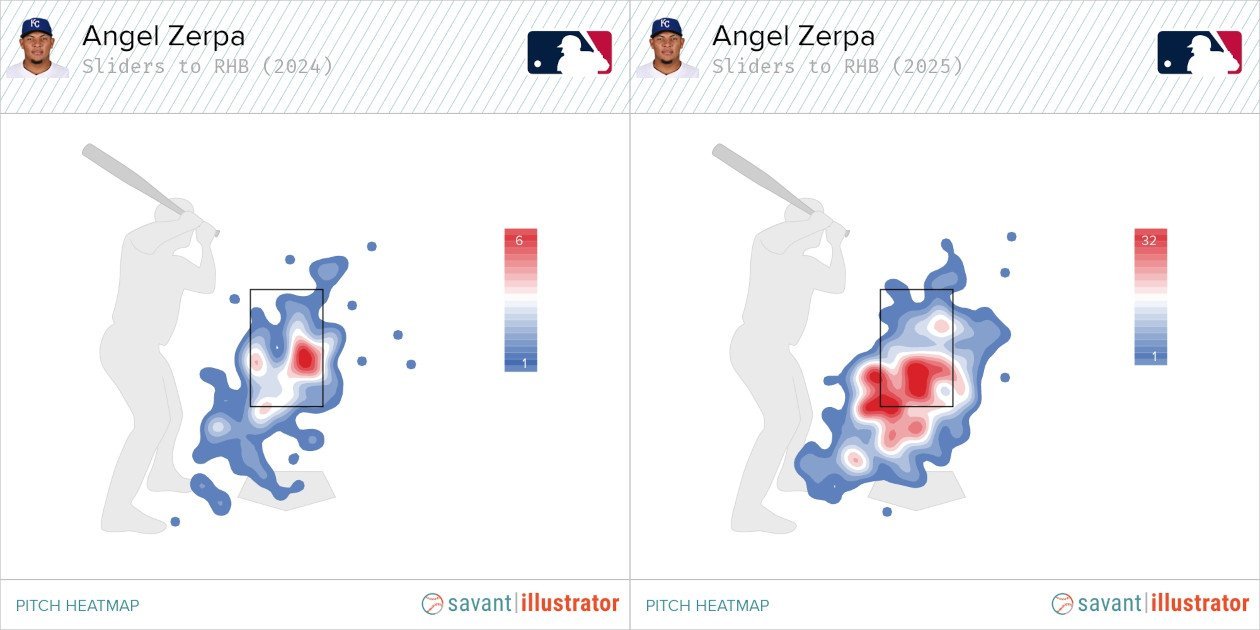
However, that newfound movement pushed Zerpa’s breaking ball further into a liminal space when it came to deceiving hitters. It didn’t mirror his fastball out of his hand (like Mears’s or Trevor Megill’s breaking balls), nor did it have the kind of break that could miss bats regardless of tunneling (like Uribe’s or Aaron Ashby’s).
Zerpa’s slider has always been easier to pick up than others at release. In the visual below, captured from a right-handed batter’s perspective, the yellow tracer (the slider) immediately separates from the rest of his arsenal.
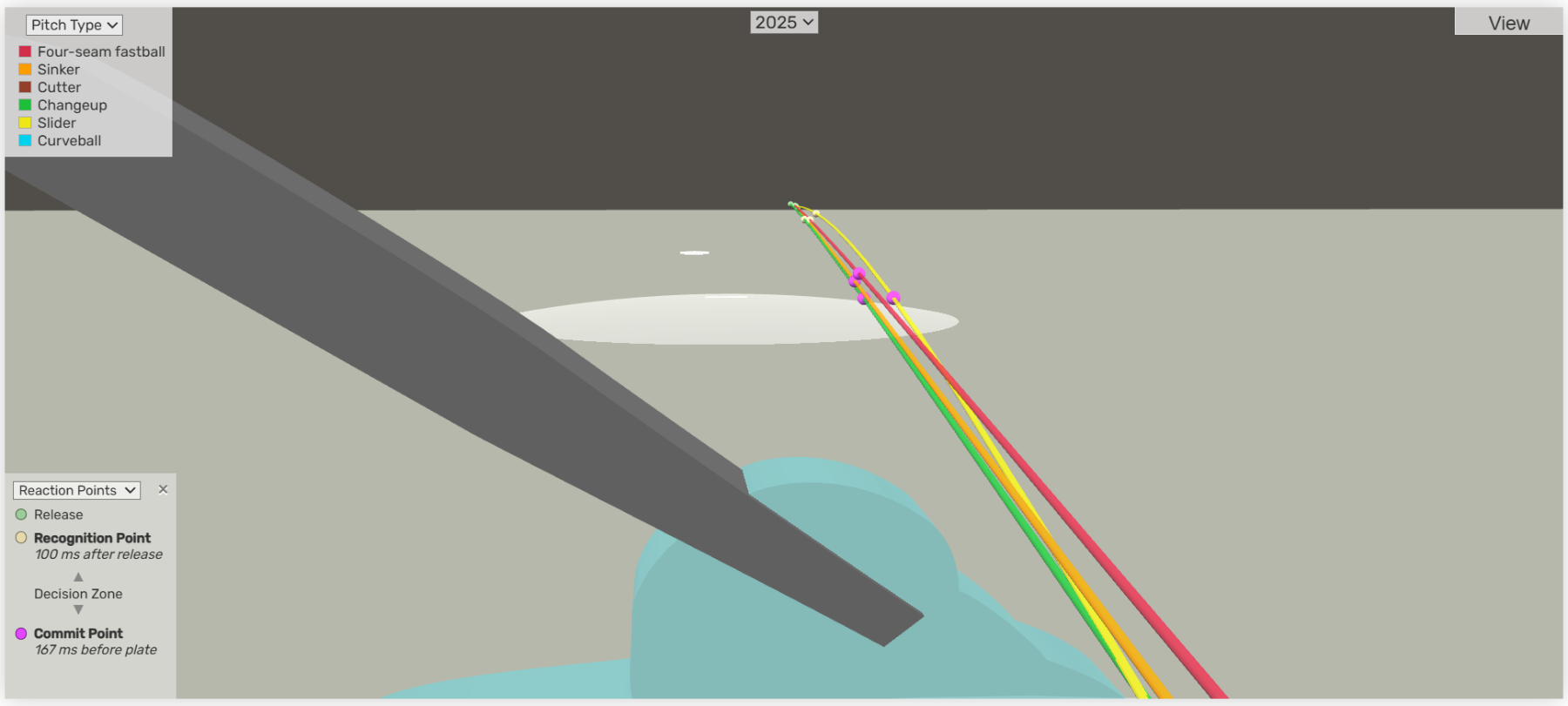
The difference is slightly less perceptible to left-handers, who have a much tougher angle against Zerpa, but it’s still there.
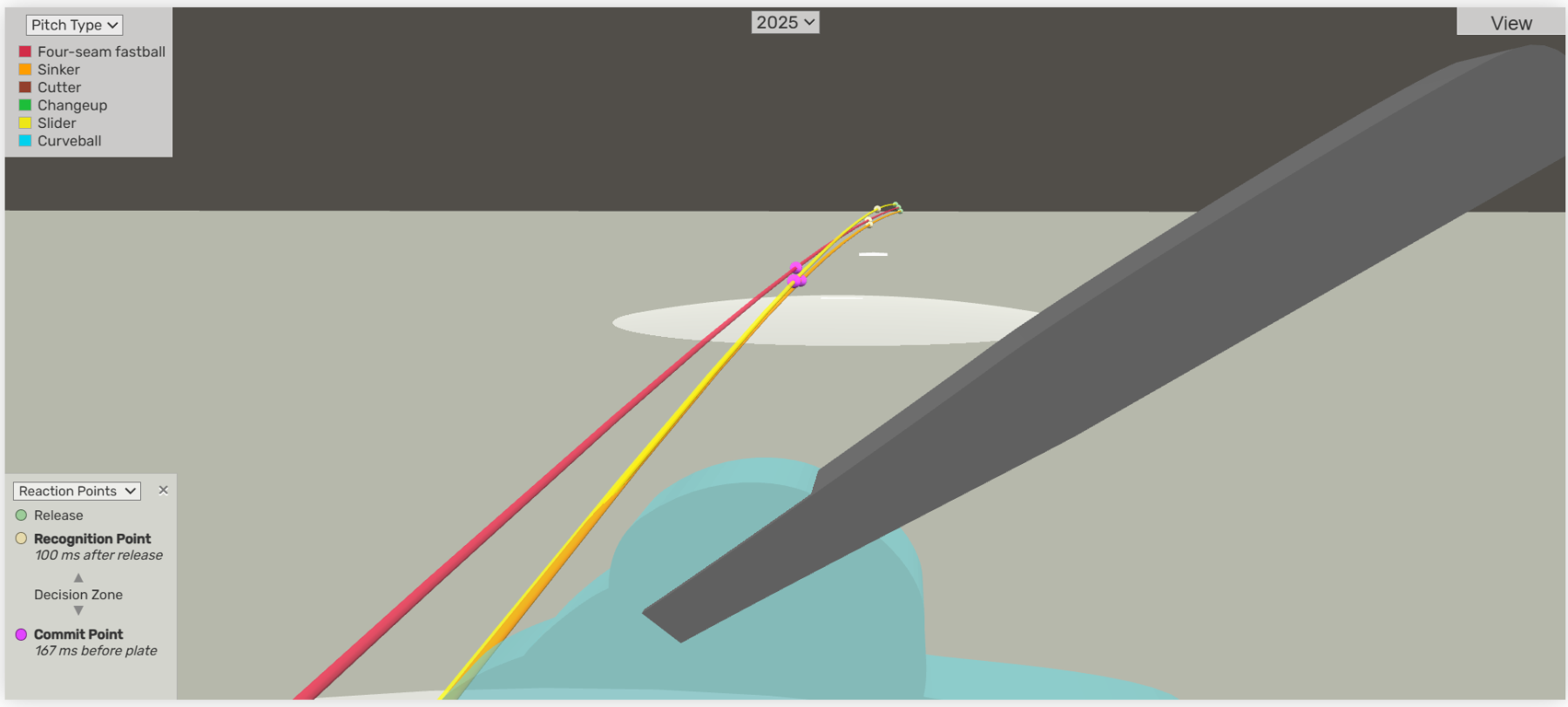
Part of the issue is that Zerpa has a relatively wide spread of release points. Most hitters cannot reliably perceive an arm angle difference of a few degrees in real time with the naked eye, but Zerpa’s varies enough based on what kind of pitch he’s throwing that it can become an issue.
Pitch Type
Arm Angle
Sinker
25.9°
Slider
33.5°
4-Seam
30.2°
Changeup
34.9°
Of the 23 pitchers to throw at least 10 innings for the 2025 Brewers, 15 had less than a 3-degree difference between their average arm angle on their primary fastball and their primary breaking ball. Zerpa’s 7.6-degree difference between his sinker and slider would have been the fourth-highest.
To make pitch recognition harder for hitters, Zerpa and his new coaches could shorten his slider to a harder pitch with more gyrospin, or develop a cutter as a bridge pitch and mold his breaking ball into a sweeper. The goal should be to focus on what he does best (inducing grounders) and tightening up the rest of his arsenal from there to make him a more well-rounded late-inning reliever.
Even if he doesn’t take that next step, Zerpa’s solid peripherals, three years of club control, and the roster flexibility afforded by his remaining option year give him good odds of being more valuable to the Brewers than Collins and Mears would have been. After both had career years, the front office took advantage of the opportunity to cash them in for the kind of reliever they’ve turned into a bullpen weapon several times.