
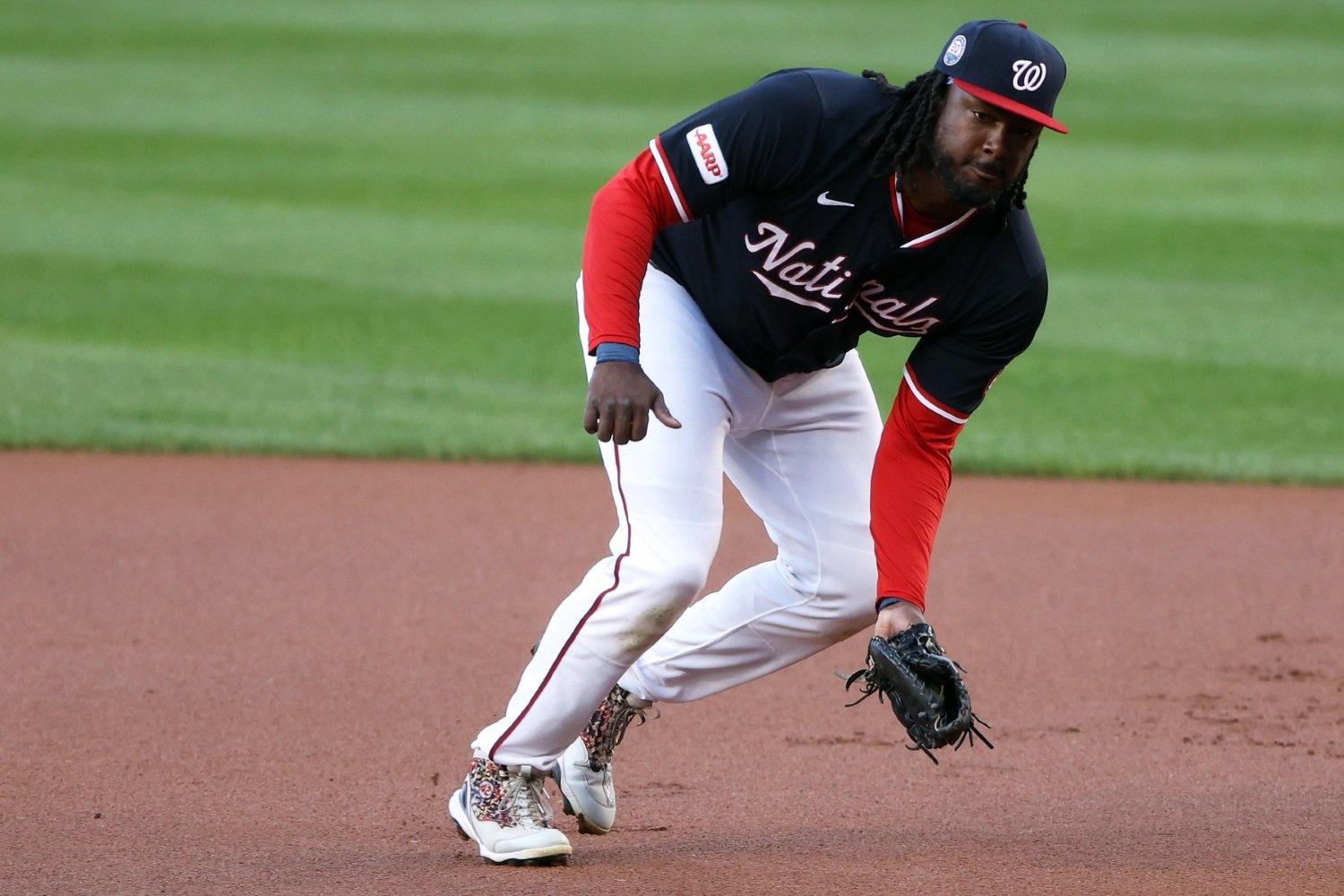
When the Twins signed Josh Bell, it was easy to shrug. This is not the kind of move that lights up the timeline or changes preseason projections overnight. Bell is a veteran switch-hitting first baseman on his fourth team in three years, and defensive metrics have not been kind to him. If you stop there, it is fair to wonder why the Twins would invest in a bat-first player at a position where defense has quietly become one of their biggest strengths. But this front office has earned a bit of trust when it comes to first base defense, and the way the Twins play the position goes a long way toward explaining why Josh Bell’s glove is not something to panic about.
Over the past two seasons, the Twins have done some of their best defensive work at the cold corner, not because they suddenly discovered elite athletes, but because they found a way to simplify the job. Against left-handed hitters, in particular, the Twins have leaned heavily into aggressive positioning. The first baseman plays right on top of the line, and the second baseman shades over next to him. The goal is straightforward: Take away the pull-side ground balls that left-handed hitters most often produce, and reduce the amount of ground the first baseman has to cover.
Carlos Santana is a clear example of how much this approach can matter. Santana had always been a solid defender, but he was not a perennial Gold Glove threat. In 2023 with Cleveland, he played close to the line against left-handed hitters 29% of the time. The result was a respectable but unspectacular -2 outs above average against lefties.
In 2024 with the Twins, that number jumped dramatically. Santana played close to the line 53% of the time. With fewer balls sneaking down the line and less lateral ground to cover, Santana posted an impressive 13 outs above average against left-handed hitters. His athleticism and instincts mattered, but the positioning mattered just as much, and it was a major factor in Santana taking his defense to another level and ultimately winning a Gold Glove. The Twins put him in spots where he could succeed.
They doubled down on that idea last season with Ty France, and the results were even more striking. In 2024, before joining the Twins, France played close to the line against left-handed hitters only 34 percent of the time and finished with -8 outs above average. After arriving in Minnesota in 2025, that number jumped to 86 percent. Suddenly, the same player with the same physical limitations turned into a plus defender, posting 7 outs above average. That shift in positioning played a significant role in France’s defensive turnaround and helped lead to him winning a Gold Glove, as well. The Twins did not make France faster or more agile. They made his job easier.
That context matters when talking about Josh Bell. There’s no way around it. Bell is not a good defensive first baseman. He is tall, thickly built, and slow-moving. He does not have great range, and the advanced metrics reflect that. Over the past three seasons, Bell has posted -2, -7, and -4 outs above average at first base. On a neutral team with neutral positioning, that is exactly the kind of profile that scares people off.
But Bell’s usage against left-handed hitters suggests there is real room for improvement. From 2023 through 2025, Bell logged 231 defensive chances at first base against lefties. Of those, he played close to the line just 41 percent of the time. On those plays, he posted -9 outs above average. That is bad, but it also shows how rarely his teams committed to hiding his weaknesses.
Compare that to what the Twins did with Santana and France, and the opportunity becomes obvious. Minnesota has shown a willingness to push that close-to-the-line rate north of 50 percent and even into the mid-80s, when the situation calls for it. If Bell’s alignment against left-handed hitters jumps anywhere near those levels, he will simply be asked to do less. Fewer hard grounders will sneak past him down the line, and fewer balls will require him to range deep into the hole.
This is not about turning Josh Bell into a Gold Glove defender. That is not happening. It’s about getting him closer to average by removing the plays he is least equipped to make. Bell does not need to be special defensively for this signing to work. He needs to catch what is hit at him, scoop throws in the dirt, and avoid being a liability. The Twins have already shown they know how to do that with players at this position.
Ultimately, this signing is a bet on offense first. The Twins’ lineup badly needs quality at-bats, and first base has been a problem area for far too long. Outside of a couple of strong months from Carlos Santana in 2023, production from the position has been inconsistent at best. Bell brings switch-hitting power and a track record of getting on base, even if the peaks have been less frequent in recent years.
Choosing a bat-first first baseman over a glove-first option makes sense, given where this roster is right now. The Twins do not need to win games 2-1. They need to score runs. If positioning can turn Josh Bell from a below-average defender into something closer to playable, the overall value equation starts to tilt in Minnesota’s favor.
Bell is not a perfect player, and this is not a perfect signing. But the Twins have a clear blueprint for maximizing first base defense, and it has worked with multiple players who came with similar questions. If they follow that same playbook here, Bell’s glove should not overshadow what he is actually here to do.
What do you think? Are you worried about Josh Bell’s defense, or do you trust the Twins to work their positioning magic again? Leave a comment below and start the conversation!