
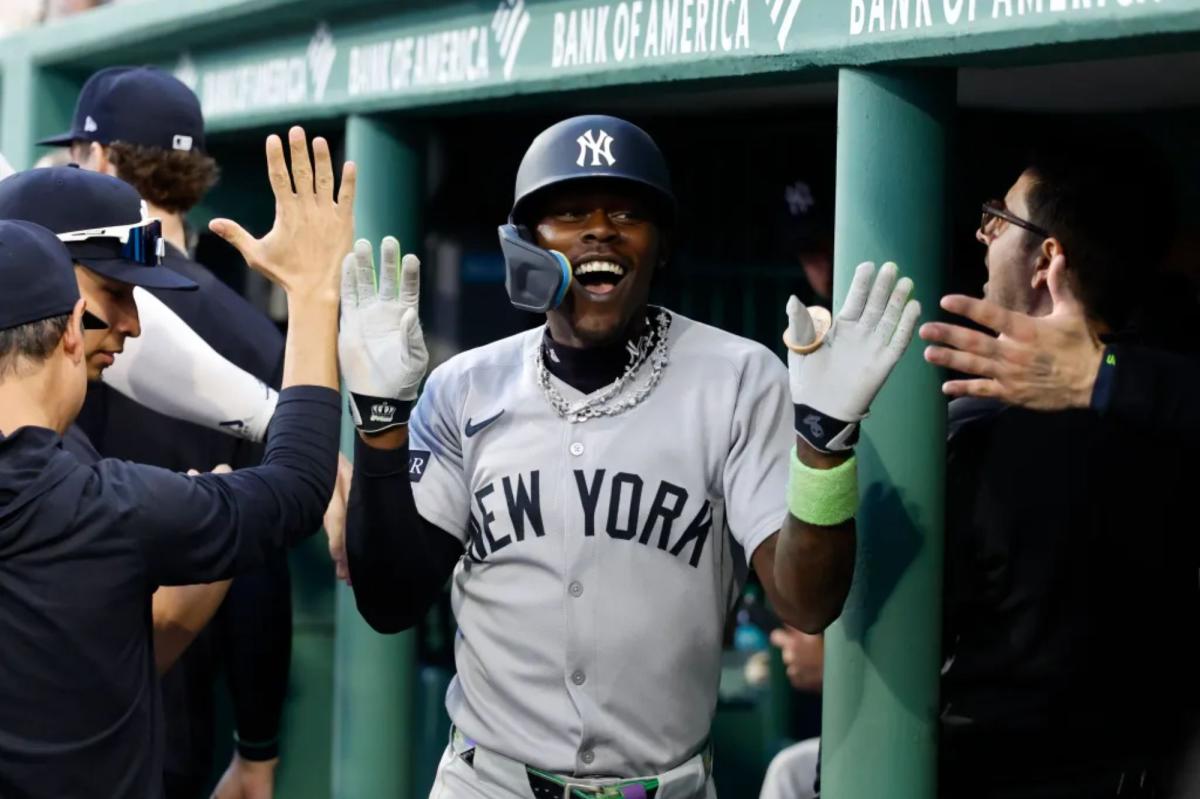
If Aaron Judge hit from the other side of the plate, perhaps he would be the one untouchable lefty bat as the Yankees try to become more balanced in their lineup.
Other than that, well, Brian Cashman is not shutting the door on anything just yet, though that does not mean he is actively shopping his lefty bats, either.
That group includes Jazz Chisholm Jr., who is coming off a career year with 31 home runs and 31 stolen bases.
The electric second baseman is entering his walk year, and while he has expressed a desire to remain in The Bronx long term, an extension is seen as unlikely, which is sure to keep opposing teams calling about him this winter to see if they can pry him from the Yankees.
“He’s somebody who I think is currently part of the solution, someone who’s made us better by getting him two deadlines ago, giving us athleticism,” Cashman said last week at the Winter Meetings. “He’s an All-Star second baseman, great defense, can steal bags, power, all that stuff. He’s been a good get. But again, the collection of all — whether it’s third base [Ryan McMahon], second base, first base [Ben Rice], catcher [Austin Wells], center field [Trent Grisham] — they’re all left-handed.
“We will be open-minded. But again, my default is these are all individually good players.”
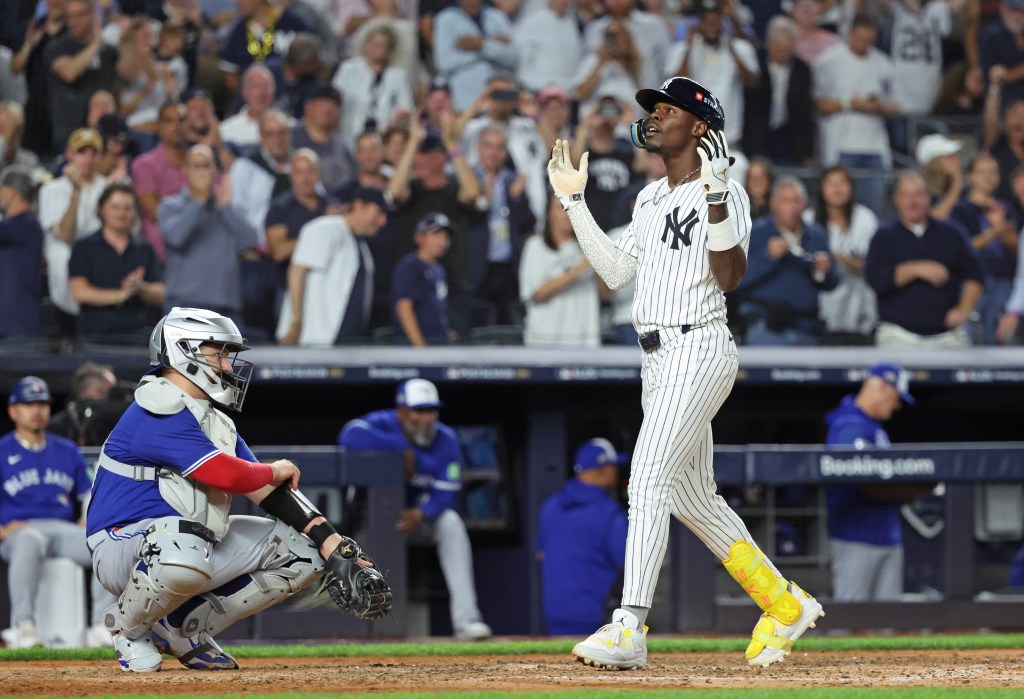 New York Yankees second baseman Jazz Chisholm Jr. reacts as he scores on his solo homer. Charles Wenzelberg / New York Post
The Yankees’ top priority continues to be re-signing Cody Bellinger, who of course would be another left-handed bat, though he mashed left-handed pitching last season.
While that pursuit plays out, Cashman indicated he was evaluating “challenge trades” — need for need from the big league roster, essentially — in an attempt to improve a roster that still has holes in left field and the bullpen, could use some fortifying in the rotation and has a lineup that is too left-handed, the general manager acknowledged.
Of course, if a team offered something in one of those areas for Chisholm that was impossible to turn down, perhaps a trade could come to fruition.
But then it would create another hole at second base, one that would be difficult to fill after Chisholm posted a 4.4 fWAR in 2025, which ranked fourth among all second basemen.
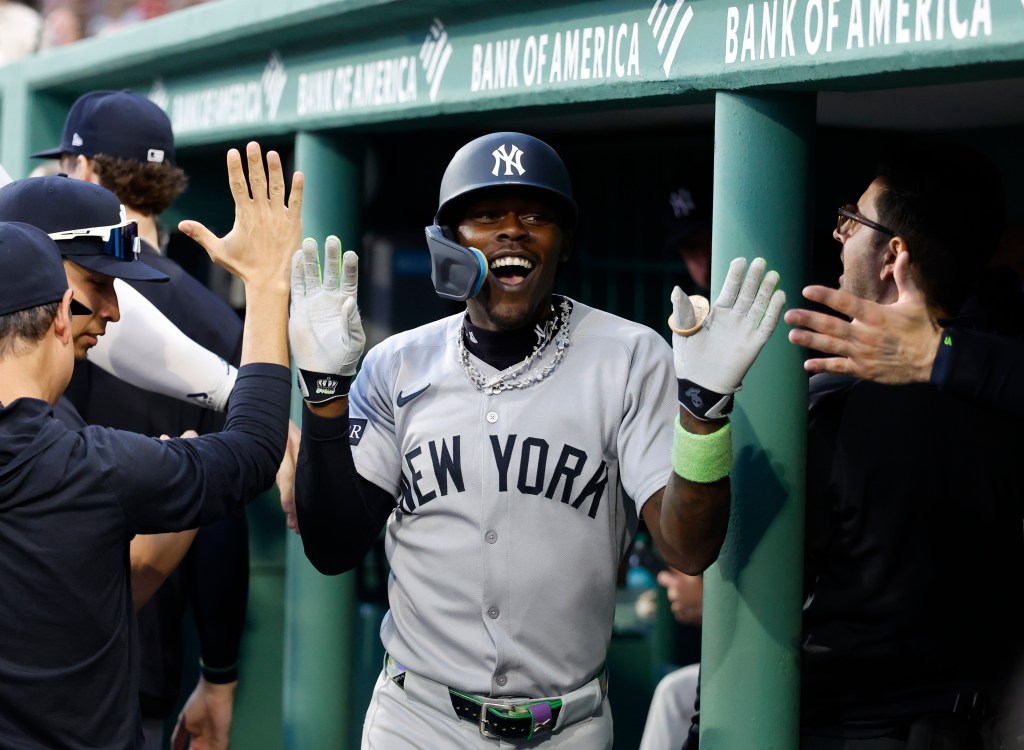 Jazz Chisholm Jr. is greeted by his teammates in the dugout after he scores on a solo homer. Jason Szenes / New York Post
“We are open-minded to challenge trades on a lot of our talented players because yes, we are left-handed,” Cashman said. “They would be hard to pull off, because I fall back to, we have good players that we like having them here.”
Chisholm, who is projected to make around $10 million in his final year of arbitration, has had his share of ups and downs in his year and a half in pinstripes — there was the brutal play during a bad series in Miami where he got doubled off at first base on a pop-up to second base, and later being outwardly frustrated when he was not in the lineup for Game 1 of the wild-card series against tough Red Sox lefty Garrett Crochet — but generally the highs have outweighed the lows.
Aaron Boone has consistently said how much he loves managing Chisholm, whom the Yankees have encouraged to be himself since he came over from the Marlins at the 2024 trade deadline.
Go beyond the box score with the Bombers
Sign up for Inside the Yankees by Greg Joyce, exclusively on Sports+.
Thank you
And though some teams might try to deal a player entering his walk year to get something for him if they know they are not going to extend him, the perennially win-now Yankees are not in that position.
As for the idea of an extension, the last two legitimate ones the Yankees handed out went to Aaron Hicks and Luis Severino, both of which backfired.
Cashman said those specific examples have not scared him off from doing future extensions — the Yankees tried on both Judge and Juan Soto, but nothing came of it — though Hal Steinbrenner has mentioned he is also generally against them.
“I think it’s more difficult because it jumps your AAV [average annual value] up from where you currently are,” Cashman said. “So obviously we’ve got a lot of big logs on the fire already that we carry. So when you do other deals that extend them out, that changes the equation and your flexibility at the same time, so it makes it more difficult.”