
Some 2,500 days ago, the Twins announced a pair of five-year pacts for two of their young stars, Jorge Polanco and Max Kepler. It was a shrewd and symbolic move: the pair—signed as international players in the same class, friends as they rose through the system together—served as complementary core players around Byron Buxton, Miguel Sanó, and José Berríos. They hadn’t yet broken out, but they each had arguably their best season in 2019, fueling a 101-win machine while giving the franchise cheap production for years.
Polanco and Kepler’s success is an example of why teams have aggressively sought pre-arbitration extensions in recent years. The surplus value potential is sky-high. As Polanco averaged over 3 wins above replacement per season (according to Baseball Reference), the Twins paid him around the going rate for a mid-tier reliever. Kepler, though less valuable in an absolute sense, was still a tremendous bargain: a two-win player paid like someone expected to fill in the back end of a rotation or play only in a platoon role offensively. If a pre-arb player flops (like Scott Kingery or Evan White did for the Phillies and Mariners, respectively) after signing this kind of deal, the downside is far less than if a free agent does so. Both franchises “only” ran $24 million in the red, spread across six years. The Twins’ savings on Polanco and Kepler were perhaps double that.
With Royals breakout star Maikel García recently inking such a deal, a question arises: do the Twins have a pre-arb player they should lock up long-term?
Serious Contenders
Matt Wallner
Wallner thundered his way through back-to-back seasons with a .370 OBP and .500 slugging in 2023 and 2024, before slogging through a far more tepid campaign in 2025. It’s easy to stomach his defensive butcherings when his OPS is nearly .900. At a slugging-forward .776, matters get much more murky.
Nonetheless, Wallner possesses undeniable tools. Few can swing as hard as him, throw with such velocity, and impart pure, utter, game-altering damage onto a baseball. He even cleaned up the whiffs a little last year, striking out at a career-low (but still high) 29.1% while walking 11.7% of the time. He has obvious limitations, though, and the extreme nature of his profile would probably make the team nervous to guarantee a significant amount of money.
His age may limit the desire to extend him. As a medium-bloomer, Wallner already celebrated his 28th birthday, meaning any free agent years bought out will come after he turns 30.
Royce Lewis
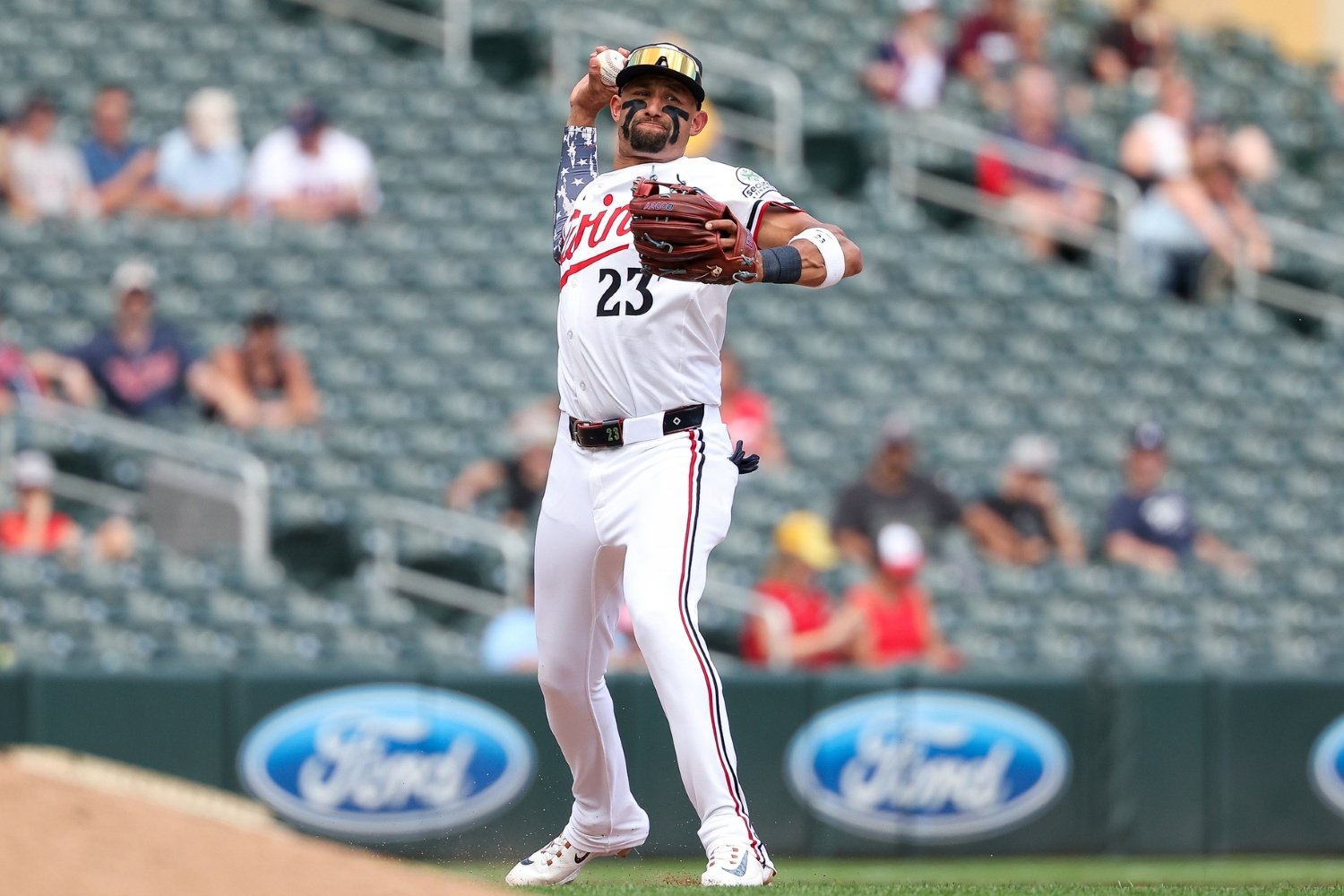
This offseason marked Lewis’s first year in arbitration, meaning he technically isn’t “pre-arb,” but the idea is the same: he’s a talent whom the team could choose to lock down before free agency. No one on this list has done the things Lewis has done. For a moment in 2023, he looked like a future MVP candidate, smacking homers at a historic rate while spearheading the late surge that helped lead the team to the playoffs. Then—while hobbled so badly he could only saunter to first base—Lewis cracked four homers in the postseason to lead the team to the ALDS.
Much can change in two years. Those homers felt like a lifetime ago. Like Wallner, Lewis saw his play degraded to the point where—separated from the name and pedigree—there would have been a legitimate argument for him to be non-tendered this offseason. An 85 wRC+ from the hot corner excites no one.
Extending Lewis would be a bet on his potential and an offered olive branch. Clearly, something has been up with his relationship with the franchise. He’s groused and grumbled about money, losing, and how he’s hesitated to make adjustments because of his apparently uncertain position on the team. Perhaps rewarding such behavior with multiple millions is unwise; maybe it would provide the foundation he needs to get his mentality right.
Check Back in the Future
Luke Keaschall
The best recent performer of the bunch, Keaschall is probably a year or two away from being considered for a contract like this. Next year will be his age-23 season. It seems like the best time to start offering to buy out free agent years will be after that, assuming his play continues to impress.
Dark Horses
Taj Bradley
Impossibly, Bradley is still just 24, making him younger than Zebby Matthews and Simeon Woods Richardson. He’s arbitration-eligible following the 2026 season. A strong showing could push the team to extend him long-term, especially as Joe Ryan and Bailey Ober inch towards free agency.
Brooks Lee
Guys with negative WAR nearly 200 games into their big-league careers don’t typically demand extensions. Lee needs to prove he can at least hold his own in MLB before the Twins entertain ideas of a multiple-year contract. The pedigree and prospect heritage are there, though.
Of all these candidates, a Lewis extension brings the most intrigue. He’s at the perfect age where buying out free-agent years could be crucial, and it could provide the stability he apparently needs to make adjustments and not push himself through injury. What do you think? Is there someone else the Twins should extend? Or would you hold off until next offseason?