
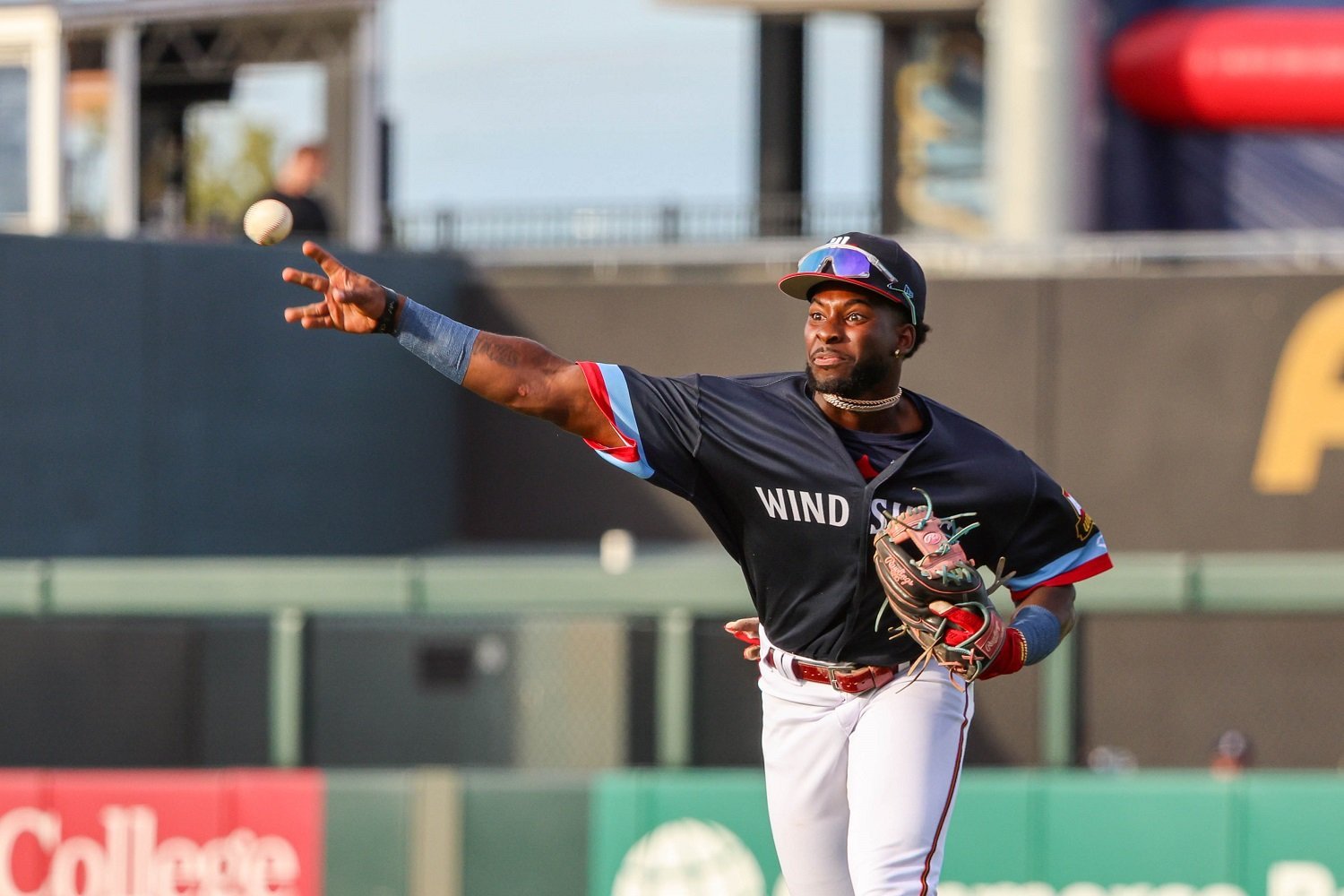
The Twins have been methodical in building an infield pipeline that could anchor the franchise for years, and the 2026 season marks the first true step toward that plan becoming reality. Brooks Lee will open the year at shortstop with Luke Keaschall alongside him at second base, while Kaelen Culpepper continues his climb after a breakthrough season in the minors. Their development is intertwined, and Minnesota is preparing for multiple scenarios where all three could play significant roles.
Keaschall’s positional path is already expanding, and Derek Falvey made clear that the organization views him as more than just a second baseman. Falvey explained that Keaschall’s broken forearm last season paused their original plan to explore outfield reps earlier.
“For Luke specifically, obviously got a ton of time at second. With the way his season went with the broken forearm, it kind of screwed up our plans for exploring the outfield more like we were originally going to do this past year,” he said.
With Keaschall now past his arm rehab, the Twins are revisiting that developmental track.
“That’s something that from a throwing program perspective this offseason, we’re going to spend more time making sure he’s building out to get some reps out there in the outfield,” Falvey said.
The Twins see Keaschall’s versatility as key to fitting all their pieces together. Falvey said the organization will be having more conversations with him about what that transition will look like and emphasized that both he and Derek Shelton believe it can benefit the club.
“We think it could be a real opportunity for him to keep finding as many ways in the lineup that help the group as we try to fit all the pieces together and slide other guys around, too. It could be really valuable if he could run out to left field or center field along the way.”
Unstated, there, is the other major reason the team is considering that move: Keaschall looked bad at second base in 2025. He probably doesn’t have the fluidity or the hands to play on the dirt on an everyday basis, though the club hopes he can stay there at least part of the time.
Culpepper remains a step behind Keaschall and Lee in terms of timeline, but his stock continues to rise. After splitting the year between High A and Double A, he solidified himself as one of Minnesota’s most promising prospects.
“Yeah, Kaelen had an awesome year,” Falvey said. “Really could not have asked for it to go much better.”
Culpepper played shortstop most of the time, but also saw early work at second and third base as the organization began expanding his defensive profile.
“He’s getting some work, you know, early work at second base, third base, a little bit of game exposure in those spots. And we’ll let that continue to play out as we get through spring training into the season,” Falvey noted.
If all three players are healthy at the same time (a big if when it comes to Twins top prospects), Minnesota has several intriguing defensive configurations. The most straightforward setup would feature Culpepper at third, Lee at shortstop, and Keaschall at second. That alignment keeps all three in the infield, while still allowing Keaschall to move into the outfield when needed.
Another scenario emerges if Culpepper arrives ready to take over second base. In that case, Keaschall’s growing experience in the outfield becomes even more critical. Lee would remain at shortstop in that alignment, giving the Twins a strong defensive foundation up the middle.
There is also the possibility that early-season struggles or injuries force a different arrangement. If Lee has a problematic defensive start, Culpepper has the skill set to take over at shortstop, sliding Lee to second base. The Twins value the ability to shift players around as needed, and this trio gives them more flexibility than they have had in years.
Whatever alignment Minnesota ultimately settles into, Lee, Keaschall, and Culpepper will be central to the organization’s future. Their versatility allows the Twins to adapt to performance, injuries, and roster construction in a way few clubs can match. The next step is seeing how quickly all three can grow into the roles the Twins envision for them.
How will these three players fit into Minnesota’s long-term plans? Leave a comment and start the discussion.