
Image courtesy of © Daniel Kucin Jr.-Imagn Images
One message from the Twins front office came through clearly at the Winter Meetings. Minnesota wants to hold on to its three stars (Byron Buxton, Pablo Lopez, and Joe Ryan) with an opportunity to trade established talent in return for productive big-leaguers who fit their needs better. The Twins have done this in recent years, when trading for Lopez or when trading away Jorge Polanco.
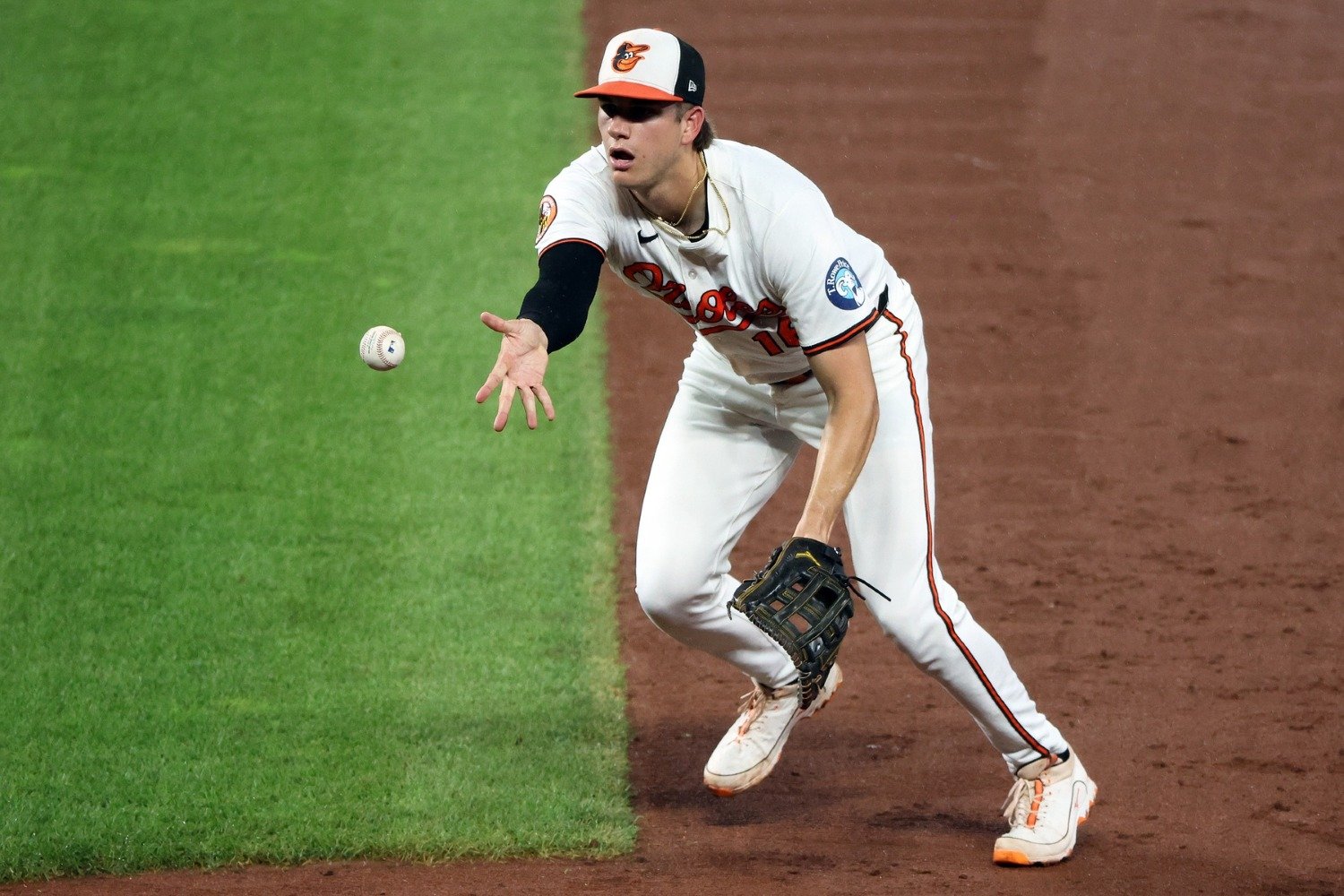
That shift aligns with what is happening in Baltimore. The Orioles surprised much of the league by signing Pete Alonso to a five-year contract. Before the deal, they already had multiple in-house corner infield options, including Coby Mayo. The Alonso signing pushes Mayo further off his defensive home, and Baltimore’s loaded infield creates an opportunity for clubs looking to upgrade at first base. Few teams match up better with Baltimore’s needs than the Twins, who have starting pitchers and young arms they may be willing to move, and who still need help at offense-first positions even after signing Josh Bell.
Mayo remains an intriguing target, despite a challenging 2025 season. Right-handed power has long been his calling card. Scouts and analysts loved the explosiveness in his bat and the potential for middle-of-the-order production. Last season, he posted a 103 wRC+ in Triple A, but was limited to a 95 wRC+ in his big-league time. He remains just 24 years old, with the kind of offensive ceiling that doesn’t come around often. A team willing to bet on upside could still dream on a future where Mayo anchors a lineup for several seasons.
Let’s consider three realistic trade concepts that could spark a conversation between Minnesota and Baltimore.
Trade Option 1
Twins Receive: 1B Coby Mayo
Orioles Receive: RHP Bailey Ober
Both Ober and Mayo are coming off rough 2025 seasons. Ober ran into uncharacteristic command issues while fighting a hip issue, leading to more hard contact than he had allowed in previous years. However, his track record from 2022 through 2024 still carries weight with clubs. Over that span, he recorded a 115 ERA+ and a 3.74 FIP while showing reliability and strong strike-throwing. With two years of team control remaining, he matches what the Orioles need as they continue to search for durable mid-rotation pitching. For Minnesota, this deal represents a swap that fits their stated direction.
Trade Option 2
Twins Receive: 1B Coby Mayo
Orioles Receive: RHP Mick Abel
Minnesota acquired Abel at last year’s trade deadline in the Jhoan Duran deal, and they have shown optimism about helping him refine his delivery and command. That makes it complicated for the Twins to move him this quickly, but circumstances have shifted for both teams. Mayo and Abel are remarkably similar assets. Both are pre-arbitration players with prospect pedigrees who have taken early lumps in the big leagues. Sometimes a reset is beneficial. This kind of challenge trade allows each organization to take a new developmental approach with a talented young player.
Trade Option 3
Twins Receive: 1B Coby Mayo
Orioles Receive: RHP David Festa, RHP Andrew Morris
This offer gives Baltimore two pitchers who can cover innings in the near future. Festa has flashed a fastball with carry and strikeout ability (32.0% strikeout rate at Triple-A St. Paul last season), and he is big league-ready, so he could slot into their rotation almost immediately. Morris is a step behind, but earned a 40-man spot this winter because of his strong command profile and the likelihood that he can contribute in the next few seasons. Last season, he posted a 4.14 FIP and a 22.4% strikeout rate for the Saints. For a team looking to build long-term pitching depth, this package may be more appealing than a single arm with risk.
Each scenario highlights a different angle for balancing value between the clubs. Baltimore must decide whether it prefers established innings, developmental upside, or a mix of both. The Twins, meanwhile, have to decide whether Mayo is the right risk, as they look for ways to shake up their core and bolster their offense.
Which deal gets the job done from Baltimore’s perspective? Leave a comment and start the discussion.