
If you thought that the Brewers found slim pickings when it came to the Major League Rule 5 Draft, check out the dribs and drabs of the minor league phase of the draft. Milwaukee had only a couple of players who made any impression at the major league level for the Brewers, and a handful of others who made it to the big leagues, albeit for other teams.
Here are the five players drafted by the Brewers who actually played for Milwaukee.
Isaac Collins, OF-2B (from Colorado), 2022
Despite showing good speed with 30 steals at Double-A Hartford in 2022, the Colorado Rockies elected not to protect Collins, and the Brewers scooped him up in the Minor League portion of the draft.
Collins began the 2023 season at Double-A Biloxi and showed power (10 HR), speed (29 steals), and a good eye, drawing 75 walks while batting .269/.424/.431 across just 376 plate appearances. He earned a late-season promotion to Triple-A Nashville but went 0-for-7 in three games.
The following year, Collins showed his stuff at Nashville, batting .273/.386/.475 with 14 homers and 24 steals in 500 trips to the plate. The Brewers called him up for a sip of Starbucks in September. Although Collins struggled with only two hits in 17 at-bats, he showed his moxie, singling on the first pitch he saw in the major leagues and then stealing second base against his former organization in a 4-1 loss to the Rockies.
The switch-hitter earned the final spot on the 2005 Brewers Opening Day roster after Blake Perkins suffered a broken tibia in training camp. Although the Brewers stumbled out of the gate, losing four straight games, Collins went 3-for-6, including a pair of doubles. He scuffled through mid-June but then caught fire over the next three months, hitting .297/.383/.485 with 26 extra-base hits in 229 ABs. Collins ran out of steam the last three weeks of the regular season, batting just .133/.333/.167 over 30 at-bats. In the postseason, Collins got only one start and went 0-for-9.
Defensively, he posted a -1 Defensive Runs Saved (DRS), which put him squarely in the middle of all left fielders, but had a +5 Outs Above Average (OAA), which ranked him near the top of the list.
After the 2025 season, Collins was traded, along with relief pitcher Nick Mears, to the Kansas City Royals for pitcher Ángel Zerpa.
The Brewers selected the Hortonville, Wisconsin product (via UW-La Crosse) from the San Diego Padres in the 2021 Minor League phase. The major league portion was postponed and then cancelled due to an offseason lockout.
Boushley spent the entire 2022 season at Nashville, starting 25 games while posting a 12-2 record with an ERA of 3.25. His 1.17 WHIP was solid. He repeated the Triple-A level in 2023, and although his stats weren’t as good as the previous year, Boushley got called up to Milwaukee in late September. In his first action on a major league mound, Boushley had mixed results as he gave up a home run to Ian Happ, blew a save, but got the win in extra innings. In 2 1/3 innings, he allowed the Happ home run, walked two (one intentionally), and struck out five. To date, it is his only major league win.
After the season, Boushley was outrighted to Nashville, and in January, the Minnesota Twins signed him to a minor league contract. He made two appearances in two separate stints for the Twins, and after the season, he became a free agent after he refused a minor league assignment. The Texas Rangers signed Boushley to a minor league contract in November. In 2025, Boushley spent most of the season with Texas, making 25 appearances and earning one save.
Two days before Thanksgiving, Boushley signed a contract with the KT Wiz in the KBO League, hoping to find a little overseas magic.
David Manning, RHP (from Minnesota), 2002
Manning was a third-round pick of the Texas Rangers in the 1992 MLB Amateur Draft. He spent seven years in the Rangers organization and barely made it to Triple-A, pitching in 12 games over a three-year period. He was granted free agency after the 1998 season and signed a minor league deal with the Chicago Cubs. Manning pitched two seasons at Double-A and Triple-A but suffered an undisclosed elbow injury that curtailed his 2000 season and the following season.
He was a member of the New York Yankees organization for two months in early 2002 before being released. Manning signed with the Minnesota Twins in July and made 10 starts at Double-A New Britain. He was released once again and then was signed in the Minor League Rule 5 draft by Milwaukee.
Manning began the 2003 season at Triple-A Indianapolis and got called up to Milwaukee in early August when Glendon Rusch went on the disabled list. It only took a few days for him to make his big-league debut. Unfortunately, he got rocked in his first outing, giving up four hits, five walks, and seven runs in a four-inning start against Montreal. A week later, he made his second start, and the results weren’t very different. Manning allowed seven hits, three walks, and six runs in just 2 2/3 innings against Florida. He was released 10 days later.
He never made it back to the majors, but he did see a lot of the world. In addition to playing two seasons in the Chinese Professional Baseball League, he played three years in the Mexican leagues and one winter in Venezuela. He also played in two independent leagues and had partial seasons in the Cubs and Orioles organizations.
Carrillo was purchased by the Pirates in December 1985 from the Mexico City Tigers after four seasons in the Mexican League. After two ho-hum seasons in the Pirates chain, he was selected by the Brewers in the 1987 Minor League Rule 5 Draft.
He spent four years (one at Double-A and three at Triple-A) in the minors for Milwaukee and was a decent player, finally getting his shot in the bigs in May 1991 when outfielder Darryl Hamilton went on the disabled list. Carillo did his best Moonlight Graham impression, although he played in three games to Graham’s one contest.
In late May, Carrillo came into three consecutive games as a defensive replacement in left field for Franklin Stubbs and Greg Vaughn. Carrillo’s Milwaukee career showed no plate appearances and no defensive chances in the field. He was sent back to Triple-A Denver to make room for the return of pitcher Teddy Higuera at the end of May.
Carrillo returned to the Mexican League for two years before he got signed by the Florida Marlins. He finally got his first big-league at-bat on September 1, 1993, and singled off Padres’ pitcher Andy Benes. He also had a double and two RBI. In his first dozen games, Carrillo batted .323/.323/.452 with four doubles across 31 at-bats. He finished the year with a batting line of .255/.281/.364 across 55 at-bats.
In 1994, Carrillo played 80 games up until the Major League Strike. He batted .250/.295/.301 across 136 at-bats. He became a free agent after the year and played the next 15 years in the Mexican Leagues, retiring from baseball at age 46. Carrillo managed eight years in the Mexican League and one year in the independent Pioneer League before pulling the plug.
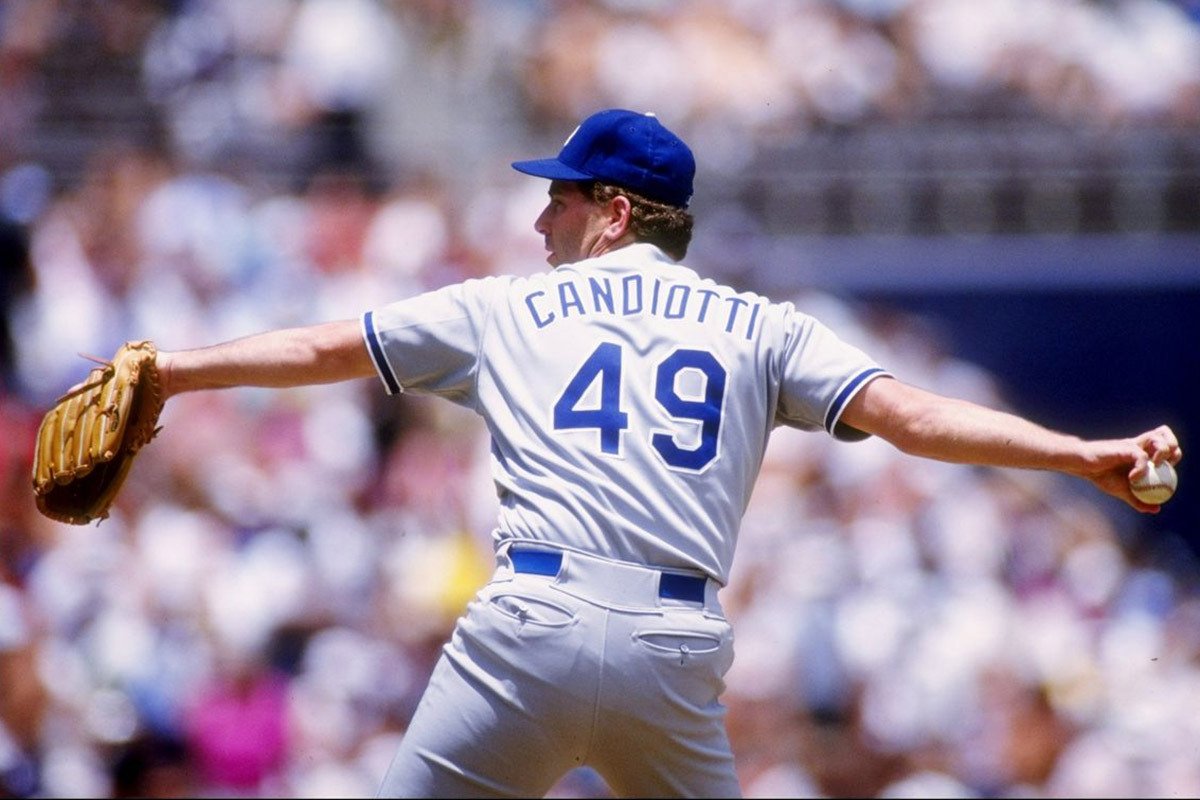
Tom Candiotti, RHP (from Kansas City), 1980
How many people remember that ‘Cotton’ Candiotti pitched for the Brewers? He began his career with an unaffiliated team in the Low-A Northwest League in 1979 before signing with the Royals. He pitched for one year with the Royals at Double-A and Triple-A before getting picked by the Brewers in the minor league phase of the Rule 5 Draft in 1980.
He made 21 appearances (14 starts) in 1981 at Double-A El Paso and went on the shelf with an elbow injury. He underwent Tommy John surgery and missed the end of 1981 and the entire 1982 season. He pitched at two levels in 1983 before getting called up to Milwaukee in August when Don Money went on the disabled list. After a pair of relief outings, Candiotti earned four straight wins, including two complete games and one shutout. The last four games were a disaster as he lost four straight. He posted an ERA+ of 117 and a FIP of 3.90.
Candiotti was viewed as a long reliever in 1984 by manager Rene Lachemann, but instead was sent down to Triple-A Vancouver. He was recalled by Milwaukee in mid-July and made three starts with mixed results before going on the DL with right shoulder tendinitis. Upon his return, he made five appearances in September, finishing his Brewer career. In 1985, Candiotti made 28 combined starts between El Paso and Vancouver and was released after the season. Candiotti made 18 appearances (14 starts) for Milwaukee, posting an ERA+ of 96 and a FIP of 4.04.
Candiotti spent the next 14 years in the bigs, toiling for Cleveland, the Los Angeles Dodgers, Toronto, and Oakland. He amassed 200+ innings nine times in his career. He retired at age 42 with 151 wins and an ERA+ of 108.
The Ones That Got Away
Five of the players chosen by the Brewers in the draft didn’t make it to Milwaukee, but instead, made their big-league debuts with other clubs.
Mike Warren, RHP (from Oakland), 1981
Warren made six starts at Single-A Stockton (4-0, 3.27 ERA), striking out batters at a rate of nearly 25% while posting a 1.14 WHIP. He was traded, along with first baseman Johnny Evers, to the A’s for utilityman Rob Picciolo. Warren pitched for Oakland for three years (1983-85) and made 27 starts among 52 appearances and had an ERA+ of 75 and a FIP of 4.75.
Juan Cerros, RHP (from Cincinnati), 2004
Cerros actually pitched in the bigs before Milwaukee scooped him up. He made 11 relief appearances for the Reds in 2003 and pitched to an ERA+ of 87 and FIP of 4.26. Not sure what happened in early 2005, but Cerros never pitched in the Brewers chain, instead electing to play in his native Mexico for the next 10 years.
Brett Campbell, RHP (from Washington), 2007
Campbell also pitched in the bigs prior to getting drafted by the Brewers. In 2006, Campbell appeared in four games for the Nationals, posting an ERA+ of 45 and a FIP of 6.38. The Brewers released him before the start of the 2008 season. After his playing career, Campbell was a coach at Georgia Perimeter College, a small school near Atlanta. After two years, he became a scout for the Texas Rangers and, more recently, is scouting for the New York Mets.
Kevin Mattison, OF (from Miami), 2013
Mattison also played in the majors prior to being drafted by Milwaukee, appearing in just three games for Miami in 2012, going 0-for-5. In 2014, Mattison played in 91 games at Triple-A Nashville, batting just .212/.294/.387 with 21 extra-base hits in 217 at-bats, but he struck out 33% of the time. He was released by the Brewers in mid-August. He signed with the Nationals before the 2015 season but was released after just three games at Triple-A Syracuse.
Matt Ramsey, RHP (from Miami), 2016
Ramsey pitched for Double-A Biloxi in 2017 and led the Southern League with 27 saves. In mid-July, he was promoted to Triple-A Colorado Springs but scuffled there and was sent back to Biloxi, where he finished the season. Ramsey was released after the season and was picked up by Houston. He spent the 2018 campaign in the minors for Houston and once again chose free agency. The Los Angeles Angels signed him, and he started the 2019 season at Triple-A Salt Lake. He was called up to the Angels in late April and the next day made his only big show appearance, pitching a perfect ninth against the New York Yankees, striking out Mike Ford to end the game. He was let go by the Angels in early June. He pitched in Mexico and in an independent league, but retired after the season.
Final Thoughts
The Brewers, like most other teams, hope to find that special needle in a haystack with the Minor League phase of the Rule 5 Draft. It happened with Collins, Candiotti, and, to a lesser extent, Mike Warren. But for the most part, major league teams are just happy if they can find someone who can be a solid performer for them at the higher levels of the minors.
And if they happen to make it to the bigs? That’s a job well done by that organization.
Please feel free to share any thoughts or comments in the comments section below.