
When the first pitching domino fell, and Dylan Cease cashed in with a seven-year, $210-million deal in Toronto, the assumption around the league was straightforward: the free-agent pitching market was about to open up.
That didn’t prevent movement entirely, but it did reset expectations. The market didn’t explode — it recalibrated. And within that recalibration, Michael King quietly secured one of the more telling contracts of the winter, agreeing to a three-year, $75 million deal to return to the Padres.
San Diego is betting on performance stability without fully committing to ace-level risk. King gets a meaningful payday while coming off an injury-plagued 2025 season, and the Padres retain flexibility rather than anchoring their payroll to volatility.
In 2025, King logged just 73.1 innings, posting a 3.44 ERA and 1.20 WHIP. He struck out 24.7% of hitters while walking 8.4%, producing a 16.2% strikeout-minus-walk rate. The numbers are solid — useful — but not dominant.
That distinction matters.
King’s value is built on depth, not on a singular wipeout pitch that can carry a rotation. His profile works when everything is functioning together: command, sequencing, and health.
His sinker (29.5%) and four-seam fastball (24.4%) form the backbone of his arsenal. Both average north of 92 mph with strong extension, hovering around six feet. The four-seamer can miss bats — it generated a 30.0% whiff rate — but when it leaks over the plate, it gets hit hard, allowing a .598 xwOBA on contact, per Statcast.
The separator for King has always been the secondary mix.
His changeup (21.4%) is his most dangerous weapon. It generates a massive 42.0% chase rate, limits hitters to a .283 xwOBA on contact, and neutralizes left-handed bats. The pitch doesn’t overpower — sitting around 86.8 mph with modest spin — but it consistently disrupts timing.
The sweeper, thrown nearly 19% of the time, flashes elite horizontal movement (-14.9 inches) and a strong 31.2% whiff rate. It’s a modern pitch that plays, particularly in today’s environment — but it’s not dominant enough to anchor a rotation by itself.
The slider, used sparingly (5.7%), is effective in short bursts but clearly not a focal point.
Those traits show up clearly in the advanced indicators.
King’s 4.42 FIP trails his ERA by nearly a full run, suggesting he benefited from sequencing and contact management more than overwhelming dominance. His pitch grades — four-seam fastball (65), sinker (63), sweeper (57) — are above average, but none live in true top-of-the-scale territory. His Stuff+ of 104 says it plainly: better than league average, not elite.
At three years and $75 million, San Diego paid for reliability without overcommitting. King gets security. The Padres retain flexibility. It’s a sensible deal — and a revealing one when viewed through the lens of the broader pitching market.
Which raises the larger question: what comes next?
Free-agent starters Framber Valdez, Ranger Suárez, Tatsuya Imai, and Zach Gallen remain unresolved. Valdez and Gallen rejected qualifying offers, meaning any team that signs them will surrender draft-pick compensation. Cease’s deal almost certainly boosted the asking prices at the top of the market, while the trade market continues to churn aggressively.
One of the most intriguing names still in play is Imai.
The 27-year-old right-hander starred for the Saitama Seibu Lions in Nippon Professional Baseball in 2025, posting a 1.92 ERA with 178 strikeouts across 163 2/3 innings while allowing just six home runs. He pitched eight innings of a combined no-hitter and struck out 17 batters in a two-hit, complete-game shutout later in the season.
The Cubs were listed as a fit for Japanese RHP Tatsuya Imai by Jim Bowden.
NPB 2025:
163.2 IP | 1.92 ERA | 0.89 WHIP
29.7 K% | 7.0 BB% | 5 CG
His FB sits around 95 mph with a unique arm-side slider (47% whiff) and a splitter (38% whiff).
Projected deal: 7 years, $154M. pic.twitter.com/YrLcQhV6Kr
— Carson Wolf (@TheWrigleyWire) October 27, 2025
Imai deploys a six-pitch mix built around a high-octane four-seam fastball that touches 99 mph, complemented by a slider and a changeup. A three-time NPB All-Star, he debuted at 19 and owns a career 3.15 ERA with 907 strikeouts across eight seasons.
The Yankees and Cubs remain in the hunt, and Imai must decide on his MLB destination by January 2 at 5 p.m.
While the free-agent market has moved deliberately, the trade market has not.
The Baltimore Orioles, in particular, have shown no interest in easing off the gas.
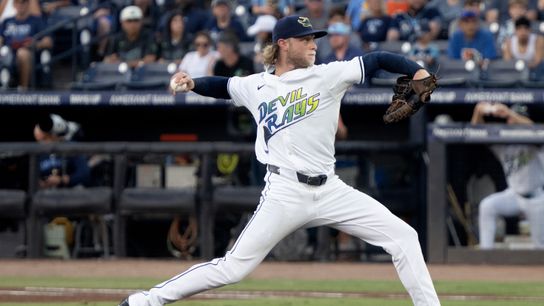
Baltimore continued its aggressive offseason by acquiring right-hander Shane Baz from the Rays in exchange for a significant prospect package and a Competitive Balance Round A draft pick. Baz, 26, gives the Orioles another controllable starter with upside as they continue reshaping both their roster and organizational identity.
Baz joins a rotation that includes Kyle Bradish, Trevor Rogers, Dean Kremer, Tyler Wells, and Cade Povich. While Baltimore is still expected to explore additional pitching upgrades, Baz fits neatly into their short- and medium-term plans.
As expected, Tampa Bay extracted real value in return.
The Rays received 18-year-old outfielder Slater de Brun, catcher Caden Bodine, right-hander Michael Forret, outfielder Austin Over, and the draft pick — a package consistent with Tampa Bay’s long-standing emphasis on depth, development, and flexibility.
The Baz acquisition capped what has already been a statement-making winter for Baltimore. Earlier in the offseason, the Orioles dealt right-hander Grayson Rodriguez to the Angels for outfielder Taylor Ward. At the Winter Meetings, they signed Pete Alonso to a five-year, $155 million deal, and earlier added closer Ryan Helsley to stabilize the bullpen.
Michael Forret (acquired by TB) is a former 14th round pick that broke out with a 1.58 ERA and 2.37 FIP in 74.0 IP
Forret wields an deep arsenal headlined by a plus fastball and the command gains he made in 2025 cemented himself as my #84 Prospect in MLBpic.twitter.com/v26KoN867G
— Thomas Nestico (@TJStats) December 19, 2025
Collectively, the moves signal a front office intent on competing now — and doing so with conviction.
Baz arrives in Baltimore coming off the heaviest workload of his career. He made 31 starts in 2025, going 10–12 with a 4.87 ERA, 176 strikeouts, and 64 walks across 166 1/3 innings. In 2024, his first season back from Tommy John surgery, he posted a 3.06 ERA in 14 starts.
He’s not an ace. But in the AL East, depth and upside are currency.
That trade also shifted the market.
If one healthy season from Baz can command that kind of return, the bar for controllable starters has been established. Mid-tier arms like MacKenzie Gore, Mitch Keller, Kris Bubic, and Edward Cabrera now carry inflated value by default.
Gore sits at the center of that conversation.
At 26, the left-hander fits the exact profile teams are aggressively targeting: premium velocity from the left side, bat-missing stuff, front-of-the-rotation upside, and multiple years of team control. In 2024, Gore took a meaningful step forward beneath the surface. His ERA didn’t fully reflect it, but the ingredients were there — a fastball that plays at the top of the zone, a wipeout slider, and strikeout rates consistent with a No. 2 starter ceiling.
More importantly, his command stabilized. Gore began sequencing hitters rather than simply throwing at them — a meaningful distinction when projecting October viability.
The Nationals don’t need to move him. But if Washington believes its competitive window remains a year or two away, selling high on a pitcher entering arbitration could yield a return similar to what Tampa Bay extracted for Baz.
For clubs like the Red Sox, Gore checks nearly every box: age, upside, control, and no draft-pick compensation. The same logic applies to contenders wary of nine-figure free-agent risk.
Bubic is another compelling case.
With just one year of control remaining, the Royals face a timing decision. After Tommy John surgery, Bubic reinvented himself in 2025, posting a 2.55 ERA across 116.1 innings while striking out hitters at a career-best rate. His command stabilized, his pitch usage tightened, and his performance finally matched the underlying indicators.
It wasn’t ace-level dominance — but it was legitimate mid-rotation production from the left side, something that has become increasingly expensive to acquire.
The Astros, meanwhile, pivoted after missing on Baz, landing right-hander Mike Burrows from Pittsburgh in a three-team deal involving Tampa Bay. Burrows, 26, made 19 starts last season with a 3.94 ERA and 1.24 WHIP. He pairs a mid-90s fastball with a full secondary mix and won’t reach free agency until after the 2031 season.
Houston remains engaged with Valdez, but like much of the league, is monitoring how the top of the market develops before committing fully.
And that brings the market full circle.
Cease’s signing didn’t create an instant waterfall effect. Instead, it clarified the landscape. There is still plenty of quality starting pitching available, and front offices are increasingly aligned around one reality: surviving a 162-game season requires volume as much as star power.
That shift is showing up in the money.
Back-end rotation arms are getting paid. Merrill Kelly landed two years and $40 million from Arizona. Dustin May secured $12.5 million on a one-year deal with the Cardinals. Adrian Houser signed for two years and $22 million with the Giants. Even Cody Ponce — who pitched in Korea last season — landed a three-year, $30 million deal from Toronto.
No. 4 and No. 5 starters are no longer bargain-bin acquisitions. They’re insurance policies.
Depending on how prices settle, virtually every team can justify targeting this tier. And as the top of the market continues to move deliberately, it’s the middle that’s quietly defining this offseason.
The pitching market isn’t stalled.
It’s evolving — and the teams that understand where the leverage truly lives aren’t waiting for the next ace to fall. They’re building enough pitching to survive what the season is about to demand.
So why is the pitching market moving this slowly? The answer lies in a fundamental shift in