
Coming out of the Winter Meetings, the Twins find themselves circling back to a familiar need. The team’s offense struggled down the stretch and remains the most obvious place to upgrade a roster that is trying to stay afloat while reshaping its long-term direction.
Last week, the Twins signed Josh Bell to a one-year, $7 million deal that comes with ramifications for the current roster. Minnesota could let him be the team’s everyday first baseman, but he has been a poor defender for most of his career. To field the best lineup, Bell might be better suited for a DH role with a different player taking over at first base.
That brings us back to Houston and to a decision that still hangs over the organization.
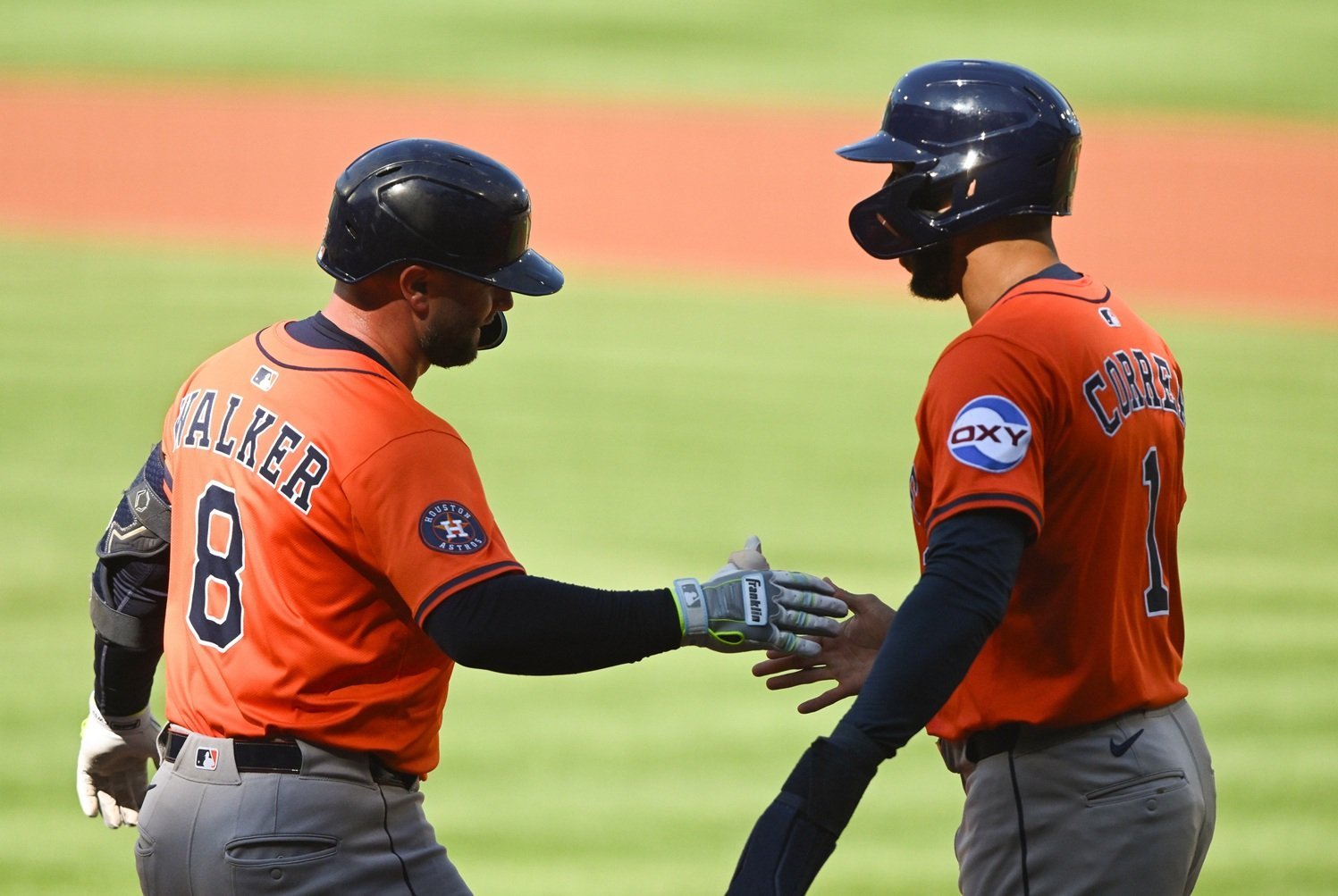
The Twins shocked their fan base and much of the baseball world when they sent Carlos Correa back to the Astros last July. The deal felt like a final acknowledgement that the previous competitive window had closed. The return only sharpened that feeling. Minnesota received a 26-year-old low-minors pitcher in Matt Mikulski, who the team already released, and agreed to cover $33 million of Correa’s remaining contract.
At the time, it looked like the Twins took the best offer available. Now, we know the talks may have been more complicated.
According to Bob Nightengale of USA Today, Minnesota initially pushed for veteran first baseman Christian Walker as part of those negotiations. Houston declined. Walker had just signed a free agent deal the previous winter and still had two years and $40 million remaining. The ask suggested the Twins were not simply dumping salary but actively searching for a way to remain respectable in the short term without Correa.
Fast forward to this offseason, and Walker’s name is back in circulation. Reports indicate the Astros are attempting to clear a logjam at first base and designated hitter. Chandler Rome of The Athletic has noted that interest around the league has been limited. Walker’s 2025 numbers explain some of that hesitation. Over 154 games, he slashed .238/.297/.421 (.718) with a 99 wRC+ and produced 1.1 fWAR.
There are reasons to think there is still something left. Walker was far better in the second half, launching 15 home runs and posting a 120 wRC+. He will be 35 years old in 2026 but remains a strong defender at first base (2 OAA in 2025), which carries real value for a pitching staff that will include young infielders across the diamond.
This is where the Correa trade could be partially salvaged. Minnesota is already sending $10 million per season to Houston as part of Correa’s deal. A creative solution could see the Astros send Walker to the Twins while covering roughly half of his remaining salary ($16-20 million of the $40 million owed). Minnesota would likely need to include a lower-level prospect to make it work, but the cost would be manageable.
It would not erase the sting of trading Correa for such a light return. However, landing a steady first baseman who can provide average offense and above-average defense would help stabilize the roster and provide a more transparent bridge between rebuilding and competing. Sometimes saving a trade does not mean winning it outright. Sometimes it means finding a way to make the aftermath hurt a little less.
Does Walker make sense for the Twins? How much of his salary could the front office expect to acquire? Leave a comment and start the discussion.