
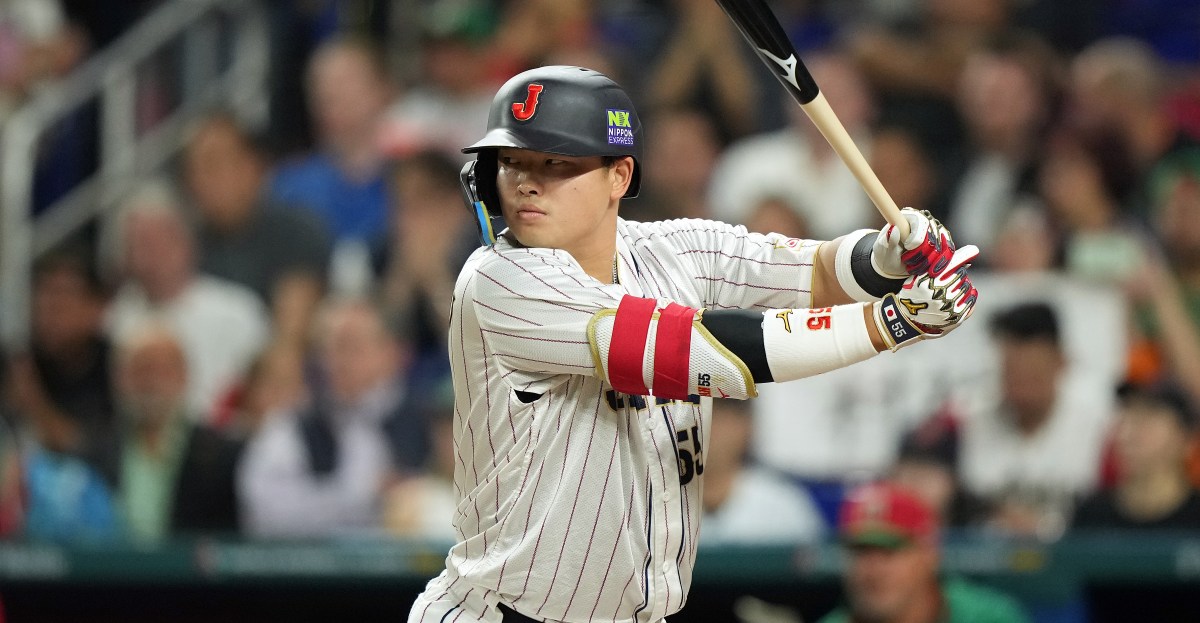
After a winter filled with pedestrian free agent signings and anticlimactic trades, the White Sox finally jumped in the free agent pool with a cannonball into the deep end.
Signing Murakami is no safe move, as there are wildly-varying outcomes, from high-boom to high-bust. On one hand, Murakami’s stats since 2021 have been stacked. He brings to the table MVP and home run accolades, along with his three .500-plus slugging percentage seasons in the last four years. He adds significant lefty thump to a lineup that relied on two rookies and aging Andrew Benintendi to add power from that side of the plate.
On the other hand, Murakami brings a modest amount of risk.
At first glance, hearing that a well-known, accomplished hitter who isn’t teetering on 35 wants to play in the Midwest warrants a victory lap. A second glance at his numbers, however, indicates why. Murakami struggles to hit high-velocity fastballs and off-speed pitches. Per Baseball America’s scouting report, the 25-year-old exhibits “below-average contact rates against nearly every pitch type, but does a majority of his damage against fastballs.” Murakami also posted a 40% whiff rate against splitters, changeups, curveballs and sliders last year with the Swallows. Although an oblique injury limited his 2025 season to 69 games, Murakami’s strikeout rate has ranged from 28.1 to 29.5% since 2023. Additionally, he’s had a below-average contact rate (sub-70% in six of his eight seasons). Both stats pose questions about his performance translation to MLB.
History also doesn’t foreshadow a strong outcome. Few stars in the majors with Murakami’s hitting profile have found success, but that doesn’t mean that he can’t defy the odds.
Defensively, Murakami doesn’t stand out. He fields below average at third and first base, and he isn’t fast enough to play in the outfield. The Sox will have their hands full helping him improve his glovework so he can fill their void at first base. In a worst-case scenario, Murakami moves to regular DH, forcing Will Venable to pick between Edgar Quero or Kyle Teel at backstop instead of putting them both in the lineup. To keep the focus on their young core’s development, Murakami should stay at first unless necessary, to maximize Quero and Teel’s reps.
Chicago is making a small gamble on Murakami to grow into a 30+ home run hitter and improve his contact rate. With qualified hitting coaches Derek Shomon and Joel McKeithan — who earned their stripes helping Xavier Edwards, Kyle Stowers, and Gavin Lux develop into reliable hitters — Murakami should be able to live up to the hype in some capacity. Especially considering his possible high ceiling, the Sox should be grateful that an impactful bat that could truly catapult the team into playoff contention by the end of 2027 fell to them, and not a more attractive option on the coast.