
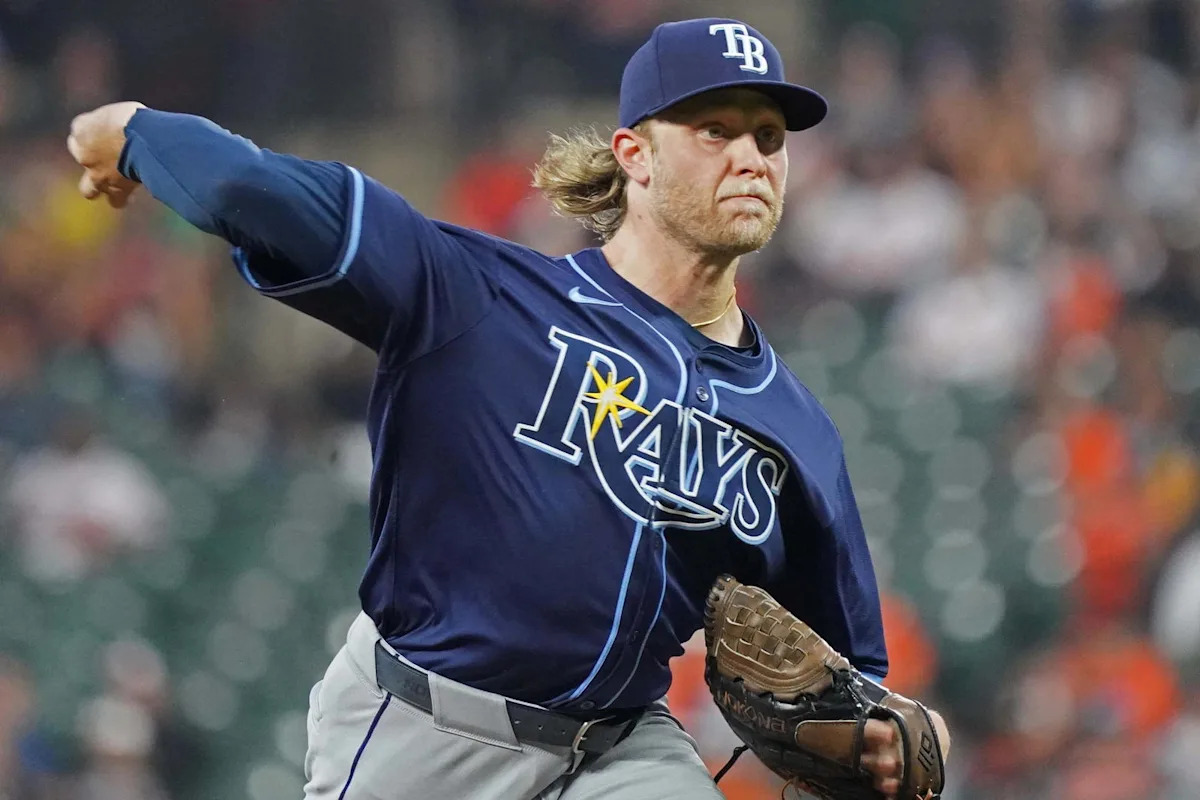
The Baltimore Orioles continued their impressive offseason this week by acquiring a top starting pitcher with significant upside from the Tampa Bay Rays. That pitcher is Shane Baz, who finally logged the first fully healthy season of his MLB career in 2025. Baz made 31 starts and finished with a 4.87 ERA. While those numbers may not stand out, he struck out 176 batters across 166 1/3 innings, showing the swing-and-miss ability that made him a highly regarded prospect. With years of team control remaining, Baz represents both immediate rotation help and long-term potential.
The trade package was substantial. Baltimore sent outfield prospect Slater de Brun, catcher Caden Bodine, right-hander Michael Forret, outfielder Austin Overn and a 2026 Competitive Balance Round A draft pick at No. 33 overall to Tampa Bay. While the prospect haul was notable, the draft pick element is particularly intriguing. Orioles president of baseball operations Mike Elias dealt away the No. 33 selection, which reshaped the team’s draft board in a way that could impact future signings.
Advertisement
Here is the wrinkle. Signing a free agent who declined a qualifying offer, such as Framber Valdez or Ranger Suarez, requires forfeiting the team’s third-highest draft pick. Before the Baz trade, that would have been No. 46 overall. After sending away the No. 33 pick, however, the Orioles’ third-highest selection is now No. 83. That shift means the penalty for signing Valdez or Suarez is less severe, making it more realistic for Baltimore to pursue another frontline starter without sacrificing as much draft capital.
Both Valdez and Suarez remain attractive options to lead the Orioles’ rotation. Valdez is a proven left-hander with playoff experience who could give Baltimore a stabilizing ace to pair with Baz. Suárez offers durability and consistency, traits the Orioles have lacked in recent years. Adding either pitcher would further solidify a rotation that has often been the franchise’s biggest weakness.
Taken together, the Baz trade and the potential pursuit of Valdez or Suárez highlight Elias’s aggressive approach. Baltimore is clearly intent on building a roster capable of contending in 2026 and beyond, even if it means parting with prospects and draft capital. For a team that has already added impact bats this winter, the rotation upgrades could be the final piece in transforming the Orioles into a legitimate American League powerhouse, one that blends young talent with veteran stability and aims to sustain success for years to come.