
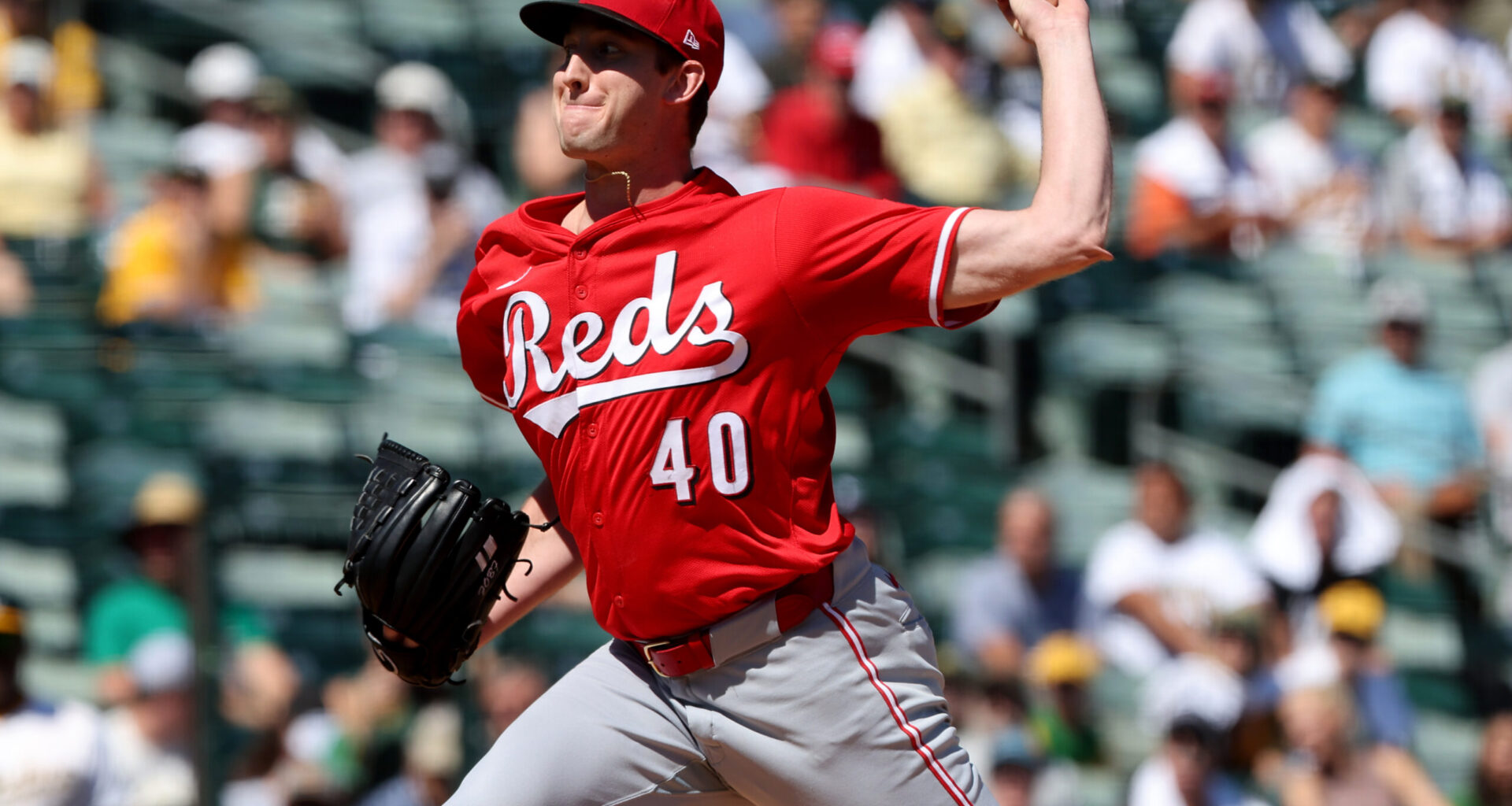
All offseason I’ve banged the drum that the Yankees need to improve their rotation, but the injury to Carlos Rodon has only emphasized those needs.
With the way the winds are blowing in the rumor mill right now, it looks like the team will end up striking out in free agency, but that doesn’t take them out of the trade market.
There are some fun names thrown around on that side, but one who has fallen to the wayside in terms of popularity is starting pitcher Nick Lodolo from the Cincinnati Reds.
He’s not the most established name on the market, but his 2025 season showed the baseball world that when healthy this is one of baseball’s best starting pitchers.
On a team that lacks serious offensive firepower, especially in the outfield, the Yankees and Reds matchup far better than people think in what could be described as a ‘challenge trade’.
READ MORE: Yankees predicted to land Bo Bichette but the reason is ludicrous
Why Nick Lodolo Makes Perfect Sense for the Yankees’ Rotation
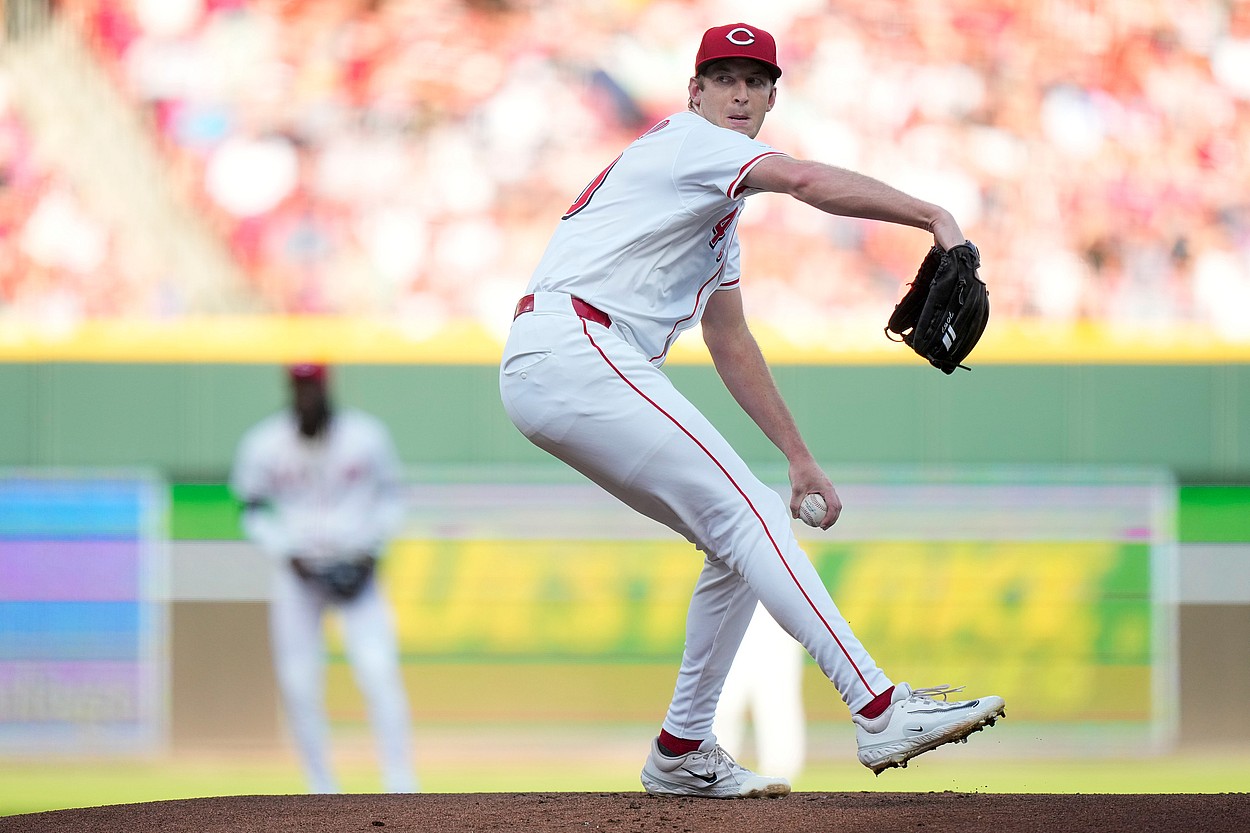 Credit: Sam Greene/The Enquirer / USA TODAY NETWORK via Imagn Images
2025 was the best of Nick Lodolo’s young career, as in his fourth MLB season he set a new career-high in strikeouts (156) and Innings Pitched (156.2), posting a 3.33 ERA and 2.8 fWAR for the Reds.
The left-hander has a four-pitch mix, but he commands all of them well and mixes them in regulalry, as he’s consistently able to miss bats due to his weird arm angle.
Lodolo recorded a 27.5% Whiff% (63rd Percentile) and a 32.8% Chase% (91st Percentile), which allows him to get a healthy amount of strikeouts.
What makes him stand out from other solid-not-elite strikeout arms is the low walk rate, finishing with just a 4.8% BB% on the season (95th Percentile), an abnormal trait for someone pitching in such a hitter-friendly ballpark.
Looking at his home-road splits, there’s a clear discrepancy that reminds me of the dramatic splits that Fernando Cruz had a year earlier:
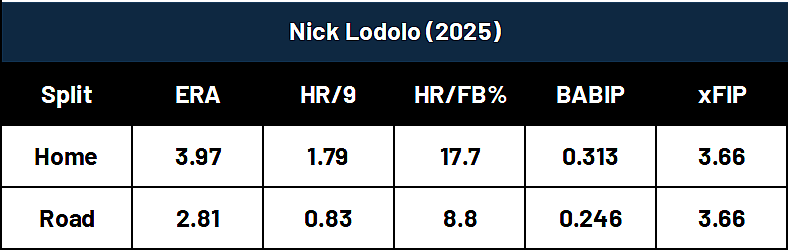
These differences are stark as the elevated HR rates in Cincinnati surpass the ones we see in New York according to Statcast’s Park Factor, and the BABIP issues are also partially fueled by those dimensions.
Now the xFIP is a great way to pull us back into the reality that this isn’t magically a 2.81 ERA pitcher the second his home ballpark changes, but rather someone who likely experienced unsustainably poor fortune both ways.
Adjusting for the league and park environments, that 3.66 xFIP is 11% better-than-average, which compares to Joe Ryan, Ranger Suarez, and Dylan Cease.
Measuring on a per-rate basis, this was one of the 15-20 best pitchers in baseball, and if you slot that behind Max Fried for Opening Day, you’ve got an incredible rotation.
You’re gambling on a terrible injury history, as the southpaw has had an IL stint in each of his four MLB seasons, but the main issue as of late seem to be either hand or leg injuries, nothing in the elbow/shoulder area to this point.
The Dodgers and Yankees have both gambled a lot on starters who perform well when healthy but tend to miss time, I’m not against a trend that landed you Max Fried last winter and mimmicks the strategy of back-to-back champs.
It’s a player under contract for two more seasons, so you have to give in order to get back, but I do think there’s a real world where these two teams match up in a deal.
Making a Win-Win Trade For Both the Yankees and Reds
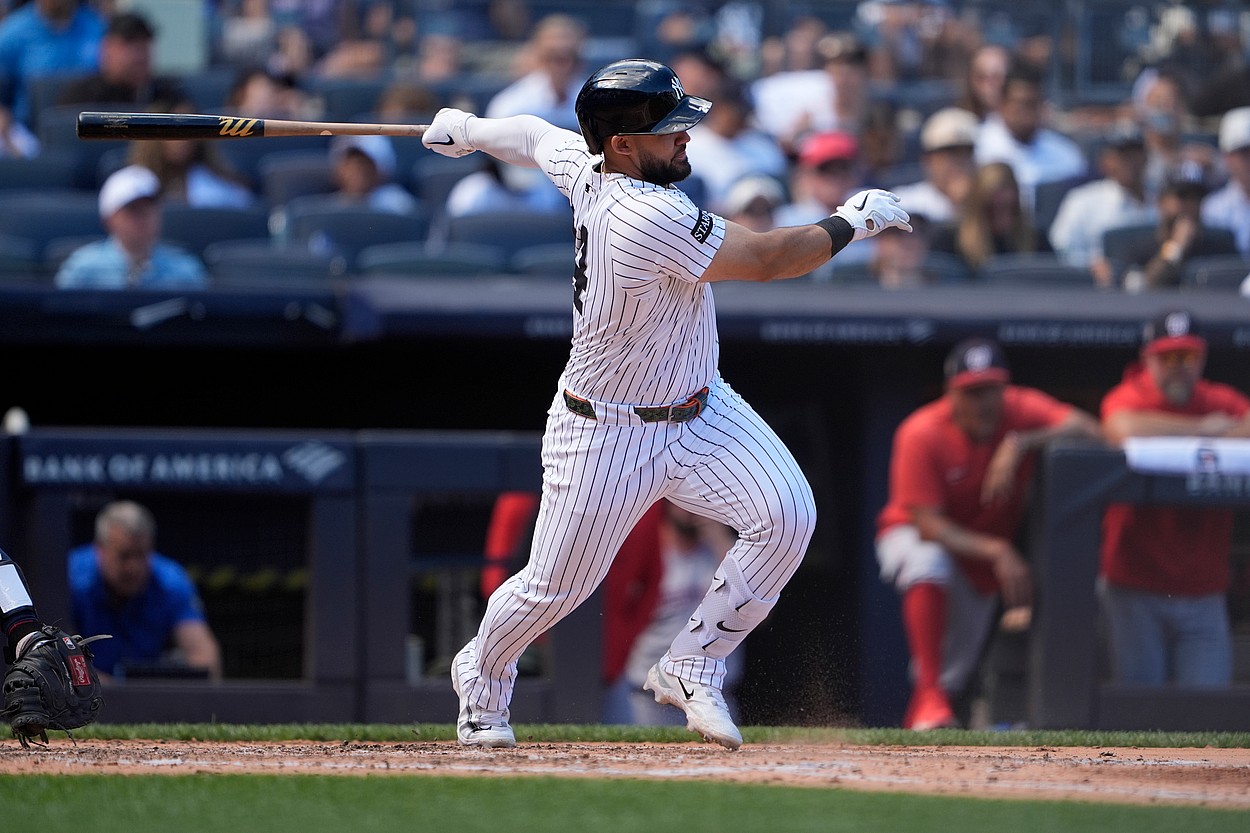 Credit: Gregory Fisher-Imagn Images
Let’s start by identifying the biggest weaknesses on the Reds’ roster from last season, which are almost entirely offense-related given that they finished 24th in wRC+ (92) and 21st in HRs (167) despite their decent run-scoring production.
This is a team that finished with the third-most pitching WAR despite Hunter Greene missing a good chunk of the season and pitchers such as they got more than 2.0 WAR from their five primary starters in 2025.
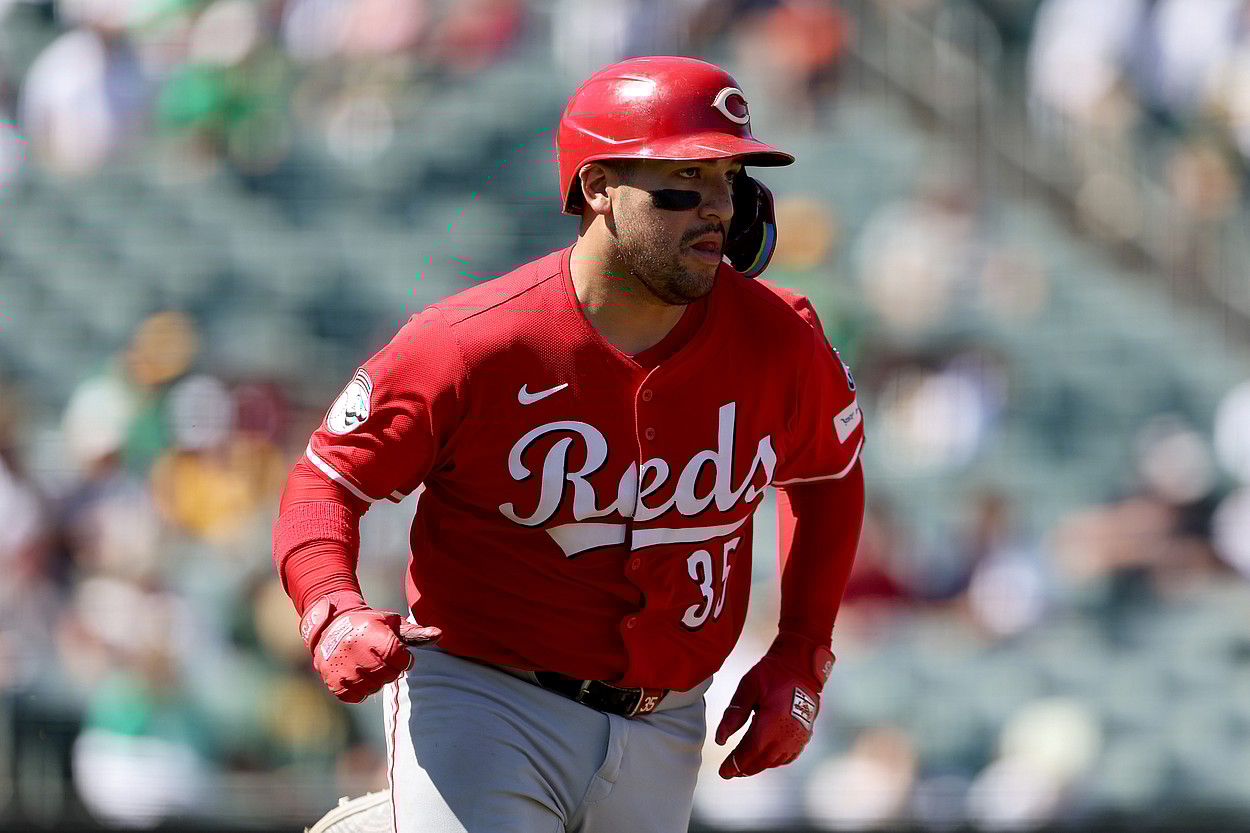
Jasson Dominguez would immediately stand out as an expendable hitter on the Yankees’ roster who projects to be a strong offensive player, having an above-average OPS projection (.744) with excellent speed.
FanGraphs projects the Reds to get just 2.2 WAR from their corner outfield in 2026, which is where Dominguez could provide a jolt to their roster and take playing time away from some struggling arbitration-eligible players.
Now that the Reds’ offense has improved, let’s look at the other issue that will always plague the Reds under current ownership: budget.
 Credit: Dennis Lee-Imagn Images
Brian Cashman mentioned he wouldn’t just add a right-handed catcher to check a box on the roster, but I do believe a swap of J.C. Escarra and Jose Trevino is an underrated way to add some more value to this deal.
For the Reds, they get $4.5 million cheaper in their catching room while having a catcher who outperformed Trevino defensively and offensively in 2026.
I could see Ben Hess, the Yankees’ 2024 first-round pick, drawing interest from the Reds due to his high swing-and-miss rates and excellent repertoire.
Brendan Beck is the final piece in this deal as he could compete for a starting job out of camp with Rhett Lowder and Chase Petty, giving them more insurance in-case of an injury.
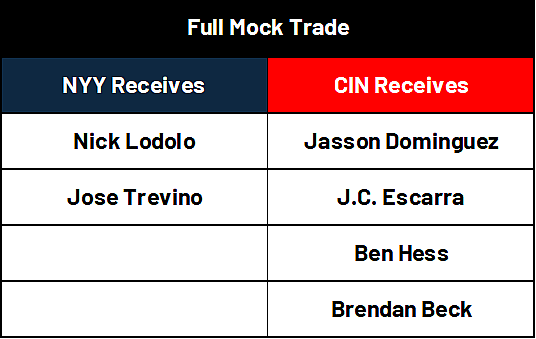
Not pictured here is the ~$8 million they’ll free up by exchanging $9.55 million in salary for two prospects and two pre-arbitration players who have a decade of combined control between them.
Depending on how they spend that money, they might be a straight-up better roster after this trade, and the same could definitely be said about the Yankees.
A return of Cody Bellinger and the addition of Nick Lodolo adds ~5-6 WAR to the roster for the upcoming season, and it gives them quite a strong depth chart in the rotation when everyone’s healthy.
Lodolo could slide into a reliever role if the roster calls for it in October, but there’s a good chance he ends up taking the ball in a Game 2 or Game 3 situation given how good the repertoire has become.
Add to your bullpen with some set-up arms, and suddenly the Yankees are locked-and-loaded with a roster full of dynamic, unique, and optionable pitchers who could help them make a postseason run.