
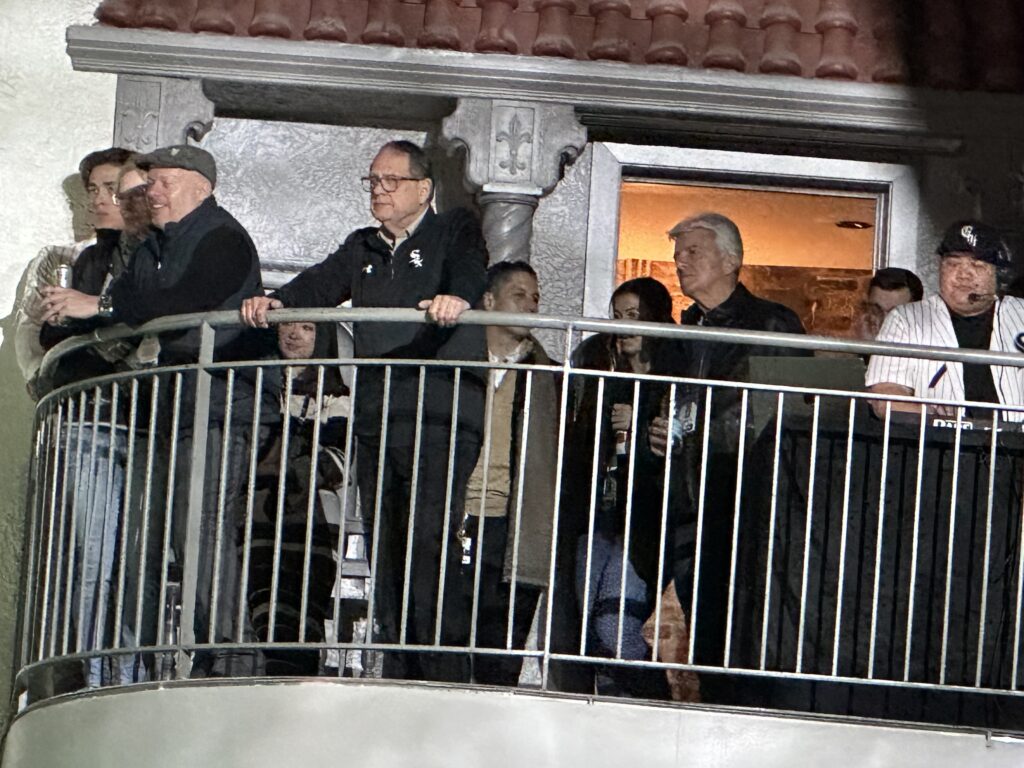
The most immediate and impactful move this front office could make this offseason has now been made. Over the last few days, the organization has shifted from quiet positioning to clearer action as decisions off the field began to line up with moves on the roster.
Support for Will Venable is now in place and the front office has taken shape. Chicago has added depth and created flexibility heading into the next phase, groundwork that helped open the door for a defining moment when Munetaka Murakami officially joined the organization.
When paired with securing the No. 1 overall pick in the 2026 Draft Lottery, the timing matters. The White Sox now hold both short-term lineup upside and long-term draft leverage, positioning the organization to guide the rebuild with more control than it has had in years.
Munetaka Murakami officially signs with the White Sox
Munetaka Murakami is officially a White Sox, and it is the kind of addition that changes the tone of an offseason. Chicago finalized a two-year deal worth $34 million with the 25-year-old left-handed slugger just before his posting window closed.
Once the posting fee owed to Tokyo Yakult is factored in, the overall commitment climbs beyond the headline figure and settles closer to the $40 million range. That total reflects the real cost of bringing an elite international bat stateside and signals a willingness to operate in a market the organization has rarely entered.
This is a calculated two-year bet that fits where the roster sits right now. The market developed unexpectedly and the front office was positioned to act once the price aligned with the risk. What Chicago is buying is upside. Murakami offers legitimate 30-plus home run potential.
The track record is loud despite the swing-and-miss questions. Murakami is a two-time NPB MVP in Japan who hit 56 home runs in a season and the youngest Triple Crown winner at just 22-years-old. He later carried that production onto the international stage, helping Japan win gold at the Olympics and World Baseball Classic. That level of power is difficult to find anywhere, and it is even rarer attached to a player still in his mid-20s.
The most recent season shows both sides of the profile. Murakami missed time with an oblique injury, yet still produced 22 home runs in 56 games (on pace to reach his 56 HR mark again) with a .273/.379/.663 line. The damage is real when he connects, and the adjustment question remains tied to how his contact profile holds up against major league spin and velocity.
Entering his age-26 season, Murakami fits the type of upside play the organization has been working toward. With 246 career homers. He forces opposing teams to plan differently for the middle of the order and provides a form of protection that the lineup has lacked. The short term matters as well. If the transition clicks, he will reach free agency again, still squarely in his prime. Evaluators have also praised his makeup, an area of emphasis under Chris Getz.
Murakami spent most of his time at third base in Japan while also logging meaningful innings at first. Reports indicate that he will man first base and Chicago has enough flexibility at the corners to let camp determine the cleanest fit. Whether he settles at first base or shifts into a DH-heavy role, the priority centers on the bat.
The wide range of outcomes is exactly why the move works. If Murakami adapts quickly, an extension becomes part of the conversation. If he produces without a long-term match, he carries real trade value. If the transition takes time, the contract ends without limiting future plans. In every scenario, he adds legitimacy to the lineup and gives fans a tangible reason to show up during a rebuild.
Carlos Rodriguez announced as Assistant GM for White Sox
The addition of Carlos Rodriguez gives the White Sox a front office voice shaped by one of the most disciplined development pipelines in the sport. Rodriguez spent 15 years with Tampa Bay, rising from an entry-level scouting role to an assistant general manager position with influence across nearly every layer of baseball operations.
Rodriguez began as a scout with a heavy focus on Latin America, then gradually expanded his scope to oversee international scouting as a whole before taking on broader player development responsibilities. Over time, his role evolved from identifying talent to guiding how that talent was developed and integrated into a long-term organizational plan. By the end of his tenure, he was involved in everything from international acquisition to minor league development strategy to major league roster planning.
He played a direct role in building Tampa Bay’s international pipeline, helping bring in players who later became contributors at the big league level or meaningful assets within the system. As his responsibilities expanded, Rodriguez became more involved in how players were developed once they entered the system. He worked closely with performance groups to improve how information was translated from evaluation to daily development. That approach helped align scouting opinions with individualized plans designed to maximize long-term growth. Those systems translated to sustained minor league success during the later years of his tenure.
The Chicago White Sox have named longtime baseball executive Carlos Rodriguez as assistant general manager, where he will report to senior vice president/general manager Chris Getz. pic.twitter.com/tYB6YG9h4s
— Chicago White Sox (@whitesox) December 19, 2025
What makes the hire notable is not just experience but timing. He was a finalist for the Cubs General Manager job, turned down the Yankees international director role, and has long been viewed internally as a future general manager.
Carlos was widely considered one of the best executives in the game (and a future GM) during his tenure with the Rays.
White Sox made a great hire here. https://t.co/8GnlES6Ue8
— Kyle Glaser (@KyleAGlaser) December 19, 2025
Rodriguez is expected to oversee the Dominican academy and international operations, which aligns directly with his background. His arrival aligns with recent coaching hires and targeted roster additions, reinforcing the idea that the White Sox are tightening the connective tissue between evaluation/development and decision-making.
Rodriguez’s impact will not show up immediately in a transaction log, but his background fits the phase the organization is entering. Whether or not Rodriguez had direct involvement in the Murakami pursuit, his hire fits the same theme. Chicago is positioning itself to be active again in international markets and to modernize how talent flows into the system. For a fan base wary of surface-level changes, this is one move that should genuinely make people feel better about where the organization is headed.
Other Roster Moves
Ryan Rolison arrived as a reclamation arm with a clear downside already exposed. He worked 42 innings in 2025 and finished with a 7.02 ERA. Opponents hit .324 with a .955 OPS against him, while his walk rate sat at 10.4 percent. The club will attempt to slide him through waivers as he was designated for assignment again on Tuesday.
The appeal is rooted in the remaining tools. Rolison is still 28 and operates with an 86 mph slider that shows usable movement traits. Chicago is betting that mechanical and pitch mix adjustments can stabilize a profile that once projected much differently.
Oliver Dunn adds experienced infield depth on a minor league deal. Across six MiLB seasons he owns a .236/.354/.410 line with 43 home runs. He logged time at second shortstop and third base at Triple-A last year.
Dunn also appeared in 55 major league games across two seasons. His value lies in positional coverage and on-base ability rather than upside.
Tim Elko returns on a minor league contract after being non-tendered earlier in the offseason. At Triple-A in 2025 he hit .292/.357/.552 with 26 home runs. His major league sample was limited to 72 plate appearances.
Elko is recovering from ACL surgery and is not expected back until mid‑season. The organization views 2026 as a chance to regain health.
Tristan Peters was acquired via trade to bolster upper-level outfield options. He hit .266/.355/.429 at Triple-A across 136 games with 15 home runs. His approach is built around contact and strike zone control.
Peters offers defensive flexibility and a left-handed bat. He profiles as competition depth rather than a guaranteed roster piece.
Dustin Harris joined on a minor league deal with a spring training invite as well. He posted a .285/.369/.435 line at Triple-A Round Rock last season. Harris was ranked as a top-15 organizational prospect as recently as 2024.
White Sox Major League Coaching Staff made Official
The White Sox made the 2026 dugout staff official this week. The theme is volume and coverage across every part of the day. The group is built to keep coaches from getting buried in prep.
Venable wanted more hands on both sides of the ball. The goal is to shift game planning and practice logistics away from the lead coaches. The pitching group now has three dedicated voices. The hitting group effectively has three daily touchpoints.
A second priority is cross-department alignment. The staff model is built to connect coaching with sports performance and medical support. The idea is one shared plan for each player. The plan should stay consistent.
Additions
Assistant Pitching Coach: Bobby Hearn
Hearn arrives as a young development coach with fast momentum. He is 29, and he has already held a complex-level role. He most recently moved into an assistant pitching coach job in Minnesota. The Sox see him as a long-term asset in pitcher development. His lane should include daily support work with Bove. Wake Forest is widely respected for its pitching lab and development infrastructure. He also crossed paths with Shane Smith during his Wake Forest days.
First Base and Outfield Coach: José Leger
Leger gets his first major league staff role after years in the game. He has managed in the minors and he is managing in winter ball this year. His responsibilities cover first base and the outfield. He also takes on base running focus and daily readiness work. He emphasizes anticipation and early reads. He fits a staff that wants more value from secondary leads and situational pressure.
Major League Field Coordinator: Chris Denorfia
Denorfia fills a wide role that can change by day. He becomes a central organizer for practice flow and pregame structure. He also provides an extra set of eyes on opponent tendencies. A close friend of Venable, he will also take over Spring Training planning duties. One focus is identifying tells that can impact game planning. Another focus is keeping groups connected during long days. Trust matters in this role, and Venable has it with him.
Major League Assistant: Tony Medina
Medina adds another planning and workflow layer to the offensive side. He supports daily preparation and practice design. He also helps run tools that support hitter work. His presence reduces the load on the hitting coaches. It also allows more time for player focused work.
Zach Bove and Derek Shomon were announced earlier this offseason and remain in place to lead the pitching and hitting groups. Walker McKinven steps in as bench coach and is expected to absorb much of the catching coach responsibility while serving as Will Venable’s primary in-game partner. Matt Wise returns to the staff with a more defined bullpen focus, where he will manage relievers. Bennett Markinson and Luis Sierra round out the group as bullpen catchers.
Trade Market Rumblings for White Sox
Even with the Murakami addition, the larger outfield picture remains unsettled. Andrew Benintendi is still the hardest contract to move, and the club has shown a willingness to absorb an unfavorable return if it clears playing time and roster flexibility.
Beyond that, the White Sox continue to explore a Luis Robert Jr. trade, with New York and Cincinnati still engaged. The priority is pitching depth, and Cincinnati’s ability to move a competitive balance pick keeps them firmly in the mix, while the Mets path is less clear.
The latest on Luis Robert and the Reds from @GDubMLB on The Stone Shields Show:
-Reds made offer earlier in off-season, White Sox wanted another player
-Source said deal “could be done as soon as this week, if it gets done.”
-Wittenmyer believes serious discussions on-going pic.twitter.com/vP5gW8T2GY
— Chatterbox Sports (@CBoxSports) December 23, 2025
The Murakami signing also creates downstream questions for players like Lenyn Sosa. With first base and DH now more crowded, his path to everyday at-bats becomes less clear.
Around the league, the return for Shane Baz reset expectations for pitching value across the market. If arms with health questions can command that kind of haul, it naturally raises curiosity about what pitchers like Shane Smith or Davis Martin might fetch if made available.

Controllable pitching remains expensive, and the White Sox now sit in a position where both their bats and their arms carry more leverage than they did a month ago.
Draft Pool Implications
The Shane Baz trade highlighted how valuable bonus pool space has become in this draft cycle. Tampa Bay added a Competitive Balance Round A pick and roughly three million dollars to its pool, pushing them past twenty million and creating real leverage behind the White Sox at the top of the board.
Chicago is still positioned to spend aggressively, but the gap matters on the margins when teams behind them can threaten to push prices. That is why adding a Competitive Balance A or B pick via trade remains appealing, since it would lift the White Sox pool closer to $20 million and restore flexibility.
Those picks can be moved up until the draft, which keeps them in play as part of larger deals. Even if the top selection isn’t ultimately over dollars, extra pool space gives the front office more room to maneuver across the rest of the class.
Free Agency Market
The left-handed corner outfield lane is where the Sox are looking to add next on the position player side. A Mike Tauchman return is still in the cards. JJ Bleday type profiles fit as the change of scenery bet. Michael Conforto is the higher variance name with upside if the price is workable. Bleday seems like a solid fit for a rebuilding club while FutureSox has learned that the club has some level of interest in Conforto and Tauchman.
The mid tier starter lane is active and it is not cheap. Recent deals have set real bars for innings and upside. That helps explain why the Sox are tied to that group and why another pitcher still feels likely.
Per @JeffPassan, the White Sox have been one of the most aggressive teams in pursuit of “mid-tier” starting pitching. The names mentioned in this tier include:
Chris Bassitt
Lucas Giolito
Nick Martinez
Zack Littell
Max Scherzer
Justin Verlander
Tyler Mahle
German Marquez… pic.twitter.com/Z9VpOjQfrK
— Noah Phalen (@Noahp245) December 18, 2025
It also opens a different path if prices keep climbing. An Andrew Benintendi trade fits here. Chicago would love to move him, and a pitching contract swap is one clean way to accommodate the move.
The relief market has also accelerated. One year leverage money is landing fast. Pete Fairbanks stands out as the clearest late-inning needle mover still available. Miami being active only adds pressure for teams that want a defined leverage arm. Chicago can still add a reliever here, but the window to wait is smaller now. Chicago may pivot to other options at a cheaper AAV.
League activity should pick up quickly. Deadlines are approaching and the calendar matters. With Christmas near and early January decisions.
Why This White Sox Front Office Feels Different
This organization has shown a real shift in how it attacks the market. Few believed Will Venable would be attainable. Few believed the return for Garrett Crochet would be strong enough that Boston would already be circling back on Kyle Teel. Few expected the White Sox to reestablish a foothold in the Asian market and land Munetaka Murakami. Few thought they could poach front office talent from winning organizations and elevate the scouting group with a hire like Carlos Rodriguez.
The front office has also shown it knows how to leverage structure. Bonus pool space has been turned into real upside with players like Grant Taylor and Caleb Bonemer. The Rule 5 process turned Shane Smith into an All-Star. The lottery delivered the number one overall pick.
There is still work to do. But the foundation looks stronger than at any point in recent rebuild cycles. The next two years represent a narrow but meaningful window to accelerate without sacrificing the long view. That balance is finally visible.
All of it points to an organization that is deeper than it was before Chris Getz took over the big chair. That depth now exists not only across the roster and farm system, but the front office and entire organization itself.
Post Navigation