
When I was just a kid growing up in Northwest Detroit, baseball was king! The NFL and the Lions were just something to get us through the winter. Yes, the Red Wings and Gordie Howe were amazing, but they were not the Tigers.

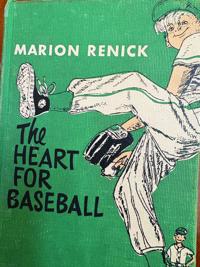
Jeff’s favorite book as a child.
My favorite book as a child — I must have read it a hundred times — was called The Heart for Baseball. The story centered on a group of 10-year-old boys who were cut from a Little League team and formed their own team and (of course) trounced the Little League champs.
Every boy I knew dreamed of playing in the Major Leagues. We had all heard stories about the greatest Jewish ballplayer, Tiger first baseman Hank Greenberg, who was an awesome slugger in the 1930-40s and famously sat out a big game on Yom Kippur after having played and hit two home runs (supposedly with the blessing of his rabbi) on Rosh Hashanah (which, according to my dad and grandpa, was what all the congregants talked about on both days in shul in 1934).
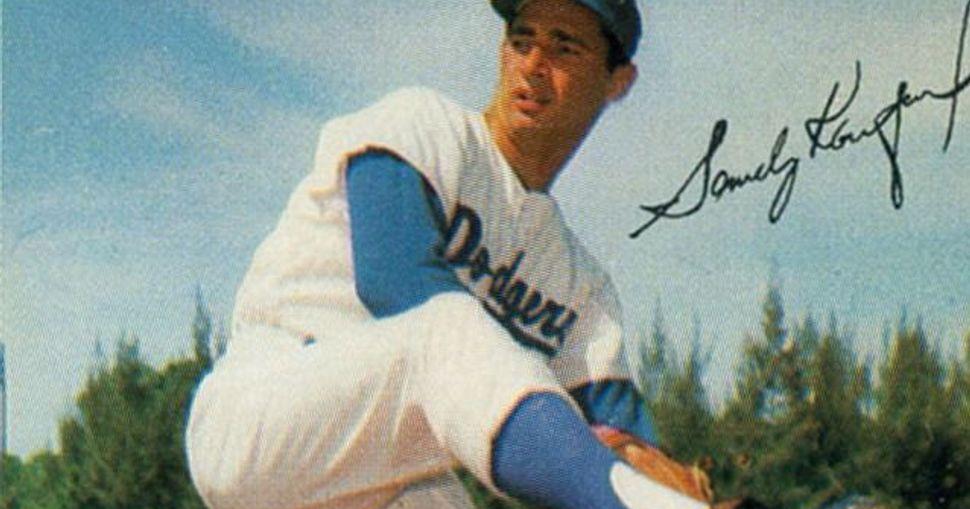
Naturally, I signed up for Little League baseball as a first step to the Majors. But I quickly got a big reality check. If I was afraid to swing at a ball thrown by an 11-year-old kid, I knew that getting a hit off pitchers like Sandy Koufax was highly unlikely. So, like many other good Jewish boys, I began to think about becoming a doctor, lawyer or accountant. When I was 17, I felt proud when Koufax made the decision not to pitch on Yom Kippur in the first game of the World Series.
As my peers and I settled into our young adult lives, we continued to be big baseball fans. The 1968 Tigers championship was a huge thrill. I was lucky enough to snag some tickets to the World Series via a mail-in lottery. My friends and I gave up our personal baseball dreams and went on with our lives as passionate Tigers fans.
Detroit Sports Fans Baseball Association
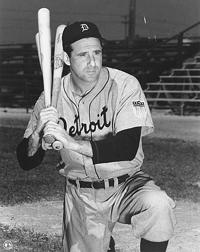
Jeff’s favorite Jewish ball players were Tiger Hank Greenberg and Dodger Sandy Koufax.
Then, in 1983, I read an article about a group of guys who had invented an intriguing way to scratch their baseball itch, to do more than just cheer for their local teams. They, like my friends and me, were fascinated by the statistics of baseball. They had developed a plan to use those stats to symbolically “own” actual Major League players and compete with other team owners. And ta-da: Fantasy Baseball was born!
I was mesmerized and energized. I called a group of my friends and convinced seven other guys, including my dad, to start our own eight-team fantasy league for the 1984 baseball season. This was the birth of the Detroit Sports Fans Baseball Association (the DSFBA). We chose different categories to compare, including batting average, runs, RBIs, home runs, wins and earned run average, and met for our first draft right before the start of what would turn out to be a momentous season for our beloved Tigers and for us.
One of the fun aspects involved naming our teams. My friends Mel and Neil became The Big Sticks. Other team names were puns like Hersky’s Kisses. Jay and Marty (their father was a tailor) became the JayMar Sansi-belters. My buddy Dave Higer’s squad was, of course, called “Higer’s Tigers.” My accountant dad owned The Auditors, and my team became Jeff’s Jets. In addition to naming a Most Valuable Player, we also agreed to give the best pitcher the Cy Schwartz award.
We started a tradition of punmanship at our yearly draft and for our league updates, inventing nicknames for players like Tarik “Screwball” Skubal, Mike “Rainbow” Trout, Aaron “Here comes the” Judge (and many names unfit for a family publication). Early on, I was named “commissioner for life,” and I started writing and reciting a poem every year for the upcoming season.
Comparing statistics was a huge challenge without much help from the internet. Thankfully, with my 7-year-old son Dan as my right-hand man, we were up to the task. I read off stats from the Free Press, which little Danny typed in the spreadsheet on our Apple 2-E computer. (Dan still claims that his current job skills, which include data analysis, were mostly learned not through higher education, but from those days as a young fantasy baseball stat maven for the DSFBA.)
Throughout each season, teams would add and subtract players related to injuries and their Big-League performances. This often led to the highs and lows of trying to make the right choices. Thus, the agony when your ace pitcher gave up seven runs in the first inning and the ecstasy when your top slugger hit two home runs.
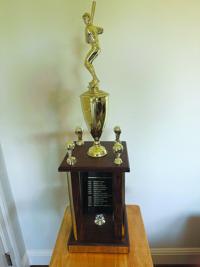
Each year’s DSFBA winner gets to keep the trophy on their mantel.
Now, here we are in 2025, starting our 41st year of the DSFBA. My dad passed away in 2003, but he is memorialized by the Leon London DSFBA trophy, which lists all past league champs. Each year’s winner gets to add their team’s name on the trophy and proudly place it on their mantel. Four of the original team owners, Neil, Marty (with his son Noah), Dave (with his son Michael) and myself have lasted all these years. And, for many years, we have been joined by teams owned by our sons along with some of their boyhood friends. My brother Mike helped run my dad’s team years ago and, for many years, has owned his own team. Neil, who moved to California years ago, brought us his friend from work whom he described as “the smartest guy in the room.” Unfortunately, he was right! We even broke the glass ceiling when Dave’s friend Joyce joined us 15 years ago. She and her significant other, TJ, are the most passionate Detroit Tiger fans in our group.
We are proud that the DSFBA has truly stood the test of time. Our 12-team league’s draft day continues to be one of our favorite days of the year. And the puns based on player’s names continue to elicit groans and occasionally even chuckles. Marty’s son Noah even wrote a paper for a course at U-M about our group, citing our longevity, loyalty and hilarity as attributes to admire.
Here is the poem I recited prior to the 2021 season, when we and the Major Leagues returned from the COVID lockdown:
We are all sick and tired of this virus and attempts to procure a vaccine.
We turn our attention to baseball where each spring our slates are wiped clean.
We study those expert predictions to pick the best guys for our teams.
Yet, despite all our pre-draft intentions,
We choose players who haunt all our dreams.
But, folks, we can use the distraction from the world’s problems, COVID and all.
So, get set for the joys and the heartaches
When the ump says it’s time to “Play ball!”
Many other team owners have come and gone from the DSFBA. So, why have the rest of us stayed? While a young man’s fantasies certainly change over time, the DSFBA has helped us each season to reaffirm our “heart for baseball.” Our loyalty to our favorite sport and to each other is as steadfast as Hank Greenberg’s bat, as true as Sandy Koufax’s arm and echoes our faith in the game we all love.
Go, Tigers! Play ball! (But, if you’re a good Jew, not on Yom Kippur!)