
Get Starting Point
A guide through the most important stories of the morning, delivered Monday through Friday.
“As an organization, we’re going out of our way to make sure we take care of him,” said Vázquez. “We’ve just got to back him up, help him out any way we can. This is what we have to do.”
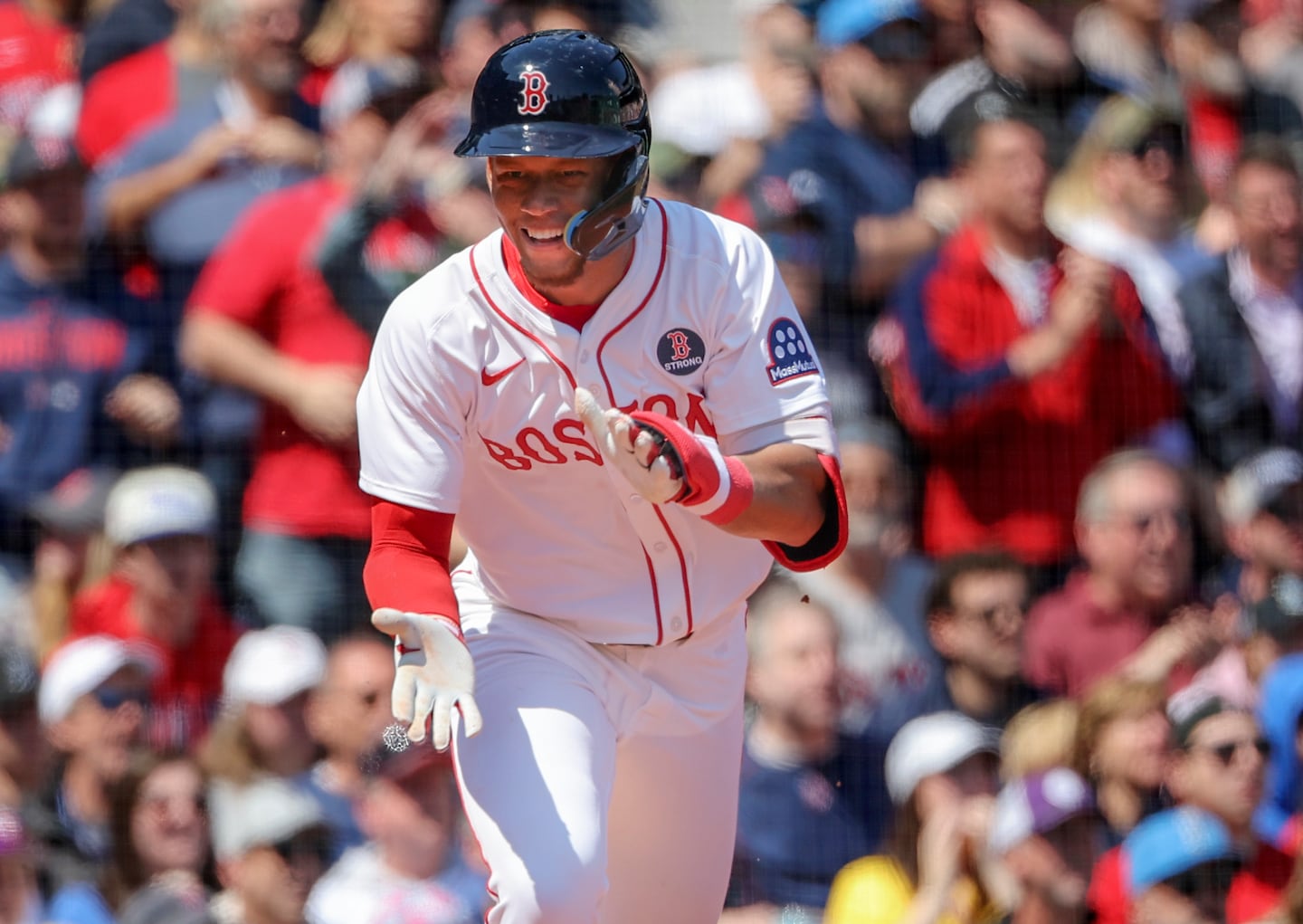
Though Campbell’s 2025 season — after an incredibly promising start that resulted in AL Rookie of the Month honors for April — went off the rails, resulting in his demotion to the WooSox in mid-June, the Sox remain convinced of the 23-year-old’s immense potential, a point emphasized by all of the support staff that worked with Campbell this winter.
The message offered to the player has been two-fold. Coaches have emphasized that it is a process for Campbell to reclaim the form he exhibited in 2024, and that he need not search for overnight fixes. And they’ve also emphasized that their view of Campbell as a special talent — one worthy of an eight-year, $60 million contract at the start of his rookie campaign — remains unaltered.
“ ‘You’re a freak athlete, tons of tools. You’re going to continue to get better, but your ceiling is high. You have the ability to impact the baseball and change games offensively,’ ” relayed Fatse. “What we’re really going to be after is the consistency piece. How do we drive the floor up? How do we make it so even when we’re not feeling great, we still are productive?”
The coaches were struck by Campbell’s enthusiasm to put in the needed work to attack his struggles, starting with his physical condition. Campbell lost weight during the 2025 season, which diminished his physical explosiveness.
Then, once opposing pitchers identified his vulnerability on the inner half of the plate, the combination of diminished strength and bat speed along with awareness of the hole being exploited left Campbell looking defensive for long stretches in the batter’s box. The resounding contact he made throughout the 2024 season gave way to both elevated swing-and-miss rates as well as weaker contact in 2025.
By the time Campbell got to Fort Myers, Fatse was struck by the strength he added — the obvious muscle he’d added to his back and shoulders.
“I noticed it right when I got there,” said Fatse.
Then came the work on changes to Campbell’s stance — a collaboration between the player and his hitting coaches.
Campbell employs one of the most extreme batting stances in the game. He starts from a closed position, with his front foot closer to the plate than his back foot. Of the 584 players who took 100 swings last year, only one — Jake Rogers of the Tigers — had a more closed stance. (Campbell was tied with Giancarlo Stanton for the second most-closed stance in the game.)
That position had the effect of locking up Campbell on inside pitches, a weakness that big league pitchers exploited mercilessly. By the end of his time in the big leagues, he was often just throwing his hands at the ball with almost no leverage from his lower body. (His last ball in play in the big leagues offered a good example of the issue.)
Both Campbell and Sox hitting coaches agreed to work on a setup that was more square to the pitcher in the box, believing that a cleaner line towards the pitcher would create space for him to attack inside pitches. He’s also lowered his hands from the crown of his batting helmet to shoulder height to diminish pre-pitch movement.
At the beginning of his time in Puerto Rico — where Campbell DH’d for eight straight games before playing five of his last six contests in left field — Campbell struggled with both the timing of his swing and rust (unsurprising given that he was stepping into the box against pitchers who were weeks into game play). Through seven games, he walked more (6 times) than he struck out (5 times), but hit just .174/.345/.217.
But he became more comfortable with his new stance with more games, and finished his stint with a seven-game hitting streak, posting a .308/.455/.500 line.
“The at-bats looked much better, more than anything else,” said Fatse. “He just looked quieter in the box.”
That setup, in turn, permitted Campbell to look more aggressive on some of the inner-half pitches that had locked him up throughout 2025.
“At the beginning, he was taking the pitch in that area of zone, but lately he’s been better,” said Vázquez. “He’s been attacking the pitch, taking chances.”
In Puerto Rico — against an array of arms that includes some former big leaguers, and others who have never pitched past the lower levels of pro ball — Campbell has offered a small glimpse of something the Sox hope will carry over into 2026.
“I think he’s heading in the right direction. We need to get him to help us as a team in major league level and help us win,” said Vázquez. “Hopefully spring training starts and it’s a different guy, and he’s ready to roll and ready to contribute.”
Alex Speier can be reached at alex.speier@globe.com. Follow him @alexspeier.