
Tuesday saw another rival of the Cincinnati Reds make a significant move towards being better at baseball during calendar year 2026. The Pittsburgh Pirates, of all clubs, jumped at signing free agent 1B/OF Ryan O’Hearn, landing him on a deal worth some $29 million across a pair of seasons, proving that they are at least moderately dedicated to the concept of successful baseball while generational ace Paul Skenes is under team control on the very same roster.
For the Reds, it’s yet another name off the board who, in theory, would have made a lot of sense for their club. O’Hearn hit .281/.366/.437 (127 wRC+) last year between Baltimore and San Diego, his patient approach and consistent pop providing a service that would have been a boon to any offense, but his profile – and the positional versatility of Spencer Steer – would’ve made the two pretty perfect rotational pieces between a corner OF spot and 1B most days. Work in Sal Stewart with that trio (while adding in the DH spot every day), and the three could’ve been cornerstones of the lineup while each got a day off from fielding once every third day, too.
Advertisement
That won’t happen now, of course. How much the Reds were interested in O’Hearn remains to be seen despite our own fascination with the idea, but the Reds have also a) been very public in their failed pursuit of Kyle Schwarber and b) still remain linked to mercurial Chicago White Sox OF Luis Robert’s services going forward. At least, that’s what we continue to hear, even though the Reds still haven’t managed to pull the right levers on any of those moves to date.
It’s enough to make you wonder if the Reds have conceded that making moves of that ilk – on players who’ll make over $14 million a year – is either too costly financially or the ask is too high in terms of trade currency. And if that’s the case, below is what the team’s offense currently looks like heading in to 2026.
C – Tyler Stephenson, Jose Trevino
1B – Spencer Steer
Advertisement
2B – Matt McLain
SS – Elly De La Cruz
3B – Ke’Bryan Hayes
LF – Gavin Lux, Will Benson
CF – TJ Friedl
RF – Noelvi Marte
DH – Sal Stewart
The utility options with that group include a trio of guys you’ve heard from before in Christian Encarnacion-Strand, Rece Hinds, and Blake Dunn. Add in that prospects Hector Rodriguez and Edwin Arroyo are on the cusp in AAA, and there’s some pretty talented (albeit with flaws) youth that’s ready to step in and step up if the need arises. There’s even a case to be made that CES, Hinds, and/or Dunn could form a potentially effective platoon with Benson and Lux, given that the first trio all hit right-handed and the latter two hit lefty.
Advertisement
What that roster does not have, though, is a proven outfielder who can hit lefties and, in theory, platoon with the likes of Lux and Benson. It also doesn’t have a middle infielder with defensive aplomb, a player theoretically in the role of Santiago Espinal (who, also in theory, would hit better than Espinal ever did). So, even if the Reds are mostly done making the kinds of moves that would shake up everything on paper, there still seem to be two pretty key peripheral moves they’d need to make to build this ground-up roster in a way that includes a couple cheaper failsafes.
Rob Refsynder would’ve made for an interesting fit, for instance. Soon to be 35, the former Reds farmhand has settled into a classic role of mashing lefties and lefties only, hitting a combined .276/.364/.440 dating back to the start of the 2022 season with the Boston Red Sox and playing corner outfield on the days he does so. He just signed for a year and $6.25 million with the Seattle Mariners, however, and ain’t on the market anymore.
If anything, a reunion with Miguel Andujar seems within the realm of expectations for this Reds club, even if there are pretty clear concerns about his ability to actually play any defense. If adding a little bit more palatable defense is a thing the Reds want to prioritize with the same signing, perhaps Randal Grichuk becomes an option (even if his own once-lauded defense has slipped a good bit as he’s aged). Harrison Bader is likely way out of this price range despite still being available, with an Austin Hays reunion likely in a similar realm.
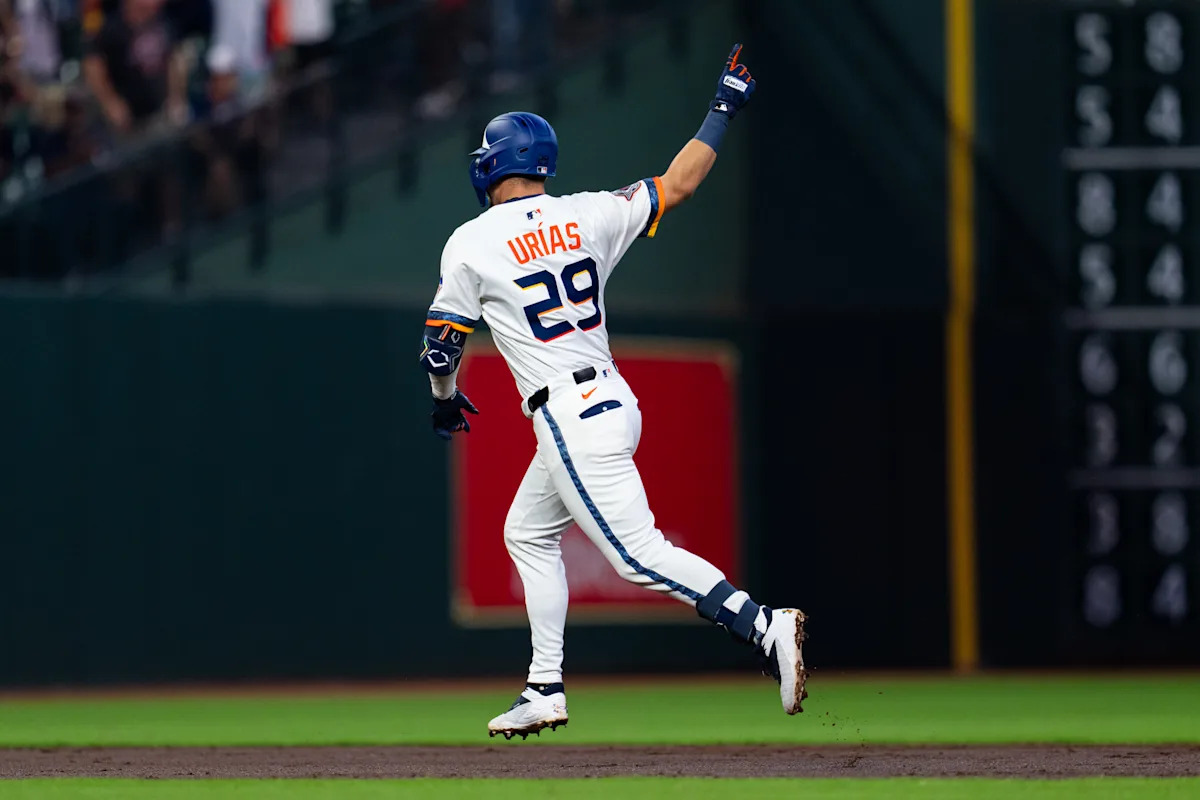
As for a utility infielder, the likes of Isiah Kiner-Falefa and Ramon Urias highlight the glove-first portion of that free agent group. The former approached competence with the bat as recent as 2024 when he posted a 93 wRC+ split between the Toronto Blue Jays and Pittsburgh Pirates, though that number plummeted to just 75 in 2025 split between the same two clubs (even though his defense at SS/2B/3B remained well regarded throughout). In Urias, there’s significantly more offensive upside – he posted a wRC+ of 114 with 11 homers in just 301 PA for Baltimore as recently as 2023 and swatted 16 in 445 PA en route to a 105 wRC+ in 2022 – and he has consistently graded as an excellent defender at both 2B and 3B. However, he’s got limited experience at SS (and none since 2022), didn’t grade well there when tasked with the job, and hit poorly enough after landing in Houston last year that he ended up getting non-tendered. Signing him would mean putting the pressure on Matt McLain to slide over to SS in order to get Elly De La Cruz a day off here and there.
Advertisement
That’s the realm where the Reds would look if they’ve moved beyond trying to find a ‘full time’ or ‘everyday’ player as an addition and, instead, are now looking to round out their bench and platoons. At least, that’s the realm they’re in on the free agent market, as there is clearly the chance they try to pick up one of these kinds of complementary pieces via trade. Doing that might mean they can bring in a player even cheaper than these options, something we know the Reds are always trying to do, but regardless it will be interesting to see if the club fully pivots to looking at peripheral pieces after missing out on yet another guy who looked the part of an everyday part of their offense.