
The Los Angeles Dodgers face a clear roster inflection point as the calendar moves past Christmas and the reigning champions enter a pivotal phase of team-building. For a franchise chasing sustained dominance and a three-peat, the decision is no longer theoretical. One move sits above all others, and delaying it risks unnecessary instability entering 2026.
The front office now faces a narrow decision window where patience risks stagnation and decisiveness preserves competitive leverage across the National League.
Fresh off another title run, the Dodgers stabilized the bullpen earlier this month with the addition of Edwin Diaz, signaling that the front office views its championship window as very much open. With the late innings addressed, attention has shifted squarely toward an outfield group that remains unsettled and thin behind its top option.
That uncertainty begins with right fielder Teoscar Hernandez, who remains locked into a starting role, but quickly becomes less certain beyond him. Utility man Tommy Edman continues to recover from a lingering ankle issue suffered during the 2025 postseason, leaving questions about his readiness for a full workload. Andy Pages flashed potential but struggled with consistency and defensive reliability when the stakes rose in October.
The organization has already rendered its verdict on the previous solution. Michael Conforto was benched during the postseason, and his free-agent departure effectively closed the door on that experiment. With no MLB-ready outfield prospects projected to arrive before 2027, the Dodgers’ roster move becomes less about luxury and more about necessity.
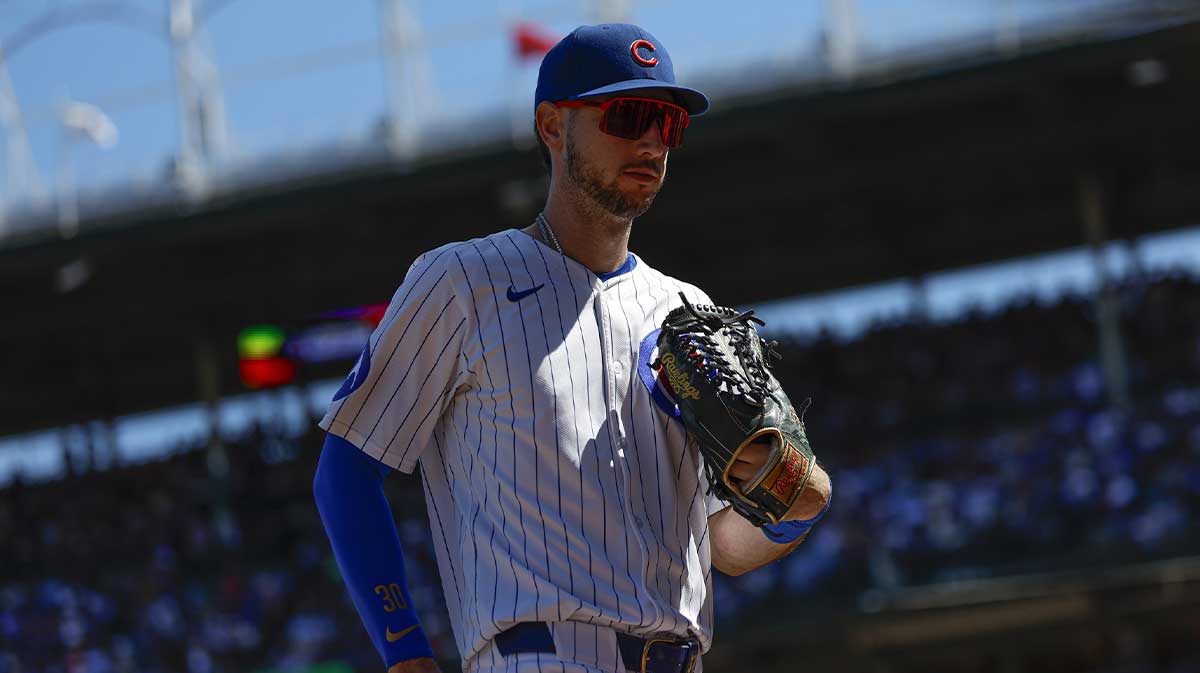
The reality places slugger Kyle Tucker at the center of the Dodgers free agency discussions. Tucker, a left-handed hitter entering his age-28 season, remains the top outfield bat on the market after a productive 2025 campaign with the Chicago Cubs. His profile directly addresses the Dodgers’ outfield upgrade requirement without forcing structural compromises elsewhere on the roster, while also offering lineup continuity, defensive reliability, and postseason-tested production.
Tucker’s appeal extends beyond surface numbers. He offers balance to a lineup built around right-handed threats while providing dependable power, athletic defense, and postseason experience. Over the last five seasons, his production has translated consistently, averaging roughly 33 home runs per 162 games while maintaining strong on-base skills. Against Los Angeles specifically, Tucker has shown comfort, posting a .279 career average with multiple extra-base hits.
The timing also matters. The Dodgers are not operating in isolation. National League rivals continue to explore upgrades, and allowing a player of Tucker’s caliber to remain available invites unnecessary competition. Market defense has long been part of Los Angeles’ playbook, and securing the premier left-handed outfielder prevents a direct rival from solving the same roster problem.
Internally, the move aligns with roster sequencing. The core remains intact, the bullpen is fortified, and the rotation depth was addressed in prior offseasons with additions like Blake Snell and Tanner Scott. What remains is the everyday stability that separates strong rosters from dominant ones across a 162-game grind.
From a value standpoint, replacing replacement-level outfield production with an All-Star-caliber bat materially raises projected wins. It also protects against injury volatility, a lesson reinforced during the 2025 postseason when depth was tested repeatedly. The Dodgers’ roster move, in this context, is not aggressive. It is corrective.
The margins between sustained success and seasonal disappointment are rarely visible in December, but history often traces them back to this window. Precision, timing, and decisiveness now shape the difference between another championship banner and a season of what-ifs.
Post-Christmas windows often define championship seasons long before Opening Day. For Los Angeles, the path forward is unusually clear. The outfield requires certainty, the market provides the solution, and the timing aligns with the organization’s stated goals.
If the Dodgers intend to pursue a three-peat rather than simply defend a title, the move cannot wait.