
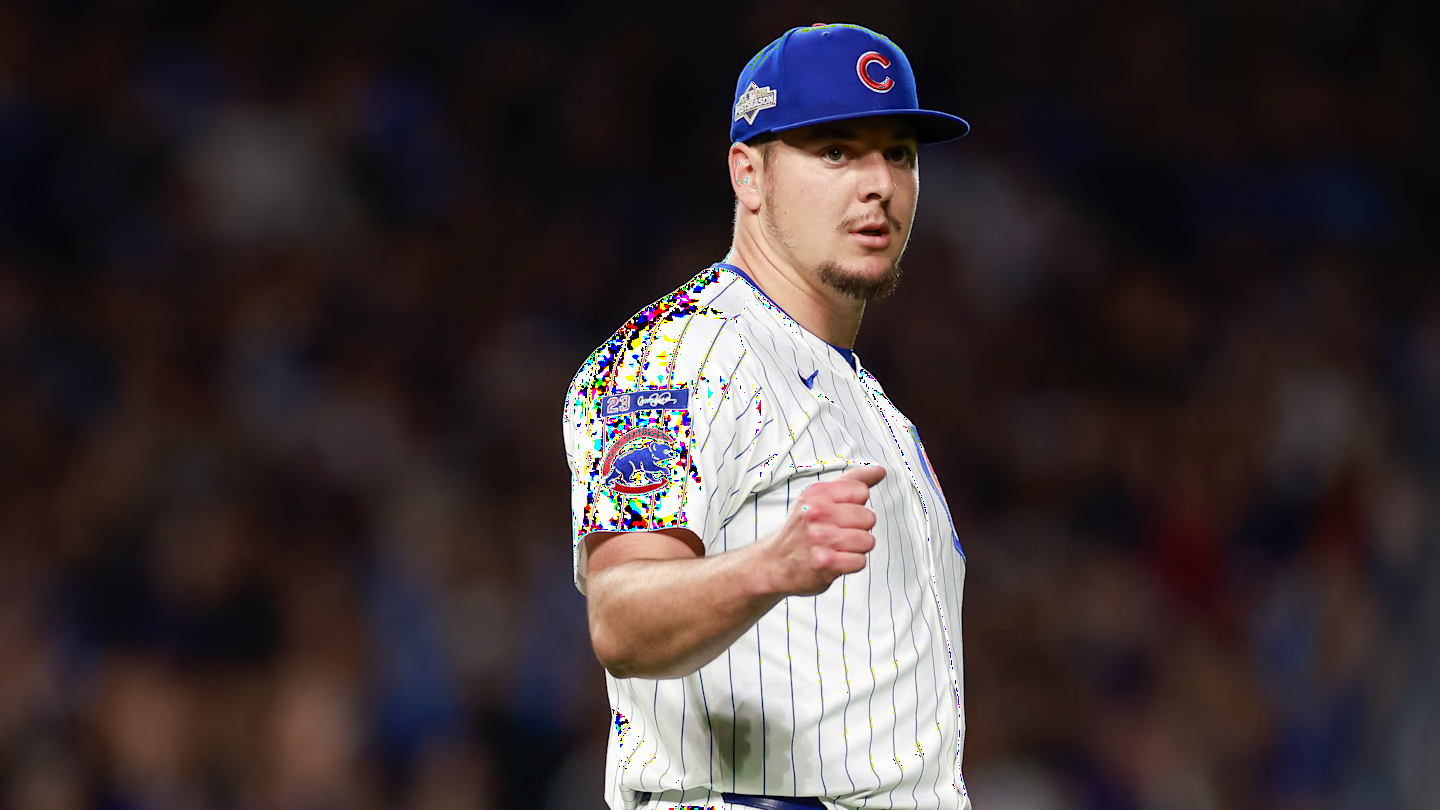
To this point, the Chicago Cubs have spent most of their offseason bringing in some veteran bullpen pieces, including Phil Maton, Hoby Milner, Jacob Webb, and re-signing Caleb Thielbar. While not household names, they each bring a solid track record. To little surprise, they did not go after the likes of Edwin Diaz, Devin Williams or Robert Suárez – the three biggest relief names on the market.
Compare the combined $55 million AAV between Diaz, Williams, and Suárez to the combined $17 million the Cubs spent on Maton, Milner, Webb, and Thielbar. Not to say the elite guys are not worth it, but with the volatility of bullpen arms, spending big on relievers is not the only path to bullpen success. Just look at the past few years and who the top relievers in the Cubs pen were.
Cubs have found tremendous value in some of their bullpen signings2025: 3.78 bullpen ERA (11th)Brad Keller: 2.07 ERA, 2.93 FIP, 0.96 WHIP, 9.7 K/9, in 69.2 IP – MiLB contract; earned $1.5MDrew Pomeranz: 2.17 ERA, 3.36 FIP, 1.07 WHIP, 10.3 K/9 in 49.2 IP – Purchased from Seattle; earned $1.3M (Worth noting: he had not pitched since 2021).Caleb Thielbar: 2.64 ERA, 3.00 FIP, 0.88 WHIP, 8.7 K/9 in 58 IP – MLB contract; earned $2.75M Daniel Palencia: 2.91 ERA, 3.08 FIP, 1.14 WHIP, 10.4 K/9, 22 saves in 54 appearances – Pre-arbitration; earned $760K
2024: 3.81 Bullpen ERA (12th)
Tyson Miller: 2.15 ERA, 3.62 FIP, 0.82 WHIP, 1.8 BB/9 in 50.1 IP – Acquired from Seattle via trade; earned $778KPorter Hodge: 1.88 ERA, 2.75 FIP, 0.88 WHIP, 10.9 K/9 in 43 IP – Team control; earned $497KBen Brown: 3.58 ERA, 3.11 FIP, 1.08 WHIP, 10.4 K/9 in 55.1 IP – Pre-arb; earned $740KJorge López: 2.03 ERA, 3.20 FIP, 1.09 WHIP, 10.5 K/9 in 26.2 IP – Signed mid-season after Mets released him; earned $740K
2023: 3.85 Bullpen ERA (13th)
Adbert Alzolay: 2.67 ERA, 3.02 FIP, 1.02 WHIP, 9.4 K/9, 22 saves in 64 IP – Pre-arb; earned $745KJulian Merryweather: 3.38 ERA, 3.52 FIP, 1.31 WHIP, 12.3 K/9 in 72 IP – Claimed off waivers from the Toronto; earned $737KMark Leiter Jr: 3.50 ERA, 3.77 FIP, 1.12 WHIP, 10.8 K/9 in 64.1 IP – Signed as a free agent prior to 2022; earned $850K
There is a clear pattern here. The Cubs have received excellent performances from castoffs, reclamation projects on short deals, and internal options – none of which broke the bank. It’s also worth noting that some of their more notable investments in recent, such as Ryan Pressly, Héctor Neris, or Michael Fulmer, did not materialize as hoped. Or the fact that Tanner Scott, the top reliever on the market last winter that the Cubs came tantalizingly close to landing, just had a disastrous first year with the Dodgers.
As mentioned before, this does not mean acquiring an elite reliever like Diaz would have been a bad move. Nor does it guarantee the moves the Cubs make will all work; there’s reason to wonder how effective the bullpen will be to start 2026, but that’s been the case for awhile now, and it’s consistently worked out of late. It just goes to show there is no exact science in building a bullpen year-in and year-out. Great relievers can come from anywhere, and often they are built from journeymen or late bloomers. Look at what Keller was before his Cubs tenure. Suárez, a two-time All-Star reliever, did not make his MLB debut until he was 31 years old.
Hopefully, the Cubs will have an effective bullpen for the start of 2026, then they can add throughout the summer based on who is pitching well, assuming they are in contention.