
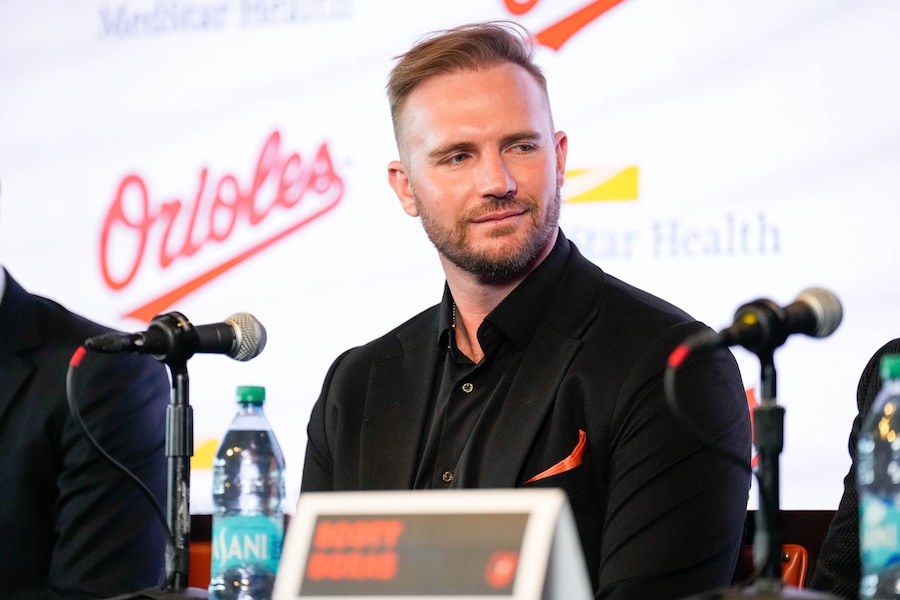
Last offseason was a disappointing one for Pete Alonso, the former Mets slugger who didn’t earn the long-term contract he desired in free agency and signed a shorter deal in New York to rebuild his value. This month, he earned a massive five-year deal with the Orioles.
The risks in signing a slugger in his 30s didn’t materially change in the ensuing year. But a foundation Alonso built over that offseason, his first working with Diesel Optimization in Tampa, Florida, didn’t just set Alonso up to perform as well as he did in 2025.
It introduced Alonso to a program that, combined with the mindset that has made him among the game’s most durable and consistent performers, can possibly eliminate that risk by giving him a new understanding of himself as an athlete and a hitter.
“A lot of these guys like Pete, we get these guys at 30, 31 and they’re top talents, really great individuals,” said Phil Wallin, founder and CEO of Diesel Optimization. “I think, at 30 years old as an athlete, you have to choose: Do I keep going on the path, or do I learn more?”
Alonso’s answer was clearly the latter. In a town where the sting of watching Nelson Cruz walk out the door after one season and continue to slug deep into his 30s while Chris Davis stayed and crumbled, that’s as reassuring a data point as any.
“I think a huge adjustment I made was in the offseason from ’24 to ’25, kind of deep dove into some things, how I could get better as a player,” Alonso said at his introductory press conference this month. “There’s some areas I wanted to attack to get better, and for me it was understanding my body, and I pretty much took a huge deep dive into analytics, and not just that, but using biomechanics, biometrics, to really understand how my body moves.
“And I used that with a blend of scouting to have more success on the field. Last year was my first year really taking that on with a full understanding of things, and I feel like as time goes on, the more information I have in this new way, I feel like I’m really going to extract even better seasons from my skills.”
Wallin, who was previously director of performance at Florida’s IMG Academy, has plenty of MLB stars on Diesel’s rolls, including Aaron Judge and J.T. Realmuto. Previously, he helped Josh Donaldson slug into his 30s, and his business partner, José Bautista, spent the first half of his 30s as a perennial All-Star.
He said Alonso came to Diesel last offseason through referrals and quickly demonstrated a simple separator that Wallin has often found distinguishes the best of his clients.
“Pete walked in the door … open to learn,” he said. “I think that’s what makes him great, is that he’s always going to try to be the competitor, he’s always going to try to win, and I think that’s the biggest thing I’ve seen in 20 years working with these top-caliber guys is, man, when you get these guys that want to work and learn and don’t want to lose, then here we go.”
Assessments at Diesel cover everything in a player’s life, from strength and swing breakdowns to sleep and dietary habits. Typically, the adjustments aren’t major. Wallin raved about Alonso’s strength, discipline and commitment to his program, right down to a daily 6:30 a.m. run for three months straight.
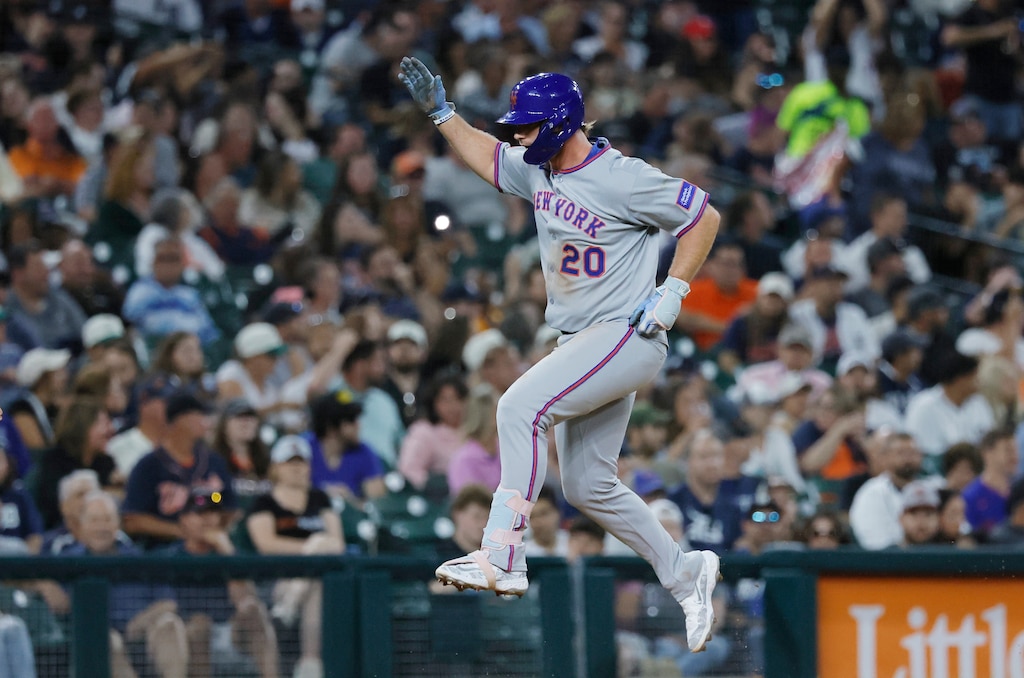
Alonso’s .871 OPS in 2025 was 83 points higher than it was the year before. (Duane Burleson/Getty Images)
The movement and swing work seemed to unlock new levels of power for Alonso in 2025, though. Wallin likened it to keeping a Ferrari in alignment, which in Alonso’s case meant better alignment in his hips so he could establish the base of his swing more naturally.
That physical base allows a hitter, particularly one as strong as Alonso, to better express his power, and the cues to feel what the best version of it are allow them to focus on how they’re being pitched.
“That seems to be the equation that’s been working a long time with a lot of elite people,” Wallin said.
Several data points illustrate the impacts of that work. According to MLB Statcast, Alonso’s stride length was over 3 inches shorter, on average, in 2025 compared to 2024, and his back foot shifted less and remained square through contact.
That led to consistent hard contact. Alonso set career highs in average exit velocity (93.5 mph), hard-hit rate (54.5%) and expected slugging percentage (.560), all while reversing a decline in elevated contact.
“I hate not knowing what my ceiling is, and that’s why I work. I want to be the best I possibly can be, and I want to be the best.”
Pete Alonso
Alonso has been back this winter pursuing those same improvements, armed with a year of experience in the program. He came back to Diesel emphasizing areas he wanted to improve in and is dedicating hours each day to those goals.
“His mindset is so strong, and he’s so disciplined, and he wants to be great,” Wallin said. “The difference is it won’t waver. The only difference between Pete and a minor league guy is Pete’s mindset is he’s going to do everything it takes, every day. The Polar Bear is going to continue to push and continue to push. … He does things every day for hours to get his body back, every day, to be able to hit homers. The cool part is some athletes don’t have that mindset, but he does, and that’s why he’s elite, and he’s going to continue to be elite.”
Alonso outlined some of his motivation this month, demonstrating the mentality that he and the Orioles hope is going to help lead a developing set of young players back to its best.
“I’m a worker. It doesn’t matter,” Alonso said. “That’s one of the things I pride myself in. That’s why I’m able to play every day, and I think, for me, I like diving into the work and having the desire to get better and be the best.
“I hate not knowing what my ceiling is, and that’s why I work. I want to be the best I possibly can be, and I want to be the best. So I’m always going to work. I’m always going to strive to be the best, make adjustments, adapt and do what I can to really deliver on a daily basis.”